FAQs for a Buddhist Pilgrimage

FAQs for a Buddhist Pilgrimage

Caveat: This is based on personal learnings and I seek forgiveness for any errors and omissions.

FAQs for a Buddhist Pilgrimage
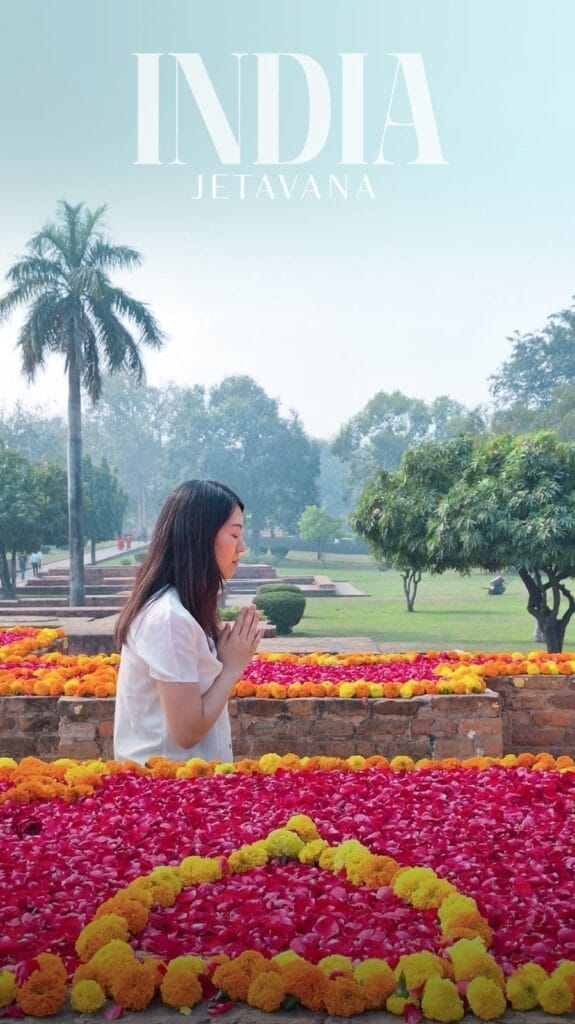
Jetavana, one of Buddhaโ€™s most frequented residences and where many teachings were given

Why go on a Buddhist pilgrimage 

A Buddhist pilgrimage to the 4 holy sites can be a catalyst or accelerant for practice. It is an experiential contemplation of the Buddhaโ€™s life and teaching. 

It is an opportunity for us to put time and effort into contemplating and understanding for ourselves what the Buddha was trying to teach and gain clarity on how we want to conduct ourselves in daily life through our body, speech and mind. 

Going on a pilgrimage is skillful when it strengthens Saddhฤ (confidence in the Buddha and his teachings as a way to end suffering), inspires Sila (our virtue and commitment to be good) and Bhฤvanฤ (refers to meditation that purifies the mind of unwholesome mental states that tie us to samsara). It gives us a sense of urgency towards spiritual practice. 

It is only life changing if you choose to change how you wish to live your life before, during and after a pilgrimage.

FAQs for a Buddhist Pilgrimage
Mahabodhi Temple, Bodhgaya, the place where Buddha attained enlightenment 

When to go on a Buddhist pilgrimage

Peak pilgrimage season is during the winter months of October to March when the weather is cool and dry. 

How to go on a Buddhist pilgrimage 

Set a clear, wholesome purpose. For example: My intention for this upcoming pilgrimage is to reinforce my refuge in Buddha, Dhamma, Sangha; cultivate virtue and insight; dedicate merit to all beings.

Once you set your intention, have a think about how you would like to align your intention with your behavior, speech and mind at least during the pilgrimage. 

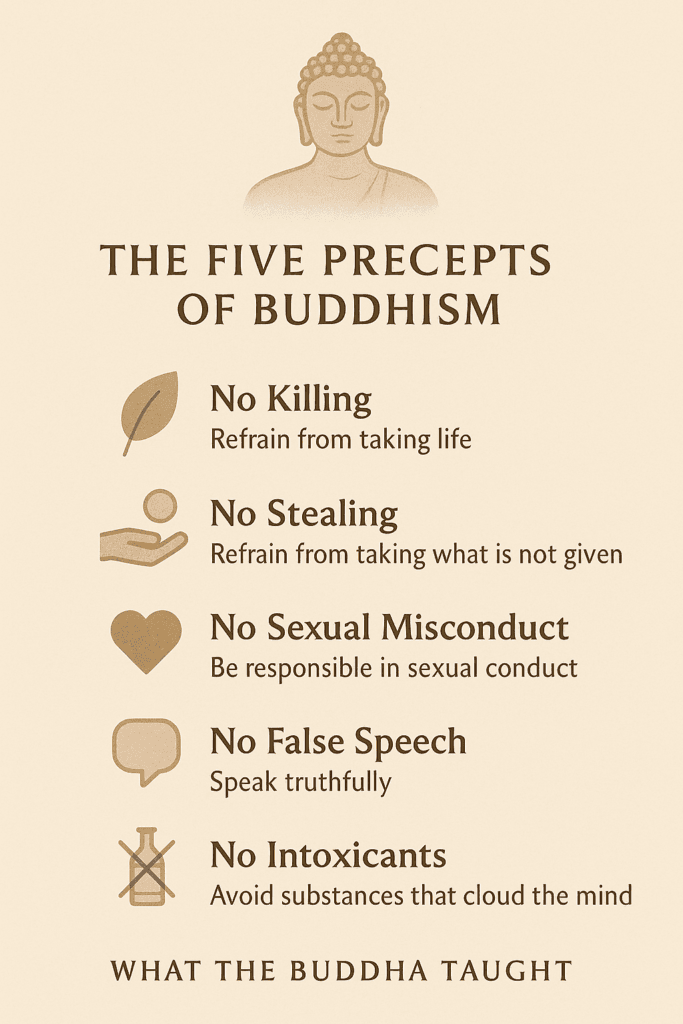
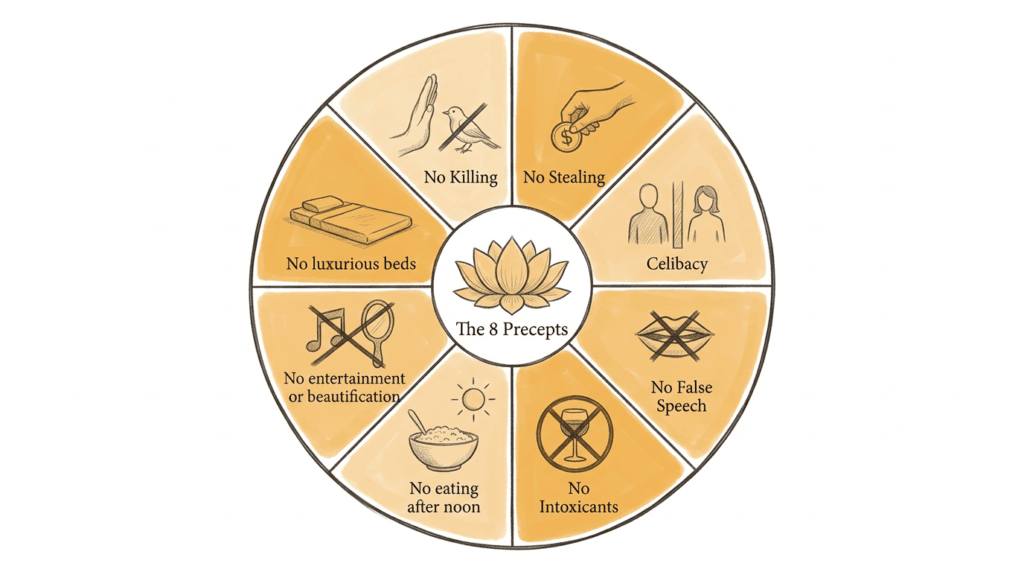
Perhaps you would like to make an effort to keep 5 or 8 precepts. 8 precepts are to support renunciation/restraint of sensuous stimulation to create better conditions for a peaceful mind. 

Or perhaps you would prefer to put more effort and intention to soften your heart throughout the trip with the 4 brahmaviharas

– Metta: wish safety and peace to all you meet.

– Karuna: be patient with crowds, discomfort, and othersโ€™ needs.

– Mudita: rejoice in othersโ€™ devotion and practice.

– Upekkha: meet delays, heat, cold, or disappointment with balance.

It would be good to have a beginnerโ€™s humility: arrive not to โ€œcollectโ€ places but to be taught by them.

How to prepare for a Buddhist pilgrimage 

Prepare the body 

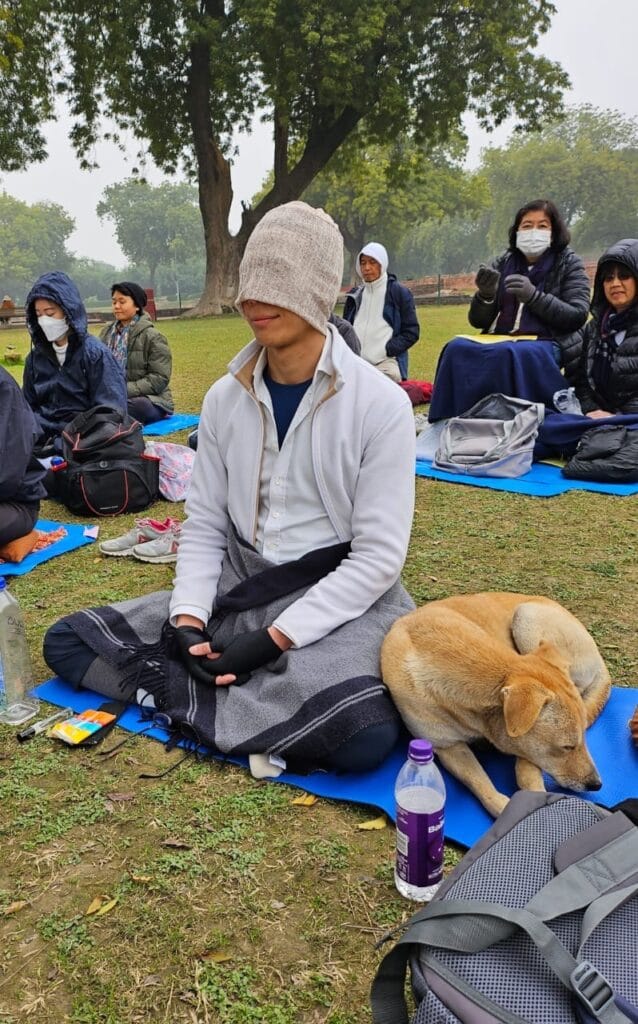
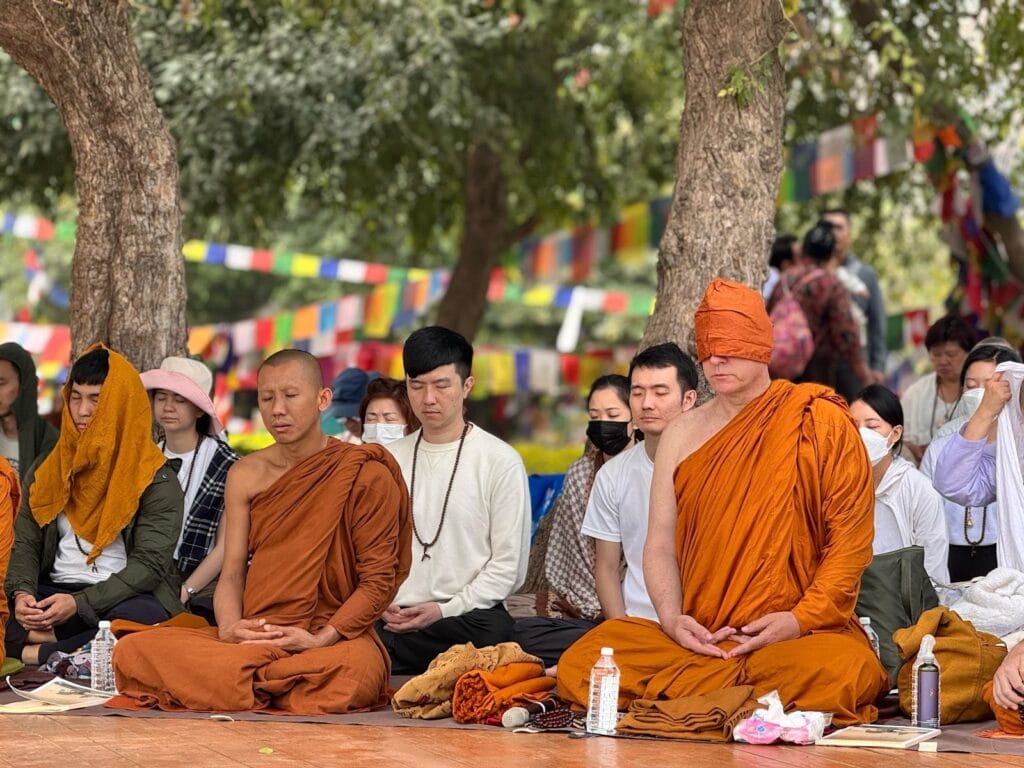
If you donโ€™t already have a somewhat consistent meditation practice, it would be good to try getting used to the act of meditating. Try different forms of meditation so that you will have a toolbox you can reach into while you are on pilgrimage – be it metta, breath, walking meditation. This is something you can and should do while on pilgrimage. What better way to honour Buddha than practising what he taught while visiting the holy sites. 

FAQs for a Buddhist Pilgrimage
One of the many benefits of metta meditation is that one would be dear to animals.

On a practical level, one should take supplements to boost your immunity before the trip. You will be exposed to different environmental conditions so it’s good to make sure your body is as healthy as can be. It would also be a good idea to stock up on medication so that you can manage whatever illnesses/symptoms that crop up. 

Prepare the mind 

It would be good to understand the significance of the holy sites that you would be visiting. Ideally, do some research on the holy sites you are going to visit. 

Many suttas begin with โ€œSo I have heard. On one occasion the Blessed One was dwelling at Savatthi in Jetaโ€™s Grove, Anathapiแน‡แธikaโ€™s Parkโ€ฆโ€. Knowing the places and the suttas that were taught at these places really makes the suttas come alive. 

I chanted the Dhammacakkappavattanasutta almost daily for a month leading up to the pilgrimage. 

This allowed me to chant and reflect on the significance of what occurred at Sarnath. The place where Buddha set the wheel of Dhamma in motion. Without Buddha and his teachings, we would wander endlessly in Samsara (endless cycles of rebirth). 

Destined to be born, grow old, get sick and die again and again. It is the place and moment where Buddha taught the Dhamma and a third party (Koแน‡แธaรฑรฑa, one of Buddhaโ€™s first 5 disciples) was able to realise the truth of the Dhamma and find the way out of Samsara. Let the significance of that sink in while you are at Sarnath. 

What to expect while on pilgrimage 

FAQs for a Buddhist Pilgrimage
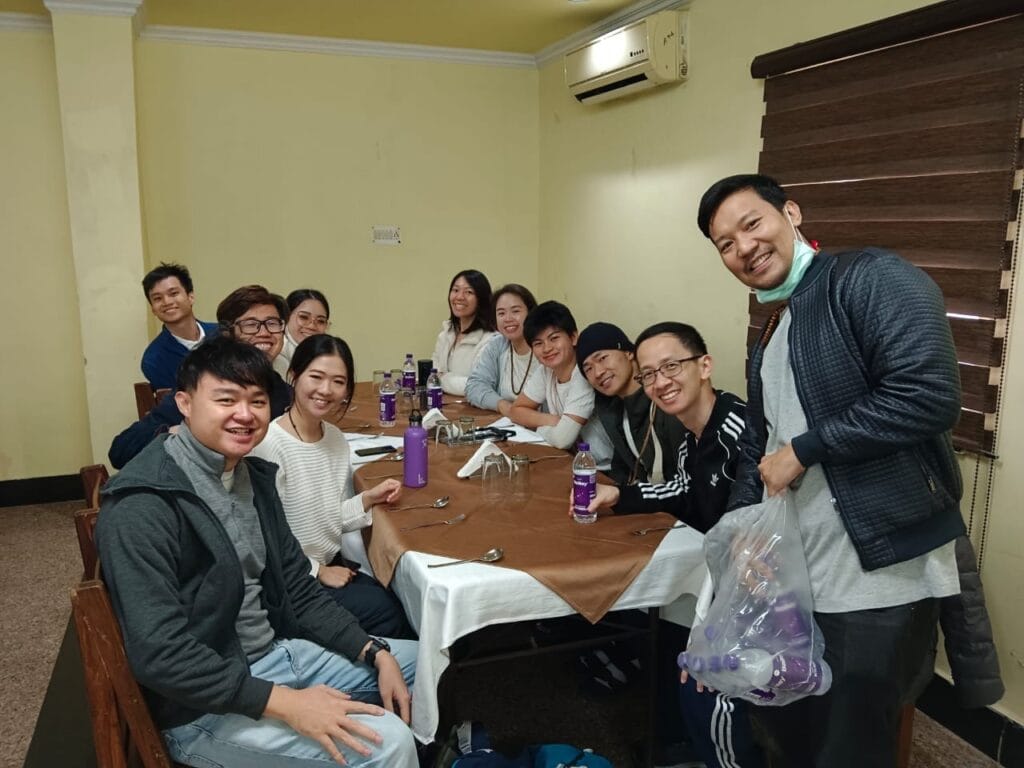
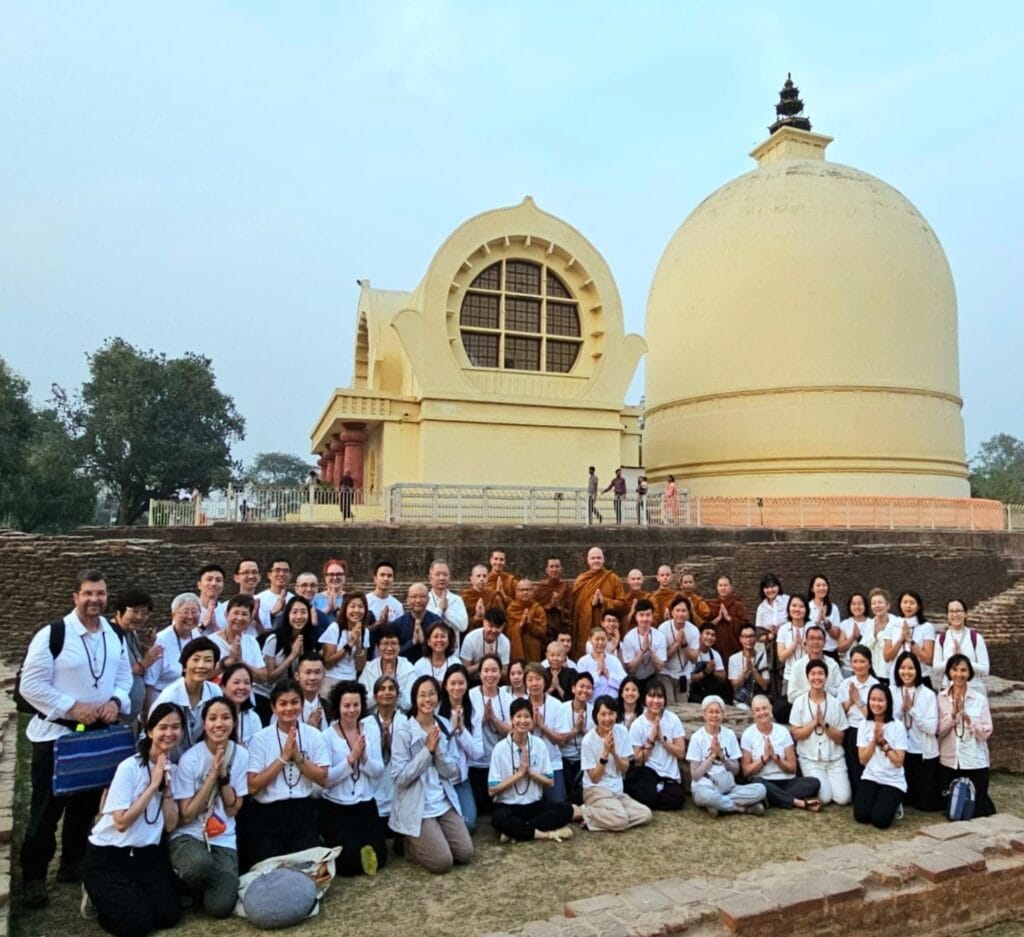
Happy DAYWA pilgrims with one of our wonderful guides and trip photographer, Champ

Expect the pilgrimage to be an extreme form of practice. Think of it like signing up for a marathon when youโ€™ve never gone for a jog longer than 5km before. So to make this whole endeavor more productive, we’d better do some training beforehand. 

A pilgrimage in India is likely to be a very different experience from our daily life. We will see, smell, hear a lot of things that we are not used to. It is a good time to practice awareness that the world and the people in it move and change in their own way and in their own time. Expecting or wanting them to behave in ways we prefer is what causes us suffering. Bring these learnings home. 

Mindfulness is your friend. Just observe and note everything around you without judging โ€” I like this, I donโ€™t like that. This shouldโ€™ve been done; that shouldnโ€™t be done. Naturally, you will be exposed to a lot of pleasant, unpleasant and neutral stimuli. This is to be expected if you live in this world. 

On a practical level, you can expect roads to be a bit bumpy/jammed, toileting situations that would not be ideal and beggars that may be waiting at the bus and could follow you all the way to the entrance of the holy site. As good as your intention may be to give out some cash, please do not whip out a wad of cash that may cause you to be mobbed. 

You may try to hand out tips and snacks to beggars discreetly (usually when theyโ€™re alone). Or you could look for a reputable charitable institution doing good work in the area and make a donation there as a way to support the community. 

What mental qualities to develop before, during (and most importantly, continuously after) a Buddhist pilgrimage? 

Daily life can be repetitive and fast moving. Because of this, we may repeat the same mistakes again and again without taking the time to reflect on which behaviours we want to let go of and which we want to encourage. Many of us live life on autopilot, without really pausing to reflect on what we do and why we do it. Pilgrimage offers a change of pace and a chance to notice the thought patterns, behaviours, and habits we have become used to for better or for worse. Pause, and reflect: what kind of adjustments do we want to make to our lives. 

Pilgrimage offers a helpful shift in pace. It is often guided by a wise teacher whom you can seek counsel from. And youโ€™ll have plenty of time with well-practiced spiritual friends who can share their experiences and offer a Dhammic perspective.

For example, do you notice any โ€œme firstโ€ habits that cause the heart and mind to become constricted? Perhaps the tendency to become impatient with others when they seem to be โ€œin your way.โ€ Is this how you want to live the rest of your life? Or is there another way to relate to the world around you that would lead to less unhappiness? Do you notice any unhelpful mental narratives running quietly in the background of your mind? What stories do we tell ourselves that assume the world should be a certain way, or should treat us the way we want it to? Does it? We often compare ourselves with those around us: better, the same, or worse. What does that do to our mind and how we treat others? 

When we begin to notice these habits, the next question naturally arises. If we want to cultivate a mind that is more open, steady and at ease, what qualities should we encourage? The Buddhist tradition offers a helpful framework in the form of the Ten Pฤramฤซs, noble qualities that gradually train the mind towards generosity, wisdom and compassion. They can serve as a practical guide or โ€œgold standardโ€ that we return to when we are unsure how to respond to challenging situations.

If one does not know where to start, one could try to cultivate the Ten Pฤramฤซ to gently bring the mind, speech and actions back to wholesome states again and again while on pilgrimage. 

The aim isnโ€™t to beat ourselves up for not being perfect. The aim is to continuously build new patterns that eventually become our habitual response in any given circumstance.

Dana (Generosity):

Generosity begins with letting go of subtle forms of greed and ill will. This might be as simple as allowing someone else to board the bus first even when you are tired and feeling overheated, or choosing not to respond harshly when someone invades your personal space. Each small act of generosity softens the heart.

Sila (Virtue):

Sฤซla is the foundation that supports all the other qualities. It involves mindfulness in speech, action, and livelihood. On pilgrimage, virtue may be tested through frustration, gossip, or impatience. Upholding Sฤซla keeps the mind clear and free from regret.

Nekkhamma (Renunciation):

Renunciation does not mean deprivation but a willingness to release selfish desires. It is the choice to step back from constantly seeking comfort, praise, or control. On pilgrimage, Nekkhamma might appear as accepting simpler meals, basic accommodation, or an unexpected change of schedule without resentment.

Panna (Wisdom):

By stepping away from your usual routine, you may have more space to develop wisdom through reflection and observation. We begin to see more clearly which actions lead to peace and which lead to agitation. This understanding grows from direct experience rather than intellectual knowledge.

Viriya (Energy):

This is the effort to keep practising even when familiar habits pull us back into distraction or complacency. Feeling frustrated? Notice how complaining, whether internally or to others, darkens the mind. Feeling uncomfortable? It can be a good opportunity to observe how quickly we try to escape discomfort through temporary distractions such as checking our phone. You might experiment with restraining urges to shop, scroll, or daydream about food back home. Viriya is the quiet determination to return again and again to mindfulness, kindness, and clarity.

Khanti (Patience):

The qualities listed above can seem almost impossible to cultivate at times. This is where patience and forbearance become important. Khanti is the willingness to forgive yourself and try again and again, patiently finding ways to keep the mind clear and wholesome in a sustainable way.

Sacca (Truthfulness):

Honesty and integrity with yourself help you explore where your discomfort is really coming from. It is common to focus on things in the outer world that appear to be causing our suffering. Sacca gently turns our attention inward to understand what is actually giving rise to our unhappiness and how we might respond more wisely.

Adhitthana (Determination):

Determination is the quiet resolve to stay aligned with what you know to be wholesome. Pilgrimage can bring tiredness, discomfort, or moments where old habits resurface. Adhiแนญแนญhฤna is the steady commitment to continue cultivating generosity, patience, and mindfulness even when it feels inconvenient. It is not a rigid stubbornness, but a calm decision to keep walking the path.

Metta (Loving kindness):

Loving kindness is the wish for oneself and others to be well and free from suffering. During pilgrimage you will encounter many different personalities, including those who may move more slowly than you would like, speak loudly, or behave in ways that trigger irritation. These moments can become opportunities to soften the heart and extend goodwill instead of resentment. Even silently wishing others well can gently shift the state of the mind.

Upekkha (Equanimity):

Equanimity is the ability to remain balanced in the face of pleasant and unpleasant experiences. Pilgrimage will bring moments of joy, inspiration, fatigue, and inconvenience. Upekkhฤ reminds us that these experiences arise and pass according to causes and conditions. By learning not to cling too tightly to pleasant moments or resist unpleasant ones, the mind becomes more steady and peaceful.

It may seem like a tall order to develop all these qualities at once, especially under unfamiliar or challenging circumstances. Instead, you might set small and achievable intentions each morning to keep in mind throughout the day. For example, โ€œMay I open my heart to opportunities to be generous with others today.โ€

Remember not to be too hard on yourself if you slip up. Slip ups are simply data points to reflect on. Rather than avoiding or judging them, we can learn from them and try again with a little more understanding the next time.

And most importantly, remember to carry these learnings back home and continue incorporating these positive changes into your daily life. 

Suggested simple routine at a holy site

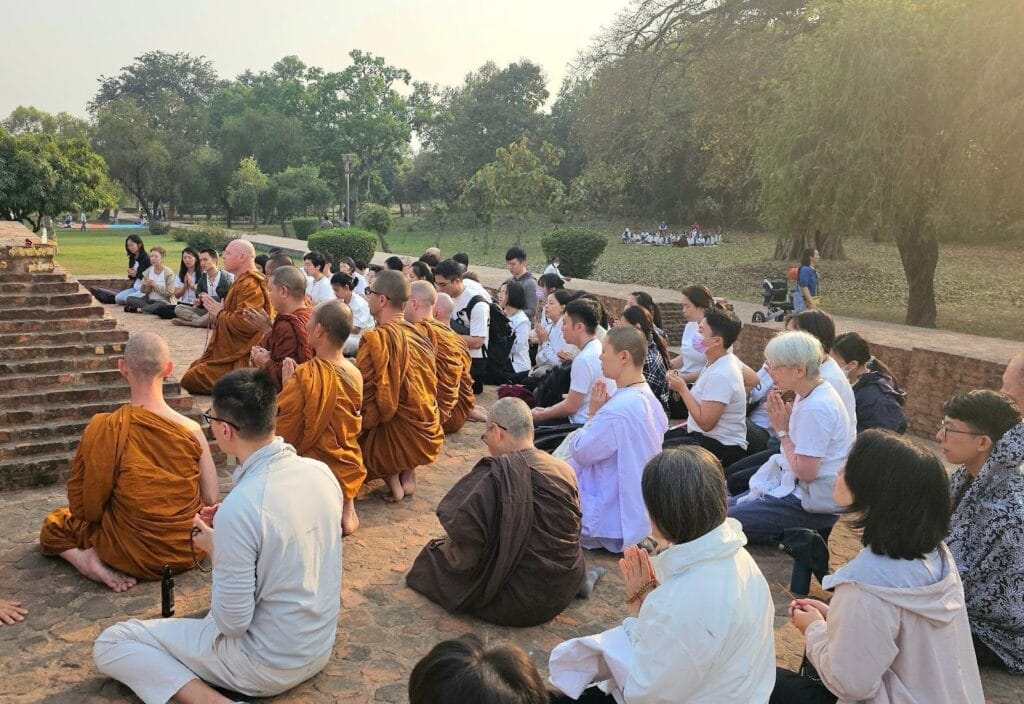
Arrival: three bows; short recollection of the Buddha. 

FAQs for a Buddhist Pilgrimage
Chanting (if thatโ€™s something you enjoy and if it helps to calm the mind)

FAQs for a Buddhist Pilgrimage
Sit 20 to 30 minutes (longer if you have the time)

FAQs for a Buddhist Pilgrimage
Walk circumambulation (honouring the triple gem with our bodies by walking around a holy site), clockwise, mindfully (three rounds)

FAQs for a Buddhist Pilgrimage
Make an offering, resolve one wholesome change you will carry home

Dedicate merit: โ€œMay all beings be happy; may this goodness support liberation for all.โ€

FAQs for a Buddhist Pilgrimage
Make any spiritual aspirations you may have before you leave

Offerings you can make on pilgrimage

The greatest offering you can make to the Buddha would be paแนญipattipลซjฤ โ€” an offering of practice.

In the Mahฤparinibbฤna Sutta, when people were worried about how to honour the Buddha after his passing, he made it plain that those who practise the Dhamma, who live in accordance with it, are the ones who truly honour and revere the Tathฤgata. Not by ritual alone, but by transforming greed, hatred, and delusion in their own hearts.

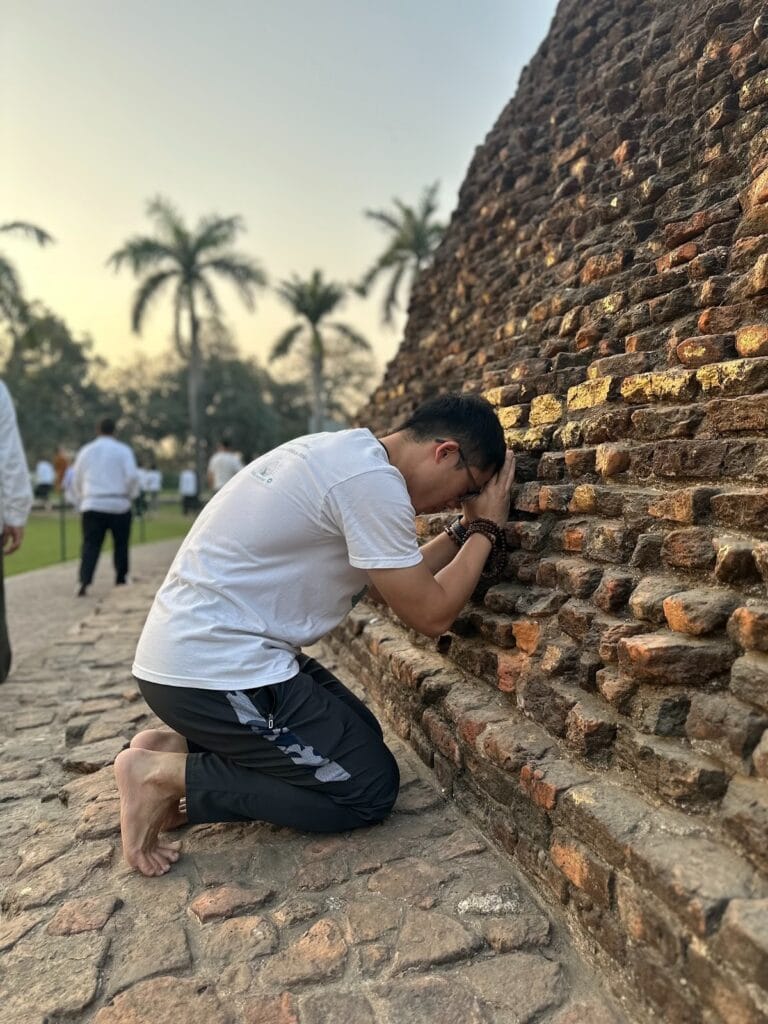
What this means on pilgrimage is simple, but not easy. Bowing at Bodhgaya matters. Circumambulating stupas matters. Chanting matters. 

But the deepest offering you can make at these places is restraint when irritation arises, kindness when fatigue sets in, mindfulness when the mind wants comfort, and patience when things do not go your way.

If you return home unchanged, the offering was mostly symbolic. If you return with even a small shift in how you speak, act, or relate to suffering, then the pilgrimage has already borne fruit.

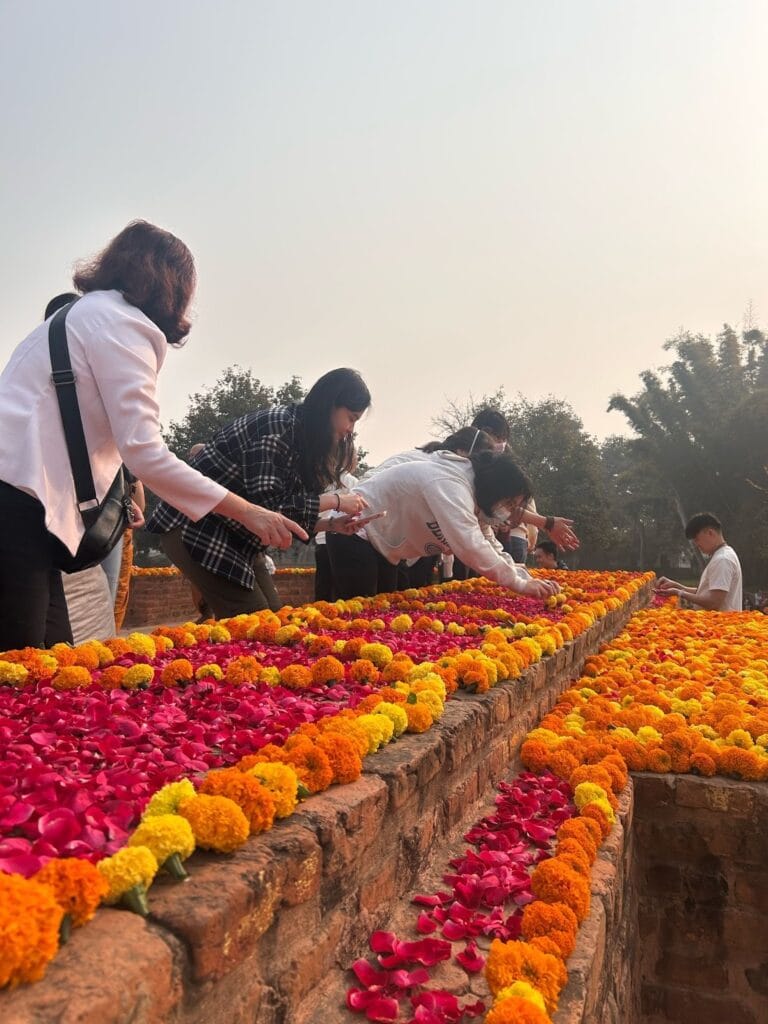
Nevertheless, please offer flowers, candles, incense and robes as and when the opportunity arises at the holy site to brighten the mind and gladden the heart.

FAQs for a Buddhist Pilgrimage
We had the beautiful opportunity to offer flowers at Buddhaโ€™s kuti at Jetavana as a group.

Things to bring (amongst the regular things you bring on holiday)

FAQs for a Buddhist Pilgrimage
Remember, temperature can be subjective. It is a good idea to err on the side of caution and pack clothing you can layer

Bring basic medication. This includes painkillers, diarrhoea medication, rehydration salts, flu medicine, and anything you regularly take. Pharmacies are not easily accessible near some holy sites, they may also not carry the medication you require. 

Bring mosquito repellent and itch relief cream. Mosquitoes can be persistent, especially in the evenings, and bites can become infected if scratched repeatedly.

Bring sunscreen, a hat, umbrella, and light long-sleeved clothing. The UV exposure is intense, even on cooler days, and prolonged exposure to the sun will sap your energy quickly. 

Bring wet wipes, hand sanitiser, and tissues. Toileting conditions may be basic, and having your own supplies makes a significant difference to comfort and hygiene. 

Bring comfortable footwear with good grip. You will be on your feet far more than you expect, often on uneven or dusty ground. You may have to take off your footwear at some of the holy sites so sturdy sandals may make sense.

Bring your meditation gear and perhaps a Dhamma book or two. 

Pilgrims tend to wear comfortable & modest white tops and dark pants.

Things to take note of

Do not underestimate the physical conditions. Heat, cold, dust, long walks, and uneven terrain will wear you down quickly if you assume you can โ€œpower throughโ€. Overconfidence usually leads to sickness halfway through the trip.

Do not drink tap water or consume unsealed drinks, even if locals do. Stick to bottled water and check that the seal is intact. Avoid ice, full stop. 

Do not eat raw or unpeeled fruits and vegetables. As tempting as fresh fruit may look, food poisoning can derail the entire pilgrimage. Understand you may need your fiber, so banana or mandarins that you can peel yourself would be a reasonable choice. Choose hot, freshly cooked food whenever possible.

Do not carry large amounts of cash in one place or take it out openly. Crowded areas attract attention. Use small denominations and keep money distributed across different pockets or bags.

Do not skip rest or ignore early signs of illness. A sore throat, stomach discomfort, or fever should be addressed early with medication and hydration. Pushing on stubbornly often leads to days lost to recovery.

After returning

Integrate one concrete habit: daily morning sitting, weekly 8 precepts, regular acts of generosity. Let the pilgrimage change your life, not just your photo album.

Recommit and align your life to the Dhamma as a lay practitioner

Find a community near you that can support your practice

Recollect often moments during the pilgrimage that were wholesome and brought joy. Let these memories skilfully brighten the mind and motivate you to keep practicing 

Conclusion

A pilgrimage does not awaken us by itself. It simply places us in conditions where practice becomes unavoidable.

If you walk these holy sites with intention, care, and humility, the journey continues long after you return home.

What matters most is not where you went, but how you now choose to live. May you grow in wisdom on your journey.

FAQs for a Buddhist Pilgrimage
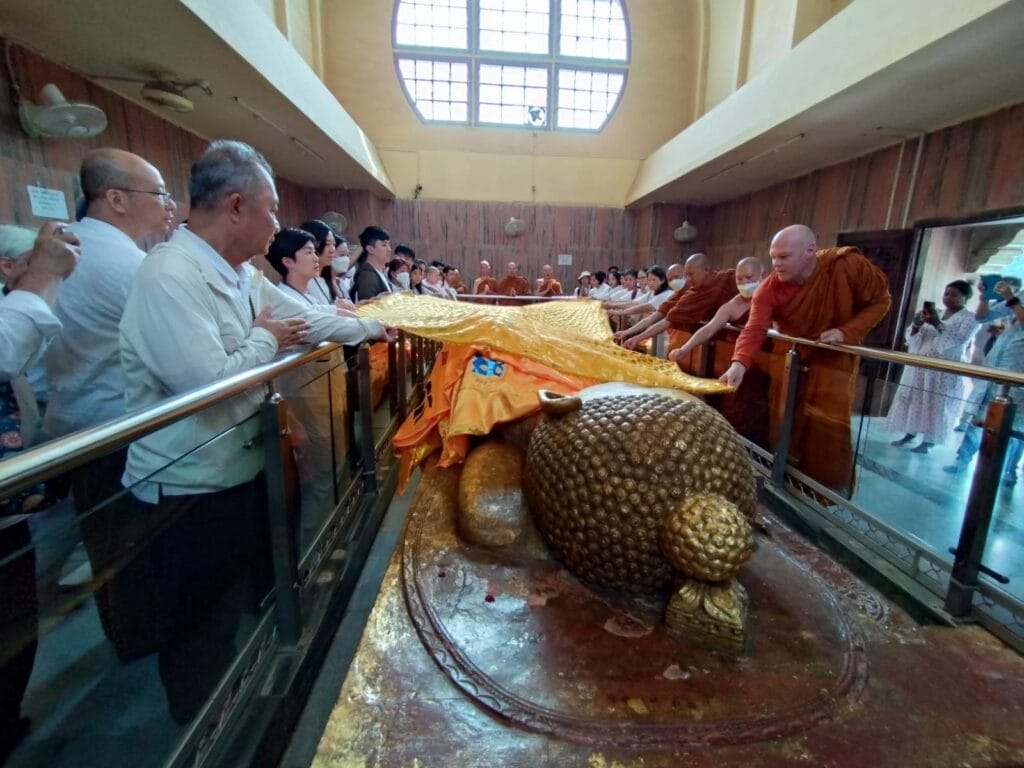
Mahaparinibanna Temple, Kushinagar

Other useful resources:

Some chanting resources

https://www.peacebeyondsuffering.org/chanting-04.html

https://www.watpahnanachat.org/chanting

Setting Rolling the Wheel of Truth (Dhamma-cakka-ppavattana-sutta) at Sarnarth

https://suttacentral.net/sn56.11/en/sujato?lang=en&layout=plain&reference=none&notes=sidenotes&highlight=true&script=latin

The Not-self Characteristic (Anatta-lakkhana-sutta)

https://suttacentral.net/sn22.59/en/sujato?lang=en&layout=plain&reference=none&notes=sidenotes&highlight=true&script=latin

The Fire Sermon (Aditta-pariyaya-sutta)

https://suttacentral.net/sn35.28/en/sujato?lang=en&layout=plain&reference=none&notes=sidenotes&highlight=true&script=latin

Buddhaโ€™s Extinguishment (Mahaparinibbana sutta) at Kushinara

https://suttacentral.net/dn16/en/sujato?lang=en&layout=plain&reference=none&notes=sidenotes&highlight=true&script=latin

The Life of Buddha (Between The Lines: An analytical appreciation of the Buddha’s Life by Sylvia Bay)

https://www.buddhistelibrary.org/en/thumbnails.php?album=149

Why Struggling With the Precepts Isnโ€™t a Failure

Why Struggling With the Precepts Isnโ€™t a Failure

TLDR:

The Five Precepts are meant to guide us toward a peaceful, guiltโ€‘free life. Some days I feel great (at the point of writing my last article), and some days I donโ€™t (some time after writing my last article). Here is my experience in navigating the occasional weight of the precepts and how I am managing it.

When the Practice Feels Heavy

After having a little taste of the joy of virtues, I locked in. I wanted more; I wanted to be better. I got frustrated and critical about everything I did โ€œwrong.โ€ I started overanalysing every flaw and pushing myself too hard to be perfect.

Before long, the joy drained away. Instead of uplifting me, my self-criticism was weighing me down. I made the common mistake of judging myself by the Five Precepts and feeling like I didnโ€™t measure up.

The Inner Critic Is Not Your Friend

One learning over the past few months is that perfectionism is a quick and dirty way to create doubt about my own goodness. The moment I slip, maybe I say something unkind, the mind quickly reacts and latches onto the mistake. It pounces: 

โ€œYou were supposed to avoid harmful speech, so why did you say that?โ€ The inner critic, under the guise of “trying to helpโ€, makes me doubt my capacity for goodness and change.

Life does not make it easier. The world moves quickly, too quickly for my mindfulness on some days. Stress piles up, one thing after another: too little sleep, work deadlines squeezed into impossible corners, customer service errors making things worse and criticism from a loved one. 

On days like that, my battery runs flat, and I notice myself reacting more sharply than I wish to. The inner critic whispers: โ€œMaybe youโ€™re not good enough for the practiceโ€ฆ You only manage it when itโ€™s convenient and life feels easy.โ€

Relooking for Joy in the Precepts

Why Struggling With the Precepts Isnโ€™t a Failure

So, when I start spiralling regarding my shortcomings and joy is scarce, patience and consistency are unlikely to follow. 

This is when practice may grind to a halt. When you find yourself not enjoying the process, itโ€™s time to step back and see what is hindering your joy. For me, taking that step back revealed certain unhelpful thought patterns and self-limiting beliefs.

One way I try to remove self-limiting beliefs is by discerning which thoughts are useful and which are not useful for progress. I do not have control over what thoughts pop into my head, but I can decide whether to give them my attention. Why believe them all, especially the unhelpful ones?

Lord Buddha, before he was enlightened, noticed the kinds of thoughts that came up in his mind. He saw that unwholesome thoughts cause harm to himself and others, while wholesome thoughts do not. 

Thus, he made a habit of letting go of unwholesome thoughts and encouraging wholesome ones. As Buddha advised in MN 19: Bhikkhus (monks), โ€œWhatever a mendicant (monk) frequently thinks about and considers becomes their heartโ€™s inclination.โ€ In the same way, I can watch my thoughts and ask whether they are helping or harming my motivation to grow in virtue. 

The more often I ask this question, the more aware I become of which thoughts deserve to be nurtured and which can be let go.

You Are Not Your Worst Moments

Why Struggling With the Precepts Isnโ€™t a Failure

Whatโ€™s also helped is changing the label. Itโ€™s hard not to feel impatient if Iโ€™m hot, sweaty, stuck in a queue, being jostled, and assaulted by an array of body odours and unpleasant sounds. Stop labelling yourself, label the thought or feeling instead. Instead of โ€œIโ€™m impatient,โ€ I say โ€œImpatience is here.โ€ Itโ€™s not who I am; itโ€™s just passing through. 

Think of it like a passing weather pattern. It isnโ€™t โ€œI am rainโ€, it is โ€œrain is hereโ€. Rain will come, stay for a while and cease. Donโ€™t personalise it. The same goes for jealousy, irritation, or whatever emotion surges through in the moment.

The feeling will come, stay for a while and cease. When you stop equating yourself with your worst moment, space for choice opens. The choice to give yourself the benefit of the doubt, and to remember that you are not your negative thoughts and feelings.

Small Wins with Big Shifts

Developing confidence comes from not discarding the 5 Precepts when I โ€˜fail.โ€™ Each time I act with integrity, however small, itโ€™s proof that I can rise above my defilements. That is what truly builds confidence. 

For instance, saying โ€œSorry Iโ€™m late, I didnโ€™t manage my time properlyโ€ instead of โ€œSorry Iโ€™m late, traffic was badโ€. Something within shifts. I realise that Iโ€™m not perfect, yet there is goodness in me that I can grow.

It reminds me that personal growth is built from countless small moments of choosing what is right, even after setbacks. If I want to be honest, I must keep speaking the truth repeatedly until it flows naturally from within. Temptation (from fear, habit, etc) will arise, but with practice, I become wiser at not falling for it.

When keeping the 5 Precepts feels like a chore, remember to recollect and celebrate your goodness. Motivation and consistency need fuel. Acknowledging even small acts of kindness or restraint helps keep the heart light. 

Most days, doing a sharing of merit chant at the end of the day helps me to bring to mind all the goodness I have done or tried to do through the day. Buddha also taught Silanussatiโ€”meditation on oneโ€™s virtuesโ€”as a way to brighten the mind. 

On โ€œbadโ€ days, I remind myself that the Buddha spent 45 years teaching the Dhamma because he saw that beings, including human beings, can overcome their defilements and awaken. If overcoming defilements were not possible for us regular folk, he would have simply โ€œawakened and chilled.โ€ You and I are good enough for the practice. 

Struggles are not Failures

Struggles in keeping the 5 Precepts arenโ€™t signs of failure. They show us where to grow. Theyโ€™re data points – what have I done well, what can I do better in the future. The task isnโ€™t to never stumble, but to get up each time with more self clarity instead of self criticism. 

And through it all, remember that joy is part of the path; without it, our efforts soon run dry. Let virtue be your motivation as much as your goal. 

Doing some chanting recently was a good reminder to myself: 

Silena Sugatim Yanti (Virtue is the source of happiness)

Silena Bhogasampada (Virtue is the source of true wealth) 

Silena Nibbutim Yanti (Virtue is the source of peacefulness)

Tasma Silam Visodhaye (Therefore let virtue be purified)


Wise steps

  1. Catch the Inner Critic Early: Notice when perfectionism turns the Precepts into self-punishment. Pause, breathe, and remember the purpose of the Precepts is to guide, not condemn.
  2. Label the Experience, Not the Self: Replace โ€œI am badโ€ with โ€œA difficult feeling is here.โ€ This creates space between who you are and what you are experiencing, allowing kinder choices.
  3. Reinforce Integrity Through Small Wins: Value even the smallest acts of honesty, kindness, and restraint. They are the building blocks of confidence and the proof of your capacity to grow in virtue.
Ep 61: How I Built a $200M Business Without Crossing These 5 Lines ft. Ying Cong

Ep 61: How I Built a $200M Business Without Crossing These 5 Lines ft. Ying Cong

https://youtu.be/-Uxw9ivl8Tw


Summary

What happens when a startup founder takes Buddhist precepts seriously โ€” not just in meditation halls, but in high-pressure boardrooms and tough layoff conversations? In this candid episode, we speak with Ying Cong, co-founder of Glints, on what it means to lead a company without losing yourself. He shares how his practice of the Dhamma has shaped everything from how he hires and manages people, to how he navigates co-founder conflict and difficult decisions โ€” all while trying to be firm in kindness.


About the Speaker

๐Ÿ‘ค Ying Cong is a long-time meditator and the co-founder of Glints, a leading career platform in Southeast Asia. Over the past decade, he helped scale the company from an idea incubated by JFDI to a regional startup featured in major publications like The Straits Times and Yahoo News. As Glintsโ€™ former CTO and current machine learning engineer, he has worked on recommender systems, fraud detection, and data infrastructureโ€”though he jokes that most of it is just โ€œglorified data cleaning.โ€

His Dhamma journey began in his teenage years and continues to deepen through regular meditation, observing the precepts, and periods of monastic training in the Thai forest tradition. He is quietly exploring how to balance the responsibilities of lay life with the path of practice.


Key Takeaways

Holding the five precepts builds deep trust

While startup life often celebrates โ€œhustle at all costs,โ€ Ying Cong stuck to his precepts โ€” even when pitching investors. Over time, however, this radical transparency became a strength. Colleagues began to trust him deeply, even sharing difficult truths others couldnโ€™t access.

Culture is shaped by how you show up, not what you say

From hiring to meetings, people look to the leader to understand whatโ€™s โ€œnormal.โ€ When Ying Cong opened up about uncertainty and shared his misgivings, others followed suit. But when leaders modelled secrecy or pure task-focus, people shut down.

Every employee is carrying something

After managing 40โ€“50 people over 11 years, Ying Cong observed something simple yet powerful: โ€œEveryone is suffering, to some extent. The only question is how much they show you.โ€ Being present and listening with care โ€” not just for whatโ€™s said, but for whatโ€™s held back โ€” often reveals whatโ€™s really going on beneath performance issues or disengagement.

Transcript

Full Transcript

[00:00:00] Cheryl: Has there ever been a moment in your career where you were not able to hold your five precepts?

[00:00:06] Ying Cong: No. No. It’s been, that was my inviolable principles, uh, ever since, uh, I was young. I have, okay, there are situations where I’ve come close.

[00:00:24] Cheryl: Welcome to the Handful of Leaves podcast, a Southeast Asian platform sharing Buddhist wisdom for happier life. My name is Cheryl, the host for today’s podcast, and my guest today is Ying Cong, who is the co-founder of Glints recruitment platform that has expanded to eight markets.

[00:00:46] Cheryl: I just wanted to catch on a word that you said, you know, treating people, uh, your team like a family.

[00:00:50] Ying Cong: Mm-hmm.

[00:00:51] Cheryl: Right. In one of your articles you wrote about how you always struggled a little bit about personal boundaries.

[00:00:59] Ying Cong: Ah, yeah.

[00:01:00] Cheryl: So, like, you know, you are friendly with everyone, but you also don’t want to be too close.

[00:01:04] Ying Cong: Yes. Yeah.

[00:01:05] Cheryl: How did that work with treating everyone as family?

[00:01:09] Ying Cong: I’ve since stopped adopting that lens, uh, when it comes to colleagues and you treat your employees as family, um, there’s a lot of unspoken assumptions around that. So one of it is that they will never, never leave you. Right? And, and in this lifetime at least they’ll stick to you through, uh, thick and thin and also vice versa.

[00:01:31] Ying Cong: You will never abandon them. Hmm. But it’s just not realistic in a company, right? People do, uh, underperform for various reasons. Sometimes they perform very well in the first few years, and then their motivation shift or the job scope change. In a startup, you’re always changing. You’re growing, right, and the roles expand very quickly.

[00:01:48] Ying Cong: And it does come to a point where even the people that you cherish the most, sometimes they can’t live up to the job scope or you can’t live up to their expectations and you have to have that conversation to leave. When I was treating my employees as family, um, those conversations were much harder.

[00:02:05] Ying Cong: I tend to avoid them, um, because who would ever fire your own brother or sister? It’s like, it’s very heartless thing to do, right?

[00:02:12] Ying Cong: Yeah. Yeah. But then when in a company setting, actually the more heartless thing to do is to let them to continue to underperform in a role where, you know, they’re no longer suited for. Because their self esteem will start taking a hit. And the company doesn’t benefit from it.

[00:02:28] Ying Cong: And you also, um, compromise on the other employees who depend on them. Yeah, so, so I started to draw that boundary, like, okay, we treat each other with respect, right? We also build that relationship at certain times where we are outside of work, but when it comes to work, there’s a clear boundary about, okay, this is what you have to perform, uh, and this is what the company can give to you, right?

[00:02:50] Ying Cong: So you have to make those boundaries, underlying boundaries very clear in your mind, and also when you talk to the employees. Um, but of course the close danger of that is it becomes too transactional.

[00:03:01] Cheryl: Mm-hmm. Yeah.

[00:03:02] Ying Cong: It becomes like, oh, you gave me this, I give you that.

[00:03:03] Cheryl: Mm-hmm.

[00:03:04] Ying Cong: Right. So it just becomes a balance. You do have to, at some certain moments, you do find that relationships, like during one-on-ones, don’t just talk about work. Mm-hmm. I know some managers do that. They just talk about what, just what you got done, how can I help you to get the next thing done?

[00:03:17] Cheryl: Yep.

[00:03:17] Ying Cong: Right. Um, but the best managers I’ve seen, they are also sensitive to the employees underlying needs.

[00:03:23] Cheryl: Mm.

[00:03:24] Ying Cong: And once you, once you do that, when I’ve been, I, I think I managed maybe close to 40, 50 people on and off across the 11 years. Right. And I, I noticed one thing is that everyone is suffering to a certain extent. Mm. Um, it is just about how much they tell you about it. Mm. Right. Even the happiest and cheeriest employees, the most upbeat ones, there’s always something that’s bothering them.

[00:03:46] Cheryl: Mm.

[00:03:46] Ying Cong: Right. And it can be very obvious things, very immediate thing like, oh, my immediate family member passed away or is having a illness. Or it can be very subtle things, sometimes they just can’t really articulate it. Mm-hmm. Like for a lot of my employees when I was running the Vietnam team, they felt that maybe the strategy wasn’t too clear.

[00:04:04] Ying Cong: Right. But it’s a very underlying feeling and they don’t know what the next direction is for their lives because of this. So there’s some uncertainty.

[00:04:11] Cheryl: Mm.

[00:04:11] Ying Cong: And when you talk to them and you really listen, uh, with your heart then these kind of things start to bubble up.

[00:04:17] Cheryl: Mm. Yeah.

[00:04:17] Ying Cong: Because they will first tell about their work. That’s a very immediate thing. And they’re tell about immediate family life. They’ll tell you about facts. Mm. But you can just see in the way they talk to you where they hesitate a little bit or, um, they have this little bit of holding back about telling you certain things, and that’s when you can sort of pick up, oh, okay, maybe certain things are not going all too well over here.

[00:04:38] Ying Cong: So then you can ask. So you ask them for permission, “I can ask you about this?”, and then they give you permission and you can talk about it.

[00:04:44] Cheryl: Wow. Yeah. Yeah. I, I think, wow, the people under you are very lucky to have you. Someone like you as a manager who really listens and want to understand them in a holistic way. Yes. Yet being firm in being kind. Yeah. Not just nice by showing respect to them.

[00:05:02] Ying Cong: Imagine right when you’re under a lot of pressure from your board or your leaders above you to achieve a certain target. Then if you are not very mindful about it and in what conditions, sometimes you’re not mindful, especially about relation, the softer stuff like, uh, you, you are maybe seen as too soft, if you are too soft to your employees too, and then you are trying to just push that down to the next level, right?

[00:05:24] Ying Cong: But then for me, as part of that whole, you know, journey of transformation, like what the startup journey meant to me, one of the things I also realized is that, you know, that connection that you have people.

[00:05:35] Cheryl: Mm.

[00:05:36] Ying Cong: That is actually what makes me come alive. Mm. No matter how momentary it is, how fleeting it is. Mm. As long as I come in the contact you and there’s a, there’s a personal connection. Mm. Right. That actually makes the day very meaningful to me. Yeah. Yeah. So little things. These are little things. These are little things.

[00:05:51] Cheryl: Yeah. Nice. And how do you translate individual meaning, individual significance to a team or even a regional team?

[00:05:59] Ying Cong: Yeah, that is the difficult part. Um, because you realize things are very difficult to change and the hardest thing to change of all is other people. Even, even though they are working in a hierarchy under you, right? You were hired, uh, they were hired by you. Uh, it is very hard to change people.

[00:06:18] Ying Cong: Right, though, uh, you can influence a certain culture. So the way I look at it is: culture — when you hire people, they usually fall within a certain range. So let’s say, let’s say for me, I do value people who are very open and transparent, who value connection, uh, who are also quite, uh, on the ball about their task, right?

[00:06:40] Ying Cong: So you can break it down into certain sort of knobs that you see, like in a culture. So like transparency, there are cultures that are very transparent and cultures that are very opaque, right. Then being on the ball: there are cultures that are more task-oriented and more relationship-oriented. Mm-hmm.

[00:06:53] Ying Cong: So each of these things that when you hire people, they fall within a certain range. Mm. And then how you act as a leader day to day influences how, where they fall within that range. Mm. Yeah. Because when people come into any certain setting, um, any certain social setting and company is one of them, they tend to look up to the leader to set the tone.

[00:07:13] Cheryl: Yeah.

[00:07:13] Ying Cong: Because they’re not, they, they’re not the ones who founded this company. They don’t know what to, to, to think or to feel yet,

[00:07:19] Cheryl: or what’s acceptable.

[00:07:20] Ying Cong: Or what’s acceptable. Yeah. What’s, what’s the norm. So they look up to the leader for a range of what the norm is as well as their peers. Yeah. So I find that if I model the behavior that I want to see in my employees, where I’m very open about sharing about my misgivings or my feelings or things that I thought about the strategy that I’m not so sure about, then it really opens them up to share also their misgivings.

[00:07:44] Ying Cong: Right. And they become more vulnerable at the same time. I also seen it the other way around when we hire new leaders and these leaders have a very different setting from me. Right. More task-oriented, a little bit more opaque. Right. And then people start to clam up.

[00:07:57] Cheryl: Right.

[00:07:58] Ying Cong: They’ll be more efficient in the short term, but they’ll clam up in the long run. And, and so it is really, it does come down from the leader. The leader, how you model your behavior in meetings, in all your interactions. It will trickle down, uh, to the, to the whole employee base after, after a certain time.

[00:08:13] Cheryl: But do you ever run into the, I guess, hiring fallacy of hiring people that are more like you? Mm, yeah. Yes. And yeah. Then how do you counter that? For example, you know, you are giving the example of the leader who was very different.

[00:08:26] Ying Cong: Yes, yes.

[00:08:27] Cheryl: But I’m sure he also brings with him a lot of benefit.

[00:08:30] Ying Cong: That’s right. That’s right. That’s right.

[00:08:31] Cheryl: How you maintain that, right?

[00:08:32] Ying Cong: That is, that is one of the difficult part about… like you can never be perfect. So there’s a reason why we hired that leader and he’s still with us, and because he’s making impact in a certain way. The problem… yeah, we made the problem in the beginning.

[00:08:46] Ying Cong: We hire a lot of people who are very, uh, friendly, very warm. And, uh, a a flip side of that is that you tend to not address fundamental problems in the company so head-on.

[00:09:00] Cheryl: Mm.

[00:09:00] Ying Cong: Yeah. So, yeah. So we brought on this leader because, uh, he was a good contrast to us. Mm-hmm. Yeah. He could, right in the first interview and the first meeting, he really made it very clear to employee base, okay, these are the problems that I see in the company that I feel we have to address.

[00:09:14] Cheryl: Mm-hmm.

[00:09:15] Ying Cong: Right? But then the balance that he need to strike is that he has to abide by certain inviolable principles that you want to have as a company. So one of the inviolable principles that we realize that we want to have, because there are people who violated them, is that you want to do this in a constructive spirit. Do it in the spirit of “let’s build this back together”.

[00:09:35] Cheryl: Mm.

[00:09:35] Ying Cong: Because we have hired leaders who also have that critical mindset, very objective, but they have the mindset of, oh, “everyone in the past they did a bad job.” Mm-hmm. Right? “Let me take this all down. And I do it my own way.” Right. It is not a collaborative, constructive, “build this together” kind of mindset.

[00:09:52] Ying Cong: And that’s caused a tremendous amount of damage in the culture, in the business. Yeah. So to answer your question, to summarize it very succinctly, right, is you want to have a base of inviolable principles, sort of like a, in Buddhism we have the five precepts that are inviolable. Yeah. Right. The foundation.

[00:10:10] Ying Cong: But then above that base you can have very different configurations and that gives you contrast and that gives you diversity as a leadership team. Yeah.

[00:10:19] Cheryl: Beautiful. One very interesting thing that I want to ask you: has there ever been a moment in your career where you were not able to hold your five precepts?

[00:10:29] Ying Cong: No. No. It’s been, that was my inviolable principles, uh, ever since, uh, I, I was young. I have… okay, there are situations where I’ve come close.

[00:10:42] Cheryl: Mm-hmm.

[00:10:42] Ying Cong: And usually the principle about not lying.

[00:10:45] Cheryl: Mm.

[00:10:46] Ying Cong: There’s the principle that we are taught not to lie, but actually if you read the sutta more closely, actually there’s some variations of it where there’s stronger forms of it, where you don’t even tell white lies or you don’t embellish the truth and you try not to, you don’t gossip also.

[00:11:02] Ying Cong: Right. Nothing that’s divisive. So I come close to that when you have to pitch to investors and, and I, I made a mistake where I was sharing too openly about all the problems in the company. I remember there was this one investor meeting where my co-founder brought me and they were pitching AI, yeah, as one of the, uh, one of the value propositions or the competitive advantages of Glints, and then I just came into the meeting and this investor asked me, “Hey, so how’s the AI?” Then I say, “Oh, not very good yet. Still a lot of things to work on. Very basic at the moment.”

[00:11:36] Cheryl: Oh no.

[00:11:38] Ying Cong: Then my co-founder like, just face palm silently in the back and after the meeting he told me, “Hey, can you don’t do that or not? Doesn’t help my case at all.” The investors did join, uh, still invested eventually because of other reasons. Yeah. So I had to learn to manage that.

[00:11:56] Ying Cong: Right. So I still… but I still hold my line. I wouldn’t tell a, an explicit lie. Mm. But I would see the situation and actually the Buddha did talk about this, like, what’s the right thing to say at the right time?

[00:12:07] Cheryl: Mm.

[00:12:07] Ying Cong: Right. So I, I know that wasn’t very helpful to my co-founder at, at the very least. Right. So I, I learned that there are many ways you can present the facts that’s still being truthful.

[00:12:18] Ying Cong: Right. But it’s more aligned to what this, what the situation cause for. Mm-hmm. Right. Yeah. So, so I learned in, in certain meetings I would say, uh, when you ask about the situation of the AI, I tell them, “okay, this is the current foundation that we are building and this is where we, we feel like we can get to. And this, uh, this is a roadmap to getting there.”

[00:12:36] Cheryl: Mm.

[00:12:36] Ying Cong: Instead of just being saying, “oh, we’re not there. It’s very basic.”

[00:12:39] Cheryl: Yeah. It is about packaging the truth in a way that’s beneficial for yourself and others. Yes. It’s a very difficult, um, thing to balance, especially when there’s so much pressure to, to get some investors money and, and all that.

[00:12:55] Ying Cong: Correct. Correct. Correct, correct, correct.

[00:12:56] Cheryl: But have you seen how the five precepts protected you in the workplace?

[00:13:02] Ying Cong: Yeah, it’s protected me in other ways. I think the biggest one is when you are consistently truthful, and when sometimes to your own detriment, then people will trust you actually.

[00:13:14] Ying Cong: Mm, yeah. People will trust you. So the people in my company know me as like the principal who, who was a monk before. And, and they do trust me with very, uh, some very personal sharings.

[00:13:27] Cheryl: Mm.

[00:13:27] Ying Cong: Because they know that I always tell them, I always share the truth, even when it’s ugly from the management team or the leadership team, from a strategy perspective.

[00:13:37] Ying Cong: I tell them, okay, this is what exactly is difficult for the next phase that we are going into. I still remember, um, this, this also during the COVID period, uh, where we have eventually to, to lay off, uh, a portion of employee base in order to save the company. PR/ marketing team person, she wanted me to lead that message first, right?

[00:14:00] Ying Cong: Because in the past, uh, we, we had slightly different, slightly different approaches like with me and my co-founder, my CEO. So he’s more polished, right? Mm-hmm. You try to frame the message in a way that’s palatable, um, easy to digest for the employee base. So in the past, for example, the PR crisis, you try to frame it in a way that saying that, okay, yeah, we stand strong.

[00:14:21] Ying Cong: It wouldn’t affect us so much. But then my approach was slightly different and I was like, okay, this is exactly what happened. This is exactly what we screwed up and this is what we can do better. Mm-hmm. Right? And I find employees over time, they, they respond to the second way better. Mm-hmm.

[00:14:37] Ying Cong: Right? Um, when you, when you treat them as intelligent human beings, they also respond in kind. They’ll see you as someone trustworthy. Right. So, so yes, it is helped me in that way. So we find that many times right when employees leave us, it is not because, the company was going through difficult times.

[00:14:54] Ying Cong: Mm. It’s because when we go through difficult times and we didn’t tell them the whole truth. Mm. Then that’s when they felt like the trust has been broken. Yeah. There was a period in time when our, after our Series A, uh, before our Series A, we were running out of cash. We were actually down to two months of payroll and it was a team of 15 people.

[00:15:10] Ying Cong: And we sat him around the table and we, I, I… and we told them very, very honestly. We only have two months of payroll left. We’re not sure whether we can close this next round.

[00:15:20] Cheryl: Mm-hmm.

[00:15:21] Ying Cong: But if you want to leave, you can. We are, we can leave on good terms. We can pay you the last two months of pay.

[00:15:27] Cheryl: Mm-hmm.

[00:15:28] Ying Cong: And then everyone stayed. Mm-hmm. Everyone stayed for that. The reason because we were honest and, and they wanted, they wanted to stick through to see what happened next. Mm-hmm. But then there were periods where we were less than honest, less than open about what’s going on in the company.

[00:15:41] Ying Cong: Like a leader left, right, because of some mismanagement on our part. And we didn’t tell them the full truth. We told them, oh, this person left because of their personal reasons. Mm. And people just immediately after the announcement come ask me, “Hey, is that true or not?”

[00:15:56] Cheryl: They know you will tell the truth.

[00:15:57] Ying Cong: “Tell me the real truth.” So I tell them.

[00:16:03] Cheryl: But can you also tell me about the biggest disagreement that you’ve had with your co-founders and how did you use Buddhist principles to overcome that?

[00:16:12] Ying Cong: The biggest one, the hardest one was when our third co-founder, uh, left us, we split. So we started off with three co-founders and we ran it for five years, and then we, around the fourth to fifth year, my current CEO, Oswald, and this co-founder who left, they started having major disagreements around vision, right? Where the company should go. That’s the biggest one, but also the underlying one that has been pegging them is difference in philosophy.

[00:16:44] Cheryl: Mm-hmm.

[00:16:45] Ying Cong: Um, this other co-founder who left, he was more process-driven. He’s much more about being very scrappy and going for quick wins. Right. Whereas Oswald, he’s about the bigger vision, where we can go in the long run and let’s not do things just for this small quick win in the short run. Yeah. And it is both perfectly valid, right. Um, both have very valid approaches.

[00:17:06] Cheryl: And what was your philosophy?

[00:17:08] Ying Cong: Me. Back then I was just interested in building the tech. Mm. Right. So I was like the neutral third party. Sometimes I come in to try to manage it, but unwillingly, begrudgingly. Uh, so I was also caught in between both of them.

[00:17:19] Cheryl: Mm.

[00:17:19] Ying Cong: Right. Uh, but this was building up for quite some time already. Even when we first —

[00:17:23] Cheryl: simmering.

[00:17:23] Ying Cong: Yeah. Just simmering in background, you know. When we first started the company, we already knew there were some differences, but we didn’t, we thought, okay, you can, people are really like, you can, you know, just be resolved over time.

[00:17:32] Ying Cong: So we just started building and building and building until eventually there was this, uh, internship business where we are helping polytechnics do internship trips to Jakarta, to different Southeast Asian markets. And we were charging for that. It was doing a good, a good amount of, uh, cash flow but that was it. They can’t, the business, you know, is not scalable. It cannot grow.

[00:17:54] Cheryl: Mm.

[00:17:54] Ying Cong: So this co-founder, like who eventually left right, he wanted to keep growing, growing that, trying to keep pushing and putting more resources in it. Um, but Oswald and I saw that, okay, maybe it, it’s quite clear this can’t scale, um, but we avoided a conversation for a while. Um, we just skirted around it and say, Hey, can you, yeah, this, there’s this problem, but you just keep running and see where you can go.

[00:18:16] Ying Cong: And then eventually the, the truth was very obvious. It can’t, it can’t grow anymore and we have to, uh, shut it down in order to grow this other part of business, which is more promising.

[00:18:25] Ying Cong: And it became very personal because this was his idea, this was his baby, and it was like him versus us, kind of a dynamic, uh, at the very end. So there, there came a point where we felt like, eventually Oswald and him couldn’t work together anymore. And now I was caught in between and they asked me to decide, oh, what should next step be?

[00:18:46] Cheryl: Oh no they (push the responsibility) taichi it to you to make the tough decision.

[00:18:48] Ying Cong: Yeah, because I was a neutral third party right. So I was caught in between and I really didn’t know what to do. It was, it was so, such a difficult, I was close friends with, uh, both of them. And then I thought, okay, in such situations, what would the Buddha do?

[00:19:05] Ying Cong: Like what, what would I be taught when I was learning from my teachers in the past? How would they approach this kind of situation? And first of all, what I did was, um, I, I first took away the emotions. Just from a very detached point of view, look at, from the business fundamentals, what’s the path that we will approach.

[00:19:21] Ying Cong: Mm-hmm. Right? And that, that came much more naturally to me because of the meditation practice. You’re always taught to, at a certain point, look at your emotions. Look at feelings from a third person’s point of view. Mm. Okay. Yeah. How much suffering is it causing you? And I was doing that for the business.

[00:19:37] Ying Cong: Mm. Then after I made the business decision, it is around how do you then execute that business decision in a way that’s the most compassionate, uh, to both parties, to everyone involved. And, and, and, and that was the approach I took. So you, you first approach it with wisdom, a little bit more calculated, but with wisdom then you then apply it with, uh, compassion after the decision has been made.

[00:20:01] Ying Cong: Yeah. So that’s the approach I took, I first told everyone, this is the, the cold hard facts, right? We can’t avoid this. This business cannot grow. This is where it’s more promising. Uh, this is where we need to go. Right. And then it was about, uh, approaching with them in the, in the most compassionate way.

[00:20:18] Ying Cong: So it’s like telling the co-founder, “I know that you have built this for this, this amount of time. I know it’s your baby and we acknowledge all the efforts that you put in. Um, but this is why I think we cannot go on any further.” Mm.

[00:20:29] Cheryl: Right.

[00:20:29] Ying Cong: So, and then

[00:20:30] Cheryl: so compassion seems to me, um, is by acknowledging the effort that a person put in. Yeah. Um, and showing a lot of gratitude to the, to what they’ve done and contributed.

[00:20:39] Ying Cong: Correct.

[00:20:39] Cheryl: Anything else?

[00:20:40] Ying Cong: Correct. Correct. I think those two actually go very far already.

[00:20:44] Cheryl: Yeah.

[00:20:44] Ying Cong: Because, I’m not sure, if you have been in the business world for 10 years, you realize that sometimes it is in quite short supply just acknowledging a person’s efforts, being grateful for what they’ve done. Right. Um, and also it’s, and also acknowledging that the friendship between both of you isn’t affected by this decision. Right.

[00:21:03] Cheryl: Is it really though?

[00:21:07] Ying Cong: For me, it was true, like I kept it because a big part of why sometimes people don’t dare to make these kind of decisions about letting people go or shutting down a business is because they are affected. They’re afraid that this person might feel, uh, excluded, right, or left out. And I’ve been on the other, I’ve been on the receiving end too, when I have to, I’ve been informed that my business unit has been shut down.

[00:21:27] Ying Cong: Mm. Right. And the biggest fear that I have is, well, I lose my, uh, my identity in this group where they start to reject me. Will I be, will I be ostracized? Yeah. So that is something that you have to assure, uh, right up front also. Yeah. So this is a part of that connection. You, you start to see these fears when you are open to that person’s, uh, inner, inner thoughts and inner feelings.

[00:21:50] Cheryl: Yeah. Wow. And that really reminds me about a sutta about metta, which is, I think it’s in the Dhammapada. Mm-hmm. Where, you know, all beings just like us, fear death, fear pain. Yes. And only want to be happy. Yeah. Um, I think we will find a quote later and insert it somewhere here. Yeah. Um, but yeah, really being able to see the same fears that you have, um, exist in other people, even in difficult situations.

[00:22:19] Ying Cong: Exactly.

[00:22:19] Cheryl: And speak to that.

[00:22:20] Ying Cong: Exactly. Exactly, exactly. Yeah. For me, one of the biggest change that helped with that empathy right, was when I stood down as a CTO. Uh, and then, uh, I was leading a small team, and then there were, then, now I stood down, stood out that position again from complete management perspective, and I played a individual contributor role. Mm. And from a very conventional perspective, that seems like a demotion.

[00:22:44] Cheryl: Mm. Right.

[00:22:44] Ying Cong: But for me, it would just open up so many perspectives. Now I see things from also an individual contributor’s point of view. Mm. And I can empathize a lot of what the leaders say, how, how it actually affects the employees.

[00:22:55] Ying Cong: Mm. Right. There are a lot of fears that I have as leaders, uh, actually the employees have it by a slightly different form. Right. So, so to me that was very eye-opening, being able to play different roles and then you can see, oh, this is what they, how they felt when I say that, okay, now I’ll approach it differently the next time. Yeah, yeah.

[00:23:12] Cheryl: There’s a massive learning ground when you take on all the different hats without the ego of like, oh, this is demoting me. Correct, correct, correct. I’m co-founder.

[00:23:20] Ying Cong: Can always lean on the co-founder title.

[00:23:25] Cheryl: I’m very inspired by Ying Cong’s sharing and how he applies various aspects of his business from growing a, a team, leading a team and even to navigating disagreements between his co-founders and what I’ll be taking away is to have a giving competition with my friends and my colleagues. So thank you very much Ying Cong for coming on today’s episode. I hope you join us again. So, so to all our listeners, see you in the next episode. Stay happy and wise.


Resources:

Ying Cong’s article on giving: https://handfulofleaves.life/how-seeking-to-balance-everything-nearly-cost-me-my-relationship/


Special thanks to our sponsors:

Buddhist Youth Network, Lim Soon Kiat, Alvin Chan, Tan Key Seng, Soh Hwee Hoon, Geraldine Tay, Venerable You Guang, Wilson Ng, Diga, Joyce, Tan Jia Yee, Joanne, Suรฑรฑa, Shuo Mei, Arif, Bernice, Wee Teck, Andrew Yam, Kan Rong Hui, Wei Li Quek, Shirley Shen, Ezra, Joanne Chan, Hsien Li Siaw, Gillian Ang, Wang Shiow Mei, Ong Chye Chye, Melvin, Yoke Kuen, Nai Kai Lee, Amelia Toh, Hannah Law, Shin Hui Chong, Dennis Lee



Editor of this episode:

Aparajita Ghose

Website: aparajitayoga.com


Transcriber of this episode:

Tan Si Jing, Cheryl Cheah, Bernice Bay


Visual and Sound Effects

Anton Thorne, Tan Pei Shan, Ang You Shan


Get connected here:

Telegram Instagram YouTube Facebook

Good Friday Reminds Us Virtues are Heroic Acts

Good Friday Reminds Us Virtues are Heroic Acts

TLDR: Good Friday is a time to contemplate more deeply the teachings left to us by Jesus Christ. We look at the parallels between Christianity and Buddhism in the practice of virtues. 

The author is a practising Buddhist who also finds many aspects of the teachings of Jesus Christ inspiring. She writes this article based on her understanding of the parallels between Buddhism and Christianity that does not necessarily reflect the teachings of Jesus or the Buddha. She hopes readers can read with wise discernment.

Good Friday is a time where all Christians observe fasting, penance and contemplate the crucifixion of Jesus. To me (as a Buddhist), Jesus showed us how to carry our crosses (suffering). 

Remembering the iconic image of Christ carrying his cross during difficult times can help soothe oneโ€™s heart. Unlike the majority of us, he did not get rid of suffering through impatience or aversion. With great faith, he showed us it is possible to face suffering with forgiveness, patience and love. To me, this is one of the reasons he is so deeply revered. 

Similarly, the Buddha taught us about suffering. He taught us what suffering is, the cause of suffering and how to cease suffering. Patience is a virtue to be cultivated in Buddhism so that we may endure suffering and let it go every time it comes up.

In this post, I would like to celebrate the spirit of Good Friday with the teachings of Christ that have inspired many people in the world. 

Perhaps one of Jesusโ€™ most famous teachings on virtue is that of giving and loving our neighbours as we would love ourselves. The Buddha too taught this in the practice of loving-kindness meditation, where we cultivate a love for ourselves and share it with all beings

The teaching of virtues

Another parallel between Christianity and Buddhism is that Jesus too, taught morality as the Buddha did. Morality helps us cultivate virtues (such as patience, joy, forgiveness and love) in our hearts. 

In one episode of his life, Christ was criticised by the Pharisees for breaking the ancient fathersโ€™ ceremonial tradition of washing hands before eating. 

Jesus replied that whatever enters into a man from the outside (food) cannot defile him because they do not enter the heart but into his stomach and out into the sewer. 

But what comes out of a manโ€™s heart defiles a man. From the hearts of men come evil thoughts, fornications, thefts, murders, adulteries, covetousness, envy, pride and foolishness. 

Jesus was pointing to us that the crucial thing is to cultivate goodness in our hearts instead of placing our attention on rites and rituals only.

Due to the evil that can emerge from the hearts of men, Jesus taught those who listened not to commit murder, steal, adultery, lie or swear. He encouraged us to love, instead of hate our enemies. 

Similarly, the Buddha taught lay Buddhists not to kill, steal, lie, commit adultery, and not to dull our faculties with intoxicants. It seems to me (personal opinion) that these two great teachers are teaching the laws of nature that apply to everyone, regardless of religion.

Although these moral precepts seem easy on the surface to follow, they are not. We often see the faults in others instead of our faults. One of the famous quotes from Christ, โ€œWhy do you look at the speck in your brotherโ€™s eye but fail to notice the beam in your own eye?โ€ 

Easier to see othersโ€™ faults than our own

Jesus was right to say we are eager to see the trivial faults in others while ignoring our massive shortcomings. We often jump to hasty judgments based on our projections. 

Recently, my sister told me that she is cutting down to two meals a day to lose weight. But she still drank protein to stave off hunger. I asked her why she was consuming protein shakes as I thought it is for vegans and those who are weightlifting. She said protein shakes contain 200 calories as opposed to 500 calories from a meal.

I told her thatโ€™s still three meals a day and commented that I too took two meals a day but without any meal replacement. She quickly jumped to a conclusion and said, โ€œThis is not a competition.โ€ I was surprised as I did not make the comment to compete but rather to clarify that two meals a day meant no meal replacements (if she wanted to lose weight). 

I cannot say that I have not projected my habitual thoughts onto others.

I often make baseless assumptions and have annoyed many people. One of the many assumptions I make is that no one ever listens to what I say and I also assume I know what others are thinking. 

The list of prideful assumptions I make about others is too long to mention here.

Often, we enjoy judging whether others are keeping their morality well instead of perfecting our virtues. Doing this grows our pride instead of virtue.

Human laws do not necessarily follow nature

We look for ways to benefit ourselves in this world and are often encouraged by others. In a recent conversation, a friend said that it is not wrong if she were to take money from the ATM if the person before her forgets to take the money. 

In her view, she is not stealing but merely taking. I would have agreed with her in the past. As a practising Buddhist today, I told her that is stealing because she is aware of taking another’s possession.

I have understood adhering to the precepts as laid out by the Buddha and Christ is for our well-being. It is because natural laws exist and we are not doing it to please the founders of religions. 

Ayya Khema, a late prominent German Buddhist nun asked her students, โ€œWhat is natural?โ€ She said we often look for natural and organic food. But arenโ€™t we a part of nature as well? We cannot escape the natural laws of birth, decay and death. 

Emotionally, we are also constrained by natureโ€™s laws because when we become extreme in either sadness or happiness, misery follows. We understand that sadness can become depression. Extreme happiness can also bring on a heart attack.

We often praise the intelligence of someone who can lie to get what s/he wants. We are also in awe when someone can cheat the system as featured in movies like Ocean Eleven to self-righteous murders in numerous superhero films. 

Virtues are heroic acts

We admire heroes who save the world. But if we were to closely examine popular violent/action films, to the number of wars fought in our history, the heroes are as responsible as the villains for causing calamities. 

Growing virtues in our hearts is an act of self-denial as opposed to self-aggrandisation. We are always looking for opportunities to grow our pride by increasing our education, wealth, network and possessions.

I am not saying it is wrong to educate or upgrade ourselves in our lives, but rather, we look outwards to grow our pride more than looking inwards to examine our hearts.

Virtues are heroic acts because we need to have the courage to deny the unskillful qualities in our hearts. 

For example, someone who is impatient seldom thinks s/he is wrong and wants to get things done quickly their way. This can cause anger in himself/herself and in those around them.

Being impatient and self-righteous can make it hard to listen to differing opinions and not argue with another. By being patient, we can avoid arguments with another, and reduce the chances of getting angry. By taming our unvirtuous heart, we can become happier and as a result, reduce suffering for ourselves and others.

Conquering our bad habits and cultivating virtue is a heroic act because it is so hard to recognise and admit to our faults as opposed to blaming others for not accepting our views. Virtues are for our well-being and also do not cause harm to others. This is how we can love our neighbours as we love ourselves.

The purpose of developing virtues

The Buddha said that it is not necessary to believe in heaven or hell to practice virtues.1 While alive, virtues can bring joy and make life easier for us. As we do not create suffering for others, they do not cause us much trouble. 

If upon death, we discover heaven and hell do exist, we are safe because having virtues in our hearts is the way to heaven. Cultivating virtues is like buying insurance for the present life and also the afterlife if we are unsure of the existence of heaven and hell.

In Christianity, the existence of heaven and hell is highly emphasised. Jesus taught, โ€œDo not lay up for yourselves treasures on earth, where moth and rust destroy, where thieves break in and steal; lay up for yourselves treasures in heaven, where neither moth nor rust destroys, and where thieves do not break in and steal. For where your treasure is, your heart will also be.โ€

Jesus clearly tells us virtues in the heart is a timeless treasure compared to our temporary material possessions. 

Holidays like Christmas, Good Friday and Vesak Day are not just holidays to take a break and be with loved ones but for us to remember the teachings of these two great teachers, the Buddha and Jesus Christ.

Note:

1. Sutta MN 60: โ€œEven if we didn’t speak of the next world, and there weren’t the true statement of those venerable contemplatives & brahmans, this venerable person is still praised in the here-&-now by the observant as a person of good habits & right viewโ€


Wise Steps :

  • We can remember the virtues of patience, forgiveness and love by recollecting Jesus carrying the cross when carrying our own crosses (suffering)
  • Before you criticise another, whether commenting on a politician, celebrity or friend, look at the speck in your eyes.
  • Spend time recollecting your heart every day. Is there anything you have said or done that has made your heart uneasy such as criticising a friend? If you can do something to unburden your heart, do it the next day. If the deed cannot be undone, forgive yourself and those around you to lighten your heart.
Ep 4: Seeing the world in shades of grey

Ep 4: Seeing the world in shades of grey

Cheryl  00:07

Hello, my name is Cheryl, and I am your co host for the Handful Of Leaves podcast. If you’ve been tuning into our past episodes, welcome back. And if you’re new thanks for joining my co-host, Kai Xin and myself, and welcome to the Handful Of Leaves community. It amazes me everyday how the podcast has been growing organically, super cool!

Cheryl  00:30

In today’s episode, Kai Xin and I discuss the notion of being a good and bad person in both the secular and Buddhist context. As a self rated 5 out of 10 decent human being, this episode was super fun to record as we challenged each other’s perception of what’s good, what’s bad, discuss whether keeping precepts actually make you a good person. Stay tuned to the end, where I talk about the crazy experience that made me wish I was an angry person.

And as always enjoyed the episode and I hope you take away some practical wisdom for happier life.

Let’s start off today’s episode with some crazy situations.

Would you rather kill one man with your own hands or kill one thousand Innocent people with a button?

Next question, squeak game friends, this is for you. Would you rather play a game honestly with a 50% chance of death, or lie and manipulate so that you win and walk out alive?

All these options aren’t great. And whichever you choose, there is no absolute right or wrong. And you can definitely justify your answer as the better option given the dire circumstances.

In the same line of thought, good and bad, isn’t exactly black and white. We often identify a good person based on the actions and condemn people who do evil deeds. But does doing a bad deed, make one bad person? Join me as my co-host Kai Xin and I start this episode by reevaluating our perspectives of what society deems as a bad person. Let’s begin.

Kai Xin  02:19

I observed that generally society can be quite harsh on those who have caused harm to others or assaulted others to say that you’re such a bad person, how could you do this? You deserve retribution. You deserve punishment, sometimes to the most extreme extent. And I’m wondering whether that’s right, or can we look at the circumstances that caused them to do nasty things.

For instance, some people might commit crime because of a very poor upbringing, or perhaps they have suffered a really traumatic childhood, and they’re acting a certain way as part of a coping mechanism. And it’s not all the time that they would be able to keep their defilements at bay, or to control their emotions or certain harmful thoughts, so they don’t act on them. So I’m just wondering whether we can see that side of them, rather than painting them to be 100% bad person, we also recognise that they are people who also need help.

Cheryl  03:16

But I think there needs to be a line that is drawn to say that there are certain things that are just bad, you cannot justify it as ‘no, it’s not the person’s fault. Maybe the person’s upbringing’. Because there are so many people who have bad childhoods. Not all of them turn into murderers, some of them turn into really inspiring people.

So, I think the moment you allow, like the person’s conditions to justify the behaviour that is not that good. Because it takes the responsibility away from the person and the fact that their actions have caused very traumatic and scarring consequences to the victims that they have preyed on. And it’s not that it’s unintentional, perhaps sometimes, you know, for example, in you know, the peeping tom, the person was seen in the CCTV, going around trying to find a victim. So it’s very intentional. It’s well thought out and well planned. So you can’t say that the person, you know, had the freewill to not do it, but, but the person eventually did it and knowing that it could cause harm, they still went with it. So, I think that is when we see something as bad and it shouldn’t be even given a chance to say that ‘nah, it could be okay’.

Kai Xin  04:29

I think the difference is, whether we see what is good and what is bad based on the behaviour or based on the person. Let me rephrase it.

Cheryl  04:42

I think I know what you mean. You’re trying to like, de personalise the action from the person. Is that correct?

Kai Xin  04:49

Yeah. So it’s not to say that a person who murders is a murderer for life, because that’s just one part of his or her life. And, of course, I understand what you mean by, we shouldn’t kind of take the responsibility away from them or use it as like an excuse to say that, ‘okay, that that’s fine. Everything can be like, you know, a passing.’

We can still take corrective action to say your actions are not wise, and it’s not moral. But it doesn’t make you a bad person. What is bad was your action and how you executed it. The moment when we say that, because you did a bad thing, hence you’re a bad person, I think it becomes very dangerous. There is no room for rehabilitation.  And people kind of just go into the vicious cycle. And we’re not addressing the root cause of why the person even did the bad thing in the first place.

Cheryl  05:42

I guess. My question is, why would the person deserve kindness?

Kai Xin  05:48

Why not?

Cheryl  05:49

Let’s say a serial murderer, who kills like 16 people with all the women and I don’t know, brutal, brutally cut people up all that they have done in their life, like the sum of their experiences, of course, they’re more more than that, but generally the theme of their life and sum of the experiences is just causing terror and pain to others and all the victims and their families and generations to come.

Cheryl  06:14

So, why would they deserve forgiveness when their victims didn’t deserve to get a chance at life?

Kai Xin  06:22

I feel like it’s two separate thing. We can look at the famous example of Angulimala before he became a monk, he was a serial murderer. But it was also because of conditions.

Okay, he had the intention to harm other people. So, he was taught by his teacher in order to show dedication and faith, he has to collect one finger from every person, and then he went on a killing spree such that people felt so terrorised. But when he met the Buddha, the Buddha felt that yeah, this person deserved equal amount of kindness, it’s just deluded.

And I think the thing about the Buddhist practice is to see that at the core of everything, every one just wants some form of happiness. Some people are able to find a skillful way around it, some people got distracted by unskillful means, but what we want is all the same. And if we know that actually deep down, we’re all suffering, then why can this person deserve the same amount of care, kindness and love than us?

And it would become very hypocritical of us to say that this person is going around to harm, to terrorise, but when it comes to, how should we then treat this person, we punish. Then, we justify our acts, because of the bad acts they do. But what does that make of us? Then it becomes a vicious cycle, right? Because the reason why they did bad, let’s say they go on a killing spree and they justify it with ‘Oh, somebody harmed me before’. It’s like the Joker movie. Like the Joker is really, really sad and a really depressed person. And he went on a killing spree because nobody cares about him. And when he goes on a killing spree, that’s where he got the care and attention. I mean, was he happy? He wasn’t? Does it justify his act? It doesn’t. But to harm him, then, wouldn’t that be the same? Because it’s like, oh, yeah, this circumstance then justifies us doing harm, we should kill this particular person. Then, to what end do we cause harm?

Cheryl  08:23

Okay, I understand the aspect of extending compassion, because you do see that there is still a person who is hurting behind all the vicious acts that are committed and trying to address that person through healing and through compassion. But in a very realistic world, resources or compassion is very limited. Very few people have unconditional compassion, right? Unless you’re very, very well practised and things like that.

So in that case, with limited amount of resources, why wouldn’t you then concentrate the helping to those who have been hurt such as the victims and their families? Wouldn’t it be more helpful to help the victims heal and show up as better people than to spend our resources and limited amount of compassion on the evil people who might not even turn good. Because, you know, there are so many cases of people going to jail, and they come out and commit the same crime again. Of course, there are a lot of factors, right. Like they just do not know how to go into the society again but at the essence of it, they still continue to hurt people.

Kai Xin  09:35

Yes, it’s wise to use our limited amount of compassion and shower it on the right people. Then, it comes to the definition of who should we prioritise.

It doesn’t mean that if a person has done an evil deed, they are not ready to change. If one is ready to listen to the teachings to practice the teachings, then this person is ready to be trained. I think in the in the chantt, we also talk about the Buddha trains those who wish to be trained. Who wishes to be trained, it’s not determined by whether he or she is a victim or a culprit.

Again, back to the Angulimala example, he was ready to be trained. And the Buddha managed to touch his pain deeply. And he actually became enlightened afterwards, he still had to serve his kammic retribution, which some people call it.  He was stoned to death while going on alms round, because people like was just so hateful, but he accepted it.

But for us to say that the victim because they are the ones that are hurting, hence, we should prioritise them, I’m not so sure whether there is a right way to define it. Of course, I think it’s up to individual to see who to care for and how to care. But I don’t think it’s justifiable to say just because somebody else has caused harm, they don’t deserve love.

Cheryl  11:00

I see your point. And it just reminded me recently, when I saw pictures of Ukrainian doctors, actually tending to Russian soldiers. I think if it were me, to be honest, like, I would probably have so much hate towards the Russians if I am a Ukrainian. And I wouldn’t even bother giving medical supplies or medical treatment to the Russian soldiers.

So, I think sometimes it’s about putting aside your views and just acknowledging as hard as it is, to acknowledge that there is still some humanity behind the person who perhaps is very wretched and terrible. And for your own sake, I guess extend them some compassion, because maybe anger does you no good or does more harm than good?

Kai Xin  11:53

I’m not sure whether I interpret it correctly. Are you saying that personally, you don’t feel like you have the capacity to actually extend the compassion to people who are causing damage? But if it’s possible, you do want to see the humanity in them?

Cheryl  12:10

Yeah, I think so. I think I would be too attached to my views. And in a sense, having a very us against them mentality. And that will come anything, my compassion and ability to extend them any help. But if I want to be the doctor, and it’s just my task, then maybe it’s just something very mechanical, that I will just do then. And I will do the minimum to fix the person and then say bye.

Kai Xin  12:37

I hear you, I think it’s quite a tall order for everybody to extend compassion to every sentient being on the planet. And we have to recognise our limited capacity. And also, I think, don’t stretch ourselves. Because sometimes it can backfire and become compassion fatigue. Example, you want to help a person who has done an evil deed, but then the person doesn’t change, and doesn’t turn over a new leaf.

It can be very, very frustrating in the process, because there is expectation of wanting the person to change. And when it doesn’t go according to plan, there’s a lot of attachment. Just like wanting to help the victim, there’s also attachment involved.

So, I think it’s about recognising that having attachment, it’s completely normal. We can not help those whom we don’t think deserve to be helped. Or that I don’t have to act on my impulse but it doesn’t also mean that I have to shower everyone with love.

Cheryl  13:33

Wow. Okay, you are quite next level compassionate.

Kai Xin  13:38

Why?

Cheryl  13:38

I feel I learned I learned a lot about myself. I’ll be so angry people like you like they have caused harm to me.

I don’t know how do you still have that perspective of wanting to be kind of still being able to see them deeper beyond the stuff that they do to you, if that make sense? For example, like the act of unkindness that’s been done now, that would literally cloud my entire perception. So, I don’t know how you see through that.

What are the practical tips to become as wholesome as you Kai Xin?

Kai Xin  14:17

Okay, so disclaimer, I think theoretically, I can say all these.

But when it (bad things) actually happens, I am not so sure.

I actually learned a lot from Dr. Gobor Mate who helps people to overcome addiction. Nobody wakes up and say, ‘I want to be a bad person’, or ‘I want to start harming other people’. It’s all really based on causes and condition.

I think that perspective helped me a lot to see the human in them. Also, learning therapy helps me to uncover that actually, a lot of the negative mind state is a protective mechanism. Some people might act very violently because maybe in their childhood, this is how they survive in order to protect themselves. Some people might be addicted to something, because that’s also how they cope, in order to feel validated in order to feel whole. But as they grew up with more tools and more social support, they don’t shed the earlier versions of them. Then, how can we reprogram our mind to say that, hey, actually, those, those mental states don’t serve us anymore, and are  causing more harm than good.

And some people when they do that, if they they’re not psychopaths, they would feel guilty about it, really. And every time when they fall back, it’s actually a very painful thing for them to go through. Because it’s like they want to break off the cycle, but they can’t it’s like hungry ghost: They need help from others, but they can’t receive the help. And they are just suffering a lot.

So, if you’re able to see other people’s suffering, then I think it really changes the whole perspective of why they’re even acting in a certain way.

Kai Xin  16:15

Maybe I should share one story. There was a teenager who’s very, very rebellious, who has a lot of anger issues. The teenager saw a lot of different counsellors, and then they keep trying to counsel him on what he should or shouldn’t do, gave him a set of guidelines, and educated him on the consequences, etc. But it didn’t work. It got really out of control.

Then, this teenager was assigned to this therapist. And, you know, what was the first thing she said to him? It’s not about what he should or shouldn’t do, not even about why he was doing this or that?

She said, ‘You are a very hurt child.’.

And immediately, the teenager broke down.

Finally, someone understood him. Because he couldn’t get the care and attention he wanted, he was very rebellious and doing all the nasty things so that the attention can be placed on him. Deep inside, he just wants to be listened to, and he wants somebody to understand him.

So, when the therapist said, ‘Yeah, you’re a really hurt child’, it really tore down the barrier and the wall. Then, he started to be very vulnerable with the therapist, and they managed to make things work.

I thought that was a really inspiring story. Because there’s a reason for how people are behaving. And if it can really see through it, they’re just another human being.

Cheryl  17:54

And a lot of times, like you mentioned, all the acting out is just really a desperate plea for others to say, ‘I see you are suffering and I validate that.’.

Kai Xin  18:05

When we see how we deal with our family members, even our parents, it seems like there are emotional baggages passed down. They are treating us a certain way because their parents treated them a certain way, and that leaves a certain imprint.

These are just causes and conditions. So, nobody should be labelled as their actions. And I think a very beautiful part about Buddhism in terms of anicca, is that there’s always room for change. And then with anatta, we can reflect that the other person is not the behaviour.

Cheryl  18:38

What’s confusing me is that there is this ideal I know, theoretically, in Buddhism, unconditional love is the highest thing that you should aspire to. And I think I am having the kind of cognitive dissonance of, in reality, I personally would want to slap that person in the face. But theoretically, I know that as a Buddhist, I should be not doing these kind of things.

Kai Xin  19:06

Hang on. Can you repeat that again? Why do you feel like as a Buddhist, you shouldn’t?

Cheryl  19:11

Because as a Buddhist, you always learn about what is wholesome and what is unwholesome and how, in having an increased in unwholesome things would cause your own suffering. Theoretically, right?

I have not practised enough to understand that experientially. It’s kind of like you know that is the rule and that’s what you shouldn’t do.

So, when I am thinking that, ‘Okay, I’m annoyed at that person. I know that being annoyed would just increase my suffering.’. But I just feel so much annoyance, and it’s in me and that’s where the cognitive dissonance is: I should, I shouldn’t but I’m feeling it, but how?

Kai Xin  19:52

The reason why I asked you to repeat it is to understand the intention behind. You feel like you shouldn’t because you know the negative consequence of it. It doesn’t just harm yourself, but you would also harm others. I think that’s from a very wise place.

But when a person say, ‘I shouldn’t do this because other people told me so.’, then I think it can cause a person to suppress the emotion, the anger, and eventually hit a tipping point where everything explodes out of proportion.

So, if we constantly think of the drawback of acting on some unwholesome thoughts, I think slowly we can adjust and recalibrate. And it’s also about knowing when to pull the plug and get out of the situation isn’t it? Because we are not saints. So it’s okay to complain, it’s okay to feel angry. Or rather, not that it’s okay. But it’s natural to have all this unwholesome states because we are still work in progress.

Cheryl  20:53

You mentioned that it it’s not okay. Is it really not okay?

Kai Xin  20:58

It’s not okay, when you’re doing it without knowing the drawbacks. And you’re doing it just because other people told you so. It doesn’t stem from a place of understanding and wisdom.

Cheryl  21:09

Right! Just following blindly?

Kai Xin  21:11

Yeah! It’s like a child. If you ask the child, ‘hey, can you stop screaming?’ Or ‘Can you stop being so naughty?’ Then, there seem to be 1001 rules, which can make the the child feel very suffocated. And to a point where perhaps, if the conditions are lined up, the child will become very rebellious. Because, they might think, ‘I’m an adult right now, I can do whatever I want.’ Because all these while they were feeling so controlled.

It becomes very unnatural for the person to actually follow those guidelines. But when we follow guidelines because it stems from a place of understanding and wisdom, it becomes second nature.

For example, when a child screams, you may say, ‘Hey, darling, don’t scream. You know, it would disturb the neighbour and we want to be considerate.’ And then, the child will learn, ‘okay, I want to be a considerate person’, rather than telling them don’t do this and don’t do that without any rationale.

Cheryl  22:05

Tying that a little bit to precepts as well, you mentioned that they are guidelines. And I think because they are guidelines, they are things that you should experience for yourself as to how they can bring about more wholesome consequences to your life.

I’m actually an advocate of asking people to drink, to push the boundaries and know for themselves what the consequences are. When I was in university, everyone was drinking (alcohol). At that time, I was also experimenting because I grew up as a Buddhist and I knew about the fifth precept, and that drinking is something we shouldn’t do. But I didn’t know it experientially.

I didn’t know what it really means to lose your mindfulness or do stupid things when you’re drunk. Until I experienced that, then, through experiencing that I realised that it didn’t make me a happier person. When I wake up the next day, my problems are still there. So, I have my problems plus a very bad headache.

From there, I start to toe the line and say, ‘okay, maybe I can drink a cup. Would that be okay?’ And then again, I start learning that when I drink one cup, I would start to lose my mouth a little bit. It’s not helping myself, it’s not helping others. Then, I started to draw the boundary and try not drinking at all and see how that works. Do I show up happier? Do I have more genuine and more meaningful conversations with my friends? Yes! Then, this is where I start to, really I guess, embody the precept and really understand that it will serve you well, if you protect yourself and your protect your own dignity.

Kai Xin  23:44

So you’re deliberately choosing to keep the precept because you experienced the drawbacks.

Cheryl  23:50

But that’s because I allowed myself to experience and toe the line and understand for myself, what works and what doesn’t work. And I think that’s so important. Because a lot of times when we learn about the precepts, it’s in a form of ‘don’t do this. If you do this, then you’re not very mindful, you’re not very wholesome, etc.’. That’s the kind of narrative at least I grew up with. Or being in a lot of Buddhist circles, I see that as a result of it (the precept) being been taught that way. A lot of my Buddhist friends who drink one sip of alcohol would think that they are not good.

Kai Xin  24:24

I think everyone grows spiritually in a different way.

It’s kind of like parenting. Some parents would say, ‘oh, yeah, just go and fall down. I tell you not to touch the kettle, if you want to touch the kettle and get burned, then that’s fine. Through the experience, you will learn what not to do and what to do that is for your own benefit and good.’.

However, I feel like we do need to draw the line and constantly reflect on negative consequences because there are certain things that we do that can really be very detrimental. It’s unlike alcohol, where you get a little bit tipsy, and maybe you do something foolish. But what about breaking the first precept, i.e. no killing?

Of course, we don’t go around killing human beings, especially in Singapore. I don’t think people are even daring to do that. But we do see cases on the newspaper (where killing happens) out of anger out of a lot of jealousy, etc. So then, can we say, ‘yeah, just, you know, go around killing until a point where you understand the drawbacks.’. You can’t, because it’s just just crazy.

So, to what extent do we say it’s okay to try in order to see it for yourself? And to what extent do you just look at all these cautionary tales and say, don’t get near?

Cheryl  25:49

To me, the average person doesn’t have the intention to kill unless you are psychopath where from childhood you just really can’t control that desire to hurt people, or, you just have that lack of empathy.

I think in general, most people would have some sort of conscience. Lying feels a little bit bad, stealing feels a little bit wrong, and obviously killing is a big no, no.

So, I think it’s more about the practical aspects where things are considered normal in the generic society, such as drinking. And to certain extent, I think, sexual misconduct as well. The idea of cheating seems to me to be more and more acceptable in generic society in a sense of ‘Oh, everyone’s doing it. So whatever.’.

Kai Xin  26:46

I think it again goes back to what do we want in life and out of this experience.

You talked about cheating. To some extent, if we if we think about in the past, it’s okay for people to have multiple partners, right? It’s very normal. What is the purpose of keeping the third precept of not having sexual misconduct? And how do we define sexual misconduct?

I hear from one of the Dhamma talks that it’s really all about being faithful, and respecting another being. So, if your partner is okay with it, they don’t feel like the respect is being breached, and if you have multiple partners, then it can be fine.

But you also have to be accountable or responsible for whatever consequences. You know that there might be a potential scenario where one party can be jealous, or there’s a lot of attachment. If you know what’s going to pan out, and you’re willing to take the consequences, then go ahead.

But it would be foolish, if you kind of just blindly do it just because everyone else is doing it. Eventually, you will cause yourself harm and you will hurt other people.Then this goes against the whole Buddhist concept of being peaceful.

Cheryl  28:05

But I think it’s very interesting to dive a little deeper about the idea of being peaceful and not causing harm and hurt to others. To a certain extent, you can’t control that you could be the kindness person, you put say things out of good intention, and people might still get hurt, or because of whatever reason, they’re still agitated.

So, how much should we care about not harming people? Perhaps it’s in the context of speech only. Maybe actions are very obvious example if you punch someone you will feel pain. When it’s speech, then it’s a bit iffy because it’s where feelings are involved, and you can’t really control other people’s feelings, and they may just be put for whatever reason even when you say things out of the best intention and phrase things in a very gentle way.

Kai Xin  29:00

Number one is have we tried to execute the good intention skillfully and tactfully?

Then, once we have done that, we don’t have to be very caught up with the outcome and the results. So interestingly, there is a sutta that talks about Right Speech.

Just having good intention is not good enough. You have to find the right timing, and the way you say it has also got to be pleasant to the ears, it has to be factual, and it has to be beneficial. So, it’s not just about good intent. Because a lot of times or most of the time, people don’t know what you’re thinking. Unless you articulate your good intention, it’s never known.

Let’s just give a very classic scenario. Let’s say parents like to nag. They have good intention. They ask, ‘Have you eaten? Why do you come home so late?’. As a child, you will feel irritated. Why is that?

On the other hand, if a parent is really concern about the kid’s well-being and say, ‘hey, you haven’t been eating well, and you have been coming home late. I am concerned about your health. I’m concerned about your safety.’.

When you just come home as a child and you’re really tired. Imagine the hearing nags about whether you have eaten or why haven’t you showered, etc. It’s not the right time!

Could you (as a parent), find a proper time, and in a peaceful manner to say, ‘hey, you know, I’ve noticed that you have been coming home later than usual, what is going on? I would have really love for you to come back earlier, because would make me less worried.’. That (the comment) becomes very constructive.

So, I think it’s how it’s being executed. It’s not always just about the intention. Does that answer your question?

Cheryl  30:45

Yeah. And I think that also segways into defining good.

Well, you mentioned that good can be defined as a combination of the intentions, the actions (how it’s being executed), and the result of the person receiving it in a positive way.

So then, I would like to hear your thoughts about whether any of these three parts, right that intention, action, and result, does any of them carry a heavier weight? Are we defined more by our thoughts or our actions, or the results of our actions?

Kai Xin  31:22

Definitely not the results, because results are based on the conditions and the seeds we planted. And there are a lot of things such as circumstances that are beyond our control. Hence, I don’t feel that what’s good is defined by the results.

From a logical standpoint, I would place more emphasis on intention, because that would guide my actions. You know, they always talk about how the mind is the forerunner.

So, if I don’t even have a good intention, then how is my action going to be good? It’s of course going to go sideways. But if I have a good intention, then I can try to train myself in how can I manifest this good intention with a right or tactful behaviour.

Cheryl  32:09

I think the reason I asked was because last time, a lot of Asian Buddhists in particular, would ๆ”พ็”Ÿ , which is releasing animals in captivity to let them be free and go back to the river.

So, they would go and buy all the fishes on the market and they would release them into whatever river. The intention was very good, very kind in that they wanted to reduce the suffering of these animals. The action is also very good. But the consequence is that all these fishes end up being caught by the same person who sold them. Meaning, this act was increasing the trade of the fishermen who were selling the fishes. The outcome was very foolish, but the action and the intention was very good.

So I’m just wondering what is the merit of this. Would they get actually get good karma from this or bad karma from this?

Kai Xin  33:06

First, karma is something that is very complex. And it’s not transactional: because we do this, then it’s bad karma. Karma can be heavy or light or neutral. And some would ripen immediately, some would ripen very late after (either this life or next life). So it’s complex. To me, that is my interpretation.

I think it’s very important to have the right intention, because that would leave a mental imprint, and that is something that a person would bring to the next life. Then, I think the question isn’t so much about whether is it okay to release fishes. It is okay to release fishes. But I think the right question should be on how can we do it more skillfully, and to see the holistic picture?

Compassion is always encouraged to be accompanied by wisdom. In the past, I used to think that ๆ”พ็”Ÿ is very good. But once I found out that the same fish would be caught by the same people at the Kelong, and that they would make a trade out of it, which is very bad karma for them, then if I want to ๆ”พ็”Ÿ, or if I want to release animals, there must be certain set of criteria.

First, where am I getting this animal? Are they doing it as a business?

Second, the place that I would release these animals, can they actually survive? Because not every fish that we put in the ocean can survive the condition.

Third, does the place allow people to release the animal? Because sometimes it can cause disruption to the ecosystem, and you’re actually causing more harm.

Once all these set of criteria is checked out, then I can do the act, knowing that the result is going to be good. So, I think it’s about having the wisdom that comes with it (the act).

It’s kind of similar to the situation where people ask you for money at the MRT station.  Do you give? I have so many scenarios where I got scammed before. And in the past, I didn’t no such thing as compassion with wisdom. I was just compassionate. And I don’t know what they did with the money. Some of them might either use it to gamble, to buy cigarettes, to buy alcohol. I felt very, very bad, because I’m actually supporting that unwholesome lifestyle.

Cheryl  35:00

But is it for you to judge. Going back to the point that they could have been affected. Such as the reason that they need to buy alcohol is because of their conditioning and they do not know how to get better resources to help with their pain and suffering. So is that for you to judge?

Kai Xin  35:41

It’s not for me to judge, but I can be more discerning in how I offer them support.

Offering money is not the best support. Let’s see if they they want money to go and see a doctor. Why don’t I ask them where the doctor is and I can go with them. If they were to ask money for food, then why can’t I take the extra effort to buy food for them, rather than just conveniently giving out cash?

Because to some extent, in terms of the heart that you place to it (act of giving), it’s easy to give money, but it’s always more difficult to put in the effort and time. So, if a person were to go the extra mile, it’s actually good for both parties. No judging involved is just being more skillful.

Cheryl  36:23

Yeah, I agree. So what I hear you say is that, before we extend help, we have to always take a step back and look into the larger picture, and to understand the context. And if you do have awareness that your help could potentially contribute to certain unwholesome activities, try to see how you can meet the person in another way and help them where they need it perhaps even more.

Transitioning into the topic of looking at anger. Generally, anger is small and unwholesome state of mind, right? Hence, it is kind of portrayed more with a negative stroke of light. But is anger always bad?

Because sometimes anger is required to bring about changes to institutional injustices, for example, like Black Lives Matter, racial injustices. Or even in Malaysia, people were very angry with the corrupt practices in elections. Then, the anger brought about a lot of peaceful protests and brought about a lot of change to the to the final leader of the 2020 elections.

So, you could be very unhappy as an individual but if collectively that anger brings about a good change for the larger picture, is there a possibility that anger could be good?

Kai Xin  37:50

Do you think that there’s a possibility that it could be good?

Cheryl  37:53

I think it’s a very tricky question because there’s no clear answer on this.

On the individual level, obviously, anger is not good, because you just don’t feel that great. You just feel negative etc. And that usually spills over to other people. But I think if we look into the motivation of the anger, and what it aims to achieve, it could be good.

So if there is a certain kind of anger that is inclusive, which is based on the premise that one is not free if others aren’t free, and it targets more of kind of like injustice, as it targets more at the suffering that is happening. That can be used for social change, right? The aim is good, and the consequences good.

So I think that should be fine. I think anger could still be appropriate.

But it’s a very thin line because usually when you don’t control anger, you can very easily cause harm, and thereby regretting afterwards. But if you you are able to contain the anger in a way that respects the humanity of the wrongdoer, like want to mentioned about seeing the person behind the act, and focus the outcome of the anger and directing it towards creating a better outcome, then that’s okay.

But if if you use it to blow your own ego or the example of politicians, to get more limelight and get societal support, then, of course, it’s not that great.

Kai Xin  39:26

I do agree. In fact, I read this article on Lion’s Roar, talking about the wisdom of anger.

And the article it talks about anger when it comes to wanting to do justice, this anger stems from compassion, because you see that others are in pain, and you want to do something about it.

There is a quote, or like a line by this author, Melvin. He said that in its pure awakened form, when it’s not driven by ego, anger brings good to the world.

And I think that’s where the thin line comes in. We have to always assess when we are trying to do justice. Maybe we are participating in a particular campaign, you know, we are an activist, always assess, whether whatever the you are doing right now, is it constructive in creating a better outcome. Because that’s why we started (activist campagins), such like Black Lives Matter.

Or when we talk about global warming and trying to get people to be a little bit more conscious or mindful of how they consume products, boycotting companies that have certain malpractices, those are all good intentions.

But when it starts to be driven by ego, and we lose sight of the outcome that we are trying to achieve. Then, we will start seeing a lot of riots that take place and people start taking other people’s lives, and then they feel righteous about it, or they can create a lot of damage, thereby moving further away from the goal.

So, to me personally, I feel that if the anger is driven by compassion, we have to balance it out with the three other Brahma Viharas, which is sometimes translated as the divine abodes.

So, we have compassion, we have loving kindness, we have equanimity and sympathetic joy. And when we have compassion for others, we really feel the pain. And sometimes it can be very intense. We have to balance it out with equanimity and to say, ‘ I can take all these actions in order to create good results. But I’m not emotionally invested in the results. I just invest my emotion in planting the seeds.’

Then, the loving kindness part can come in: reminding ourselves that every being deserves happiness, that deep down, we are all suffering. Dukkha (Dissatisfaction), Anicca (Impermanence), Anatta (Non-self). So, all these three are the universal characteristics of our existence.

And when we are able to see that, then I think it would tame the anger and doesn’t let it slip over to the other side where we want to punish, or we want to cause harm to another being. That’s because we recognise that, this being also deserve love and that we are equal in that sense. So it (loving-kindness) balances out the anger.

And then the last part is sympathetic joy. It is the ability acknowledge that it is okay if somebody else is not as emotionally invested in certain causes as we do. And they could be leading very happy and peaceful life.

We should feel that they don’t deserve to be happy when the world is on fire. Because it’s really tough to be able to be peaceful amidst all these chaos. So, I think that’s where we have to keep our ego in check. It’s not just compassion, we need all the other three. That’s how I view it.

Cheryl  43:21

Yeah, that makes sense. And I think it’s, it’s so important because I think the moment we don’t balance all the four divine abodes, sometimes anger would cloud our entire judgement and takes the centre stage instead of the issue that you’re trying to solve. And when anger takes the centre stage, more often than not, violence and pain will just increase.

Kai Xin  43:49

I think to some degree it also about having faith in karma, cause and effect.

I know some people would say that all these people who are doing evil deeds seem to get away with it and lead a very good life. Then, we feel even more angry, because it seems like they are not impacted by their actions.

But if we have faith in karma, and also rebirth, or let’s say if you don’t believe in an afterlife, it doesn’t mean that if a person doesn’t get tangible retribution, they are not being punished by their acts.

Were they happy when they were committing those acts? On the surface, it might seem that they are happy, but deep down, they can be very insecure, they can be very lonely. And you would realise that they don’t die being a very peaceful person.

I think just that itself, at least for me, I think that brings a lot of comfort. Rather than questioning why all the good people seem to die earlier, or good people get all these consequences and feel very unjust about this, and start to feel that life is kind of very unfair, and get into a depressed state, feeling helpless, like nothing is worthwhile… for me, I would think that it’s all about the mental state.

Do you live a peaceful life? Do you die peaceful?

Only the person who is leading their life would be able to be truthful to themselves.

And we always chant the verse: We are the owners of our karma, heir to our kamma, born of our karma. They (people who do bad) don’t need us to punish, we can take corrective actions, but karma is fair all the time.

Cheryl  45:32

But also don’t go to the other side whereby you rejoice when the bad person experience their kamma retribution. Because that’s also a form of defilement.

Kai Xin  45:43

I’m wondering whether you have any personal anecdotes to share?

Cheryl  45:49

I think the reason why I brought up anger as a vehicle for change is because it relates to how I might not have enough courage to stand up for the LGBT community, which I’m a part of.

I recall a time when I was interning, towards the end of the internship, my manager said certain things that made me felt very unwelcomed and unvalidated in the company. The essence of the message was that ‘you’re not really welcome. We’re tolerating you because the company is liberal.’.

At that moment, I shrank and wish I could disappear and get out of the person’s view. And I felt angry at myself for feeling so. Because I wish I had the courage to tell him that what he said was unacceptable, and he shouldn’t have said those things to me. So, I wished I had more anger, or more rage in order to react and retaliate, rather than feeling small, be passive and run away and avoid the person forever. That’s why I’ve always thought that maybe having a little bit more firepower would be good in my life.

Kai Xin  47:08

I get what you mean, because there’s a strong energy in anger. And maybe it’s a little bit different from courage. But in my opinion, I feel that you could have achieved the same outcome with more courage, but maybe anger is the one that can propel you to take action.

Cheryl  47:25

I feel that anger would have propelled me to have the courage. Anger would have driven that courage to speak up. But because I felt more of ‘ I’d rather disappear, I’d rather go into a hole’, I didn’t raise this to HR, I didn’t complain.

I think I just told a couple of friends and focused more on ‘okay, how do I find peace? How do I find confidence in myself and tackle the problem from there’, which I felt that that is good and it is important, but it doesn’t contribute to preventing the same thing from happening to another person.

Kai Xin  48:04

If you were given a second chance, how would you have responded differently?

Cheryl  48:09

I think it’s hard because instinctively, I would always go back to myself first, I will always see how I could work on the inner happiness in the sense that how I move on, how would I be psychologically safe or how can I provide that safe space for myself, rather than externally. So, I think it’s also about considering effecting certain changes externally could help other people.

Kai Xin  48:40

I do agree that you don’t have to take it all upon yourself. And to what extent do you want to step up and just tell the person this is not right, and to what extent do you keep it in and just deal with it alone?

Personally, I do think that there is a sweet spot.

We can pull the person aside and say, ‘Hey, whatever you say just now, it didn’t make me feel welcomed. And it would have been helpful if you were to do X, Y and Z.’, rather than retaliating in front of everybody and shaming that person, which can cause a lot of hate and it might also backfire.

So, I think it’s about finding that balance and doing it skillfully because I don’t think it’s right to just absorb all the pain by yourself.

Would you have stepped up if you saw another person going through the same scenario right before your eyes?

Cheryl  49:29

Yeah, I think I would have.

Kai Xin  49:30

Then why don’t you give yourself that same amount of compassion?

Cheryl  49:36

But I think it’s also because it comes with a lot of baggage. Speaking on behalf of the LGBT community, first, you already need to have enough confidence in yourself about your identity being okay. Because of the kind of Asian upbringing where it’s unacceptable and the society thinks that it is not okay.

I already do not have that confidence in the identity in itself. So it does not help when other people are being negative to you, because there is this little voice inside of myself that says, ‘What if they’re right?’.

There is that kind of doubt that says that they could be right that I shouldn’t be welcomed.

Kai Xin  50:23

It is not right to exclude anybody because of orientation or colour or anything. I think it’s not right to cause harm to others.

Cheryl  50:33

Ah~ I’m feeling emotional.

Kai Xin  50:36

I’m not sure. Before it even gets to that stage, how do you feel people around you can offer support? And how can you build up that courage within you such that in the future, if the same thing were to happen again, you can respond (well)?

Cheryl  50:54

I think the funny thing is that I felt a lot of comfort when people were angry on my behalf. So I was telling this to one of my colleagues, and she was all like raging about this, feeling that it’s unacceptable, and wanting to get the person into trouble.

Cheryl  51:11

I really appreciated the anger.

Kai Xin  51:13

Was it because you feel cared for?

Cheryl  51:15

I feel validated more than care.

Cheryl  51:17

I feel  affirmation in my identity that I am okay. I am accepted. And that the person who is being mean is the one that’s the outlier. So I feel accepted. So I do appreciate the anger.

Kai Xin  51:33

Cheryl, you are accepted by me, by all of us.

Kai Xin  51:40

Would you feel acceptance and validation without people getting angry on your behalf? Would it have been different? Or is it because they became the proxy, because you don’t find that confidence and courage to be angry and to step up, and when others were to do so, they are sort of acting on your behalf?

Cheryl  52:00

I think it’s the proxy thing. I feel like if someone were to comfort me and say, ‘Oh, it’s okay’, I wouldn’t have felt the equal a sense of relief after.

I think it was really the anger that helped me process my emotions. But I really like how you termed it as a proxy, filling the gap where I didn’t feel the courage to even feel that.

And interestingly, feelings and emotions have rules, right? For example, when we go to a funeral, we’re supposed to cry. When you go to a wedding, you’re supposed to feel happy for the person or inspired. And sometimes, our true emotions get blurred, because we are trying to abide by the rules or feelings in a certain way, about things, about people, and situations.

Kai Xin  52:56

And why do you say that? Do you feel like people are being bullied? Hence, the rule is be angry.

Cheryl  53:02

Yeah, I think how I connect it is that if it’s an appropriate emotion, then I feel validated. If it’s not an appropriate emotion, I would feel like ‘do you actually empathise or understand?’.

Anger could actually bring about change and sometimes anger could be a good thing. But we also need to talk about how to be skillful and manage or will it effectively, right. So you could perhaps get in solidarity with others, create goals and plans to achieve certain kind of justice, and stick to it. Because Anger is an emotion that is very strong, high energy. If you don’t stick to it, you can end up going to like break people’s window or things like that. And I think most importantly, is to be careful to not become the perpetrator that you are fighting against.

What what do you think is the opposite of anger?

Kai Xin  53:55

I wanted to say compassion. But anger can be a manifestation of compassion.

Cheryl  54:01

I was thinking peacefulness. Because anger is very chaotic and peace is very calm.

Kai Xin  54:13

Why do you ask that question? What’s the flip side of anger?

Cheryl  54:16

Because I feel that a lot of people associate peace with passivity and inaction. But just as anger can be used as a force of change, and good change, peace can also be used as a vehicle for action and productivity.

I just wanted to share the example of Thich Nhat Han, who is a peaceful activist. Especially during the war time in Vietnam War, he trained a lot of young monks and young people to help out in the war, using very peaceful methods.

But at the same time, he did a lot of things. They went into areas where there were a lot of victims of war to build hospitals, schools, health centre, essentially just helping them out. And I think the key concept here that he shared, which really inspired me was that when you’re trying to help people who are already in so much pain such as refugees who have lost their families, they have lost their limbs, and they are probably also losing their mind, if you also lose yourself in panic and fear, you cannot help them. But if you’re able to maintain that sense of stability and kindness within you, then you can really meet them where they need to help in. It (peace) could not just be a few for good action, but it could even make help much more effective, when a person comes from a clear state of mind.

Kai Xin  55:52

I agree. A lot of times people kind of misinterpret being peaceful to not doing anything or equate it to staying in your own world. I don’t think that’s the case.

I think the challenge is about understanding. Because peace itself seems to not carry as much energy. You know, when you think of a peaceful person, you don’t really imagine them to be very driven, very action-oriented. It’s more associated to them sitting in a cave, contented, laid back. They might be proactive, but it’s just not with the same amount of drive and eagerness that you can see tangibly in their expression or in their behaviour. And I’m not so sure whether that impedes what gets executed?

Cheryl  56:49

I disagree, though, because being mindful doesn’t mean you, you need to slow down. You could be in a rush in a chaos, but you are aware of and mindful of the chaos, and that’s where the calm and peace comes in. It’s like being in the centre of the tornado. It’s peaceful inside. I watched certain videos of people flying through a tornado where everything is happening (chaotic), and once they reach the vortex, it is so calm.

So, I disagree in the sense that being peaceful would mean that the efficiency reduces the impact reduces. I think peace just gives you the ability and sanity to do things faster, and to stay over the long term. So more sustainable in terms of your energy, and perhaps the influence that you have over other people as well.

Kai Xin  57:39

I do agree that it’s a lot more sustainable.

In fact, base on my personal experience, talking about mindfulness meditation, I can be really busy in the day, but if I’m mindfully busy, then I don’t feel burnt out, as compared to aimlessly doing doing my tasks.

In terms of whether peace would influence people better, that I’m not sure. I feel that there seems to be some draw when a person has a lot of bodily energy. And it shows in the way they speak. Example, they speak louder. When they try to lobby for votes or for support, it’s always in a very energetic sense, versus ‘oh, life is all good.’ You know, it’s just a very different vibe.

Or you can look at the corporate context, usually people who gets the most votes, or gets the most support are the loudest people in the room.

Cheryl  58:42

Sadly, that’s the case. The one who talks the loudest or bang the most drums.

Kai Xin  58:48

Which I think sometimes then, certain camps of people would feel that it’s a little bit ineffective or foolish to do things peacefully, because it’s not effective.

Cheryl  58:57

Then that’s where we need to separate the performance and the action. It is similar to effective marketing, right? For example, this podcast is very peaceful. But to get to people, we need to drum up on the marketing aspect of things, publicise it with snippets that are high energy, like reels. So, it’s how you package it. But inside, you still need to maintain that sense of peace.

Kai Xin  59:26

Provided that a person can be really advanced and dissociate the action that is done versus the mental state within. I think it’s quite inevitable that people are drawn to causes that are angled in a way that connects with the emotional piece.

Kai Xin  59:52

So we are driven by pleasure and pain. An example would be if I were to write a campaign to say that all of this hurt that a person has caused, or a particular organisation has caused, it’s gonna incite a lot of negativity because of the intensity of the pain that was painted in the storyline, as opposed to writing it very objectively to say, Okay, this is what is done, let’s come and lobby and campaign, I think people wouldn’t see that it’s something that it’s very severe. And in terms of taking action, some people might prioritise other causes that seem more important than this, because this doesn’t seem too significant.

So, I think it’s inevitable that people are drawn to others who are more charismatic and more vocal about the negativity and causes that are driven by anger. And it’s really up to the leader who is spearheading the campaign to ensure the community that is helping, in the process stay wholesome. So there must be certain guidelines, to say, ‘Okay, we want to fight for justice, but never ever fight for justice in this, this, this and that way, because it will be out of line, and it will be untrue to what we want to do.’.

So, I’m not so sure whether there are ways to actually educate the general public to do in a more tactful manner. So the hook can still be packaged with a lot of anger, driven by compassion, but then the execution would then a little bit more, you know, peaceful, and then balance it out with the three other pure divine abodes that I’ve mentioned earlier on.

it’s tough to find that balance in real life, I feel.

Cheryl  1:01:45

It’s very hard, definitely very hard to find that balance. So I think who you surround yourself with is super important. If you know you are surrounding yourself with bloodthirsty people, then obviously a fight is going to break out and all of you encourage each other in that sense.

So, make sure you do have people in your circle who counters your perspective and offers a balancing view to to ensure that hey, maybe you need to take a stop and reflect on your intentions. Are you getting ahead of yourself with your ego and feeling very attached to what you’re doing? Or have forgotten why you started feeling angry? Or why are you even putting yourself to change certain things?

So, yeah, make sure that you balance life out.

Kai Xin  1:02:42

To kind of an off this episode or this chat. I’m just wondering, what what are some of the key takeaways?

Cheryl  1:02:50

Broadly, a key takeaway would be to not jump to conclusions so fast, and to always allow for opportunity to dig a little bit deeper into the specific scenarios, the context. And why that is important is because we can then find the right course of action to take and appropriately behave in a way that takes care of ourselves and still be able to come up with appropriate change to the wider system.

Kai Xin  1:03:27

Thanks for the reflective chat.

Hey, there, thanks for listening to this episode. Our takeaway is that there’s really no absolute definition of what is good, what is bad, and we should never judge others preliminary based on the snapshot of their actions. Instead, we should try to seek to understand the full picture. It’s not to say that we shouldn’t stand up for what is right. It’s about doing it in a skillful way. Well, the world is filled with so much uncertainties and sometimes it can feel like a really dark place. So, let us bring the world with more goodness by restraining our thoughts, speech, and action, such that we don’t cause ourselves harm, as well as others whom we interact with.

Never underestimate the power of kindness, because every drop of kindness can create a ripple effect to change the world. We wish that you can be kind to yourself and kind to others.

In this episode. All the views that we have discussed are purely ours and no harm was intended. While a huge part of this episode, it’s about discovering the good in people who have done bad deeds, by no means are we invalidating the feelings experienced by victims.

Regardless of the situation. If you or anyone you know are in need of emotional and psychological support, please do reach out to somebody seeking help is a sign of courage, not a weakness. You can find various helplines in the show notes.

Once again, thank you for listening to this podcast. If you have benefited from this episode, please give us a five star review would really help us in terms of the algorithm to get to more people. And if you have any feedback in terms of how we can do better, please also let us know via our telegram channel. I hope to see you in the next episode. And meanwhile, stay happy and wise!


Helplines: 

Resources and useful links:

Special thanks to Tan Key Seng, Lynn Leng, and Alvin Chan for sponsoring this podcast.

Looking to support our efforts? Contribute here: https://handfulofleaves.life/support/