TLDR: Why quit your job during a pandemic? How do we help our friends who are thinking about quitting?
When the pandemic plunged the world into recession, university graduates felt nervous. The fear of not finding a job or having your job offer rescinded was real.
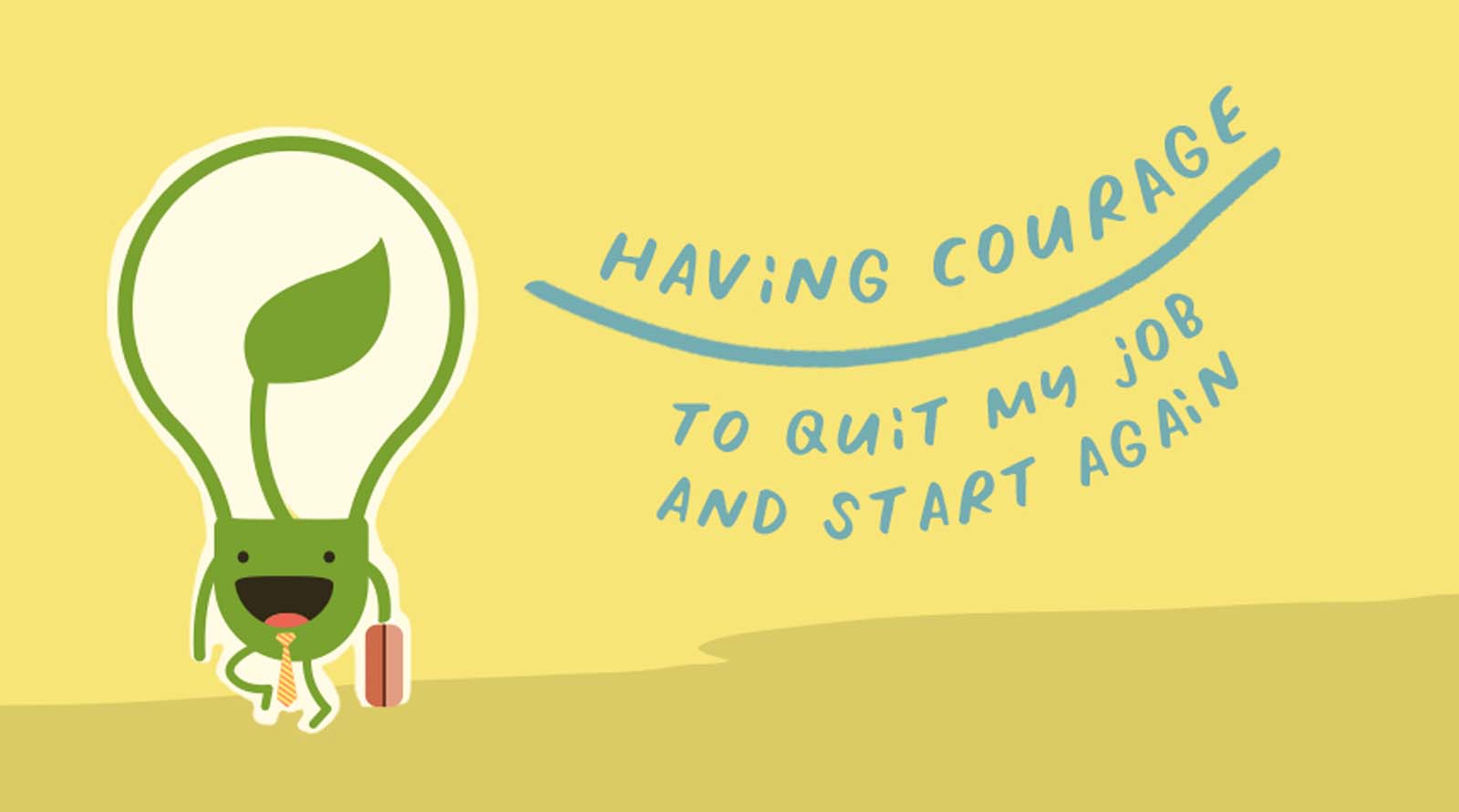
Hence, to land a job and then quit your stable, full-time job during a pandemic makes you pause and say “Huh, why?”. Yanda has a different take. He asks ‘Why not?’.
Sipping coffee as Yanda shares his story
The Job Hunt Hype
Yanda, a final year student in 2020, took his time to enjoy university while it lasted. He mentioned that “everyone was rushing to secure a job. There was great hype for job hunting.”
It was definitely not an easy climate to be in. Rather than worrying about uncertainty, Yanda volunteered for Buddhist Organisations such as NTU Buddhist Society/ BYN (Buddhist Youth Network). He then took on the job search in his own time.
(No. Yanda doesn’t come from an uber-rich family where a job falls on his lap. He didn’t see the need for an all-or-nothing chase.)
Eventually, Yanda obtained a few offers in the engineering space and took on a role he thought he might enjoy. That is where things changed.
Is This It?
Work soon became monotonous and a routine for him. He noticed a routine of “working, going out for lunch, sitting back down and going home.”
This made him wonder, “Is this it? Is this how I am going to spend my life? What do I want? If I lived to 60 years, will I be content with doing 40 years of the same thing?”
In response to his musing, I mumbled: “Definitely not me.”
His attempt at sharing work struggles with some friends did not yield something he could relate to. They alluded to “finding meaning in your job rather than have the meaning come to you.” It was cold comfort.
I could see his thought process unfold and why that advice didn’t sit well. Yes, there was this sense of job security during a pandemic but it brought little meaning to him. That meaning was nearly impossible to find.
The turning point came when this question popped to mind, “If tomorrow, I am going to die, I would only remember that I did paperwork here and there. That’s it”. That spurred him into action. He tendered his resignation and left the company to the shock of his peers. New hires are usually expected to stay in that job for at least 2 years, but he stayed in that role for less than 6 months.
The Pains Of Change
“I had fear and felt scared”, he gulped when recalling the moment he quit and had no job offer on the horizon.
“So what helped you through the uncertainty?” I quizzed.
The fellowship of his Buddhist circle who listened patiently was what brought him to a brighter state of mind. Friends that were slow to advise but quick to listen to his pain helped him greatly. “That is what matters…being there for me,” he concluded.
“Confidence in the Buddha’s teaching, knowing that all these negative emotions would fade,” he added, gave him strength when he was alone. He viewed the transition as “uncertainty at its very core.”
Over the years, having done mindfulness practice enabled him to watch his emotions and to make necessary changes without attachment. That gave him the conviction that it was not an impulsive move but an informed one.
Starting Again
Smiling as he recalled his Buddhist work, “I have done a lot of Buddhist work that brought joy to me. If this (engineering) job doesn’t fit me, what can I do?”
As causes and conditions came together, Yanda didn’t need to wait long for an answer.
“A friend told me that she had an opening at a preschool where they wanted a Dhamma friend to help build the school’s curriculum.” He recalled. He mulled on the idea of facing kids all day and decided to take the plunge.
Yanda is now studying for a Diploma in Early Childhood Education while working to help build the preschool’s curriculum.
“Uncertainty,” he answers immediately when asked what he loves about his job. “What the children can bring to you every day with every interaction presents uncertainty,” he added.
When he dived deeper, he felt lifted about being able to help kids appreciate this ‘thing’ called the mind. Letting them know that there are ways to develop their minds. Equipping them with Buddhist concepts, techniques and emotional awareness to thrive in a stressful world really motivated him.
“Kids are easy to teach, as they are free of concepts,” he quipped. At that moment, I recalled being an inquisitive child, something I felt I have lost along the way. It was interesting to see how uncertainty could bring us pain (job transition) and joy (teaching kids).
Helping Others Start Again
I was curious to hear Yanda’s take on how we can help our friends’ transition from one job to another.
“There is no one-size-fits-all solution, but what I can say is that this is something cliché,” Yanda shared.
“Listen to them and be genuinely happy for them. Recognise that they took a courageous decision to step out of something that did not fit them,” he added.
On a practical side, Yanda shared that we should remind our friends to also financially plan ahead if they choose to resign without a job offer. As a rule of thumb, one should have at least 3-6 months of expenses saved in cash to weather them through their job search.
His advice was grounded heavily on the Buddhist idea of appreciative joy which is a joy in the achievements/victories of others.
“How can I support you? Do you need resources/contacts?” has been one of the most helpful questions friends asked. I instantly agreed by nodding furiously as I felt that we often are quick to develop solutions without considering our friends’ needs.
Turning Back Time
“Your first job is super important” is one piece of advice that Yanda recommends ignoring for graduating students. It adds unnecessary stress to the individual. That person may then seek out the perfect job which may not exist.
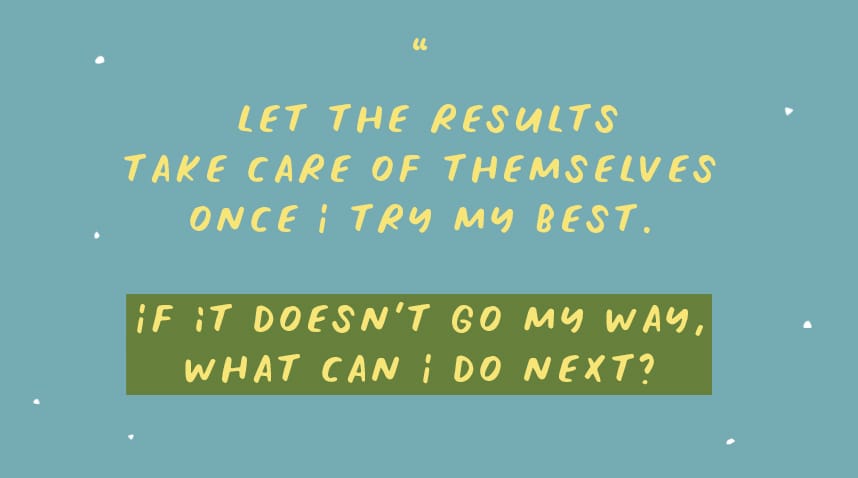
Having wisdom is crucial in helping us see the world properly. If he could turn back time to advise his graduating self, he would say this: “Have an attitude in life that let the results take care of themselves once I try my best. If it doesn’t go my way, what can I do next?” and “We are our own boss, only we can understand our emotions and the true nature of our mind.”
Asking that question gives us the courage to be open to what life can bring. What we can do is to create conditions for success while developing a sense of non-attachment to the outcome.
“Understand we have a mind, and emotions are never truly ours. Just like a cup. The reason why we wash it is that we are confident that the dirt can be washed off. The dirt was never the cup.” he summarised.
It was a mind-blowing summary of expectations and emotions. Recognising emotions as transitory and being at ease with the unpleasant is a skill set we all need as we go through the different changing phases of life.
Yanda showed that Singapore youths are hungry for life and meaning. We need not stay in the same job just to clock a magical number of years before leaving. Asking ourselves “Is this it?” can spark conversations and paths we never dreamt of.
Yanda is currently working in Blue Lion Preschool as an early childhood educator trainee.
TLDR: When we are at the height of our career success and plummet into failure overnight, what do we do? Gather our courage to see things from a different perspective.
The Highs Could Only Go Higher Right?
2019 was an amazing year for my career. I achieved the coveted promotion by securing large revenues for my company, the bosses had only praise for my hard work, and I earned nearly 1-year worth of bonus.
Times were good, and when January of 2020 approached, I had only big plans for the year. This was going to be the zenith, I knew that I would achieve my second promotion, earn even more money and shine ever bigger.
In a natural turn of events, I knew nothing.
The moment COVID began impacting Malaysia, my career nosedived in a single day. All the deals I had lined up were halted, and the tumultuous journey began.
Long were the days of tough talk with the bosses; it felt almost like a consistent interrogation revolving around my presence in the company despite my lack of revenue. It was apparent how the company now saw me as a burden.
The Crash Of Change
I was entangled in a mass and mess of emotions; my mind alike to the sea that I so love, unpredictable. Fury, jealousy, melancholy, had a wonderful time consuming my waking thoughts.
Thoughts of “Why can’t they understand my difficult situation?” and “Why are they making things difficult for me?” only oiled further anger within.
To soothe this heat, I began plotting to create reputation damage to the company. Sharing this with a good friend, he merely asked “What is the point of harming others and oneself?”
Building Courage Again
That phrase gave my mind a sudden epiphany. For years I have heard the phrase ‘embrace change’, but now I am behaving like a temperamental child robbed of desires.
It is odd how I welcome change with a big hug only if it is in my favour yet loathe the tide’s natural turn when my desires are unmet. What I needed, was quite simply courage.
Courage to admit that success and failure are betrothed, there is nothing shameful about failing. Courage to refrain from blaming an external party for the source of my negative emotions, and instead to realise that I am still a lot of work in progress. Courage to embrace change, both positive and negative with grace.
I found the Dhamma quote on being unshakeable when the winds of life blow inspiring:
TLDR: When faced with unexpected financial hardship… see things as they truly are, ask yourself ‘so what’, and live within your means.
‘At least you still have a job okay.’
The usual reply I received when speaking of pay cuts. Though the replies have compassionate intentions, it often falls short of comfort. In the loud narrative of ‘up skill, up skill, up skill’, these are 3 ways of how I stayed Zen in the face of pay cuts.
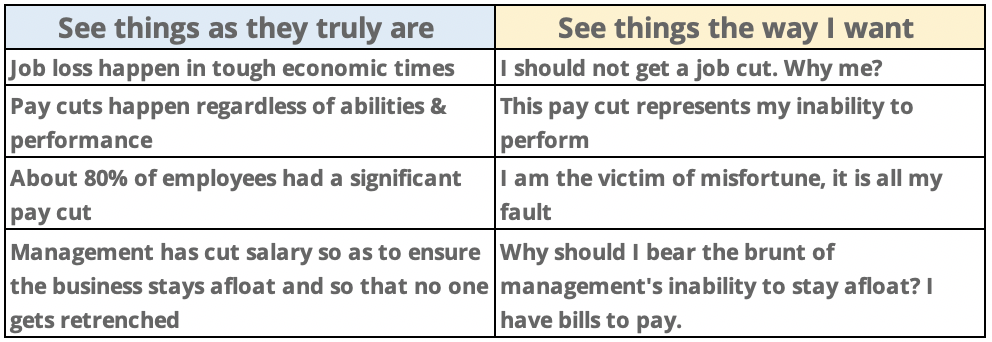
See things as they truly are
When I first received news of the pay cut, it caught me off guard. I thought that business was going well. I felt that it was ‘unnecessary’ to do so and that I and my peers were ‘victims’. To us, our pay was already low, hence getting pay cuts was a crazy possibility. The gap between perception and reality is where suffering arose.
Seeing these thoughts in my head, I recalled the term ‘Seeing things as they truly are’. This meant reframing the way we look at reality. This shifts our perspective away from ourselves and to the bigger picture.
We distance ourselves from the negativity by removing the ‘I’ & ‘my’ & ‘me’. This prevents us from cycling around the stories born of our perception. Through this thought exercise, we find our calm and have a clearer view of reality.
Asking ‘so what’ rather than ‘why me’?
It takes great effort to remove the ‘I’ & ‘my’ & ‘me’ from your thoughts. Hence, this step is another useful tool for staying Zen. As my mind played out many crazy scenarios of the pay cut, a thought bubbled up…’so what?’.
That cut through all the self-victimization. It made me pause to count my blessings. Asking ‘so what’ places you mind to see the possibilities that one can undertake, it widens your mind. Counting blessings and seeing possibilities is one crucial way to uplift your spirits. This redirects your emotions into creating something new.
My inspiring friends who had a job and pay cuts took the path of ‘so what’. They started selling masks and even durian to generate a new income source. By directing energy away from ‘why me’, they found possibilities to not only remain Zen but also thrive.
Finding the essential
“But I am super not creative or enterprising” could be a reply to talk of entrepreneurship. If you feel now is not the right time to increase income, that’s fine. This last tip helps you remain calm by finding the essential in your sea of expenses.
Having pay cuts challenges you to live and be content with less. Being a finance nerd, I started to look at all my expenses after my pay cut. Asking myself, what is essential to my welfare and happiness?
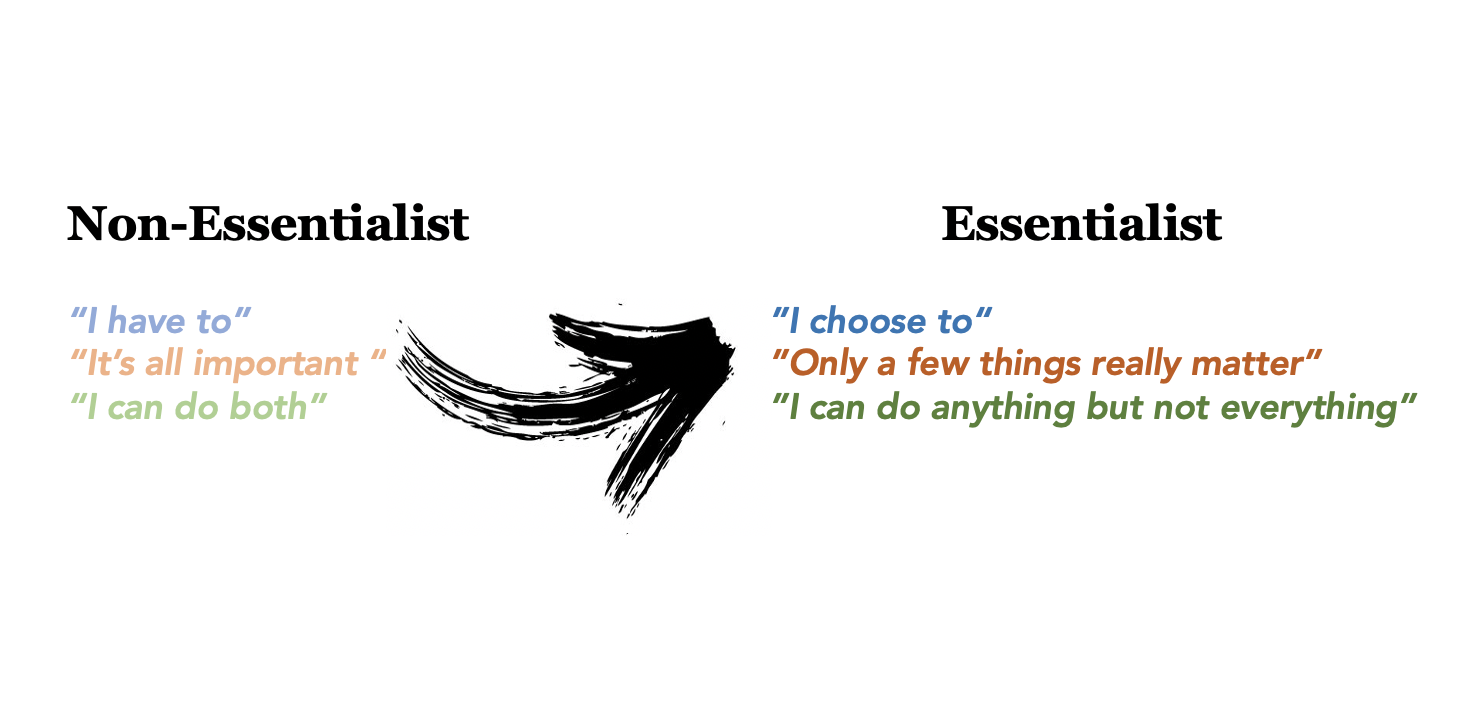
Asking these questions in front of your spreadsheet may seem mad, but this is crucial to reaching essentialism. Through this expense cutting, I realised I could do away with certain expenses I used to deem as essential. Essentialism by Greg Mckeown talks about changing the mental statements you make to arrive at what is essential.
By directing your energy towards finding the essential, you avoid spiraling into monetary stress. You also find that you can live on less. This slowly builds you up to pursue a life of essentialism and keeps your precious Zen-ness (calm).
Summary
These are little tools I found useful in my journey, I hope you find them useful in these difficult times.
A key takeaway is that when negative thoughts do arise, don’t just indulge them or push them away. Rather than blindly being led by them, question them. Ask yourself why you feel shame or self-doubt. Learn from it. Use your emotions to your benefit.
Stay calm. Stay zen!
Wise Steps:
When faced with unexpected financial difficulties, ask yourself “So What?”, this brings about new perspectives
Find an open window of time to cut down on spending that no longer serves you beneficially. Reset & Rethink!
TLDR: As religious or spiritual people, we can sometimes get unknowingly self-righteous, giving unsolicited advice. It’s much more skillful to respond to the needs of the person we are speaking to with equanimity, mindfulness and a sense of “right timing”.
A type of question I often hear during Q&A sessions with Dhamma teachers goes like this:
“How should I advise this person about this thing they are doing that seems problematic?”
“How should I advise my friend /family member to be more [insert good quality]?”
This is interesting because from how the question is framed, it sounds like the asker is less concerned about what their friend/ family member should do about their situation than how to advise (or persuade) them in a way that makes them want to take up their advice.
This can seem like it comes from a good place – but actually, what is the intention here?
Are you collaboratively helping that person to work out their issue, or are you trying to “correct” them based on your opinion of what they should be doing?
Sometimes the desire to fix other people’s problems can come from righteousness and judgement – aka the ego. But in fact, they might not need (or want) your advice.
Am I doing this for them or for me?
Something I’ve noticed in myself and other Buddhists is that we can sometimes become quite deluded, clinging to a “Buddhist identity” that we’ve fabricated over time.
We can be quite self-righteous, thinking we have all the answers and if only they knew better, if only they did this thing that the Buddha said, they would be so much happier. So, we go around advising our friends and family, trying to “fix” everyone’s suffering.
If we’re honest with ourselves, we may find that this is less about them and more about us, compelled by a neurotic desire to fix someone’s problem as a projection of our own ideals. A telltale sign is when we feel a strong desire for the other person to take up our suggestion and a sense of agitation when they are not willing – that disappointment comes from an expectation.
Probably another defining quality of unsolicited advice is when it is given at the wrong time. You could very well be right about what the other person needs to do about their situation, but they might not be ready to receive it just yet.
What you are saying might be true, but if you say it at the wrong time or in the wrong circumstances, it becomes “wrong”. This is because we are not being receptive to the needs of the other person; our words are not in line with the way things are right now.
Instead, we are strongly attached to our views about the situation and are more concerned about getting them across and validated.
We want our thoughts and speech to be thought of as right and true.
That validation gives us a nice ego boost, making us feel that our opinions are right and true – which is a very nice and lofty way to perceive ourselves.
I am a wholesome and good Buddhist.
I am someone who helps improve the lives of those around me.
This sounds wonderful, of course. Better than being a murderer.
But if we begin to cling to that image of ourselves, then our actions become less about generosity and goodness for their own sake and more about egoistic self-interest. More importantly, we may not be not truly serving the other person at all.
Drop the preacher mentality
I used to have a strong tendency to go around preaching about Buddhism until I met people like my Ajahn – a very unsuspecting monk of the Thai forest tradition.
He always keeps a low profile but sometimes drops these mind-blowing nuggets of wisdom when the situation calls for it. Even though he’s in robes, he doesn’t go around preaching to every person he speaks to – which is ironic because he’s probably one of the most qualified people to do so.
He mainly just listens and only gives advice when asked or makes comments at the appropriate time.
I think this is a sign of true humility (and Right Speech) – as opposed to when you feel like you have the right to “teach” or “correct” others, which automatically comes from a place of superiority.
You’re trying to fix others, change them, make the world a better place – all according to your ideals, which are really just ego projections. Again – true but not right, right but not true.
Observing Ajahn’s behaviour, it’s apparent that despite his many years of diligent practice, experience and knowledge, he never really views himself as a “teacher” and therefore never puts himself in that position. He’s not on a profound mission to create world peace or save humanity or spread Buddhism.
He just wants to live out his life as a simple monk practising the Dhamma.
The irony of that is that turning inwards and focusing on ourselves is often the most impactful or inspiring thing for other people. Watching the skillful conduct of Dhamma friends like Ajahn has been the most effective thing for me in changing my behaviour and views for the better – they didn’t have to push or persuade me.
This doesn’t mean that we shouldn’t lend our support to our friends and family when they need it – it would definitely be good if we did. But there’s a difference between supporting someone appropriate to their needs, and being generous for our benefit.
It’s the same principle behind donating tons of food to an established food bank that has an oversupply of food, rather than donating to a lesser-known one that is really in need. The former may make us feel good for being generous, while the latter is generosity with attentiveness to the recipient and their needs, which is more beneficial and truly “self”-less.
Returning inwards
I think another important lesson to learn is that we can’t change people (and it’s not our business to anyway) – we can only support or encourage them. I believe people change on their own accord when they have their insights, and those definitely cannot be rushed or forced.
When we understand this, we realise that trying to fix others is a waste of time and energy. We become more equanimous and in turn focus more on ourselves – which is where we can truly bring about change.
Wise Steps:
Focus on yourself. Most of what the Buddha taught was aimed at going inwards and cultivating wholesome qualities and abandoning unwholesome qualities within. If we realise this, there would be fewer problems to “fix” in the world.
If you’re not sure what your friend or family member needs, ask how you can best support them. Do they need advice, encouragement, or just empathy, etc.?
Be supportive, not compulsive. If you feel the impulse to give advice, ask yourself if it is appropriate for the other person right now and check if you’re just doing this to satisfy your ego. Agitation is a sign that the ego is at play.