TLDR: Enjoying beautiful things is possible when we remember their fate. That understanding brings ease, not guilt.
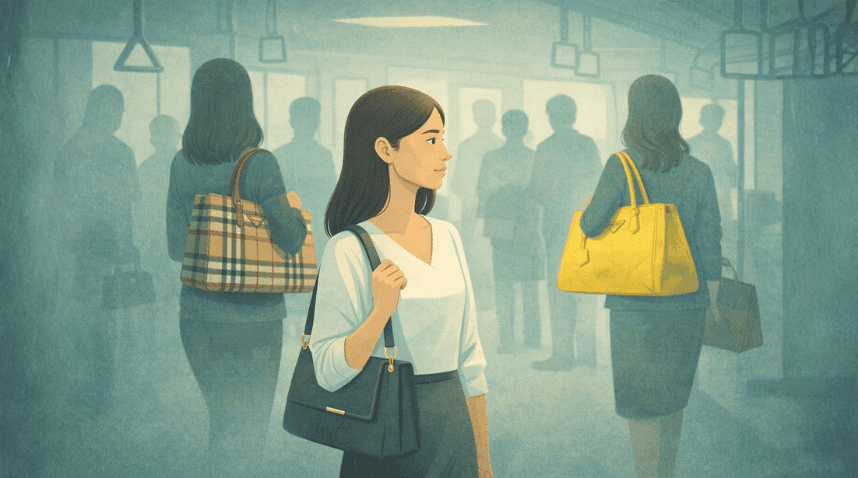
Perhaps it’s due to past conditioning—I’ve noticed that I’ve always had a keen eye for luxury & branded goods—gazing at the fashionable OLs carrying them when I was a kid on the MRT, catching a glimpse of my neighbour carrying a Burberry Blue Label after a Japan trip, witnessing well-to-do classmates in my secondary school carrying Prada wallets and LV bags handed down from their mothers, seeing my colleagues buying and carrying them when I was a cabin crew. Thus, it seemed quite fitting when I started working as an appraiser for a company involved in the luxury resale market.
As an appraiser, keeping up with market trends for luxury items is part of my job. Another part of my job is encountering lots of people with different reasons for wanting to get an evaluation to sell their pre-owned luxury items; sometimes it’s simply a case of no longer liking an item, and sometimes it’s due to lifestyle changes. I’ve even encountered cases of people selling their loved ones’ items after they passed away. Recently, I met a family selling branded items belonging to their deceased family member, who was in their early 30s, just like me. Very poignant.
It is also important to note that we need to approach the issue of purchasing such luxury goods in a balanced manner.
It’s not to say that we cannot own or acquire them: as a householder, we can enjoy owning and using them, purchased using wealth acquired in a rightful way, with proper budgeting, while being mindful of any attachment to them!
Also, forcefully using willpower to not act on desires to acquire them only works to a certain extent. When we see the drawbacks of owning these items, we become naturally inclined to not want them. As someone who is constantly exposed to these branded items, I would like to share a few of my strategies and approaches when it comes to dealing with cravings to acquire more of them, and using the items with minimal attachment (if we do end up purchasing them!)
Seeing Items as Impermanent or Borrowed
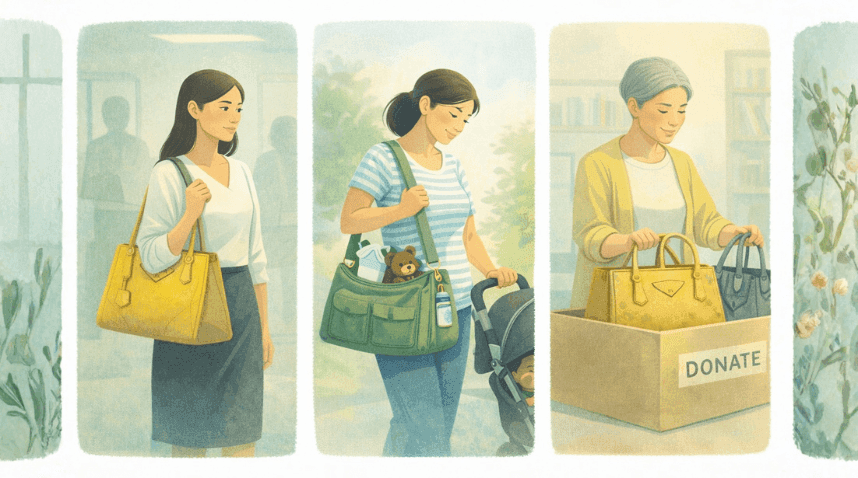
In my work, I often see how impermanence shows up in changing trends, evolving lifestyles, and shifting needs. Many people come to let go of their branded items for reasons such as:
- Changes in lifestyle: becoming a mother (needing more practical bags to fit children’s items), retiring (letting go of office/work bags), or simply shifting priorities.
- Health changes: foot conditions or size changes after pregnancy that make shoes unwearable, or choosing lightweight nylon backpacks instead of leather shoulder bags due to shoulder pains
- Evolving tastes or trends: what once felt fashionable now feels outdated or “Obiang”
- Condition of the item: item feels worn, old or damaged and no longer serves the intended purpose
One reflection I often use, both for myself and when friends ask for advice before buying a bag, is this: Would I still want this if it were already worn? If the hardware were scratched, the corners scuffed, or if the design had gone out of trend, would I still find it beautiful, or even want to carry it? That’s what eventually happens to every item after 5, 10, or 15 years. If I can accept that and still feel the purchase is worth the usage and joy it brings, then perhaps it’s a reasonable decision to purchase it.
But often, this reflection helps me realise that something more affordable yet equally functional can fulfil my needs just as well (without the added attachment to brand or image!)
There’s a beautiful analogy in the Majjhima Nikāya (MN 54), in which the Buddha spoke about the drawbacks of sensual pleasures, and in one of the analogies spoke about a man who had borrowed fine goods:
“Suppose a man had borrowed some goods—a gentleman’s carriage and fine jewelled earrings—and preceded and surrounded by these he proceeded through the middle of Āpaṇa. When people saw him they’d say: ‘This must be a wealthy man! For that’s how the wealthy enjoy their wealth.’ But when the owners saw him, they’d take back what was theirs. What do you think? Would that be enough for that man to get upset?”
“Yes, sir. Why is that? Because the owners took back what was theirs.” …”
This analogy is especially poignant because I’ve encountered some people selling items belonging to their deceased family members. All sense pleasures that we enjoy, including everything we “own”, are really only borrowed for a time.
Sometimes, I even ask myself: if I were to treat this purchase like a rental, would I still be willing to pay the same amount? And if not, perhaps there might be a wiser way to use that money. The point of this reflection isn’t to completely refrain from buying things we need or genuinely enjoy, but to consider:
- Would I still pay this amount if it were only for temporary use?
- Is there a wiser or more meaningful way to spend this sum of money?
After all, as householders, we can still choose to purchase and use such items. When we buy within our means and use things without attachment, we do so with the understanding that, in time, every item will wear out, break, or simply no longer suit our lifestyle and tastes.
Not to Associate with the Fools, but to Associate with the Wise
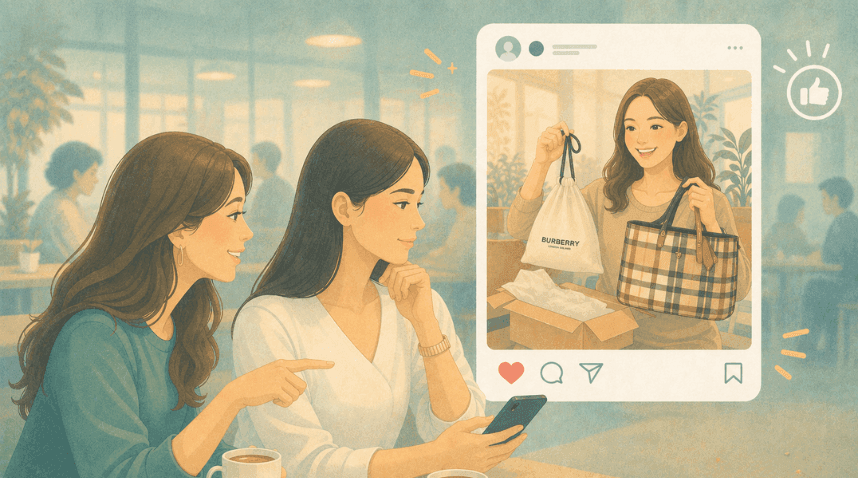
In our day and age, “fools” not only refer to friends in our social circles (who may encourage us to spend more!), but also refer to the type of content we follow on our social media. Following influencers who are constantly reviewing and unboxing each season’s new collections may lead us to normalise such spending behaviours. (“I don’t know why I bought this—it looked so good when XYZ was carrying it!”, “I would never go shopping with my girlfriends again, at that moment it just looked so good when I tried it on at the boutique and they encouraged me to buy it!”, seemed to be quite a common thing I hear.)
Instead, we can choose to follow accounts that promote contentment and minimalism, and this brings me to my next point:
Finding Inspiration from Disciples of the Buddha

Theri Khema, foremost nun in wisdom:
In the stories, she was said to be beautiful and also inclined towards beautiful appearances. Her husband (King Bimbisara) lured her to see the Buddha by describing the beauty of the place Buddha was residing. Buddha conjured an image of a beautiful maiden by his side (surpassing her own beauty) and aged the image, showing it to age and pass away until eventually leaving behind a heap of bones. Upon seeing this, she realised the impermanence of conditioned phenomena and decided to ordain as a nun.
One can’t help but imagine the changes in lifestyle: from being the chief queen consort of King Bimbisara, enjoying the luxuries of life, to one as an alms mendicant.
Subha, the goldsmith’s daughter:
I chanced upon her verses in the Therigatha and found the verse “Gold and silver, does not buy awakening, does not buy peace”, so beautiful! According to some sources, she was the daughter of a goldsmith and frequently wore beautiful clothes and jewellery before she was ordained as a nun and eventually became an arahant.
Lady Visākhā, foremost female lay disciple:
If renouncing all the fineries and comforts of life for spiritual happiness seems unattainable, we can look towards Lady Visakha, who is the foremost female lay disciple of the Buddha, as an inspiration for her use of wealth while not being attached to it.
She was said to visit temples in fine clothes and jewellery, and in one well-known story, her maid misplaced her valuable piece of jewellery in the monastery while listening to the Buddha. The monks found the ornaments and gave them to Ven. Ānanda for safekeeping. She took this lapse as an invitation to do good and decided not to wear it anymore. She put it up for sale and intended to donate the proceeds to the Order, but as nobody in the city could afford this, she bought it herself out of her other property and established a large monastery with the money.
I found her inspiring because she showed us that one can be a householder and have attainments on the path, while also possessing finer things in life and using them without attachment.
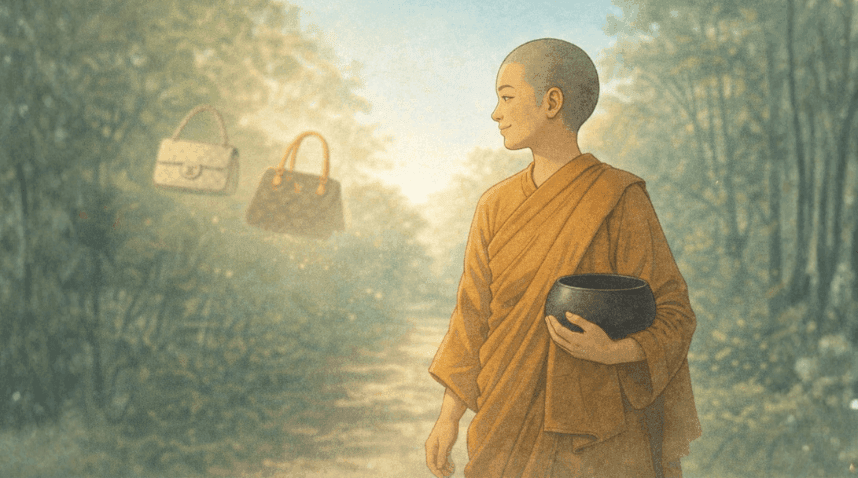
Interestingly, as a source of inspiration in our modern times, I’ve also chanced upon this podcast interview of Ayya Soma, a former fashion journalist, talking about the joys of relinquishment. In the episode “The non-returner” (starting from 31:50), she talked about giving away her possessions before ordination, which included 2 Chanel bags! She mentioned that the bags never made her happy until she let them go.
Summary
While these stories of great disciples are inspiring, it’s also important to acknowledge that most of us live very different (householder) lives. We may still have jobs, social events, and personal preferences that make completely giving up such possessions less practical, and that’s okay!
What’s more realistic (and sustainable) for many of us is to take a more gradual approach. One term that I’ve recently come across is called “luxury minimalism”, and I think it captures this balance well. It’s about:
- being intentional with our spending,
- curating what we bring into our lives,
- and finding joy in using what we already have well
We can recall Lady Visākhā’s example: she used her wealth generously and possessions wisely as a householder, without attachment.
We can use our possessions in a similar fashion: purchased mindfully, using wealth rightfully acquired, and remembering that all possessions are temporary.
Trends change quickly; the condition of our items change even with careful use and storage; our lifestyles change as we move through life, becoming parents, changing jobs, retiring, or experiencing health shifts like shoulder aches from carrying heavy bags.
Eventually, we too, must leave all things behind.
Reflecting on this, we can learn to see each item as something “borrowed”, and to end this post, I’d like to share one of my favourite anecdotes of Ajahn Chah:
“‘One day Ajahn Chah held up a beautiful Chinese tea cup, “To me this cup is already broken. Because I know its fate, I can enjoy it fully here and now. And when it’s gone, it’s gone.” “When we understand the truth of uncertainty and relax, we become free.”
~ version by Jack Kornfield
Wise Steps
- Before buying, pause and imagine the item already scratched, dated, or worn, because seeing its future clearly often softens blind desire.
- Ask yourself whether you would still pay the same price if the item were rented for a few years, as this reframes ownership as temporary use.
- Audit who and what you follow online, since constant exposure to unboxings and hauls quietly normalises unnecessary spending.
- Regularly remind yourself that every possession will one day be left behind, which naturally loosens attachment without force.