I used to feel a little estranged Pali chanting. Through some study of the translations and memorisation, however, the liturgical language has grown on me over time.
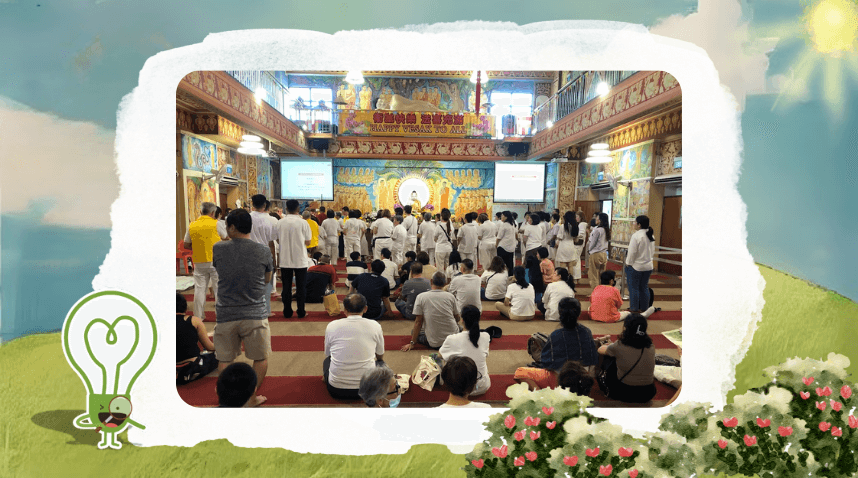
And while big crowds are not the usual draw for me, I’ve braved a ceremony or two to celebrate Vesak Day in recent years.
Now what about the millenia-old Kathina (Robes offering) ceremony, one of the largest alms-giving occasions of the Buddhist year?
Given my interest in the Thai Forest tradition, I thought to look up what my Theravadin friends have been up to over the years!
(Siha the Wise chilling on a cloudy day – moisturised and unbothered – it’s Kathina not Cat-hina by the way!)
Introducing the Kathina (Robe Offering) ceremony
The Kaṭhina (Robe Offering) ceremony takes place once a year after the completion of a three-month rainy-season residence or rains-retreat (Vassa) of Buddhist monastics.
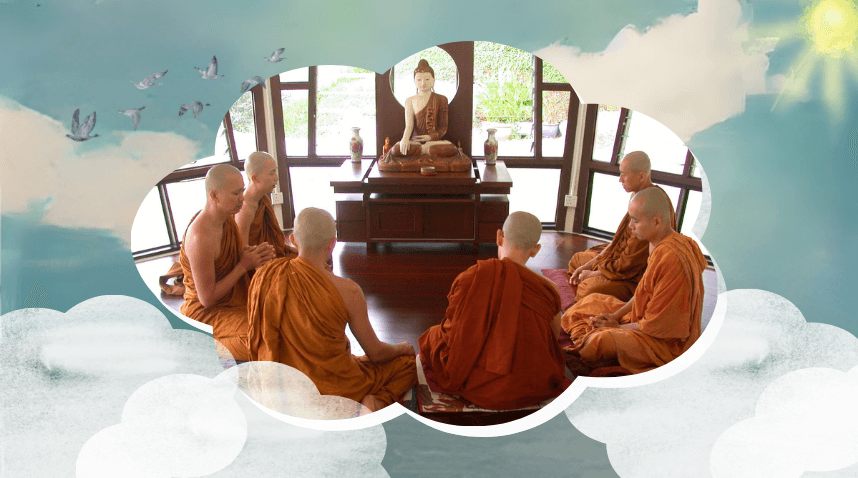
During the Vassa period, usually nomadic Buddhist monastics would stay put in one place for at least three months, and this is typically when the practice of seclusion and meditation intensifies.
The Kathina celebration marks the end of this Vassa period, and the time for them to move on.
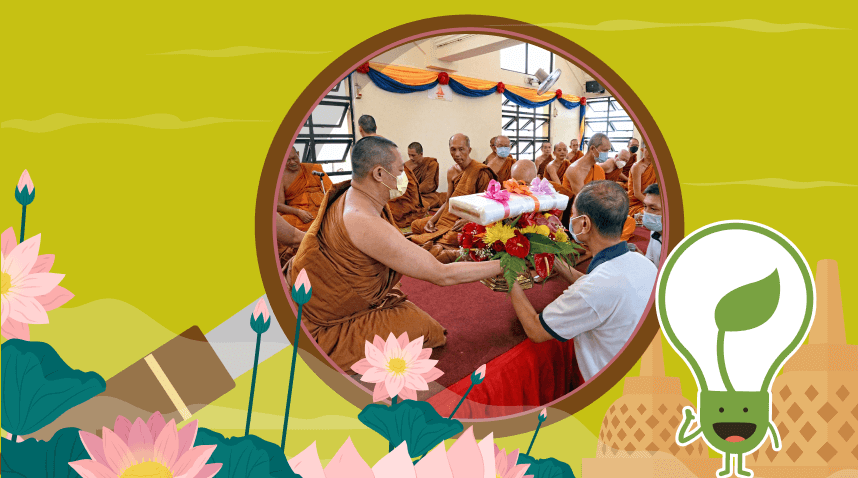
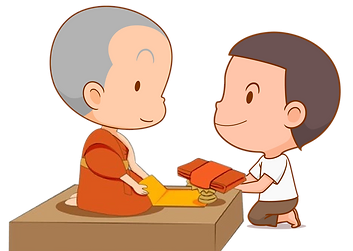
On this occasion, the laity offer Kathina cloth to their monastics upon their leaving. The offering can take place up to one month following the end of the Vassa period, and is typically celebrated by Buddhists of the Theravada traditions. But how did this even come about?
An ancient practice…
How the kathina ceremony came about is recorded in the Mahavagga, the third book of the Vinaya Pitaka (Vin III. 351ff). A group of thirty monks were journeying together with the intention of spending the Vassa period with the Lord Buddha who was staying at Savatthi in Jetavana. But the Vassa began before this group of monks reached their destination and so they had to stop.
After the Vassa, the monks continued on their journey through swamps and rainwater, finally arriving at where the Lord Buddha was staying. He came to see their robes were drenched and they were exhausted. Upon the exchange of friendly greetings, the Lord Buddha gave a dhamma talk, and then said that he would allow monks who have completed the vassa to ‘spread the kathina’.
While the literal meaning of kathina is the wooden frame used during the Buddha’s time for sewing double-layered robes together, the phrase ‘spread the kathina’ has a figurative meaning of sharing the five privileges accorded to other eligible monastics participating in the kathina ceremony.
In this day and age, the Rains Retreat (Vassa) period is observed with slight variations, and so Kathina ceremonies have also evolved with time.
Modern infrastructure enables monastics to travel and to seek shelter from the monsoon weather whilst minimising both disruptions to their practice, and their potential destruction of non-human lives and habitats during the rainy season. With this, amongst other reasons, it seems that the practice of seclusion during the Vassa may be more varied in intensity in modern times.
With the advent of the Internet, monastics can also continue to teach remotely even if they choose to reside in a single location such as a monastery. Lay practitioners can therefore benefit from the continued stream of teachings and dhamma reflections during the three-month Vassa period.
Wooden frames or kathinas may also no longer be required in our modern times. Just as some of us have left behind the sewing needles and thimbles, monastics today might be making their robes using sewing machines instead!
The adaptation of scriptural traditions warrants deeper research and reflection; All observations and mistakes above are my own. Now for our introductory understanding, seeing as the Kathina ceremony lives on, how might we relate to it?
Significance of the Kathina for monastics and laity
The following suggestions are adapted from Sasanarakhha Buddhist Sanctuary: Kathina Day is a special occasion for many reasons.
For the monastics, Kaṭhina reminds them of at least 4 important things:
The ancient practice of making their own robes.
Gratitude to the lay devotees for relieving them of the time-consuming chores related to the making of these garments.
Gratitude for the support from lay devotees for providing the monks with the 4 requisites so that they can make use of the time available to study, practise and propagate the Dhamma.
To renew their commitment to perpetuate the Vinaya tradition of making the Kaṭhina robe by cutting, sewing and then dyeing it.
For the lay devotees, Kaṭhina is meaningful too. It gives them the opportunity to make a lot of merits. Lay devotees make merit on Kaṭhina day when they:
Develop faith in the Triple Gem – the Buddha, Dhamma and Saṅgha by learning and practising the Dhamma.
Renew their commitment to support the Saṅgha, thus prolonging the śāsana i.e. the teachings of the Buddha.
Help to support monasteries and retreat centres by contributing in cash and kind towards their operation and maintenance.
Where to go in Singapore
Credit: Lanka Bogoda – Captured Mangala Vihara Buddhist Temple
I hope you’ve gained some appreciation for the Kathina (Robe offering) ceremony over the course of this article. Here are some locations you could visit if you’d like to experience it for yourself this year.
Kathina robe offering, Taking the 5 precepts, Dhamma talk, Offering of robes & requisites, Sanghika dana, Sharing of merits, Vegetarian lunch for devotees
Paritta chanting & Special blessing at Dhamma Hall
2 Nov, 11am onwards
Alms round, Sangha dana / Lunch for monks and Lunch for devotees, Procession around temple, Offering of robes & requisites, Sharing of merits at the Main Shrine Hall
Breakfast for Maha Sangha, Alms round, Homage to the Triple Gem, Requesting for 3 refuges and 5 precepts, Asking for forgiveness, Offering of Kathina cloth to the Maha Sangha, Dhamma talk, Offering of food & requisites to the Maha Sangha, Blessing and sharing of merits, Lunch
Registration & pick-up robe, Arrival of the Maha sangha, Puja, Speech, Dhamma sharing by Bhante Dr. Dhammapala, Chanting of Maha Samaya Sutta, Offering of robes & requisites to the Maha Sangha, Blessings & Sharing of merits, Sanghika-dana & Meals for devotees
Do you remember our previous article on a Buddhist festival concerning clothing you might not have heard of?
Yes! The Kathina season is around the corner when lay people gather at temples to offer robes to the monastics as a gesture of generosity and gratitude. And if you didn’t know, the word “Kathina” has its origin in Pali referring to the wooden sewing frame once used to make robes for Buddhist monks.
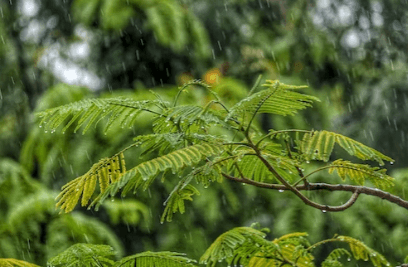
This tradition has it that during Buddha’s time, a group of monks was on their way to meditate and practice with the Buddha. Unfortunately, the rainy season began and they stopped travelling to avoid stepping on newly planted crops or creatures escaping the heavy rain.
While waiting out the rainy season, they practised together in the ways taught by the Buddha. This austere practice and exposure to the elements made their robes dirty, wet, and torn.
After the rainy season, the monks finally met the Buddha. The Buddha greeted them, asked about their retreat and journey, and noticed their wet and torn robes.
The lady disciple of the Buddha, Visakha was also there visiting and listening to the Buddha. When she saw the monks in tattered and worn robes, she asked permission from the Buddha to offer new robes to the monks, and the Buddha granted her request.
Since then the Buddha granted the monks the opportunity to accept robes offered by donors during the one month from the middle of the Eleventh Lunar Month to the middle of the Twelfth Lunar Month.
The Kathina ceremony was thus born and is still practised today among many Theravada Buddhists. During this Kathina season, various events are held across the island to mark the joyous occasion. Do check them out below and “soak” in the atmosphere of this festival with a “rain-soaked” past!
(1) Singapore Buddhist Mission
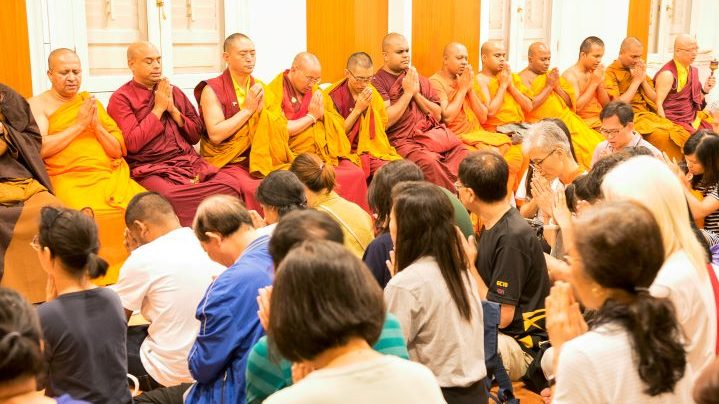
The Kathina Ceremony organised by Singapore Buddhist Mission is a half-day programme that begins with a Kathina procession, followed by puja and chanting before devotees offer robes and requisites to the Maha Sangha. There will be a vegetarian lunch for devotees at the end of the programme.
When: 10 November 2024, 9am to lunch
Venue: 9 Ruby Lane, Singapore 328284
Want to find out more? Check out our listing event here!
(2) Dhammakami Buddhist Society
The Kathina Ceremony at Dhammakami Buddhist Society gives the opportunity to support the monks in Sri Lanka as all robes offered during the Ceremony will be donated to the monks’ training centres in Sri Lanka. There will also be chanting of the Triple Gem during the half-day session.
Want to find out more? Check out our listing event here!
(3) The Buddhist Library
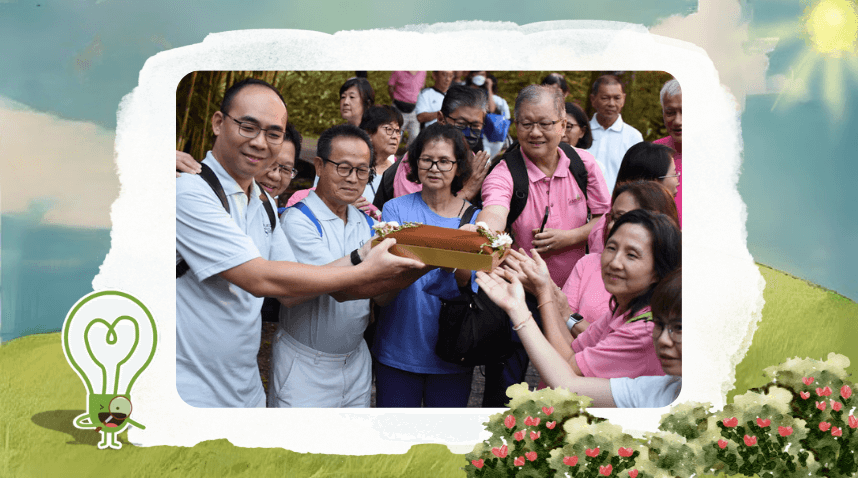
At the Buddhist Library, the Kathina tradition is also observed and kept alive at one of their annual events. Apart from the commonly offered robes to monks, the Buddhist Library has also introduced the innovative practice of offering books during Kathina to give added meaning to this event observed at the Buddhist Library!
Want to find out more? Check out our listing event here!
(4) Wat Ananda
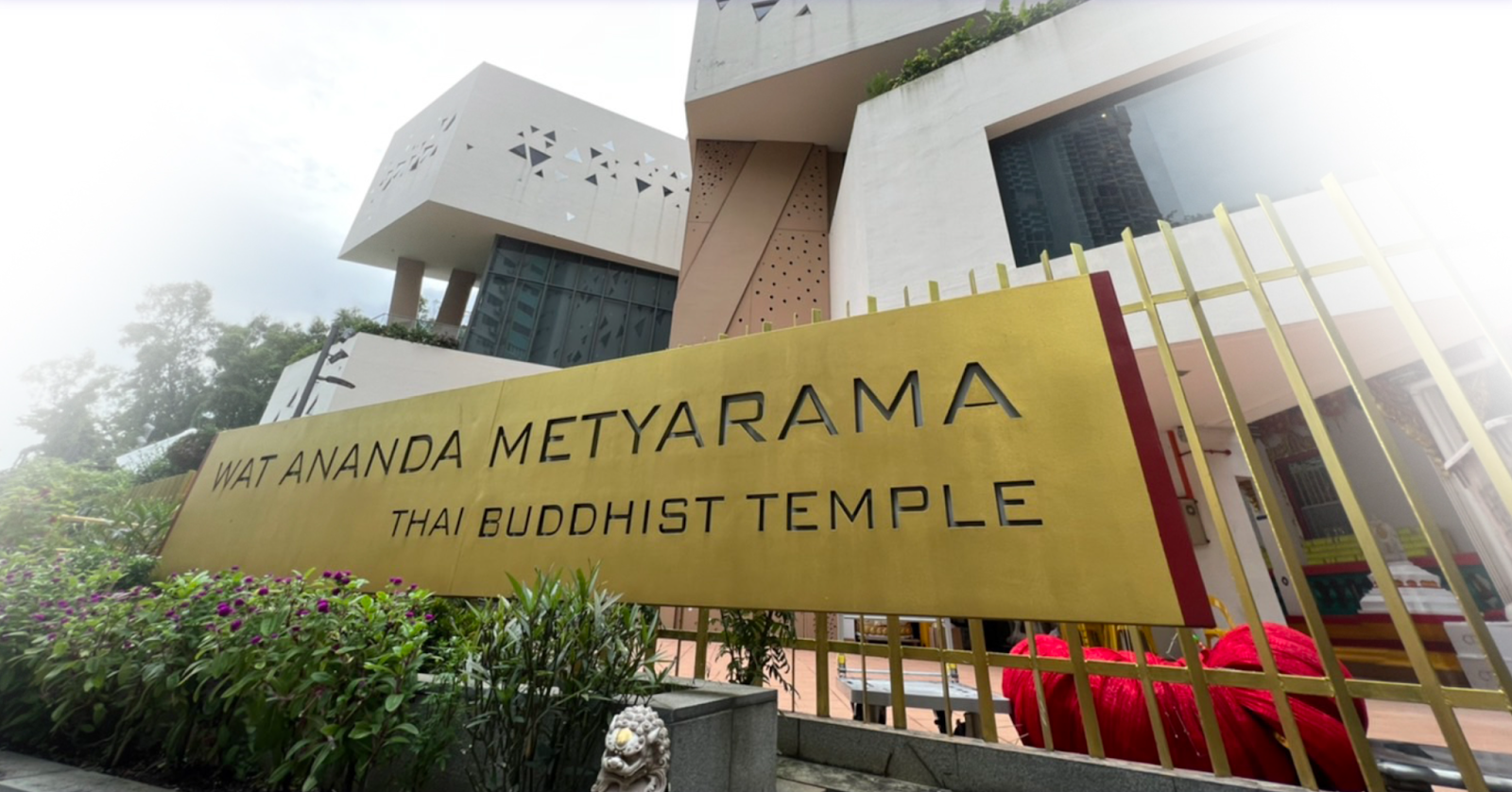
The oldest Thai Theravada temple in Singapore, Wat Ananda invites devotees to offer robes and candles to the monastics. There will be live-streaming of chanting every evening from now until the actual Kathina ceremony on 20 Oct.
When: 20 Oct 2024 (Sunday), 9.30am
Venue: 50B Jalan Bukit Merah, Singapore 169545
Want to find out more? Check out our listing event here!
(5) Burmese Buddhist Temple
Experience Kathina at a Burmese temple, the oldest Theravada tradition temple and the only Burmese temple of its kind in Singapore! The Burmese Buddhist Temple, founded in 1875, began its journey as a small temple on Kinta Road. It gradually gained prominence and relocated from its original site and since 1990, the current temple has been a place of worship and learning for both locals and Burmese people living in Singapore.
When: 27 Oct 2024, 9am to 6pm
Venue: 14 Tai Gin Road, Singapore 327873
Want to find out more? Check out our listing event here!
To explore other events, activities, communities and temples in Singapore and Southeast Asia, you can also look up our very own Handful of Leaves’ Buddhist Directory!
Wholesome Wednesdays (WW): Bringing you curated positive content on Wednesdays to uplift your hump day.
Buddhist Lent has ended. The 3 months of rainy season/Buddhist lent is an opportunity for monastics to strengthen their practice and not venture out of the monastery (as much as possible). This 3 months completion is marked by Kathina. Not sure what that is? Don’t worry we got you covered! Here are two content you can digest. One on Kathina and the other on giving.
1. The history of Kathina explained by a Singapore monk in a witty manner
2. When should a gift be given?
The history of Kathina explained by a Singapore monk in a witty manner
Cr: Unsplash
What’s going on here & Why we like it
Ajahn Keng Khemako, a Singaporean Buddhist monk who often uses Singlish to share Dhamma, shares on the history of Kathina. In addition, the remainder of the talk reminds us to keep our morality well on such an occasion. Kathina is a festival where lay people give robes and requisites to the monks. It is an opportunity for both the lay and monastics community to interact and also learn the Dhamma together. We like this video because his lively sharing beats any Wikipedia article you can find on Kathina
“All their robes were completely rotten. Buddha had the compassion and gave permission to the monks to collect their robes”
Wise Steps
Check out the different temples that celebrate Kathina in Singapore and soak in the atmosphere:)
Ajahn Brahmali, a Norwegian monk who resides in Australia, shares on when a gift should be given. How does giving move us in the right direction? We like this video (not because we made it! :P) but rather because it is crisp and short in helping us understand the Buddhist take on giving.
“You don’t always have to give to a Buddhist cause. It’s about givign where you feel like giving”
Wise Steps
When was the last time you gave and smiled?:) Try to give a little more of your time, money, or effort today to cultivate generosity within your heart!
TLDR: Can/should Buddhists celebrate Christmas? Is that the right question to ask? To give the intangible, share metta, and give up the unwholesome — these are some ways we can celebrate this season of giving.
The possible awkwardness in Buddhists celebrating Christmas
“You can meh?” was the start of that imagined awkwardness of a Buddhist celebrating Christmas. The notion of enjoying another religion’s holy day while being firmly grounded in Buddhism made me feel ‘awkward’.
The question arose as I walked with friends to observe the Christmas light up at Orchard road. “Should I be enjoying this?”, “Should I be singing Christmas songs and giving gifts?”, “Is this against what Buddha taught?” were thoughts that ran through my mind as my Christian friend asked me “You can meh?”.
He was concerned for a ‘serious’ Buddhist like me, who had to stroll through the nativity scenes put up in Orchard Road to celebrate Christmas. He thought that celebrating Christmas, the birth of Jesus Christ, might be ‘against my religion’.
Rather than asking, “okay to celebrate?” we should ask ourselves how we can grow our goodness this season.
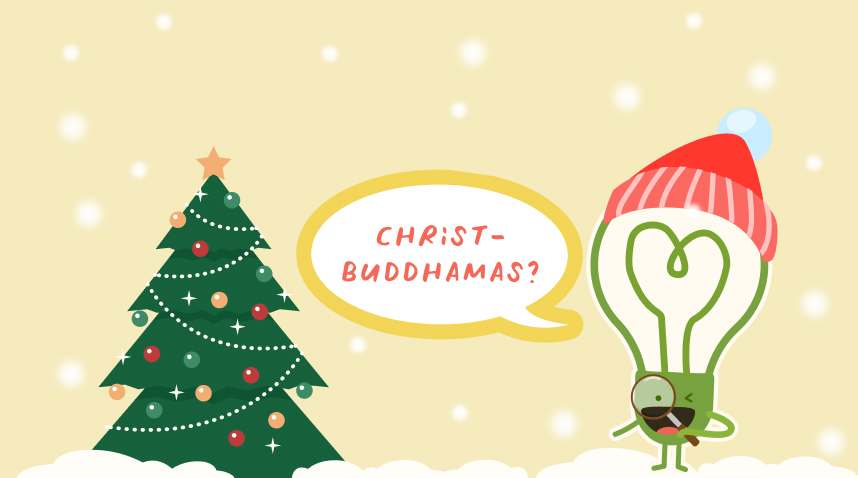
A Christ-Buddhamas?
Often, we tend to divide our world into a binary one of ‘right’ or ‘wrong’, ‘us’ or ‘them’.
Learning the Buddha’s middle path of balance and wisdom helps pull us away from such extremes. We develop a tendency to slow down our reactions and enrich our responses to the world around us.
December, the month of Christmas, offers Buddhists and Christians alike an opportunity to reflect on a topic dear to both traditions: Giving. The late Thai forest teacher Ajahn Chah illustrates this best.
An excerpt from one of the recollections of his teachings:
—
How can they (monks) celebrate Christmas?
A group of the Western monks decided last year to make a special day of Christmas, with a ceremony of gift-giving and merit-making.
Various other disciples of mine questioned this, saying, “If they’re ordained as Buddhists, how can they celebrate Christmas? Isn’t this a Christian holiday?”
In my Dharma talk, I explained how all people in the world are fundamentally the same. Calling them Europeans, Americans, or Thais just indicates where they were born or the color of their hair, but they all have basically the same kind of minds and bodies; all belong to the same family of people being born, growing old, and dying. When you understand this, differences become unimportant.
Similarly, if Christmas is an occasion where people make a particular effort to do what is good and kind and helpful to others in some way, that’s important and wonderful, no matter what system you use to describe it.
So I told the villagers, ‘Today we’ll call this Chrisbuddhamas. As long as people are practicing properly, they’re practicing Christ-Buddhism, and things are fine.”
I teach this way to enable people to let go of their attachments to various concepts and to see what is happening in a straightforward and natural way.
Anything that inspires us to see what is true and do what is good is proper practice. You may call it anything you like.
—
Ajahn Chah’s tongue-in-cheek yet compassionate take on Christmas spreads the flavour of Dhamma better than any Christmas log cake.
We are often caught up with technicalities and terms, forgetting the essence behind them. We tend to see differences rather than similarities.
Applying Ajahn Chah’s comments to my experience, I should not have worried whether I was ‘violating’ the Buddha’s teachings by singing songs.
Rather I should have been more concerned whether the words I said were compassionate and kind. Was I ‘giving’ kindness to those that I spoke to? Did I give when the opportunity arose? Or did I hold back when others needed me?
What can we do this Christmas?
Beyond ‘doing’ Christmas stuff like eating, meeting friends and gift exchanges, how can we better embody the festive season this December as Buddhists?
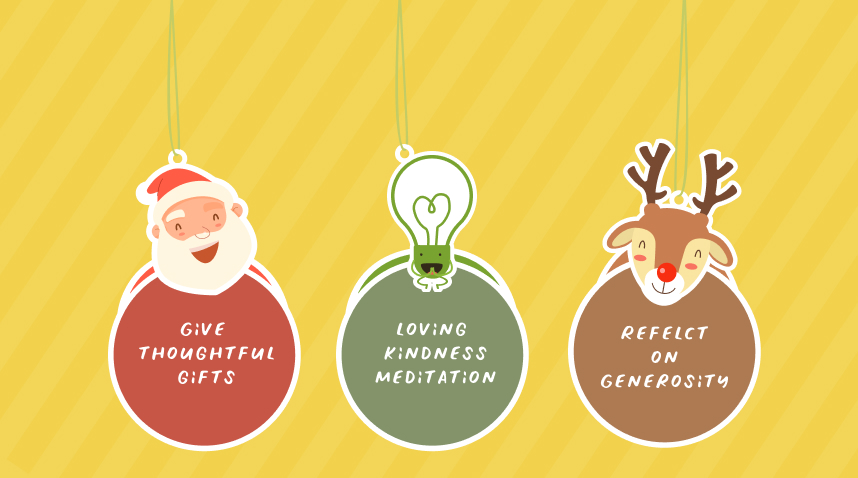
Here are 3 ways.
1. Give thoughtful Gifts
Bring mindfulness into the act of giving. We may give someone a material gift that helps them through tough times or if we wish to ‘rebel’ against materialism, we can give our time and effort to friends.
Giving them a call, taking them out for tea/coffee, going for a hike are great ways to give! We may not have a lot of money to buy gifts, but we can give in many ways.
Recollecting that Jesus praised a poor widow who gave a few cents of her wealth as a greater gift than the rich crowd who gave a large sum. It is not the amount but rather the intention and heart that matters.
2. Sit! Do a loving-kindness (metta) meditation
This gift may not be an obvious choice to give during Christmas but it has strong lasting effects. The act of cultivating goodwill for all sentient beings and wishing them to be well and happy can change your attitude to friends, family, and your social circles.
This meditation technique is excellent for those of us who struggle with anger and jealousy. Sharing a feeling of gratitude and kindness with all beings softens our hearts and uplifts our minds.
This practice gives others a sense of protection that you will never harm them while keeping your mind light and bright (even brighter than the Christmas tree at Vivo City)
3. Reflect on generosity
Beyond giving thoughtful gifts & cultivating metta, we can delve deeper into generosity. The act of giving comes with the spirit of letting go. The eradication of “the attachment that comes from feelings of scarcity and separateness” as Vipassana teacher Philip Moffit describes Dana (Generosity).
For some of us, this might mean letting go of our greed and selfishness. For others, Christmas can be a time to examine biases towards people of other religions.
What matters is that we are giving up mind states that cause us to feel negative. We then open ourselves up to giving and love.
Same same but different?
These 3 ways can help us Buddhists celebrate the Christmas spirit of giving and not get caught up in the consumerism of gifts.
This attitude perhaps resonates with many churches who lament about the materialism that has plagued their favourite holiday. In this way, the holiday can be turned away from the usual feast of consumerism and toward a period of interfaith solidarity.
Following the 3 ways of making merit, giving can be seen as both a beginning to the Buddhist path and as a component of the path in its entirety. May you find the beginning of giving this Christmas!
So rather than asking ‘okay to celebrate?’ we should ask ourselves ‘how can we grow our goodness’ this season.
P.S. In case you are wondering if Buddhists have their ‘season of giving’, there is!
Theravādin countries (e.g. Thailand, Myanmar) celebrate Kathina, a festival where lay people offer basic goods to monks and nuns such as robes, bowls, medicine, and food. Monastics, in turn, give religious teachings to the laypeople. You can read more about this Buddhist season of giving here!
Wise Steps:
Don’t get caught up by labels (e.g. Christmas) especially if that prevents you from practising the values of generosity.
Find non-material ways to give! Be it metta meditation, being there for someone, or giving up bad habits