

TLDR: Situationships can sometimes leave deeper wounds than breakups, because there is no clear beginning or ending to grieve. Through the lens of the Dhamma, this author shares their personal struggles in navigating a painful experience, and how they came to understand that craving and clinging prolong suffering.
I drown my pillow in tears, hoping sleep will come and take me back to our smiles and laughter, if only in my dreams.
And when I awake, I lay flowers at the tombstone of the memories that we never dared to name.
He Chose You. Then He Didn’t.
He texted first.
Replied fast.
Kept the energy steady.
He flirted like you were the only woman in the world.
He made you feel seen. Wanted. Special.
And, somewhere along the way, you believed him.
So you lowered your guard.
You opened the softest parts of yourself.
and you let him in.
Then, it changed.
The texts slowed.
The flirting faded.
The laughter grew scarce, then disappeared.
The conversations about everything and nothing – absurd and spilling endlessly into the late nights – were no more.
He must be busy. He should rest. He needs space.
So you stepped back. You softened the questions. You made excuses for him.
Because deep down, you were afraid of the truth: You were losing him.
He didn’t end things. After all, what’s there to end?
He simply faded…
And left you holding a broken cup – still leaking as you trace the crack with your thumb, wondering where it came from.
The flashbacks.
The love-bombing.
The emotional high.
The breadcrumbs turned into a slow withdrawal.
The deafening silence.
He made you feel like everything, then left you feeling like nothing. Or worse, disrespected. Used.
That kind of damage lingers. It makes you turn the knife inward: Did I do something wrong? Say too much? Was I not enough?
But here’s the truth: You were genuine. You showed up with an open heart.
He didn’t.
I Asked, and the Silence Answered
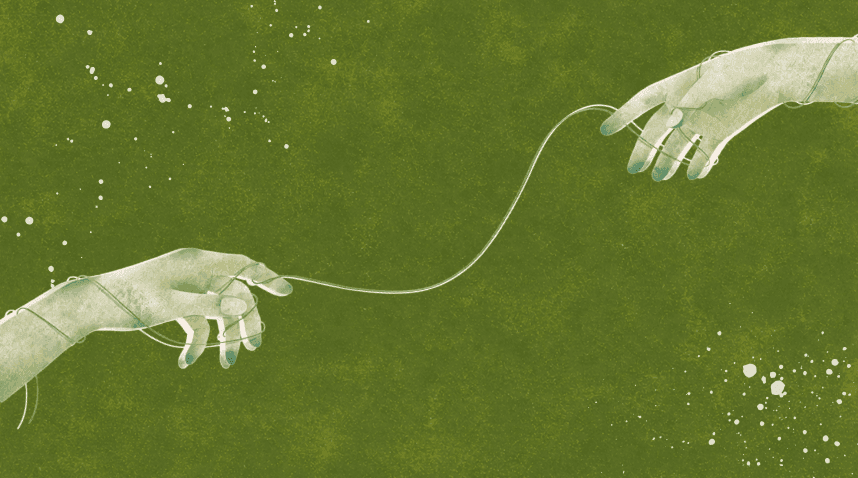
Last year, I finally gathered my courage with shaking hands and asked, “So… what are we?”
We had shared playlists like secret diaries. Late-night suppers with laughter soft as candlelight. Texts that felt like small prayers whispered into the dark. We were careful not to touch the word for it. No labels meant no expectations, right?
So why did it hurt like this when it ended?
There was no anniversary to mourn. No ring to return. Barely any photographs, a few sunsets, fragments of almosts. But still, the ache cut deeper than some “real” endings.
How can something that was never named take your heart with it when it goes?
Situationships hurt.
They hurt because of the uncertainty. With no clear beginning, there is no clean ending. The heart grieves a future it built out of light – bright enough to believe in, weightless enough to vanish the moment you reach for it. In the Dhamma, this is tanha (craving) and upadana (clinging), the mind grasping at a pleasant feeling and the story that keeps it warm.
They hurt because of inconsistency. Sweet one day, distant the next, baiting the heart to chase a mirage. Papanca (mental proliferation) blooms. You reread messages until the letters blur.
They hurt because it was never named. You behaved like partners without being acknowledged as one. Without a name, the mind writes one on your skin so you feel safe. But the questions keep coming: “Am I imagining things?” “Am I not worth naming?” Ditthi (views) knot around the self, and his withdrawal feels like a verdict on my self-worth and dignity.
They hurt because of the ache of potential. You’re left holding the what-ifs like broken glass. We could have… but didn’t. “At least we tried” is a door I can’t turn the handle of: There was no goodbye. No closing ritual. Only silence.
The grief is quiet and invisible. “But you weren’t even together,” they say. So the pain goes underground, turning bedrooms into caves.
To be treated as precious, called a princess, only to realise the tiara was never meant to be yours to keep.
An unshareable sorrow: I was left alone on the highway with memories that felt too real and words that meant nothing.
Not a breakup. But somehow, this is worse. Because there is nothing “real” to grieve about.
Through the Dhamma Lens: Craving Is Not the Same as Love
The Buddha taught that dukkha (suffering) arises when we take what is unstable to be solid, and what is not ours to be “me” or “mine.” Situationships rest on moving sand, hence the fall is harder.
He would also look to cetana (intention). Buddhist ethics are not about labels, but about the quality of heart and the effects of our actions. Ambiguity can shelter unkindness: keeping someone on standby, or accepting crumbs we know bruise us. I, for one, bruise like a peach.
How to tend a heart that feels like it’s tearing?
Begin with the body. When the urge to check your phone rises, place a hand on your chest and breathe slowly, kindly. Sit daily with mindful breathing to steady the trembling.
Offer metta to yourself:
May I be safe.
May I be gentle with this heart.
May I see clearly.
I watch the stories unfold in my mind. The familiar “what ifs” and “if onlys” drifting by like clouds. Instead of chasing them, I gently name them for what they are: thinking. Noticing this, I smile at the moment of wandering. There’s no scolding, no rush. I speak to my mind the way I would to a dear friend: Hey, you’ve wandered again. That’s okay. Not right now. And with kindness, I let go of the wandering thought and invited her back – back to the breath, back to the body, back to this quiet place that feels like home.
Reclaim wise boundaries like you would set a splint on a broken bone. Just as the fifth precept protects against intoxicants that cloud judgment, emotional intoxication requires restraint too. If contact reignites craving and confusion, refrain. This is compassion for your nervous system.
Lean on kalyana-mittas (spiritual friends). Let someone witness your pain without minimising it. Being seen turns private ache into something human.
Give and receive goodness. Acts of generosity loosen the fist around the heart and remind it that life still flows. Small acts of kindness could be an unexpected form of rescue for yourself.
If You Are Still Holding Onto An Almost-Love, Take Him Off the Altar
1) See. With Wisdom and Compassion.
Take him off the pedestal.
In the beginning, I set us both up for failure. I saw him as flawless, whole, almost sacred. I filled in the gaps with longing and called it love. I turned him into something unreal, and then asked a real human to live up to it.
Distance gave me sight. When the fog lifted, I saw his flaws clearly. Not with anger, but with honesty. And in that clarity came a quiet truth: I do not want to live with those flaws. I do not want what he could offer. Or could not offer. When he stopped being a god in my mind, the stone in my heart fell. Not because he was bad, but because he was human. And so am I.
See impermanence in him and in your image of him. Notice how moods, fantasies, and sensations arise and pass. Insight weakens the spell.
And be gentle: this pain shows how deeply you know how to love. Train that love to be free, not chained.
2) An Attempt at Clarity.
Bring yoniso manasikara (wise attention) to intention. I started asking myself, what do I truly want? Not what I am afraid of losing, not what I hope he might become, but what my heart actually needs. Often, heartbreak continues because we are acting from fear – fear of loneliness, fear of starting over. When we see this honestly, without judgment, something shifts. Acting from care instead of fear restores dignity. It reminds us that longing is not the same as nourishment, and that staying is not always an act of love.
Asking if honesty has been spoken plainly helps us cut through the fantasy. Many situationships survive on what is implied but never said. Yoniso manasikara, without blame, explains why the heart feels unsettled. If we did speak honestly and were not met, the pain begins to make sense. This understanding helps the mind stop rewriting the past, because clarity replaces self-doubt.
3) Guard the Sense Doors and Return to Awareness.
Unfollow. Delete. Remove what fuels the fantasy. This is medicine, not cruelty.
When the mind replays memories, name them: craving, imagining, becoming. Return to the body. Short, frequent resets work better than epic inner battles. Be honest with yourself: you are not clinging to him. You are clinging to a story. Each replay deepens the cut.
By removing him from your social media feed, you condition yourself with less contact with him, causing fewer charged feelings, with fewer feelings, craving has less fuel, loosening the attachment that you once felt so strongly.
4) Setting the Intention to Release with Kindness
And if what you seek cannot grow, can you release with kindness and without resistance? Upekkha is not indifference. It is respect and acceptance for causes and conditions. Not because it didn’t matter, but because it did.
Bringer of Light

The Buddha pointed to cause and cessation. Where craving ends, suffering ends. Love doesn’t hurt, but clinging and attachment do.
When I look back now, I remember not only the ache, but the tenderness that arrived when I stopped fighting what was true. Love is not less real because it has no label. Wisdom is not less loving because it whispers, “This, too, ends.”
If you are sitting with a heavy heart and unanswered questions, know this: You are not alone. You are not too much. You were simply too real for someone who could not meet you with accountability.
As I watch him transition to a different page, I finally understand that some stories were never meant to be written together, but that does not make them any less beautiful.
To lay flowers at the grave is not weakness.
It is acceptance.
Of grief.
Of vulnerability.
Of pain.
Of worth.
I stopped waiting for an ending he could not give.
This ends here.
I set the cup down. I mend it.
The cracks remain and I hold it with care.
They hold the light.
Not bitterness.
Clarity.
May this letting go be for my freedom.
May all hearts learn to release without harm.
Wise Steps:
- A 30-day clarity container: Refrain from contact and social checks. Archive chats, mute notifications, remove shortcuts. This cools craving loops and allows steadiness to grow.
- A twelve-minute daily anchor: six for breathing, three for metta for yourself, three for journaling one honest line. Raw feeling becomes wise observation.
- A values-and-boundaries script: “I care about clarity. I’m seeking commitment. If that’s not where you are, I’ll step back with kindness.” Clear intention prevents sliding back into fog.
- Weekly kalyana-mitta (spiritual friend) check-in: One trusted person. One joy, one challenge, one step taken. Good company guards the heart.