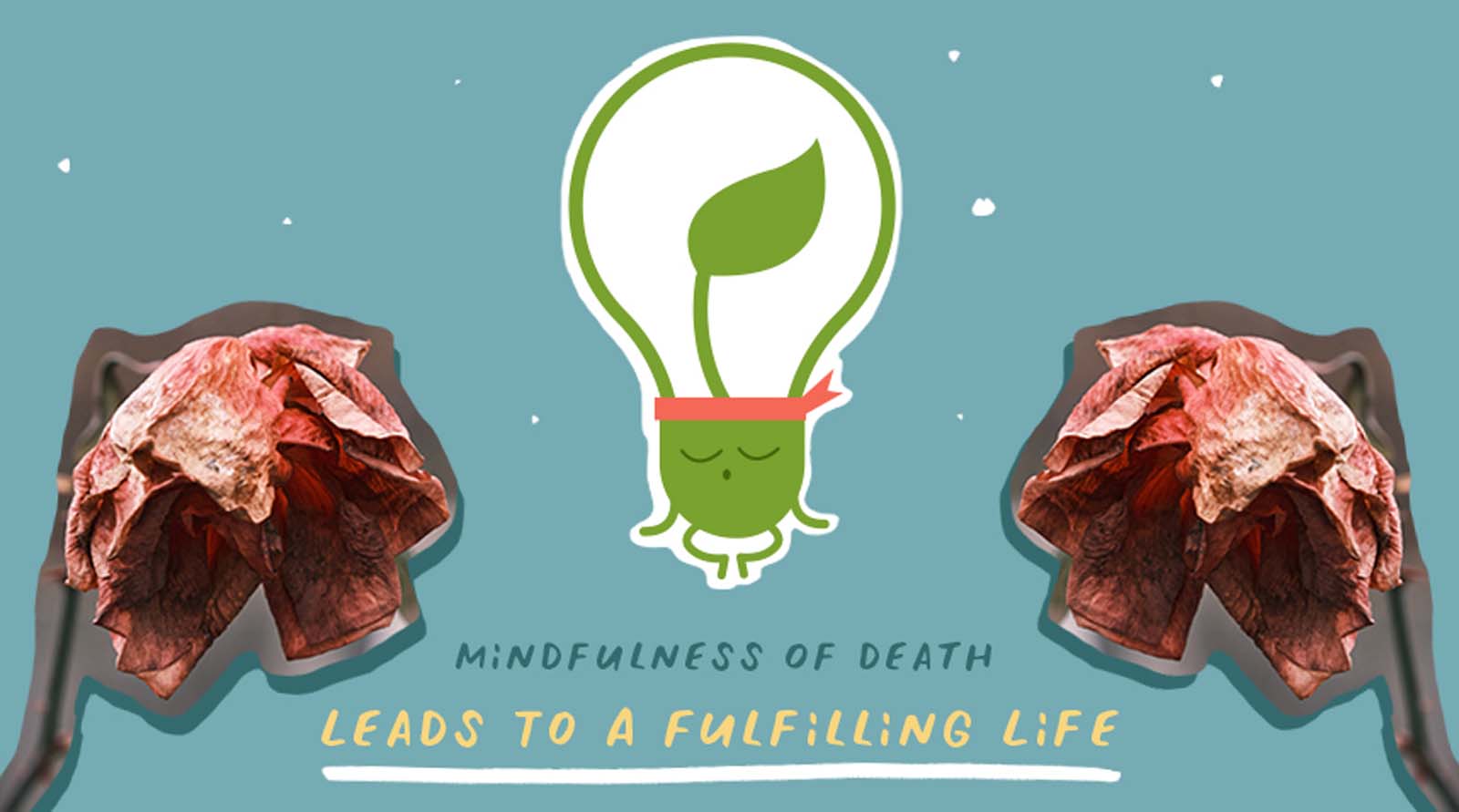
TLDR: When we don’t understand death, life can be very confusing. Recognising death’s uncertainty, we not only do what we like but do what matters.
Death is a reality no one likes to talk about. An ex-co-worker passed away lately and so did a friend’s sister. Throughout my life, I have seen the passing of family members to acquaintances. Either by illness and even accidents – some were sudden while others took a while to die. They include the old and the young. Reflecting on death inspired me to write about the mindfulness of death. However, being mindful of death does not mean we constantly lament and harp on this fact till the last breath. It is about how understanding death helps us live a good life.
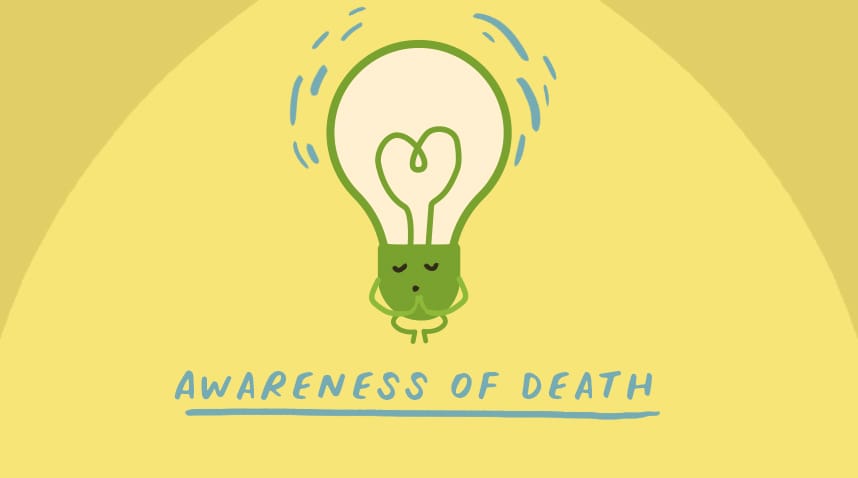
Awareness of Death
The unique ability of humans is our ability to be more aware of death compared to less intelligent life on earth. Despite this awareness, we do not pay much attention to it. What do I mean by paying attention to the reality of death?
We do not pay attention to the fact we have no control over the timing of our death. But yet we try to control everything else in our lives. We aim to live a good life measured by what we have or have not. We try to control our environment and others for this good life to happen. When in reality, if we cannot control when and how we die, how much control can we have over life?
This does not mean we give up on life to be lazy and lie down to sleep all the time. But the lack of awareness of death’s uncertain timing is a big reason most of us live stressful, discontented, and sometimes acrimonious lives.
The Good Life Is Linked To Death
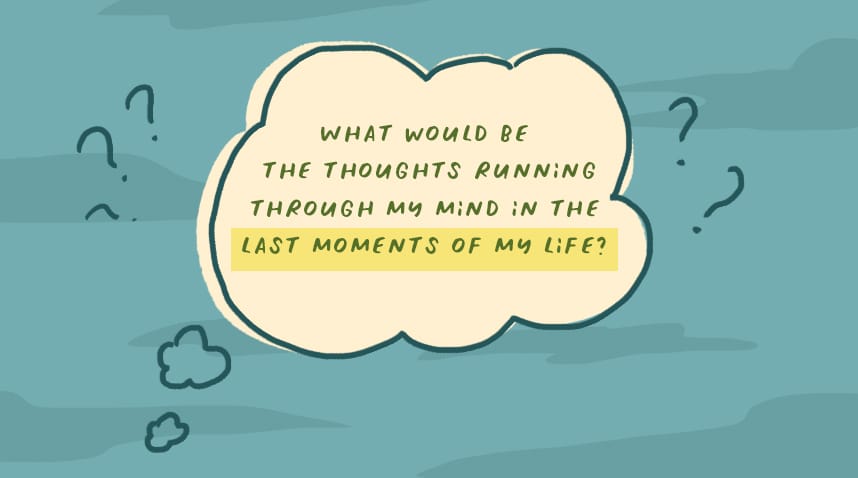
When we don’t understand death, life can be very confusing. This is one of my favorite sayings of Ajahn Chah, a forest meditation master. A simple way to look at this could be imagining our last moments at death. I have reflected on this a lot. What would be the thoughts running through my mind in the last moments?
Do I want to busy myself and sweat the small things in my life? No.
Do I want to spend my life in a state of discontentment and blaming others for obstructing my well-being? I must admit, I had begrudged others in my youth but also noticed I was really unhappy. It is not something that I want.
Having a good career and boasting about it wasn’t part of my plan too. I saw early in my life how fame and wealth come and go. Through my reflection, I saw how nothing really mattered in our striving because it will all be forgotten with time. If I died and became nothing, would having fame, having a fantastic career, and having good food or living in a big house give me a sense of satisfaction at death? Even if I had a loving partner or family, I had to leave them at death and there is no satisfaction at all – having lost my mother to death made me realize this.
That was what I reflected on in my youth. There was mindfulness of death in me. But I had no answer to what makes a fulfilling life. I focused instead of doing what I liked.
Mindfulness of Death Helps Us Let Go
Growing up I had thought the purpose of life was to achieve things and be satisfied at death. Only to realize that satisfaction never lasts. There was this constant thirst to fill the emptiness of the heart.
What filled my heart was recalling the good I had done in my life. Lifting the spirits of an intern in my company to helping another youth find stability in her career and life. Recalling how I had helped others filled my heart. The achievements I had at work could not really remember. Even if I did, they did not fill my heart, compared to how I was able to help others in little ways I could.
A good life should be a life that is relaxed and joyful, without guilt or regrets. To be relaxed is to be able to let go at every moment. We could have goals in life. Goals from learning a new skill to climbing the career ladder.
Understanding that we can never really have full control of people or of our environment, all we can is to do what is needed at this moment and then let it go.
To let go does not mean we are lazy or we do not care. To let go is to know that we don’t know what will turn out the next moment so there is no point thinking or holding onto it. Even if we want to help someone, that person may not want to receive help. So, we can only take whatever opportunity there is to help and let go rather than force a person to receive help or to expect an outcome.
Filling Our Own Hearts
What really matters is our heart. Mindfulness of death in every moment allows us to let go. Letting go we allow ourselves to grow in patience and inner security. Patience because we allow things to unfold from our actions without needing control. Inner security because mindfulness of death makes us aware of our mind, speech, and action. They all have a consequence on our conscience. This helps us become responsible for our actions. It would not be very pleasant to die with regrets of hurting someone or living a selfish life with the time we have.
Wise Steps:
Calling to mind our last moments allows us to let go of the trivial negativities that we hold so closely.
Knowing that many things are truly not within our control, to cultivate patience without the need for control.
To guard our hearts against regrets and guilt, develop compassion towards ourselves and others so that our impending death may be peaceful.
TLDR: Learning to see life in death requires courage. It is a great reminder to live life well and see joy even in the downs of life
We all know that our loved ones and ourselves will pass away someday. For the majority of us, however, this isn’t something we normally bring to mind – that is until circumstances make this a reality in our lives.
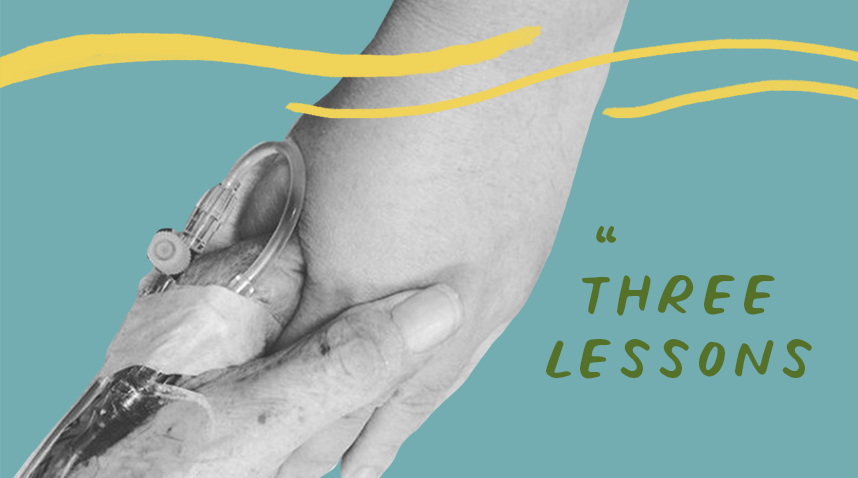
For me, this reality came in late-2017 when my close uncle (Tiuo Tiuo) passed away from Leukemia. Tiuo Tiuo was almost like a 2nd dad to me, and he was by my side through my various life milestones all the way until university. From Tiuo Tiuo, I learnt many life lessons – and the lessons continued even until his last days and beyond.
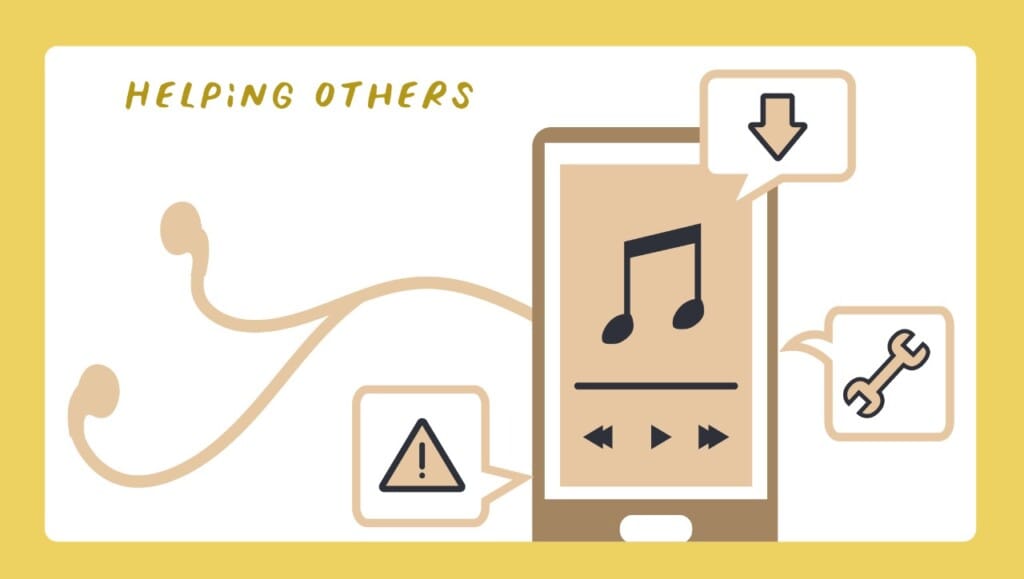
Helping Others
“There will come a year when we will have 1 less person (at Chinese New Year) compared to the previous year. It will be really sad and the memories of that person and his presence will certainly be missed. I also felt sad looking at Ah Ma’s picture on the wall. It is the first time I see a familiar face of someone on a wall like that…”
29-01-2017 (Chinese New Year)
Tiuo Tiuo was someone who enjoyed the simple pleasures in life! One of his greatest pleasures was to pluck in his earphones and immerse himself in the music on his handphone. However, he was never good with technology and often required help loading up or accessing his music. The job to troubleshoot his phone when it malfunctioned often fell to me – and honestly, it wasn’t something I enjoyed all the time (especially after a long day at school)!
“So Tiuo Tiuo’s leg has been troubling him these past 2 months, but more acutely these past 2 weeks. Old age and sickness indeed.”
11-10-2017
Looking back, however, memories of these small acts of service give me the greatest joy. There is little regret in my heart, knowing that I overcame my laziness to help bring minor conveniences and joy to Tiuo Tiuo. Since then, I made it a personal principle never to turn down requests from my loved ones as far as possible – we never know when that might be the last time we can help.
From Tiuo Tiuo, I learnt that being of service is a blessing.
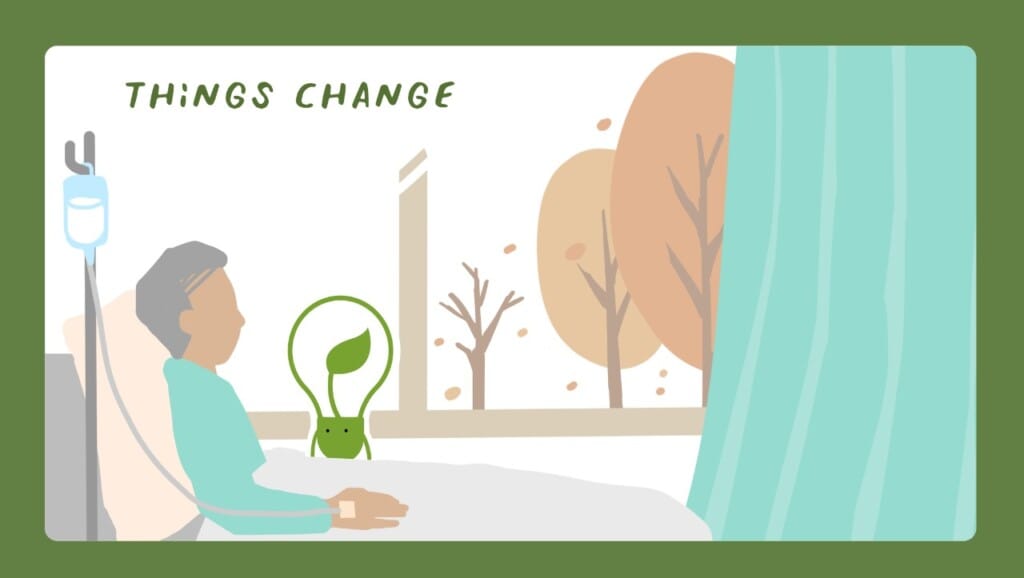
Things Change
“I brought Tiuo Tiuo to A&E for his full body check up… Was informed that he was diagnosed with Leukemia, which is essentially cancer… It is hard looking at Tiuo Tiuo suffering – not just his physical pain, but his mental expectations that this would be a short one.”
21-11-2017
Aside from listening to music, Tiuo Tiuo also loved to catch up on the latest news around the world! One of the common interests that we shared was to follow the latest English Premier League football highlights. As Tiuo Tiuo became weaker, however, these joys became harder to attain as his world turned more inwards.
“Tiuo Tiuo started his first chemo today… There is a chance Tiuo Tiuo will face many complications for his health and get more sick; or he might be on this long and gradual road to recovery and this state will hence linger for a few years. It is so uncertain.”
30-11-2017
Being by Tiuo Tiuo’s side as he journeyed through his last days, I saw that pleasures in life are not evenly distributed throughout. Many of the more enjoyable and sensually delightful experiences are often front-loaded in our youth and early adulthood. The less pleasant parts of ageing, sickness, the dulling of our senses, and the gradual losing of things we hold dear – these come slowly, but inevitably.
From Tiuo Tiuo, I learnt that conditions go their natural way.
How We Live
“Tiuo Tiuo has been admitted to the ICU and intubated and unable to speak, and the prognosis isn’t good… But what’s for sure is that he is suffering much now, and I don’t know how to ease his suffering.”
13-12-2017
As Tiuo Tiuo became weaker, he could not enjoy the things he used to enjoy. Instead, he sought a simpler solace from the companionship provided by our entire extended family who banded together to support him. Tiuo Tiuo lived his life in service of others. Through the decades, his humble 4-room flat played host to many of my Malaysian cousins working in Singapore who required accommodation.
As one of the respected elders in the family, he always rejoiced in our successes, and was quietly supportive in our times of struggles – even financially at times. As Tiuo Tiuo gradually grew weaker, he rested at peace with memories of a life well-lived and in the companionship of family.
From Tiuo Tiuo, I learnt that how we live, is how we pass.
“Thursday, the doctor said the falling BP and oxygen levels were signs that Tiuo Tiuo was passing away soon … I stood outside the glass door for an extended period sending metta (loving-kindness). That was the last time I saw Tiuo Tiuo alive… I went in and ma ma and mum were reassuring him that it is ok to pass; the rest were kneeling down, sis was crying badly. I did not cry. Sent metta to Tiuo and wished for him to be well and happy.”
24-12-2017
It has been almost 3 years since Tiuo Tiuo passed away. With time, the deep feelings of loss and sadness have given way to a more subtle appreciation of the values he represented. As I pay respects to Tiuo Tiuo at his altar daily, the lessons he taught also continue to inspire me to live each day fruitfully in service of others.
While Tiuo Tiuo may no longer be around, in many ways, he lives through the lives of many around him whom he had touched. Our loved ones and ourselves will indeed pass away someday, and we do not need to wait for this to be a reality before we learn the lessons that death and dying presents.
By realising our mortality, may we learn to be less intoxicated with youth, health and life. By learning the preciousness of our human life, may we allow mindfulness and wisdom to guide us on the path towards truer and more lasting forms of happiness.
Wise Steps:
Learn to see the bright sparks in the bleakest of time, as every moment is an opportunity to find sparks
Knowing that separation is inevitable, fruitfully serve those around you
Resources to help in death (and life) contemplation:
TLDR: We get busy making plans after plans. But what happens when our plans are upended? With the pandemic, some plans such as having a holiday overseas may take another year or two to unfold. Maybe life is just it. This is it – with or without plans, we can learn to live life in gratitude.
Most of us make plans. One plan after another. Some are short-term such as going on a holiday. Others are long-term such as getting married and buying a property. For the last few years, I have stopped making plans except to take time off to go for meditation retreats. Thanks to COVID19, I realised that was a plan too. A plan is something you have in mind to do in the future. Despite not making as many plans now as compared to my youthful self, making just one plan is a plan as well.
In 2019, I attended a course and met several people whom I made a few plans with. These plans included travel.
When Plans Don’t Go Your Way
Making plans is a normal routine. You wake up, think of the task you have in mind for the day. Then you brush your teeth, have your breakfast, take a bath and act on your day’s plan. Though the daily routines of brushing the teeth, and having breakfast are small plans we make from one thing to another.
What happens when your daily routine or plan is upended? Maybe you are used to going to bed at 11 pm but a friend who needs to talk about an issue is preventing you from sleep. What about being told by your manager to change your presentation after you have worked on it to perfection? With the current pandemic, most of our holiday plans have gone down the drain.
This period of major changes does not allow our plans to go as planned. It can bring on frustrations and impatience.Some are suffering from the loss of their jobs while others are still trying to get used to having lesser social contact.
The Reason We Make Plans
What happens if you were to stop making plans one day? Try it. Take a day not planning to do anything at all. It is hard right? Our brain is wired to do things and to take rests in between. It feels uneasy without a job. There’s a saying, “An idle mind is the playground of the devil.” When we don’t give our brain a job, it seems to spiral downwards.
Having plans makes us feel alivebecause there is something to look forward. Without something to look forward to, life has no purpose and it may feel as though we are waiting to die. Though the truth is, no matter how many goals we have and how many things we have to do, we are still marching towards death.
Could it be possible that we make plans so we feel we exist? Is having plans a way to feed the ego’s existence?
It’s Time to Stop
Having plans can bring frustration when it does not come to fruition. Not only that. The time of death is uncertain. Having plans after plans can cause this fear that if death comes, these plans would come to a halt. Or you might never see the fruition of them.
Is it possible to do the tasks according to plans without thinking of its fulfilment? It is like going on a holiday. We plan and expect an enjoyable trip. But during the trip, we don’t feel it is special, and instead of being rested, we feel fatigued.
Imagine the possibilities spontaneity and acceptance can bring without us being attached to our plans and its fulfilment. Making plans is inevitable in life with family and work goals to fulfil. But many times, frustration and impatience set in because we want the plan to unfold as we had imagined it. A little inconvenience may cause blood to boil.
Not clinging to how a plan should be completed opens up fresh possibilities and creativity in spontaneous moments.
When I discovered that my mind was dissatisfied because I was hinging on my plans to unfold one day, I realised I had taken life for granted. I was not appreciating the moments I have. Even if there is nothing going on in my life, I have my breath. Watching the breath and wishing those around you well in meditation is a very pleasant job for the brain even in active life. My longing for a meditation retreat to reconfigure my mind of a bad year was really one of the causes for having a bad 2020.
Most of us go about our busy lives without questioning why there is a feeling of sadness, of dissatisfaction or frustration. I went through last year learning to lift my mind through relaxation. But it was not until I realised that even a small plan like wanting a meditation retreat could cause upheaval in the mind, that I became content with all that there is right here, right now.
Wise Steps:
Make goals without being attached to the plan its fruition. Allow spontaneity and flexibility to add creativity in what you do.
Give the mind a job to anchor it to the present (such as your breath) so it does not create an unrealistic image of your plans, which when unfulfilled can bring frustrations.
Take a pause to breathe in and out slowly every twenty minutes by setting a bell on repeat to help you rest and feel refreshed.
TLDR: Yoga will not save you from aging. As your body ages, don’t take it personally. Reflect & live.
Yoga & back pain
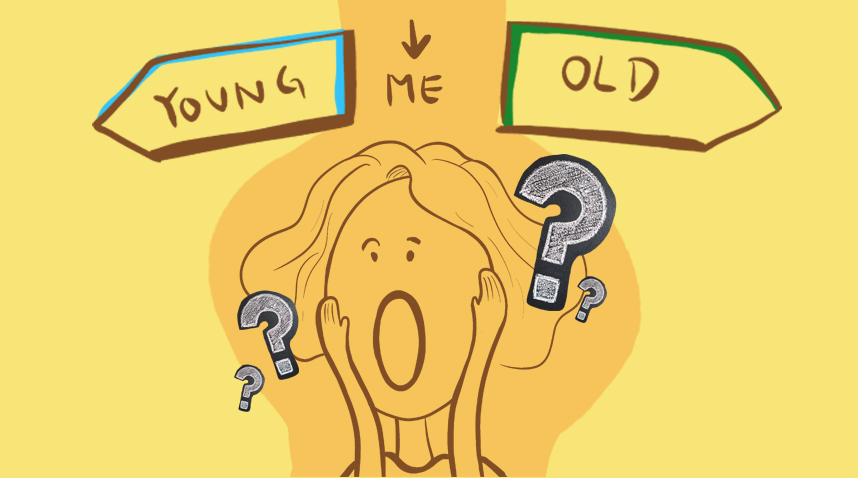
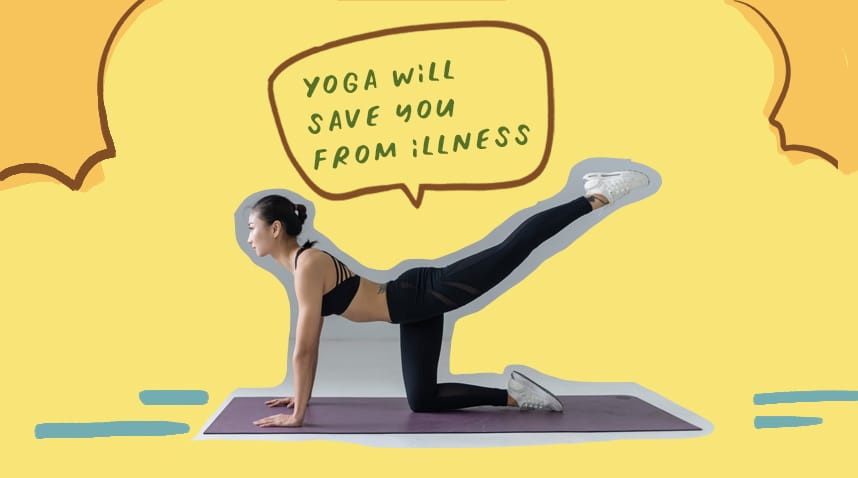
A few years back I was at a dinner with a friend who is six years my senior. She complained about back pain. She said her bones and back was hurting everywhere. My immediate thought was that she wasn’t doing enough stretching or yoga. My belief at the time was that yoga will save me from such ills when I grow old. Fast forward four years today, I texted her to tell her I know how she feels now. I am at an age where I can’t identify with being young, and I also can’t identify with being old (yet). I realised I am stuck between youth and ageing – commonly known as middle-age.
I have never grown old before. I don’t know what it will encompass except the hardening of joints and muscles, weakening bones with various names given to these conditions.
I now realised that I have no control over my body. Being young, we are duped into thinking we have control over our body when we could do more physical work and exercises with it. Now, a lower back pain from sitting too long could affect the knee and pull the upper muscles of your body downward. I guess this is what gravity does. I remember the times in my youth when I had joked about how our skin and muscles will succumb to gravity, without thinking about the gravity of the matter literally.
Being young, we are duped into thinking we have control over our body
The aging disconnect between mind and body
The physical deterioration of the body made me reflect a lot lately. Do I have a phobia of aging?
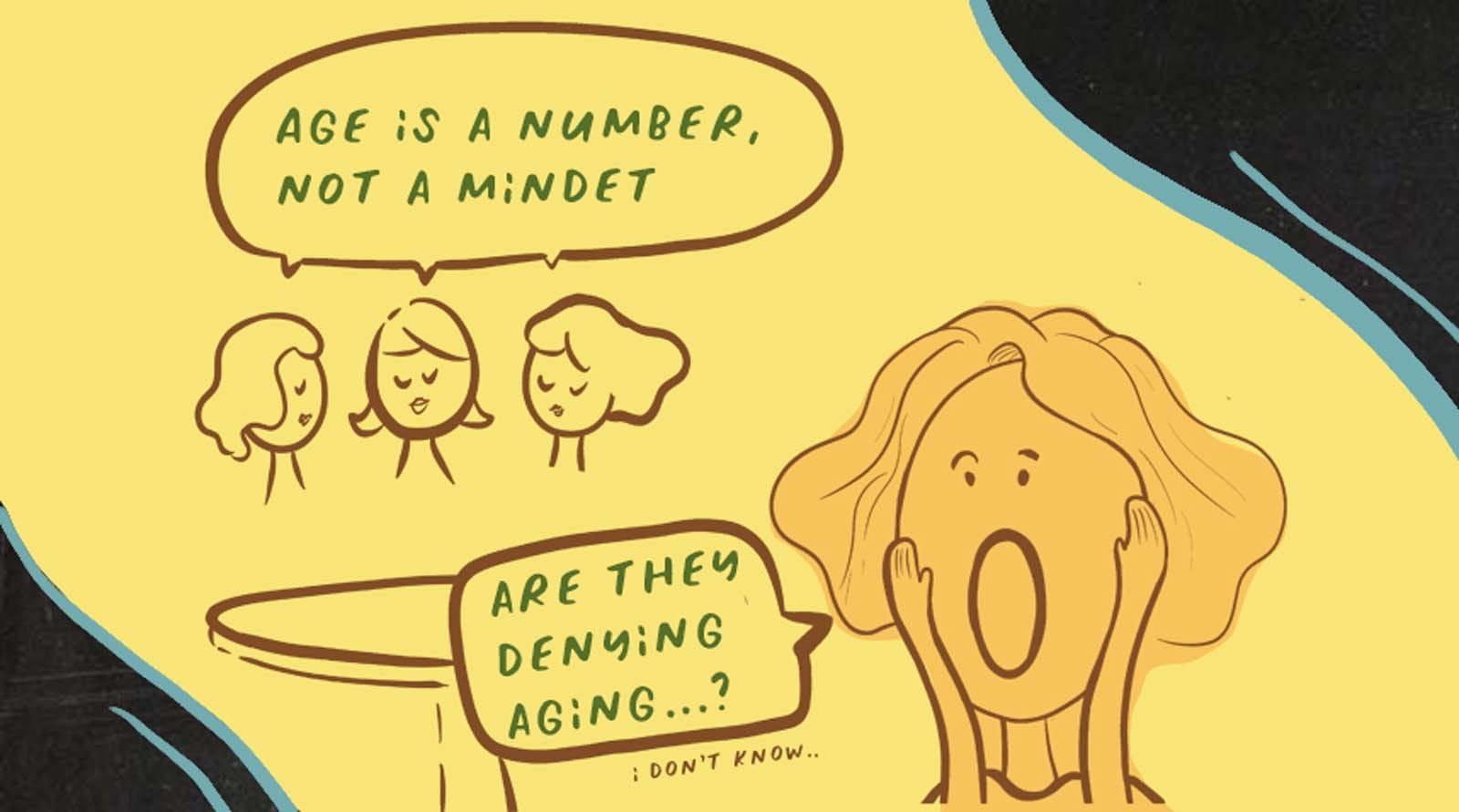
In terms of health, it pours instead of rain when we grow old. I see my father with his body getting stiffer by the day. He is now in his 80s. I have not heard him complain like my friend or myself about having body pains and aches. He has not accepted being old or being ill and has to suffer from it on an ego level. Many people around my age told me ageing is a number and a mindset. I don’t know if they are denying ageing. I see many elderlies in my estate. I think to myself they probably don’t relate to being old in their minds, except the body telling them so.
The path we all move towards
So, I’m now in the middle of youth and ageing and a bit reluctant to go further to find out what else is in store. It doesn’t seem to affect my friends much though they too feel ageing’s effects. They are older than I am. They are still pretty much drawn into the things offered by the world – such as food, travelling, learning to invest, being quite involved in their daily work.
For me, I am also learning new things to catch up with a world which has changed quickly from when I was growing up – from liberalism to growing nationalism, from analogue to digital. I am not as interested or absorbed by the work I have to do, but just doing what I need to do daily to fulfil my duties. Deep in my mind amidst activities, I constantly think about how I can strengthen my mind on this path we all move towards, which is the end of life.
I’ve read many books on the end of life to past life regressions. From these books, I understand there is nothing to fear about death but fear itself. Many encounters of death related by those who experienced it briefly, said it is a relaxing feeling. I guess it isn’t so much that death bothers me, but the body’s reluctance to listen to my instructions and the discomfort it causes as I age.
Have you seen your one way street?
The truth is, life is a one-way street. We may fall in love with our body and life, but it eventually becomes an unrequited love.
We can’t marry it and sign a contract for it to last forever. For the encounter with death to be relaxing I figured I have to learn to relax with whatever comes my way and in all that I do. I also had to ensure I do nothing to cause regret or guilt that weighs down the mind.
do nothing to cause regret or guilt that weighs down the mind.
There is no assurance in our heart as we have no certainty on what happens after death. I think this is what causes fear. But the mind is a powerful tool. A confused mind tainted with wants and guilt versus a trained mind free from guilt or expectations make a difference in one’s life as well as in death.
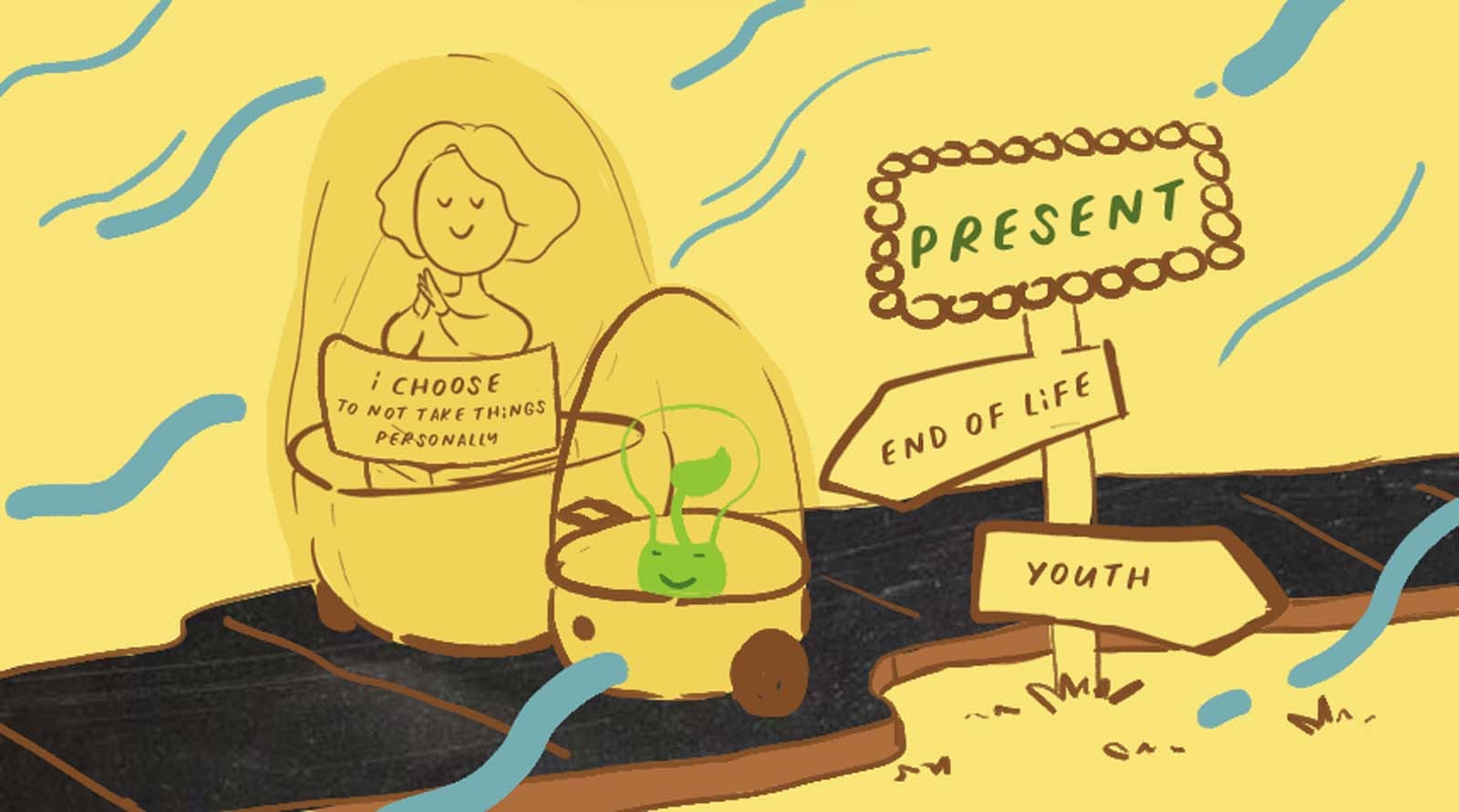
I dare not say I have a totally relaxed mind that is free from fear. But I decided that no matter what I do in my daily life, I resolve not to take it seriously or personally. Although I feel I am overly focused in work sometimes more than I would like to. How I work now compared to when I was young is that I no longer think far or have any dreams or expectations in its results. My only focus is to learn to relax and not hold onto anything by having expectations of life or anyone. Interestingly, I am happier now compared to when I was younger despite an ageing body.
Deep in my heart, I understand there is something that is permanent within all of us, that stays stable despite our ups and downs in life. I only hope that whatever time I have, I will be wise enough to spend time knowing this part that is elusive from thoughts and only accessible by mindfulness.
Wise Steps:
View ageing (white hair, wrinkles) as a process to understand rather than challenge
Use ageing as a reminder to seize the ever diminishing resource we have – Time