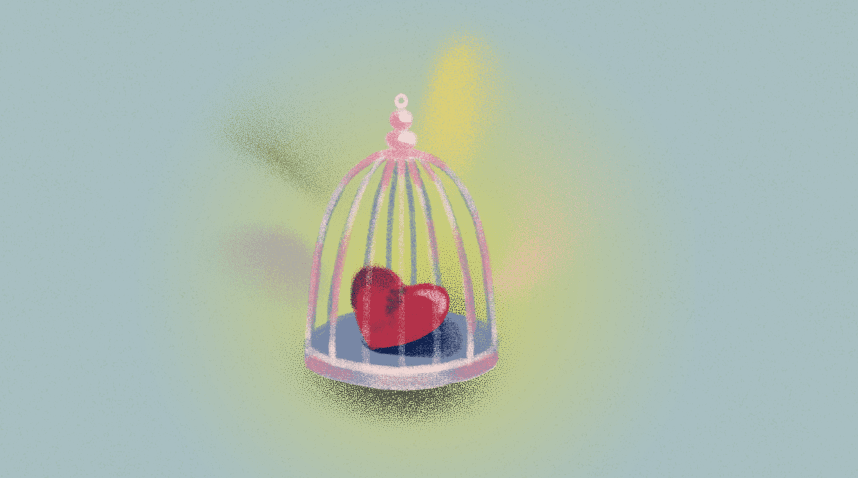
TLDR: How to navigate the uncertainties of online dating? Learning to want less, expect less and identify what is within and outside of our control can help us know ourselves better.
As a young (<30-year-old) man interested in women, I spent the last four years actively swiping on various dating apps looking for a partner for a long-term relationship. The search has not resulted in a lasting relationship, and I am still single, but all is not lost: reflecting on the process has produced some thoughts that could make dating less painful, which I hope to be able to share.
“Mendicants, I do not see a single sight that occupies a man’s (woman’s) mind like the sight of a woman. The sight of a woman occupies a man’s mind.”
Of course, the Buddha also said:
“Mendicants, I do not see a single sight that occupies a woman’s mind like the sight of a man. The sight of a man occupies a woman’s mind.”
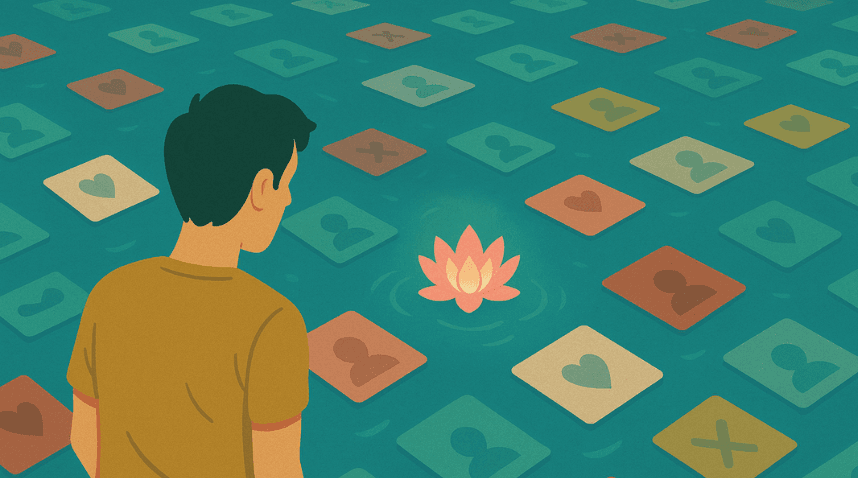
I think this sutta does describe the underlying drive behind dating. We allow the many facets of others to occupy our minds and thoughts, making them our singular focus—and create for ourselves a world of distinctions, complexities and possibilities (& unhappiness!)
Online Dating: More Than Just Swiping
Online dating is a process that involves the creation of profiles by interested people—you curate photographs, videos and short descriptions and traits about yourself, list out your preferences in a partner (gender, age, relationship type, etc. ), and the dating app platform searches for suitable people meeting those preferences and presents them to you. Next, you decide if you’d like to connect with them, and if they feel similarly about connecting with you, they accept, and it’s a match! The talking part commences, and possibly an in-person meetup in the future should both parties agree.
The Three Kinds of Uncertainty in Online Dating
As simple as the process sounds, looking back, I’d say that my experience of online dating is one that can be characterised by three kinds of uncertainty:
First, the uncertainty in whether I’d meet someone; long stretches of not matching with anyone, wondering if there was something lacking in myself that made me unworthy to be considered, and the additional loneliness I felt through this process of waiting.
Second, the uncertainty in whether I’d get along with the people you meet; people came in with their own expectations, ideas and thoughts about the dating process. Many were just bored, and wanted to see what it was like, without any real interest or investment in the process. Some appeared to be dating according to a checklist, keen to find any point of incompatibility. Others were disinterested, and spoke nothing much. Many matched and neither spoke nor responded to a “hello”, and unmatched soon after.
Ghosting happened often, expectedly (and also most unexpectedly), and people regularly dropped out of connections that they had no interest in continuing—without even a “this isn’t what I’m looking for, goodbye”.
(Let me note that: people should not have any obligations to continue conversations that they don’t feel comfortable or safe engaging in. Ghosting can be the best way to end an interaction, especially if further explanation or reason only serves to magnify the discomfort or danger.)
Being ghosted created more self-doubt: was it the quality of my end of the conversation? Was I too serious? Not fun enough? Not interesting enough? Too desperate? Too insecure? Was I not a good person? Was I not good enough? Was it something about me that I could fix? Skill issue? Frustration and unhappiness also arose from being “unceremoniously” disconnected.
Thirdly, the uncertainty in building a lasting connection. For the few matches for which conversations were responsive and interesting, that I felt increasingly invested in, there was the uncertainty and anxiety in being able to hold on and build something out of the connection.
Upon reflection, I guess I did also turn people away for being too intensely invested in the process. This came with feelings that it was my flaws that sabotaged it, and wondering if I’d ever meet someone as unique, great and good as them ever again.
Eventually, it also dawned upon me that I had no real sense of what was going on. I just had an “idea” that I had a stake or an investment in a relationship — I too had no clue what I was going to do with a relationship beyond the first few dates.
Reflecting on my experiences (with the help of the Dhamma) has made them less painful, and I’d like to share some thoughts that’ve comforted me, and helped me to look at the dating process differently.
Wanting Less, Hurting Less
Wanting brings a sort of dissatisfaction—so want less: At the root of it, the preoccupation with dating & finding someone is itself a source of suffering. The Buddha taught that the:
“…union with what is displeasing is suffering; separation from what is pleasing is suffering; not to get what one wants is suffering”
When we find ourselves in relationships that are unfulfilling and unbeneficial, there is unhappiness. Losing, changing, or ending a promising connection that we greatly enjoyed is also a form of unhappiness, and when we seek but do not find someone suitable for us, that is yet another sort of unhappiness.
My takeaway: To moderate my wants & expectations regarding relationships. Although the inevitability of (some degree of) suffering attached to the pursuit of romance and love persists, by letting go of unrealistic or unnecessary expectations about relationships, I subject myself to fewer avenues of suffering. To me, this is a call for simplicity and moderation in my expectations about relationships—to focus on the few and vital aspects that are the most important to me.
Focus on What You Can Actually Control
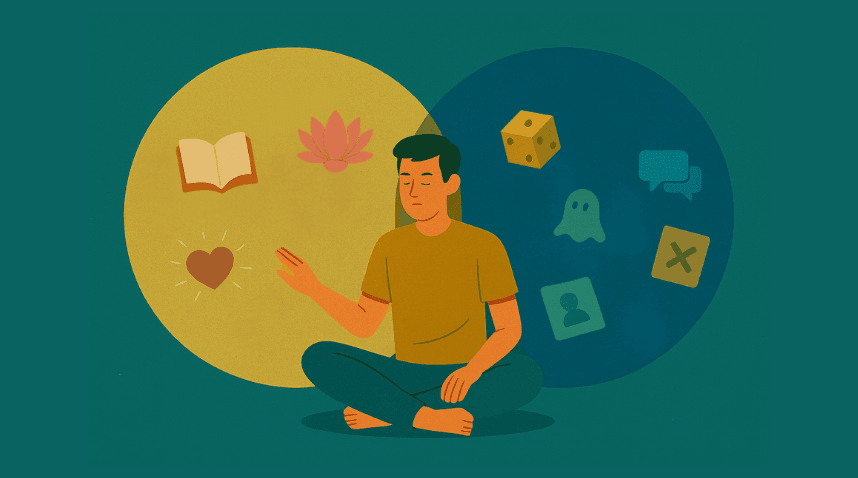
What is within & what is beyond our control: I think we spend too much time and effort on what is outside our control, and too little on what is within our control.
What is outside of our control? Meeting the right person. What is within our control? Our happiness and fulfilment.
My takeaway: We may think that the process of encountering people is entirely within our control, but that isn’t necessarily true. We can do a great deal in setting ourselves up for success—by the ample possession of good morals, qualities, traits, behaviours and habits, by looking for people in the right places (not on online dating platforms perhaps 😜), by ensuring that we are in the right mindset and frame of mind to date. However, we are ultimately dependent on there being a suitable counterpart out there—someone at the right place, right time, who shares a compatible outlook on life.
The online dating scene is noisy and full of distractions—people are in it for a variety of reasons and try as much as we do to filter incompatible people out, chance and uncertainty features strongly in this process. Just as we don’t expect to be the lucky draw winner for every contest we enter, and aren’t overly disheartened by this outcome, we should practice a sort of “patient forbearance” (khanti) in this process, and focus on ensuring that we have done what we can to set ourselves up for success.
My takeaway: We may think that happiness, fulfilment and completeness come from finding the ideal partner, but that isn’t necessarily true.
There are some joys that arise from being partnered, such as the experience and ability to care for and be cared for in romantic relationships, having someone to share and experience life with; but our happiness and fulfilment is largely our own affair.
Even if a partner presented to us all that we need to be happy and fulfilled—whether materially, emotionally, romantically or otherwise—blinded as we are by our expectations and wanting, we would not be able to recognise and appreciate it. The solution to this lies within ourselves.
When we work on ourselves, the most natural and immediate beneficiary is not our (prospective) partner, but ourselves. The cultivation of skilful, beneficial and wholesome qualities brings immediate and long-term improvements to our lives. These traits would also attract like-minded people who appreciate them—an additional plus point. Similarly, the letting go of unskilful, unbeneficial and unwholesome qualities makes us easier to live and interact with, benefiting both ourselves and those around us. When we are easy to get along with, people find our presence enjoyable and less stressful, which is an added bonus.
Know Thyself: The Hardest Swipe
Know Thyself: If I were to condense all of my thoughts about dating learnt over the past four years into a single phrase—it would be “know thyself”.
My takeaway: We are best placed to truly understand ourselves and what we are looking for in relationships; to know what it is that we actually want and whether it is helpful to us.
Our continued fixation on idealised images and aspirations about dating brings us a great deal of unhappiness when they go unmet, or when reality is dull compared to our expectations.
Self-knowledge brings perspective on the relative importance of relationships compared to the other things in life: our family, friends, work, spiritual practice, health, and other life goals.
Could we also find a great deal of contentment, fulfilment and freedom in our current singlehood? If yes, by sowing good causes and conditions, we can patiently wait for the opportunity to meet someone aligned with our approach to life—and discern when a person isn’t suitable for us, and vice-versa .
Ultimately, respect, and concern for the welfare—physical, emotional, mental and sexual—of others underlies the whole process; after all, it is meant to be a joyful and enriching process for both parties after all.
Finding Peace, Not Just a Partner
In the spirit of the ‘Serenity Prayer’ by Reinhold Niebulr:
“… give us courage to change what must be altered, serenity to accept what can not be helped, and insight to know the one from the other.”
May we aspire and work towards healthier and sustainable tendencies in dating!
Wise Steps
Be clear about what I want from relationships – moderate my wants and expectations
To understand what is beyond my control and what is within my control
To know myself – have clarity on what I am looking for in relationships
Editor’s note: This is an adapted article from Roberta’s blog of reflection and learnings
TLDR: Leading with compassion isn’t soft—it’s essential for emotional intelligence and effective leadership.
It’s easy to be compassionate toward people we love. Friends who need support, family members going through a hard time—we extend kindness almost instinctively. But what about the people outside our inner circles (a.k.a. strangers)? The ones who frustrate us, the ones we don’t understand, the ones we don’t even know? Or maybe the inverse? When we take our loved ones for granted.
In Search Inside Yourself, a book that started as an emotional intelligence program at Google, Chade-Meng Tan argues that compassion isn’t just a moral virtue—it’s a skill that can be trained like a muscle. And when we build that muscle, we don’t just become more patient or kind; we become more present, more emotionally intelligent, and ultimately, better at navigating life.
Why Compassion is a Game-Changer for Personal Growth
Many of us spend years trying to “fix” ourselves—reading self-help books, setting goals, chasing productivity hacks. But what if the real transformation comes from something simpler?
When we practice compassion—toward ourselves and others—we stop seeing mistakes as failures and start seeing them as learning experiences. We stop taking things so personally. We become less reactive, less consumed by resentment, more open to change.
The more I reflect on this, the more I realise how much suffering is self-inflicted. How often do we replay an awkward conversation in our heads, assuming we embarrassed ourselves? Or beat ourselves up over things we can’t change? Imagine if, instead of criticising yourself, you treated yourself like a close friend. Wouldn’t life feel lighter?
Compassion Makes You a Better Leader (and Human)
If you look at the world’s best leaders—not just in business, but in communities, in families, in friendships—they all have one thing in common: they lead with emotional intelligence. And emotional intelligence is built on compassion.
We’re currently seeing a lot of the other type of ‘leaders’ on the world stage. A leader who lacks empathy demands perfection, dismisses emotions, and leads through fear. A leader with compassion, on the other hand, listens, understands, and inspires. They don’t just see what people do; they see why they do it. And that makes all the difference.
But leadership isn’t just about running a company or managing a team. We lead in our everyday lives—whether it’s showing up for our families, guiding a friend through a hard time, or simply setting the tone for how we interact with the world.
How to Build a Habit of Compassion
Like anything worth developing, compassion takes practice. Here’s where to start:
Pause Before Reacting – The next time someone frustrates you, take a breath before responding. Ask yourself: What might be happening in their world right now?
Turn Self-Criticism Into Self-Compassion – When you catch yourself being harsh, reframe it. Instead of, “I messed up,” try, “I’m learning.”
Make Eye Contact and Be Present – Really listen when people speak. Put your phone down. Acknowledge people. Small moments of connection create big change.
See Everyone as a Work in Progress (Including Yourself) – No one has it all figured out. We’re all just doing our best. Give others grace.
Compassion Isn’t Soft—It’s Transformative
The world often teaches us that kindness is weakness and hat to succeed, we have to be cutthroat, unyielding, and detached. But the truth is, compassion makes us stronger. It makes us more resilient, more adaptable, more human.
To borrow words from the Buddha, to be a person of true compassion is to be like a cloud of boundless rain, watering and nourishing the lives of others regardless of who and where they are.
So maybe the real secret to becoming the person you want to be isn’t about trying harder, achieving more, or pushing through at all costs. Maybe it’s about softening. About choosing understanding over judgment. About recognising that the more we give, the more we grow.
Because in the end, the way we treat others is the way we shape ourselves.
TL:DR: The time after post-breakup can be challenging. In this article, we’ll discuss how one can cultivate an inner environment of peace, as well as sculpt a healthier and more positive mindset, to themselves, their partner, and their future.
Letting go is only one part of the journey. What comes next is the process of healing—for both you and your former partner. Even if the breakup was mutual and handled with care, emotions do not disappear overnight.
Navigating a breakup can be emotionally overwhelming, but healing is possible with mindfulness and self-compassion. Buddhism teaches us to meet our emotions with mindfulness, not suppression. Allow yourself to feel the sadness, the loss, or even the relief without judgment. Grief does not mean the breakup was wrong; it simply means something meaningful has ended.
Here are a few ways to heal with wisdom and self-compassion:
Sit With Your Feelings Without Clinging to Them
After a breakup, the mind often spirals into what-ifs and regrets. Thoughts like “Maybe I should have tried harder” or “What if I never find someone like them again?” may arise.
Instead of pushing these thoughts away or drowning in them, observe them with mindfulness. Treat them like passing clouds—real, but impermanent.
A helpful practice is to sit quietly and acknowledge:
“Right now, I feel sad. And that’s okay.”
“Right now, I miss them. But feelings come and go, just like everything else in life.”
This simple awareness helps you create space between yourself and your emotions, rather than becoming consumed by them.
Release the Need for Closure
One of the greatest sources of suffering post-breakup is the belief that we need a perfect ending—a conversation that wraps everything up neatly, a reason that makes complete sense, or an answer that soothes all wounds.
But life is rarely that tidy. Sometimes, people part ways without full clarity. Sometimes, emotions remain unresolved.
Buddhism reminds us that seeking control over impermanence only creates suffering. Instead of seeking “perfect closure,” allow yourself to make peace with what is.
Closure is not found in words from another person; but in your acceptance of what has passed.
Cultivate Loving-Kindness for Yourself and Your Former Partner
It is easy to dwell on pain, resentment, or guilt after a breakup. But holding on to negative emotions only prolongs suffering.
A gentle Buddhist practice to support healing is Metta Bhavana (Loving-Kindness Meditation). Even if your heart feels heavy, take a moment to send these wishes:
To yourself: “May I be at peace. May I heal. May I grow.”
To your former partner: “May you be happy. May you find peace. May you live with ease.”
At first, this may feel difficult—especially if the breakup was painful. But over time, releasing love rather than bitterness frees you from emotional entanglement.
Loving-kindness does not mean you have to stay in contact, reconcile, or agree with everything that happened. It simply means you choose to let go with grace, rather than resentment.
Shift Your Focus to Growth
Relationships are not failures just because they end. Every relationship—no matter how long or short—teaches us something about ourselves, our needs, and our capacity to love.
Rather than fixating on what went wrong, ask yourself:
“What did I learn from this relationship?”
“How did this experience shape me into a better, wiser person?”
“What kind of love do I want to cultivate in my future relationships?”
By shifting your perspective from loss to growth, you honour the experience rather than regret it.
Embrace the Space That Has Opened
A breakup is not just an ending; it is also a beginning. It is the opening of space where you can rediscover yourself, reconnect with old joys, and explore new experiences without the constraints of a relationship.
Give yourself time to:
Reconnect with previously neglected hobbies and passions
Strengthen friendships and family connections.
Spend time in solitude to nurture self-awareness and self-love.
Instead of rushing to fill the void, allow the empty space to breathe. In time, you will realise that this space is not loneliness—it is freedom.
Closing Reflections: Love as a Path, Not a Destination
In Buddhism, love is not seen as something to possess, but as something to cultivate.
True love is not about holding onto a person; it is about wishing them well, whether they walk beside you or take a different path.
A breakup, when handled with wisdom and compassion, is not a failure of love—it is a continuation of love in another form. It is the recognition that, sometimes, the most loving thing we can do is let go.
So as you step forward from this ending, remember:
Love is never lost. It simply transforms.
Pain is temporary, but growth lasts a lifetime.
Your capacity to love remains, and it will find new ways to bloom.
No matter where you are in this process, be gentle with yourself. Healing takes time, but every moment of acceptance, every breath of kindness, is a step toward peace.
Other HOL Articles for those dealing with breakups:
TLDR: Fathers in our lives may be stern and commanding, but they provide sustenance, practical advice, and express their love in different forms. Father figures during Buddha’s time highlight fatherly love, sacrifice, and invaluable teachings such as unconditional love and gratitude.
A warm and caring figure comes to mind when we think of our mother. On the other hand, when we think of our father, fear strikes our hearts.
Why can’t we have a warm, sacrificing father like Ne Zha’s father, we may wonder? Perhaps our fathers’ sacrifices come in different ways, and they are often too little, too late, before we realise.
Letting Go Is Hard
When I was sent abroad to study in the United States of America (USA), (I was studying and living there for 12 years), and with long intervals of about 2-3 years before I returned to Malaysia for visits, I thought my father had abandoned me.
Though later on, I realised that, due to financial challenges of sending me abroad at the height of the 1997-1998 Financial Crisis, and also my father’s battle with cancer (he’s now a 4-time cancer survivor), the regular trip home is hard to materialise.
Furthermore, my father was worried about me being affected academically (he doesn’t want me to worry about his health) and financially (cancer treatment costs a lot!), so it was next to impossible for me to visit home frequently. Mind you, this was the world before WhatsApp video calls existed, hence, letter writing (snail mail) and using International phone cards to make voice calls was used.
When working and living in Singapore, going on regular meditation retreats, and pursuing my five years of Buddhist Studies, from Diploma to Master’s, I never quite understood my father’s concerns about how I should prioritise my career before learning Buddhism. I thought that my pursuit of Buddhism would help not only myself but my parents too, if I could better educate and share the Dhamma with them.
This is where I recollect and remember the story of King Suddhodana’s concern for his son, the Buddha, and then his grandson, Rahula.
“Sometimes letting go is harder than breaking up.” While the lyrics come from a romantic song, it poignantly reminds me of my father’s great sacrifice. He sent his son away to study abroad for a better future with no certainty that the distance will not disrupt the already tenuous bond between them.
Sacrifice My Own Needs, for My Child’s Need is Greater
Biologically and psychologically, one can argue that it is for preserving one’s offspring’s genetics and contributions over time. For a very long time, I never quite understood the seemingly irrational ideals of someone sacrificing their own needs for the needs of another, until it happened to me.
As a childless single, I often surprise my friends when I mention “my kids” In our conversations.
I refer to my students under my care, my counselling students, as my kids. It’s an internal code word for some of us in the counselling field of a particular biological age, where we would and could have been fathers and mothers, to activate our parental instincts.
As one of the volunteer teachers for the Buddhist Fellowship (BF), Junior Youth (JY), a group of 13-16-year-old students for BF regular Saturday afternoon classes, it is one of my privileges to bring snacks and drinks for the students for their tea break. It is always interesting for teachers to observe and identify which snacks are in vogue amongst our “kids”.
Getting the right snacks that get consumed earns us bigger joy than hitting the metaphorical jackpot, it seems!
In the story of King Bibimsara and Prince Ajatasattu, despite Prince Ajatasattu’s traitorous intent in taking over his father’s Kingdom and torturing King Bibimsara, we read that the king only has goodwill towards his son. Prince Ajatasattu realised the love of a father only when he became a father, albeit a bit too late as King Bibimsara had passed on.
While I have glimpses of what a father’s sacrifice could be like, thinking and worrying about those under my care, I also realised that I would never fully understand a father’s sacrifice, unlike my best friend Marcus, who became a new father last year. Bro, I guess I can forgive you for becoming more absent in my life, as your child needs more attention than I do.
As friends of our peers, friends, and colleagues who are young parents, may we extend our love and compassion to them for the great sacrifice they make. I would add that we should not forget to extend the same to ourselves, when we have to part with our close friend’s company. As a helping professional, I often remind my clients that one’s suffering is not a comparison game, that one’s suffering is no less than the other’s.
Resilience : Top Life Lesson from my Father
When I shared my topsy-turvy life journey, moving from Malaysia to the USA to Singapore, many wondered how I grew from a shy, introverted child, the metaphorical soft and easily bruised strawberry, to the charismatic, extroverted man, or what I considered to be the hardy and thorny durian fruit I am today.
I like the metaphor of the durian fruit because while I may seem hardy and tough on the outside, I am still very sensitive deep down; also friendly and wonderful to get to know, though I find it increasingly hard to let people into my life.
My father is a Polio victim survivor. For those who don’t know, those BCG jabs that you received for vaccination actually help to spare you from the crippling nerve disease that caused my father to grow up with a shrunken left leg that causes him to walk with a limp.
Despite my father’s physical limitations, my grandfather (toxic masculinity ideals or the practical realities of the harsh life facing men of those days?) makes my father a socially athletic handyman around the house. My father’s nickname is Coach, for he self-taught himself how to swim from reading books, and he had coached many to swim (except his three sons)…
Additionally, as a 4-times cancer survivor still living as healthy as possible given him closing on to 80 years old, my father was the symbol of resilience and inner strength that I had learnt to embody over the years of facing my demons and hardships in life.
In the Sigālovāda Sutta, the young man, Sigālaka, was guided by the Buddha on the teachings Sigālaka’s father was trying to convey. Themes of respecting one’s parents and teachers, avoiding vices such as gambling, and making good friends are qualities that are not only taught by my father but are lived by him.
Visiting and spending time with the elders during Chinese New Year makes sense now, as strong social connections are a predictor of a good life for our elderly relatives and friends. Social connections are essential for both the young and the old.
Sketched by playingwithpencil
In closing, I would like to dedicate my appreciation and gratitude to my father, Mr. Lim Siow Choo:
Father, thank you for teaching me the lessons of life not only through your exemplary guidance when I was young but more so through your lived experience of living the good life.
I am a better person today because of you. You taught me to look for a hero within myself, to be the best man I can be, because you showered me with the “Greatest Love of All.” While I continue to wish you would say ”I Will Always Love You” to me, I know deep down that your action (of love) speaks louder than words.
May you, readers, find the greatest love of all in your father and mother.
Sukhi hontu – May you be well and happy.
Wise Steps:
• For Father’s Day in June, thank your Father or Father figures in your life. Next, try to keep it going for the rest of the months till the next Father’s Day, where possible.
• We can practice gratitude to our parents by sharing the Buddhist teachings with them.
• Dhamma books and YouTube teachings are good ways for our parents to learn the Dhamma when we are not at home.
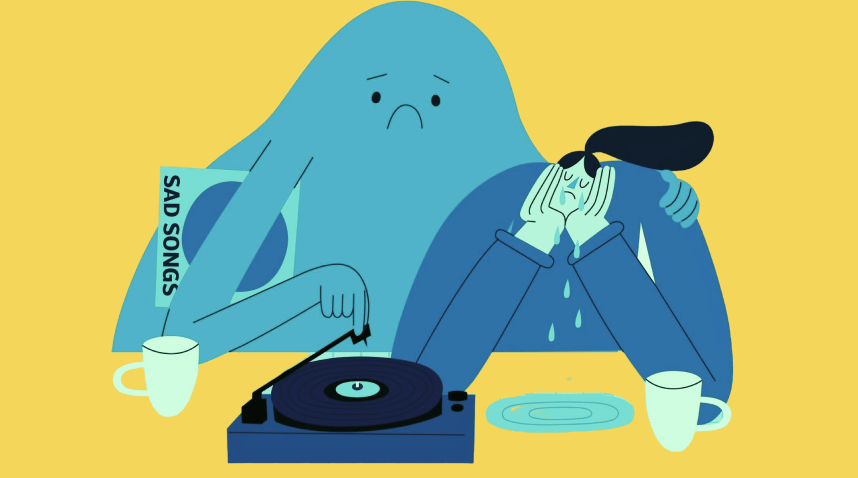
TLDR: Explore a unique collection of Buddhist resources designed to guide you through heartbreak. Transform your sorrow into compassion with our ‘Breakup Dhamma Playlist’
Editor’s note: A thank you to all the heartbroken Buddhists who contributed to this article!
Your heart feels shattered, and your world is turned upside down. The pain of a breakup can be all-consuming, leaving you wondering if you’ll ever feel whole again. But what if this heartbreak could be more than just suffering?
Enter the “Breakup Dhamma Playlist” – a curated collection of Buddhist teachings designed to guide you through a heartbreak towards the calm shores of acceptance. This is inspired by popular culture to have a playlist for everything from ‘falling in love’ to ‘life sucks’.
These timeless teachings offer more than just comfort; they provide a roadmap for transforming your pain into wisdom, and your sorrow into compassion.
Not a punishment
As you navigate this difficult time, remember that your pain is not a punishment or a sign of weakness. It’s a natural response to loss, and more importantly, it’s an opportunity. An opportunity to deepen your understanding of impermanence, to cultivate compassion for yourself and others, and to discover strengths within you.
This playlist brings together the wisdom of respected Buddhist teachers and the Buddha’s own words. Each entry offers a unique perspective on dealing with loss, letting go, and finding peace amidst turmoil.
Whether you’re grappling with fresh heartbreak or nursing old wounds, these teachings can offer solace, insight, and practical guidance.
As you explore these resources, approach them with an open heart and mind. Some may resonate more strongly than others, and that’s okay. Take what serves you, reflect on it deeply, and allow it to support your healing journey.
The Heartbreak Playlist
“Loss of a Partner” – Q&A with Ajahn Anan (Spotify): In this insightful Q&A session, Ajahn Anan addresses the pain of losing a partner. He emphasises the importance of understanding impermanence and cultivating equanimity. The first 3:49 minutes provide a compassionate introduction to dealing with loss from a Buddhist perspective.
“Grief, Loss, and Celebrating a Life” by Ajahn Brahm: While originally addressing the loss of a loved one through death, Ajahn Brahm’s wisdom applies equally to the “death” of a relationship. He encourages us to celebrate the good times shared and to use our grief as a catalyst for personal growth and deeper understanding of life’s impermanent nature. You may skip past the eulogy
The Buddha’s Words (SN 47.13) Quote: “How could it possibly be so that what is born, created, conditioned, and liable to wear out should not wear out? That is not possible. So Ānanda, live as your own island, your own refuge, with no other refuge. Let the teaching be your island and your refuge, with no other refuge.” The Buddha reminds us that all conditioned things, including relationships, are subject to change. He encourages us to find refuge in the Dhamma and in our own practice, particularly through mindfulness meditation.
“Letting Go” by Bhante Sujatha (Insight Timer): This short 6-minute meditation is perfect for those moments when emotions feel overwhelming. Bhante Sujatha’s soothing voice guides listeners through a simple yet powerful practice of letting go, ideal for quick relief during difficult days.
“Practising with a Broken Heart” by Ajahn Achalo (YouTube): While the entire talk offers valuable insights, the segment on compassion from 20:59 is particularly relevant. Ajahn Achalo teaches how to cultivate self-compassion and extend that compassion to others, even those who may have hurt us.
How to Heal your Broken Heart by Mahindasiri Thero (Youtube): Choose someone wise and supportive to share your heartbreak, avoiding those who might exacerbate negativity.
Loneliness and the Illusion of Connection by Thich Nhat Hanh (Youtube): Technology offers an illusion of connection but doesn’t address the deeper loneliness within.
Conclusion:
As you work through your heartbreak, remember that healing is a process, not a destination. Remember, healing is not linear. There will be ups and downs, moments of clarity followed by waves of grief.
This is all part of the process. The goal isn’t to eradicate your feelings, but to learn to relate to them with mindfulness and compassion.
As you listen to these Dhamma talks and incorporate their wisdom into your life, you’ll find that your heart not only heals but expands, becoming more resilient and compassionate than before. Remember, just as the Buddha taught, you are your own island, your own refuge. Trust in your innate capacity to heal and grow. This pain will pass, and you will emerge stronger, wiser, and more open-hearted than before. May these teachings guide you towards peace and renewed joy.