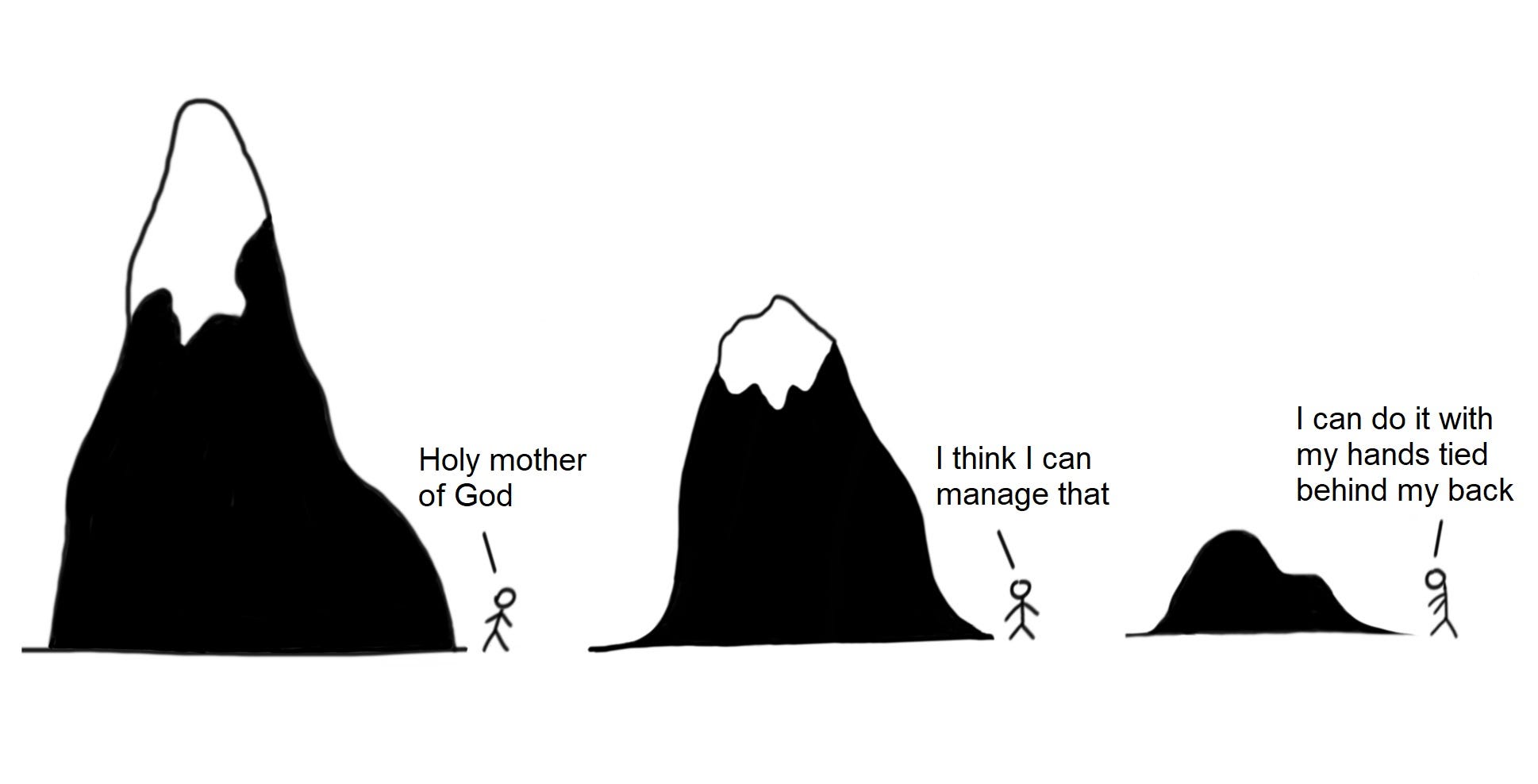
TLDR: You can’t force the end of a pattern by reciting doctrine at it. It fades when the mind stops valuing its payoff.
If you have a desk job which involves dishing out positions or advice, you would know that sometimes we need to articulate our reasoning clearly so that readers can understand the direction being proposed. In my line of work, this occasionally involves referring to relevant clauses in regulations or law to support and explain a decision.
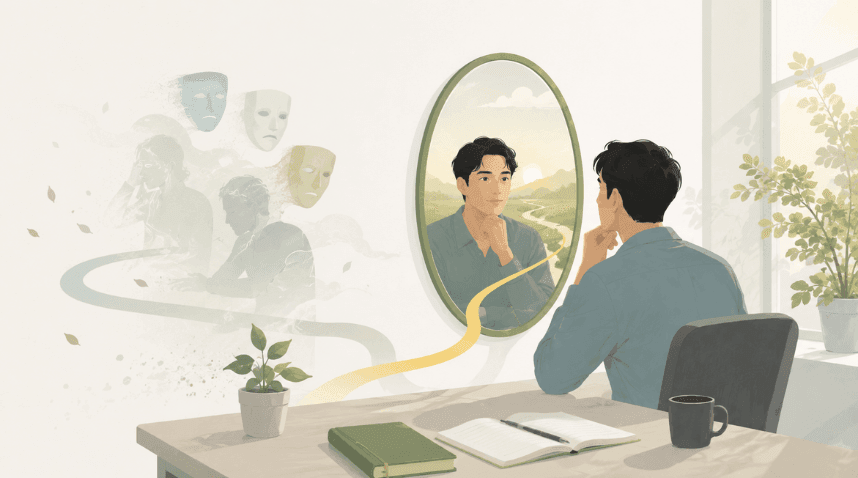
The work hazard here is in using the Dhamma to begin explaining certain things in a way that is contrived. As students of the Dhamma, this is something many of us naturally encounter while we are still learning and finding our footing in the practice.
Misappropriating the Buddha’s Truth
I came to the Dhamma about five to seven years ago. At the time, I did not immediately recognise the tendency for one to misappropriate the Buddha’s truth. Allow me to share a few examples:
Sister Self-Care: This person regularly indulges in certain comforts. Extra treats, leisure activities, or distractions and frames them as “self-care” or “the middle path which is moderation.*” Beneath this narrative, the pull of sense pleasure remains unexamined. The underlying tendency of sense pleasures prevents her from acknowledging that there are certain attachments to be worked through.
“Take off your cap!” Auntie: This person feels morally justified in policing others on the precepts and etiquettes. She sometimes does it abruptly without tact. The underlying tendency of ill will expresses itself as criticism and judgement.
Non-Self Bro: This person tends to brush aside difficult thoughts or painful emotions by quickly labelling them as “impermanent” or “non-self.” He never fully addresses the causes. The underlying tendency of delusion prevents him from honestly reviewing his own unhealthy patterns.
The reality is that, despite our sincere intentions toward the Dhamma, we all (yes you too dear reader, unless you are an Arya) display these tendencies in one way or another. The trick is to have the humility that we are fallible. The Buddha cautioned us in The Snake Simile (MN22),
Suppose, monks, a man wants a snake, looks for a snake, goes in search of a snake. He then sees a large snake, and when he is grasping its body or its tail, the snake turns back on him and bites his hand or arm or some other limb of his. And because of that he suffers death or deadly pain. And why? Because of his wrong grasp of the snake.
Similarly, O monks, there are here some foolish men who study the Teaching; having studied it, they do not wisely examine the purpose of those teachings. To those who do not wisely examine the purpose, these teachings will not yield insight. They study the Teaching only to use it for criticizing or for refuting others in disputation. They do not experience the (true) purpose for which they (ought to) study the Teaching. To them these teachings wrongly grasped, will bring harm and suffering for a long time. And why? Because of their wrong grasp of the teachings.
How then do we stop grabbing snakes in the wrong way?
1. Self-Honesty as a Starting Point
Those familiar to the Theravada tradition would have chanted the qualities of the Sangha and know that one of them is Ujupatipanno. The term is often translated as “those who practice rightly” or “those who have gone along the straight path.”
While uju is commonly understood as “straight” or “direct” the word also carries the sense of uprightness and honesty. In this light, Ujupatipanno may also be appreciated as “those who practice with honesty”. Those who are walking the path without distortion, or avoidance, but with a willingness to face things as they truly are.
In identifying our own destructive tendencies, introspection is a key tool. If you are bad at it, then employ your good friends and give them the license to provide you critical feedback!
The outcome of this process is that we gain clarity about our own patterns of thought which we can now work with.
I recently attended a Dhamma talk by Bhikkhu Thanissaro where he laid out a way of working with unskillful mental states that was methodical and unsentimental. What follows is my understanding of that approach, and how it has helped me relate more clearly to my own recurring patterns.
2. Identifying Unskillful Thoughts Precisely
We often describe our inner struggles with broad labels: anger, ego, insecurity. These terms feel explanatory but are usually too general to be useful.
A key point from the talk was to identify the specific trigger behind a recurring unskillful thought. Instead of saying, “I am an egotistical person,” we ask, “What triggered this narrative in my mind?”
The more we reflect, the more we can pre-empt the arising of such thought patterns. Once the trigger is clear, the task is not to suppress the incoming thought or replace it with something wholesome. It is simply to observe it.
Seeing its arising repeatedly begins to change our relationship with the pattern of thought. The thought no longer appears as a fixed feature of the mind, but as a conditioned event. We begin to allow ourselves to slow down rather than habitually react. With patience and self-restraint, the mind becomes ready for deeper investigation.
3. Understanding the Gratification and Drawback
While we get better at observing the arising of a thought, we eventually get better at observing its passing away. What often follows is subtle. After the unskillful thought has ended, there can be an inclination to return to it. Gratification exists.
Bhikkhu Thanissaro described the mind as a committee. It is not a single voice with a single preference. Different parts of the mind want different things. Acknowledging this, we ask ourselves:
What makes this attractive to me?
This question assumes something important. These patterns continue because they offer something, however unhelpful that offering may be. Sometimes the attraction is clear.
Anger can bring a sense of courage.
Pride can bring a sense of confidence.
Self-pity can provide emotional shelter.
At other times, the attraction is quieter. The pattern may offer familiarity, or a way to avoid uncertainty. Our work is to examine this attraction carefully, and then to compare it with the drawbacks. We ask ourselves:
How does it disadvantage me?
Here we turn our attention to the other side of the coin. The same patterns that give us a temporary sense of satisfaction also carry costs:
Anger may fuel courage, but it is often reckless and leads to regret.
Pride may give confidence, but it can blind us to our limitations or prevent genuine connection.
Self-pity may offer shelter, yet the security is illusory and it can trap us in a cycle of stagnation.
Even when the attraction is subtle, the drawbacks can be quietly accumulating: wasted time, strained relationships, or anxiety. Sometimes the disadvantage is not immediately visible but it emerges only over repeated experience.
So we continue to reflect. Not once, but over time.
The Escape…
We cannot force this process. Not through sheer effort, determination, or even by leaning on the Dhamma, as our friend “Non-Self Bro” so often tries to do.
When the reflections are done honestly, and the costs become increasingly apparent, dissatisfaction naturally arises.
The pattern does not end because it is labelled unskillful. It certainly does not end because you shun it. It ends when the mind no longer values what it provides.
Conclusion
I am still learning how to work with the mind in this way. The patterns do not disappear all at once, and some return more often than I would like. But each time I notice them, each time I pause instead of reacting, each time I question its validity, I am practicing awareness and patience. That, in itself, feels like a workable, responsible path.
*: “For early Buddhism, “middleness” does not mean moderation. Nor does it mean a compromise of the two extremes or a synthesis that embraces the two extremes. As defined by the Buddha himself, middleness is to be understood as “not entering either of the two extremes” (ubho ante anupagamma).”
– Y. Karunadasa (2018), Early Buddhist Teachings, pp. 13–23. Simon and Schuster
Wise Steps
Ask ourselves these questions:
Honestly, why am I doing this or thinking this way?
TLDR: As children, we want the best for our parents. To see them live actively, confidently, and independently. But the best isn’t about forcing change; it’s about inspiring, supporting, and guiding them so they choose it themselves.
Helping Them Live Their Best Lives
As children, we always want the best for our parents. But what does ‘the best’ truly mean? We want our parents to keep moving well and living boldly as they grow older, not worrying about who will take care of them, but trusting in their own strength.
Today, my mum trains with me two to three times a week without me even asking, and she now takes the initiative to plan her workouts with me for the weeks ahead.
The journey to get to where we are today wasn’t easy, but let me share what helped me and I hope it guides you in having this conversation with them.
Firstly: Inspire
Transformation never sticks when it’s pushed. It lasts when it’s chosen.
For years, I pushed my mum to go on early morning walks with me, but we ended up doing it only once that whole year. It made me realise that if the desire isn’t coming from her, my efforts alone won’t keep her going when I’m not around. That’s when I decided to become the example, to show her what’s possible and to inspire the spark for her own growth.
Become the version of yourself that inspires others to become their best.
I committed to a five-month cut and stayed disciplined, losing 10kg in that time. Throughout those five months, she watched me give my all: Turning down social dinners, skipping home-cooked meals, and sticking to my meal preps. She even helped me prepare my meals. She became part of my journey, experiencing what it truly means to commit to a goal and become a better version of yourself.
Secondly: Community
Your workout partners can be the difference between showing up and giving up.
I invited my mum to bring her friends along to the gym with me, adding a little extra motivation and that we could all enjoy lunch together afterwards. The gym soon became a place for her to catch up with friends, chatting and laughing in between sets.
My role became making sure she had fun, taking photos, and capturing those moments so she could relive them later. Having good friends truly makes a difference. Friends who genuinely want the best for her, who are also committed to their own health. When these positive energies come together, they become unstoppable.
Thirdly: Advice from Subject Matter Expert
I’d been asking my mum to cut down on snacking for ages, but it never worked. Yet the moment her TCM advised her to fast, she listened.
It helps to get feedback from an authority figure, like a doctor, because parents are more likely to listen when it comes from a subject-matter expert.
Funny enough, the Buddha’s most wise disciple, Sariputta, could not teach his mom the Dhamma. Only when he was dying, and she saw that the devas she prayed to, came to pay respect to him, she converted to the Dhamma. So whenever you feel exasperated trying to ‘teach’ your parents, recollect that Sariputta’s struggle.
The doctor also advised her to exercise more and set a plan: fast and work out for a period, then return for a review to check her health markers. And guess what, her health markers improved! The doctor even asked her to extend the trial period, reinforcing that her fasting and exercise were directly benefiting her health.
Ask them to experiment, not to comply.
My mom & I
Lastly: Support System and Feedback
It’s important to understand your parents’ ‘why’. The reason behind their desire to change. For my mum, it was about improving her health and building strength so she could move freely as she ages.
Having these conversations over the years hasn’t been easy, but remembering the Buddha’s teaching — to see things as they are, not as we wish them to be — has helped.
One often sees “see things as they are” rendered from the Pāli concept yathā‑bhūta‑ñāṇa‑dassana, “knowledge and vision of things as they really are.”
Accepting my parents as they are allows me to meet them where they truly are. I’ve shared about this in my previous podcast episode with Cheryl on Handful of Leaves’ Spotify.
This journey has taught me a lot about patience (khanti). I used to want change to happen immediately, wanting my mum to build lifelong healthy habits overnight, and this cause me a lot of suffering. I had to manage my expectations for the speed of change and be ok even if things remain status quo, as this journey is a long one, as I would never have expected that a small breakthrough was just around the corner.
The second I change how I show up in the relationship, the relationship changes for the better – Mel Robbins
By tracking her milestones in our training sessions, my mum could see her growing strength. Especially in her legs, making everyday movements like standing from a chair easier. As the weights increased over time, she discovered her legs could handle far more than she ever believed at the start.
When you notice your own growth, motivation grows with it.
As we care for our parents, let’s remember the journey they took raising us wasn’t easy, and every act of love we give them is a privilege.
Us with senior and younger peers
Conclusion
In the end, helping our parents live well is not about control or perfect plans. It is about patience, trust, and learning when to step forward and when to step back.
What I learnt most deeply is this. When we stop trying to fix our parents and instead walk alongside them, their hearts soften. They feel respected. They feel seen. Change then has space to arise on its own.
The Buddha often pointed out that growth cannot be forced. It unfolds when conditions are right. Our role is simply to help create those conditions with care, steadiness, and goodwill. Sometimes that looks like inspiring quietly. Sometimes it looks like finding the right support. Sometimes it looks like practising patience again and again.
As our parents age, we are gently reminded that time moves in one direction only. The chance to support them, train with them, laugh with them, and watch them grow stronger is not guaranteed. It is something we are given for a while.
If there is one thing worth carrying forward, it is this. Love expressed through patience and understanding is already a form of practice. And caring for our parents, imperfectly but sincerely, can be one of the most meaningful trainings we will ever undertake. P.S. If you need help getting your parents to the gym, you can find me at my socials where I have helped clients over 60 years old attain their health goals. Lose fat happily with me and get into your strongest and healthiest body for mobility, wellness and longevity.
Wise Steps:
Inspire Through Example: Transformation sticks when it’s chosen. By showing commitment to my own fitness — meal prepping, training consistently, tracking progress — my mum saw what dedication looked like and started sparking her own motivation.
Build a Supportive Community: Workouts are more fun with friends. Inviting her peers, sharing laughs, and celebrating milestones made the gym enjoyable. Positive energy from a supportive group makes habits stick.
Learn from Experts: Parents often listen to professionals. When my mum’s TCM advised fasting and exercise, she followed through and saw measurable health improvements. Encourage experimentation, not compliance.
TLDR: For people who are all ready to go, and always succeeded in being disciplined, you may stop reading now. The article has three parts: the why, the how and the what. 1) Understanding why a goal is needed, 2) How to create optimal conditions for success, 3) Strategies for building habits that stick.
Three young children huddled together, their mouths agape with awe at the impressive display of orange and green fireworks lighting up the night sky with its glittery spiral sparks. I, too, was once that wide-eyed little girl believing that once the clock strikes 12, the magic of The New Year will finally bring about positivity, change and of course, washboard abs. Year after year, the only thing that eroded were not my fats, but my faith in resolutions.
Peeling the ra-ra away from the grand celebrations, resolutions are nothing other than a goal that someone sets for himself or herself. But given the fact that resolutions are set and revisited only once a year, it lacks a regular review or accountability system, it is doomed to fail.
We need a better system equipped with accountability and regular review. What I offer for your reading here is a system that is based on scientific theories, and by no means a perfect one, but it seems to be working for me. Take it with a pinch of salt. I’ll also be attaching some trackers to aid with the implementation of these habits.
Source: The Daily Mississipian
Step 1: [Why] — Set it right: Find personal meaning
First of all, why do you even want to improve yourself? While the answer may seem obvious at first glance, is it really reflecting your true motivations? With the barrage of perfect bodies and perfect lives that we consume on a daily basis, it is so easy to be spurred on with desire- like a kid getting to choose anything in Candy Wonderland. The trouble with that is, as fleeting as it arises, the desire that is not rooted in personal meaning is fickle- it does not have any substance to weather through the ups and downs of transformation.
Here’s how to find meaning:
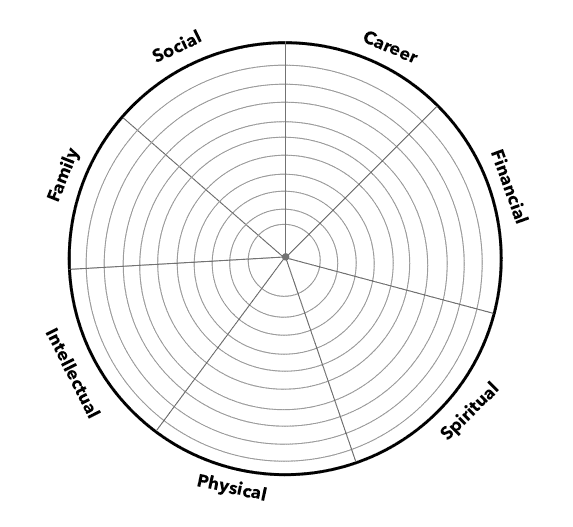
1.Current Snapshot: Rate where you feel you’re currently at using the Wheel of Life below. Pick one of the lowest ranked. If there are a few that are equally low, you can pick one that you feel is more urgent at this point in life.
Wheel of Life; Source from Minimalism co
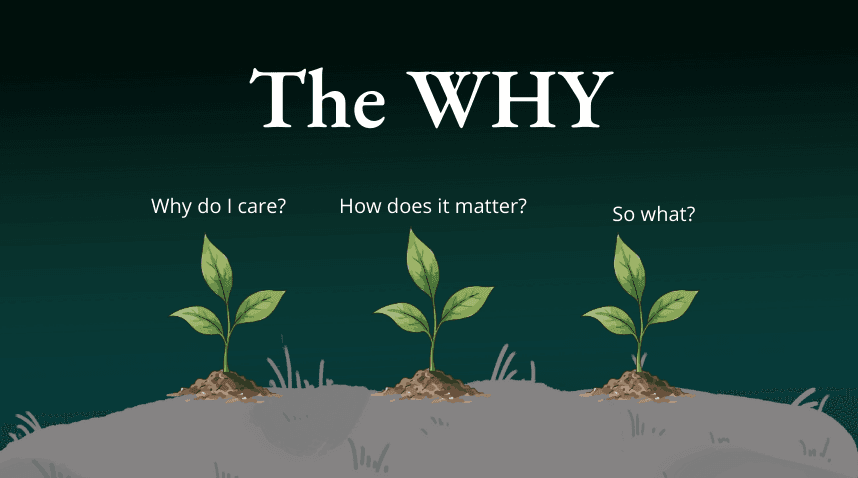
2. Draw Inspiration: You might want to bring to mind a few people who excel in that particular area of your life and you respect them. What specific traits inspire you? Some common examples are persistence, kindness, ambition, authenticity, discipline, empathy, curiosity or courage. Then, rank the top 3 using these three simple questions.
a. Why do I care?
b. How does it matter?
c. So what?
The questions are super simple- almost obvious even, but so often neglected. These are powerful tools to dig deep into your purpose, motivation and subconscious drives. While at this step, you may not have found something that clearly stands out, and that’s ok. Feel free to revisit this few steps again at any time.
3. Cause and effect: Consider how the absence of these traits manifest in the aspects of your life rated the lowest.
Ask this one question: How is it playing a part in your dissatisfaction?
You may also want to bring awareness into the direct emotional consequences. Understand how the lack of this trait brings about certain emotions, self perceptions and attitudes that you are experiencing.
For example, the lack of discipline might result in sloppy dietary choices and bad sleeping routines, thus giving rise to the perception of lack of attractiveness. The corresponding attitude might be that of self defeatism and a dull inertia. It is important to stay through to the discomfort and tension that may arise while going through this exercise.
4. Aspire: Visualise the positive effects of developing these traits. Imagine the wonderful consequences on both the short(<1 year)and long term (>5 years) timeline. If you have a vague idea of who you’d like to be, it’d also be good but optional to connect it to that vision too.
An example: My intention is to be disciplined about my physical health.
Results of such cultivation:
Long term:
Ailments, discomfort and pain in my physical body will be reduced.
Short term:
My self-confidence and my body image will improve.
My mental health will improve.
Recap: Two things may have bubbled up to the surface. Firstly, the traits that have compelling, personal meanings to us, and the areas of life that needs a significant improvement. We can use this as a foundation for setting our next steps.
Step 2: [How] — Optimal Conditions for Success
Habit Loop by Charles Duhigg
In his book, The Power of Habits, Charles Duhigg explains that habits are built and enforced in a three part loop.
Firstly, a cue that triggers a behaviour. Secondly, the routine that you either want to get rid of or build. Lastly, the reward system that provides positive reinforcement for the behaviour to encourage your brain to do more of the routine.
To develop a certain trait, we need to create habits successfully. We can hack the loop at each part of the cycle to build sustainable habits and break unhelpful ones.
Part 1: Hacking the Cue — Self-awareness and Habit Stacking
Source: New York Times
Self Awareness to build new habits
Think about times where you have successfully created habits or achieved certain goals, and ask yourself these questions:
What is the context?
Was there a short term goal to achieve? Was it a response to negative feedback?
What emotions sustained the habit?
Was it a feeling of obligation to a group of people to show up? Was it a drive for personal satisfaction to proving yourself? Was there an element of competition/ camaraderie?
This two questions address the powerful drives and motivations that exceeds the negative seeds of demotivation and laziness, and are perhaps the most important questions in this exercise.
What time is it?
Was there a pattern to the times and days that you practiced the habits? This helps to identify the optimal times and energy levels that would be convenient to build a new routine. Don’t ask yourself to do a habit when you’re likely to be occupied with something else.
What social environment was present when you practiced the habit?
Research has shown that people are 65 percent likely to meet a goal after committing to another person. But depending on your personality, the way you build an accountability system and how you involve other people varies too and it’s good to know what works well for you.
What actions preceded the habit?
Stickler for routines or you’re the type where not a care in the world is given when the notification bell rings? Know thyself and plan accordingly.
You might be very surprised to find out that the answers to these questions vary very much. For example, for an extrovert like myself, I am more likely to do something if I’ll be doing it with others, and am driven to perform when there is a sense of competition. This environment might be completely horrifying to an introvert who is motivated by intrinsic satisfaction. Bringing in the self-awareness on what you like and naturally prefer, creates a path of lesser resistance, and you will be more likely to successfully create new habits.
Part 2: Habit Stacking to reduce bad habits (credits to B.J. Foggs)
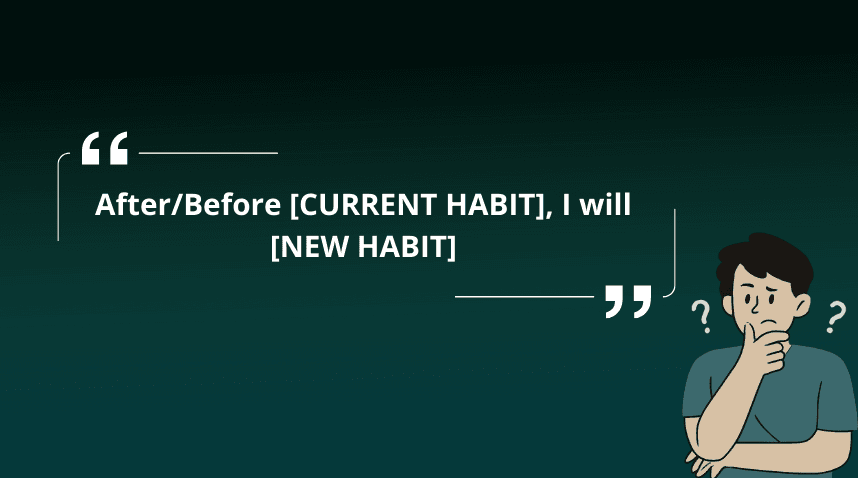
Formula: After/Before [CURRENT HABIT], I will [NEW HABIT].
Use the above questions in step 1 to identify the situations that usually trigger bad habits. Bad habits are no different from good habits. They are triggered by cues and reinforced by reward too.
Leverage on the current cue you already do each day and stack your new behaviour before or after the new habit. You can also use your existing bad habits as a reward for doing your new habit. Let’s say you want to cultivate a new habit of meditation, using the formula:
After [waking up], I [flip through social media].
Habit stack:
After [waking up], I will [meditate for 30 seconds]>>
After [meditating for 30 seconds], I [ flip through social media].
Link your new habits to a cycle that is already built into your brain, it is more likely that you’ll stick to the new behaviour.
Recap: build new habits easily by optimising conditions that you are naturally inclined towards, and reduce unhelpful ones via associating healthier habits with existing built-in behaviours.
Step 3: [What] — Strategies for Building Routines that Stick
1. Set a timeline
Pick one ambitious goal that is reasonable for a one year period. As much as possible, try to quantify that goal. An example of a good goal would be- I want to climb Macchu Picchu (1000m) by the end of the year.
2. Break it down into 4 milestone activities—
Milestone activities are events where a certain demonstration of the skillset that you were cultivating is required. It should be something that you feel slightly intimidated of, such as an assessment or competition, so that completing it will give you a satisfaction that you’re on the right track of progress and allow you to relish in the fruits of your efforts.
Depending on the goal you set, the milestone activity could be direct or indirectly related or flexible.
Direct Milestone Activities
Could be a numerical figure you want to achieve. For example, if you want to reach the peak of Mount Kinabalu by the end of the year, your quarterly milestone activities could be conquering mountains of incremental heights each quarter leading up to the goal.
Indirect Milestone Activities
More generically tied to fitness- such as joining a gruelling triathlon in the first quarter, and a week-long fitness bootcamp the second quarter.
Flexible Milestone Activities
Putting in some mix in your milestone activity is key in sustaining the habit over the long term. The activities itself does not matter, but rather the act of progressing in the desired direction, and developing the persistence is what will help sustain this lifestyle.
3. Aim for the bare minimum:
The Goldilock rule states that humans experience peak motivation when working on tasks that are right on the edge of their current abilities. You want to make habits that are just beneath what feels like work. Pick at most 2–3 habits to build at most, and once it is built, you can add on more.
For optimal frequency setting, you can do this by finding out :
Actual abilities at your lowest point– Eg 0 time exercise per week
Highest abilities at your peak– Eg 4 times exercise per week
Realistic sustained ability- Aim for somewhere slightly below the midpoint. eg 1 time per week
Repeat for 1 month- In order for a habit to be built, showing up consistently is required over a period of time- so I’d recommend sticking through with the goal for the very least 1 month.
The 1 and only rule here is to execute the bare minimum consistently. You can overachieve on days when you can and want for sure, but the bare minimum must be satisfied week after week.
4. Review
Reflect and adjusting is crucial to making sure that you are not wasting your efforts into something that ceases to be relevant for your life just because you “have to”. Upon 1 month of practicing the habit, ask yourself this:
Is this habit still relevant to my goal?
Am I benefitting from practicing this habit?
Then, you can make the decision to increase, maintain or reduce the frequency of the habit, or modify the routine or even completely discard the habit altogether.
Sample Tracker (Contact my bio link for a copy of the tracker)
5. Rewards
Source: Giphy
Reward system is probably the most underrated aspect of the habit loop. We don’t often think about it enough.
Intentional but simple:
You want to be celebrating that habit. Don’t let even the smallest success slide by. Be intentional about positively reinforcing the habit.
Simple things that bring joy: Elbow bump someone. Share on social media. Text a friend. Pick your dopamine poison to trick your brain into craving and anticipating more. At the same time, you want to be careful of not overindulging in rewards that might be counter to your progress. Overeating after exercising, anyone?
The journey of growth and personal development is a long one. We are not perfect and will never be. Please be kind to ourselves and remember that even at the current stage, you are 100% worthy of love and acceptance. Enjoy the little things and ups and downs of the journey, and allow the process to transform you.
Thank you for coming all the way here, and if you’re still reading, I really appreciate it.