

TLDR: You can’t force the end of a pattern by reciting doctrine at it. It fades when the mind stops valuing its payoff.
If you have a desk job which involves dishing out positions or advice, you would know that sometimes we need to articulate our reasoning clearly so that readers can understand the direction being proposed. In my line of work, this occasionally involves referring to relevant clauses in regulations or law to support and explain a decision.
The work hazard here is in using the Dhamma to begin explaining certain things in a way that is contrived. As students of the Dhamma, this is something many of us naturally encounter while we are still learning and finding our footing in the practice.
Misappropriating the Buddha’s Truth
I came to the Dhamma about five to seven years ago. At the time, I did not immediately recognise the tendency for one to misappropriate the Buddha’s truth. Allow me to share a few examples:
- Sister Self-Care: This person regularly indulges in certain comforts. Extra treats, leisure activities, or distractions and frames them as “self-care” or “the middle path which is moderation.*” Beneath this narrative, the pull of sense pleasure remains unexamined. The underlying tendency of sense pleasures prevents her from acknowledging that there are certain attachments to be worked through.
- “Take off your cap!” Auntie: This person feels morally justified in policing others on the precepts and etiquettes. She sometimes does it abruptly without tact. The underlying tendency of ill will expresses itself as criticism and judgement.
- Non-Self Bro: This person tends to brush aside difficult thoughts or painful emotions by quickly labelling them as “impermanent” or “non-self.” He never fully addresses the causes. The underlying tendency of delusion prevents him from honestly reviewing his own unhealthy patterns.
The reality is that, despite our sincere intentions toward the Dhamma, we all (yes you too dear reader, unless you are an Arya) display these tendencies in one way or another. The trick is to have the humility that we are fallible. The Buddha cautioned us in The Snake Simile (MN22),
Suppose, monks, a man wants a snake, looks for a snake, goes in search of a snake. He then sees a large snake, and when he is grasping its body or its tail, the snake turns back on him and bites his hand or arm or some other limb of his. And because of that he suffers death or deadly pain. And why? Because of his wrong grasp of the snake.
Similarly, O monks, there are here some foolish men who study the Teaching; having studied it, they do not wisely examine the purpose of those teachings. To those who do not wisely examine the purpose, these teachings will not yield insight. They study the Teaching only to use it for criticizing or for refuting others in disputation. They do not experience the (true) purpose for which they (ought to) study the Teaching. To them these teachings wrongly grasped, will bring harm and suffering for a long time. And why? Because of their wrong grasp of the teachings.
How then do we stop grabbing snakes in the wrong way?
1. Self-Honesty as a Starting Point
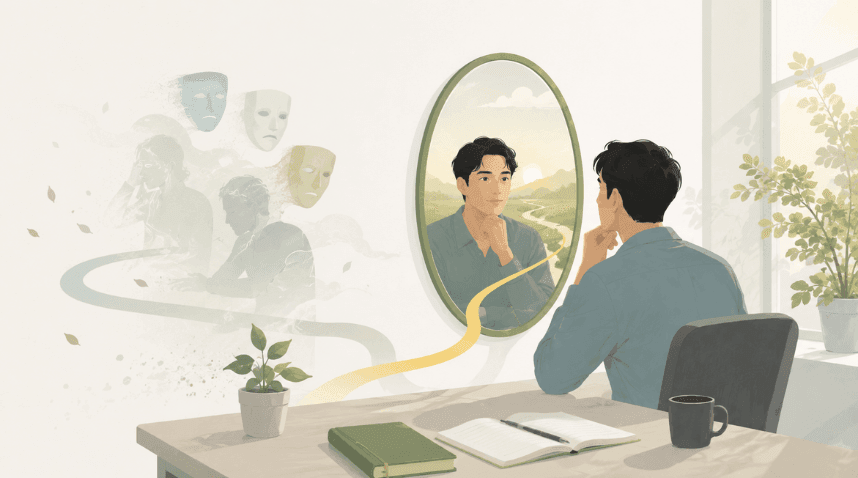
Those familiar to the Theravada tradition would have chanted the qualities of the Sangha and know that one of them is Ujupatipanno. The term is often translated as “those who practice rightly” or “those who have gone along the straight path.”
While uju is commonly understood as “straight” or “direct” the word also carries the sense of uprightness and honesty. In this light, Ujupatipanno may also be appreciated as “those who practice with honesty”. Those who are walking the path without distortion, or avoidance, but with a willingness to face things as they truly are.
In identifying our own destructive tendencies, introspection is a key tool. If you are bad at it, then employ your good friends and give them the license to provide you critical feedback!
The outcome of this process is that we gain clarity about our own patterns of thought which we can now work with.
I recently attended a Dhamma talk by Bhikkhu Thanissaro where he laid out a way of working with unskillful mental states that was methodical and unsentimental. What follows is my understanding of that approach, and how it has helped me relate more clearly to my own recurring patterns.
2. Identifying Unskillful Thoughts Precisely
We often describe our inner struggles with broad labels: anger, ego, insecurity. These terms feel explanatory but are usually too general to be useful.
A key point from the talk was to identify the specific trigger behind a recurring unskillful thought. Instead of saying, “I am an egotistical person,” we ask, “What triggered this narrative in my mind?”
The more we reflect, the more we can pre-empt the arising of such thought patterns. Once the trigger is clear, the task is not to suppress the incoming thought or replace it with something wholesome. It is simply to observe it.
Seeing its arising repeatedly begins to change our relationship with the pattern of thought. The thought no longer appears as a fixed feature of the mind, but as a conditioned event. We begin to allow ourselves to slow down rather than habitually react. With patience and self-restraint, the mind becomes ready for deeper investigation.
3. Understanding the Gratification and Drawback
While we get better at observing the arising of a thought, we eventually get better at observing its passing away. What often follows is subtle. After the unskillful thought has ended, there can be an inclination to return to it. Gratification exists.
Bhikkhu Thanissaro described the mind as a committee. It is not a single voice with a single preference. Different parts of the mind want different things. Acknowledging this, we ask ourselves:
What makes this attractive to me?
This question assumes something important. These patterns continue because they offer something, however unhelpful that offering may be. Sometimes the attraction is clear.
- Anger can bring a sense of courage.
- Pride can bring a sense of confidence.
- Self-pity can provide emotional shelter.
At other times, the attraction is quieter. The pattern may offer familiarity, or a way to avoid uncertainty. Our work is to examine this attraction carefully, and then to compare it with the drawbacks. We ask ourselves:
How does it disadvantage me?
Here we turn our attention to the other side of the coin. The same patterns that give us a temporary sense of satisfaction also carry costs:
- Anger may fuel courage, but it is often reckless and leads to regret.
- Pride may give confidence, but it can blind us to our limitations or prevent genuine connection.
- Self-pity may offer shelter, yet the security is illusory and it can trap us in a cycle of stagnation.
Even when the attraction is subtle, the drawbacks can be quietly accumulating: wasted time, strained relationships, or anxiety. Sometimes the disadvantage is not immediately visible but it emerges only over repeated experience.
So we continue to reflect. Not once, but over time.
The Escape…

We cannot force this process. Not through sheer effort, determination, or even by leaning on the Dhamma, as our friend “Non-Self Bro” so often tries to do.
When the reflections are done honestly, and the costs become increasingly apparent, dissatisfaction naturally arises.
The pattern does not end because it is labelled unskillful. It certainly does not end because you shun it. It ends when the mind no longer values what it provides.
Conclusion
I am still learning how to work with the mind in this way. The patterns do not disappear all at once, and some return more often than I would like. But each time I notice them, each time I pause instead of reacting, each time I question its validity, I am practicing awareness and patience. That, in itself, feels like a workable, responsible path.
*: “For early Buddhism, “middleness” does not mean moderation. Nor does it mean a compromise of the two extremes or a synthesis that embraces the two extremes. As defined by the Buddha himself, middleness is to be understood as “not entering either of the two extremes” (ubho ante anupagamma).”
– Y. Karunadasa (2018), Early Buddhist Teachings, pp. 13–23. Simon and Schuster
Wise Steps
Ask ourselves these questions:
- Honestly, why am I doing this or thinking this way?
- What are its effects?
- Do I truly want this?