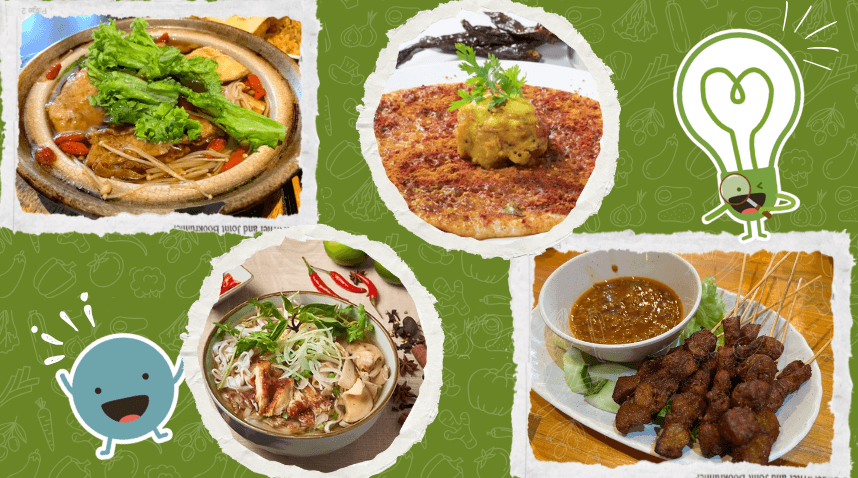
Think that vegetarian food only has Zai Mee Fen? Fam, we gotchu! We are sharing a list of top vegan/vegetarian-friendly places to check out and support this effort to go meat-free in Singapore. Have CDC vouchers to spend? We wrote a guide here.
Long gone are the days when going ‘vegetarian/vegan’ meant eating miserably yellowish salad leaves for lunch. There are plenty of vegetarian and vegan restaurants in Singapore, whether you are seeking something meat-free for health, animal compassion/welfare, religious reasons, or the environment. We have left out the kopitiams and hawkers as these change quite a bit!
Here is the list of 13 plant-based places to eat across Singapore.
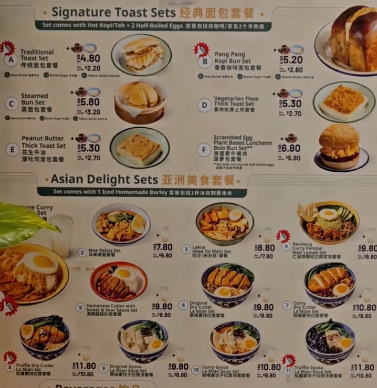
1. Pang Pang Kopi: Your Nanyang Breakfast Go-To
Crazy nice Asian Delight Image: Google
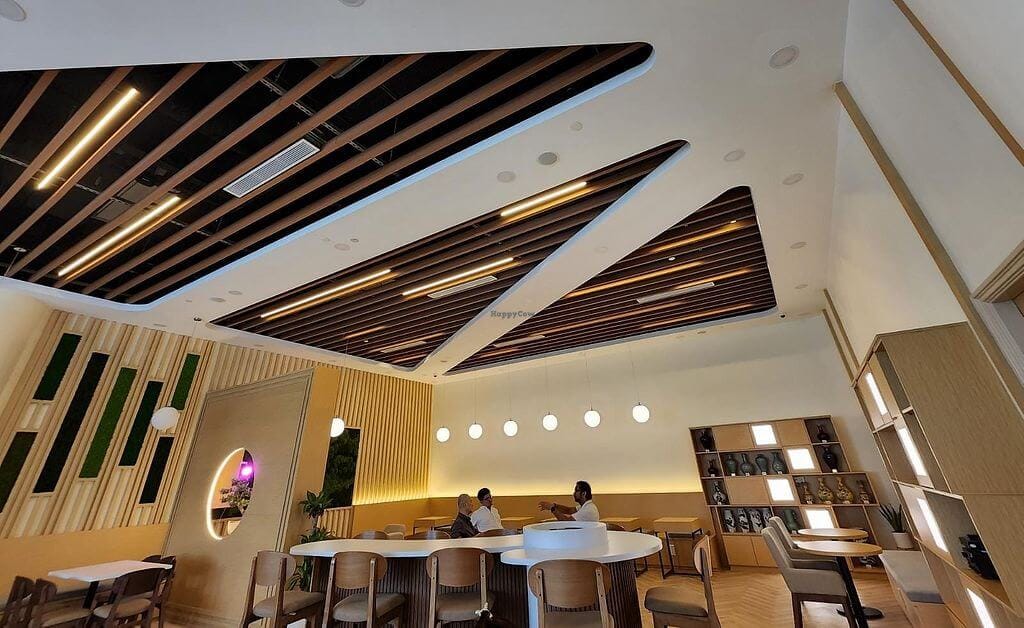
Taking the place of Grove @ Singpost from mid-Dec ’24. Pang Pang transports you to the kopitiam vibes with local delights for a good brunch/lunch catchup. The Bolo Pun is an awesome breakfast choice!
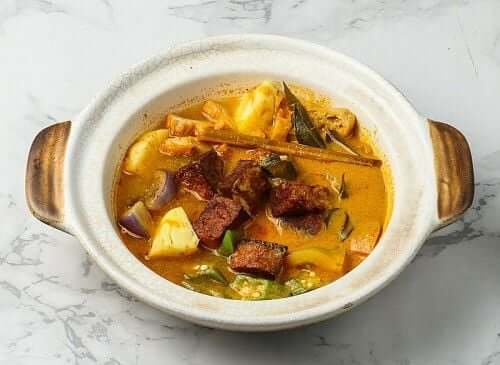
Nyonya food typically has shrimp hidden in certain dishes making it tough for vegans/veges to find suitable dishes. Coco’s food provides an opportunity to enjoy the Peranakan side of life. Do try their Sambal Sauce with Petai Fried Rice, and Vegetarian Curry Monkey Head Mushrooms with Turmeric Rice.
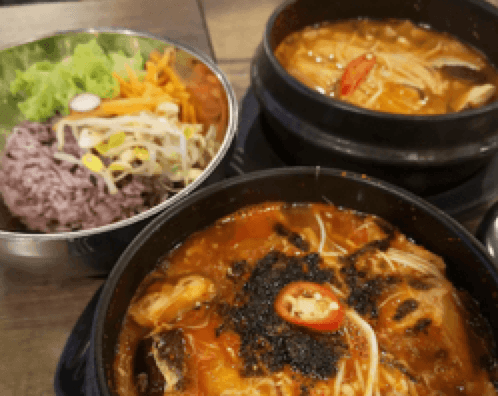
Korean food is well known for its seafood and beef, Daehwa shows that you can get tasty food without the meat! Indulge in their Kimchi soup, bulgogi mushroom stew, Army stew, and vegetable pancakes! Enjoy your meat-free K-Drama-esque getaway there!
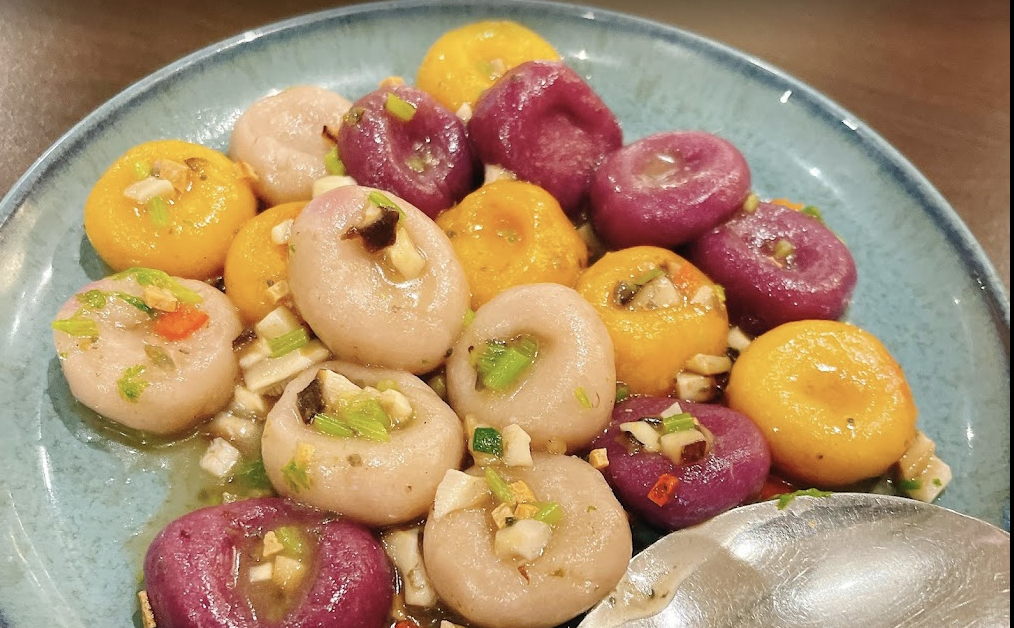
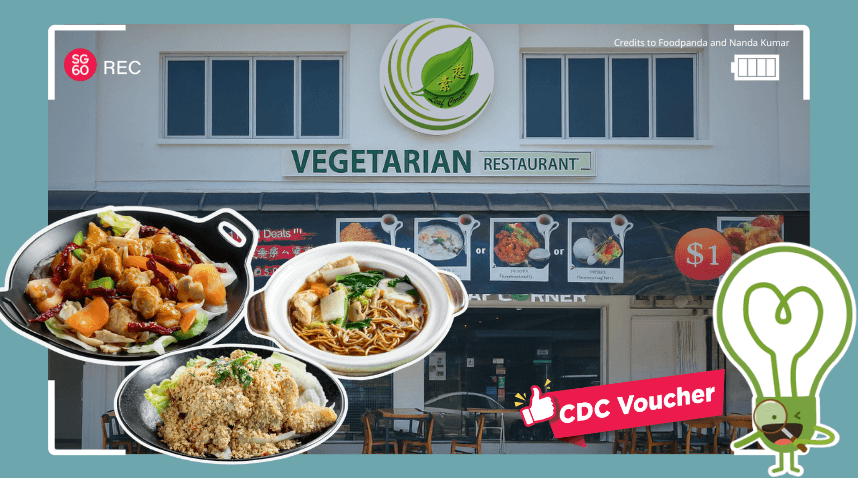
Leaf Corner is tucked away at Tai Seng/ Sembawang/ Jurong West with awesome Chinese food. Do try their Monkey Head Mushroom, Yam Ring, KL Hokkien Mee (I always go for that despite looking at the menu for 10 minutes to try new things).
A mix of burgers, pastas, rendang rice, vegan pho. This place has everything for everyone. It overlooks the Singapore river which can give you some romantic vibes!
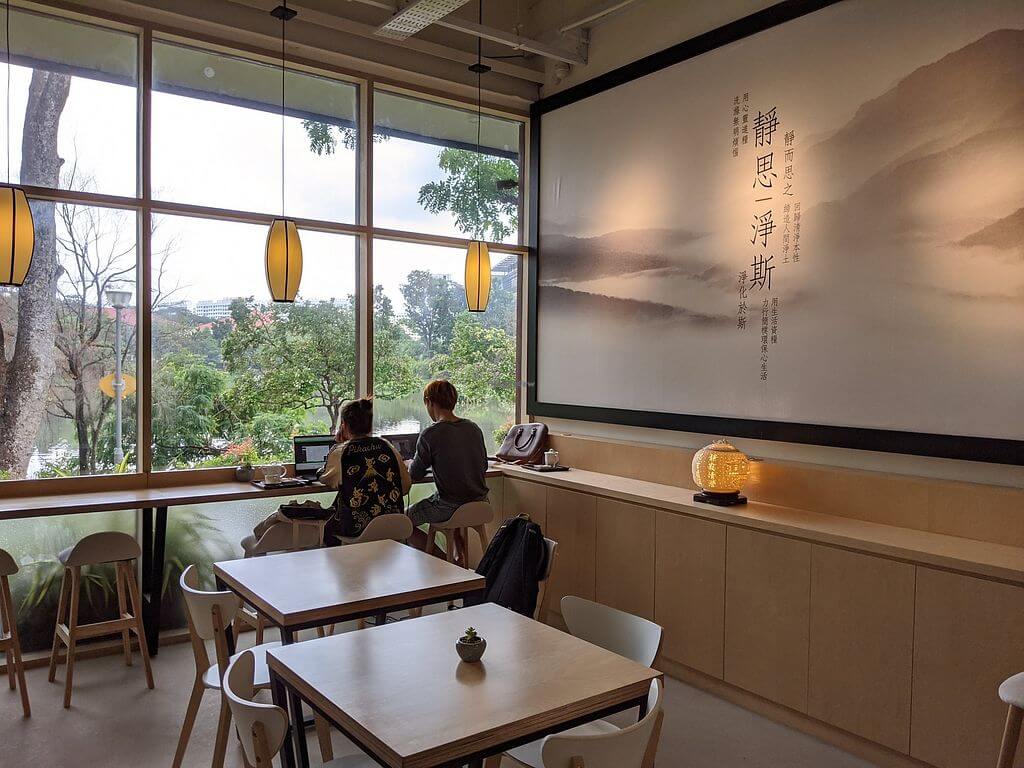
You can’t get any more closer to Zen, by dining at a temple. Located at level 1 of Kong Meng San Phor Kark See Monastery. This cafe serves coffee, tea, smoothie, cakes, and moments of peace. The temple has many spaces to chill and meditate at for greater peace.
Tzu Chi always strikes me as a Dhamma Centric Humanitarian Organisation that is always intentional about their activities. Check out their book cafes at Sims Avenue or Yishun! It is really a tea place to chill and contemplate about life. Don’t expect a huge variety of bites there!
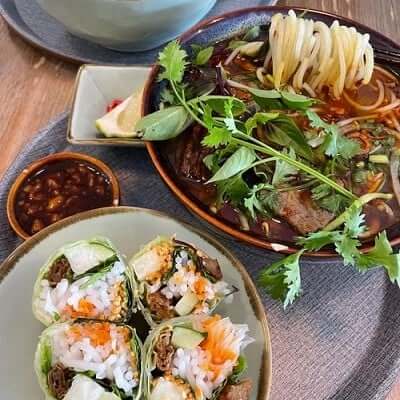
Vietnamese Pho is typically cooked in meat broth so this is a great treat to go meat-free! Check out their Kind Pho or Eat the Rainbow dishes to enjoy some warm soupy food on cold rainy days!
myVillage @ Serangoon Gardens 1 Maju Avenue #B1-03
9. D’life: Tze Char Vegetarian
Image From: Food Advisor Singapore
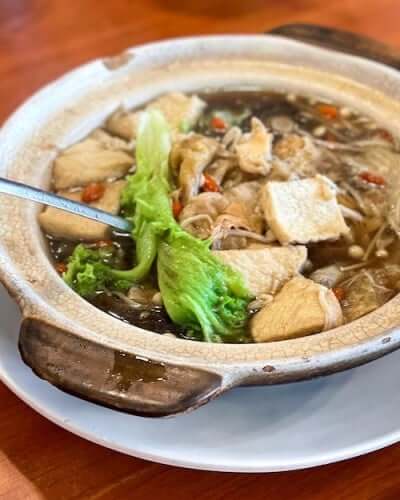
From Orchard to Beauty World, D’life has grown to 4 outlets in Singapore. They offer a huge variety of food from Asian to Western (though I’d recommend their Asian food more!). Do try their KL Noodle, Bak Ku Teh, and Creamy Abalone Mushroom.
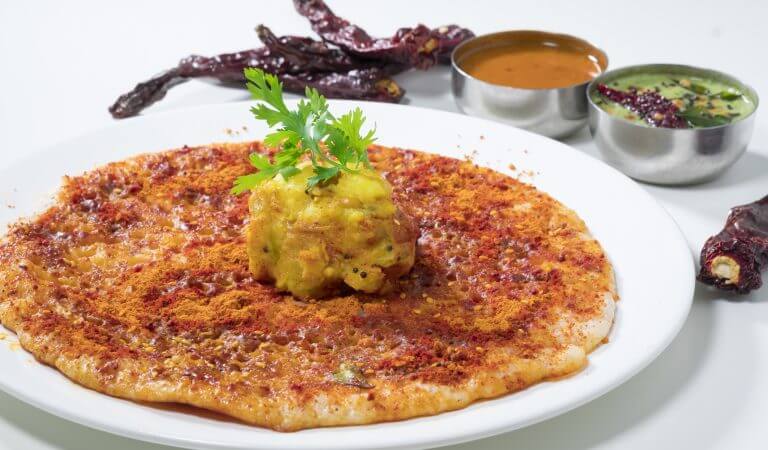
MTR offers awesome South Indian food with very nice spices (you can of course choose non spicy too!). Try their Rava Idly or Masala Dosa. Queues can get long during lunch hours so do be prepared to develop patience there. It is worth the wait!
We found that Ling Zhi vegetarian may be quite expensive on the wallet and found this to be a good cheaper alternative! For mala lovers, do give their mala ‘fish’ a try. It is numbing but tasty.
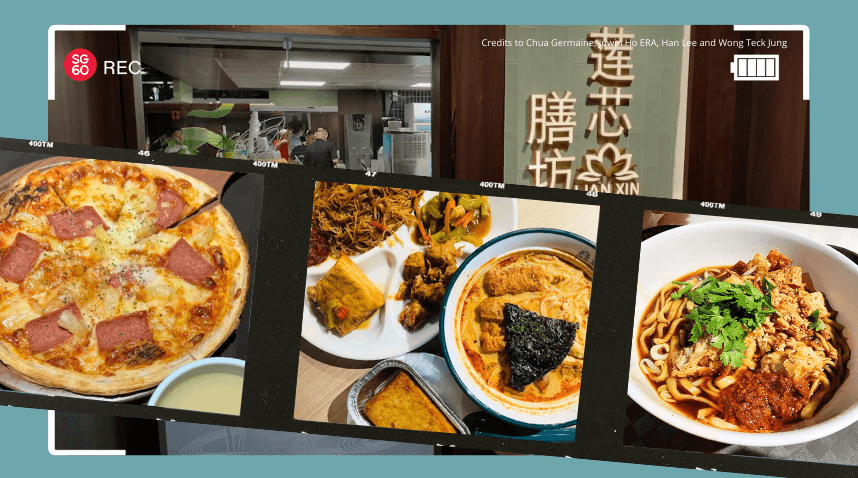
Located RIGHT next to Maxwell Mrt & at the basement of Buddha Tooth Relic Temple, this hidden gem provides awesome breakfast and lunch at an affordable price. It is ‘cai fan’ (pick your veges) style and there is plenty of seating after lunch hours. There is a nice Guan Yin statue there to pay respect too before and after your meal.
With a couple of uncle and aunties chilling there after lunch, the place is serene and great for work-from-cafe vibes. However, they close earlier than cafes! Do check!
Lian Xin | 288 South Bridge Rd, B1 Buddha Tooth Relic Temple and Museum, Singapore 058840
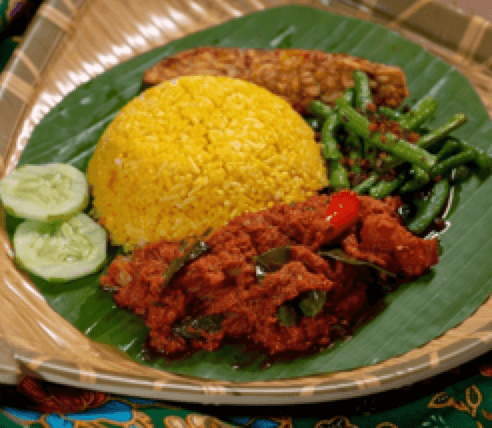
13. Warung Ijo: Indonesian
Image from: HappyCow
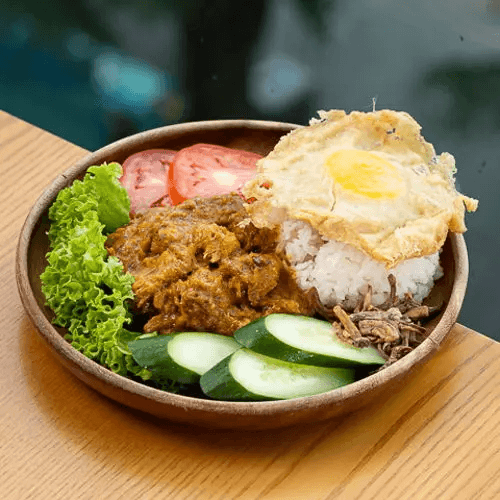
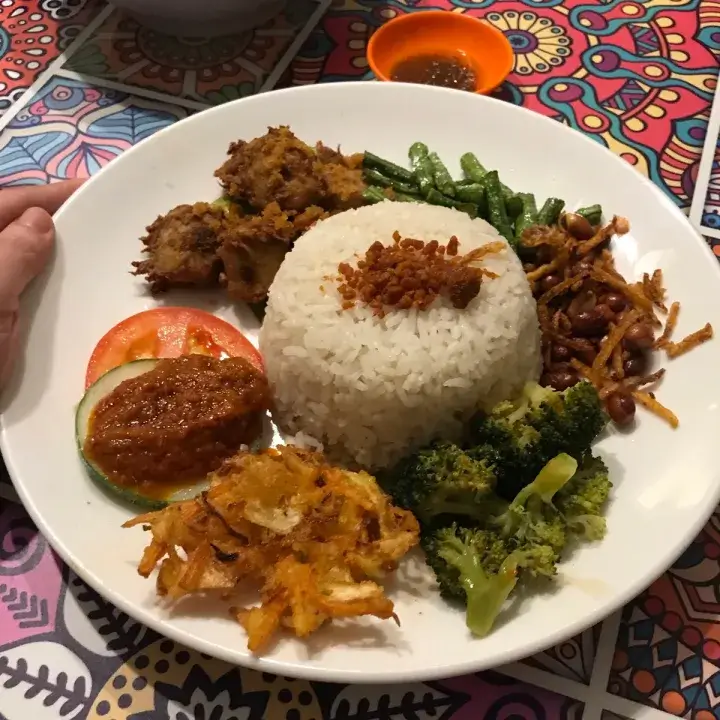
I personally never thought I could eat Indonesian food ever since I became a vegetarian. Warung Ijo is a Godsent (Buddhasent?). Their highlights include Kalasan Chicken Rice, Nasi Lemak Rendang, and Tempe Goreng. The vegetarian food here is also alliums-free and vegan-friendly.
TLDR: Whether you’re full-time veg or just veg-curious, here’s where to eat with intention — and stretch your dollar.
If you’ve been holding onto your CDC or SG60 vouchers, wondering what to spend them on, here’s an idea that’s kind to your wallet, your body, and the planet.
Support vegetarian and vegan eateries that are part of our local community — many of them are small family-run businesses or places started with a clear purpose: to offer food that nourishes without harm.
Whether you’re fully plant-based, occasionally veg-curious, or just looking for a cleaner meal after all that hotpot and mala, this guide’s for you.
From old-school Buddhist canteens to trendy vegan cafés, here’s where you can enjoy a mindful meal and make your vouchers go further.
🌿 Category 1: Cosy Cafés & Dessert Spots
Perfect for catchups, solo dates, or a quiet spot to read the Dhammapada with a cuppa. These eateries serve plant-based fare with charm, creativity, and a little indulgence.
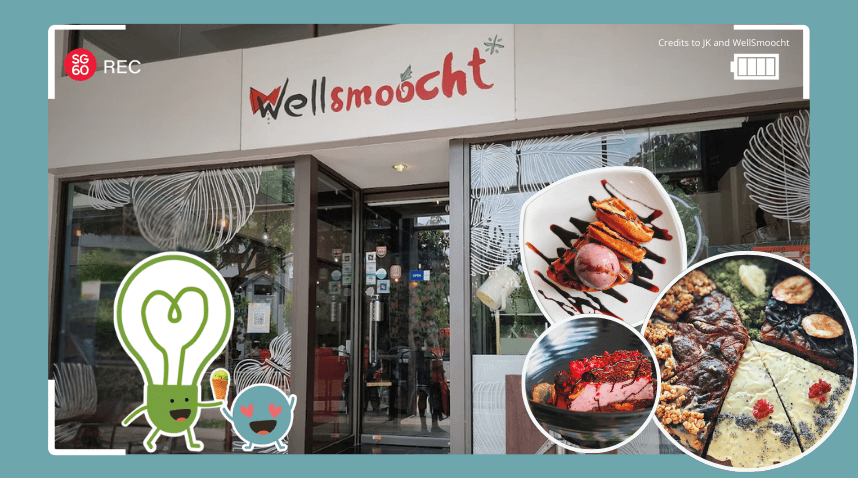
WellSmoocht – vegan ice cream and bakes that don’t hold back on flavour
SunnyChoice – part-grocery, part-eatery, all plant-based
🥢 Category 2: Local & Heartland Favourites
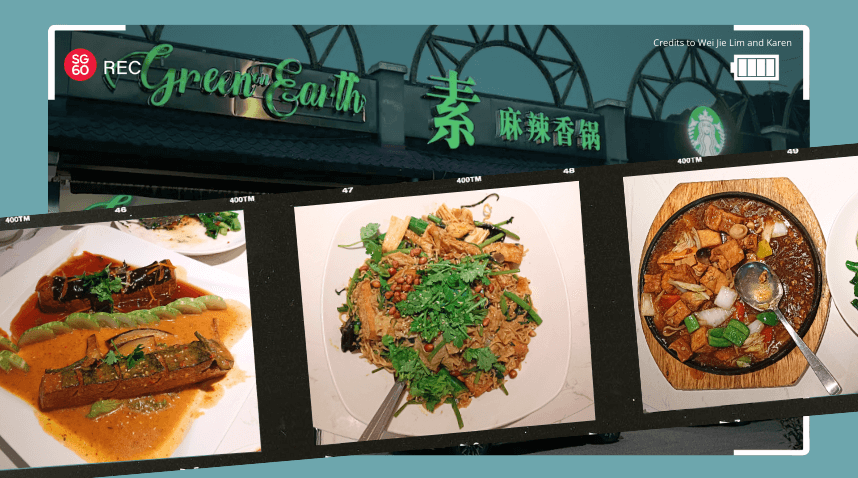
These are the no-frills, full-flavour spots serving up veg*n versions of your hawker classics. Many are run by longtime vegetarians, Buddhists, or community aunties and uncles who know how to make a plate of bee hoon sing.
If you’re looking for something with spiritual roots, these spots are run with care by communities who inclined to the Dhamma. Many avoid garlic and onion and are great if you’re on Eight Precepts or eating before a retreat.
You can follow this simple step-by-step guide on how to claim and spend your SG60 vouchers: 👉 vouchers.sg60.gov.sg/how-to-claim-and-spend If you find a hidden veg*n gem that takes vouchers, tag us and share the love 🌱
TLDR: Kyle talks about how a fundamental change in lifestyle from eating food regularly to sustaining himself through a PEG tube became the fulcrum for lessons in impermanence, mindfulness, and suffering. He talks about the importance of feeding the right thoughts to one’s spirit, how to truly connect without needing food as a medium, and how to overcome attachment to something as integral as the pleasure of food.
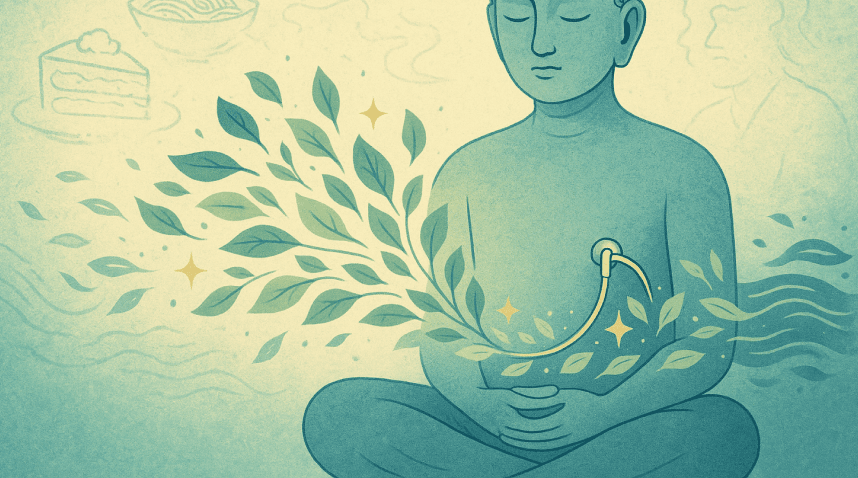
I never imagined that something as ordinary as eating would become a distant memory. Since December 24, 2024, I have not tasted a morsel of food, not felt the warmth of a freshly cooked meal, nor enjoyed the simple pleasure of chewing. Instead, my sustenance comes through a PEG tube, a lifeline that keeps my body nourished even when my senses crave the experience of eating.
At times, self-pity creeps in like an uninvited guest. The mind whispers, “I’m not going to taste the fried carrot cake again. Look how great it will be if I still could take a bite out of that cake.” In those moments, it’s easy to sink into despair, dwelling on what was and what will never be again. But then, I remind myself: what we feed grows. If I continue feeding my mind with unnecessary, unconducive self-pity, it will flourish like an unkempt vine, wrapping itself around my spirit until I lose sight of the present moment.
The Illusion of Loss
Buddhism teaches us about impermanence—the idea that nothing remains unchanged. Everything we attach to, be it our ability to eat or the comfort of routine, will one day shift or dissolve. Clinging to what was, grieving what is no longer there, only tightens the chains of suffering. Instead, true peace lies in acceptance.
I reflect on the Buddha’s idea that attachment leads to suffering. I can mourn the loss of eating, or I can embrace this experience with equanimity. The absence of food on my tongue does not equate to the absence of nourishment in my being. My body is still sustained. My life is still meaningful. The essence of who I am is not tied to what I can or cannot eat.
Cutting Off the Supply of Suffering
Just as my PEG tube delivers nutrients to my body, my mind thrives on what I choose to feed it. If I continuously provide it with sorrow, regret, and longing, it will grow accustomed to that diet. But what happens if I change the supply? What if I nourish it with gratitude, mindfulness, and acceptance?
There is power in knowing that suffering is optional. Pain may arise, but whether I allow it to linger and take root is a choice. Instead of thinking, I miss food, I can shift my perspective: I am grateful for this tube, for this chance to live, to sustain, to experience life in a different way.
Seeing Beyond the Surface
In Buddhist philosophy, suffering is not to be avoided or suppressed but rather understood. When I feel sorrow about my situation, I ask myself: Who is suffering? Who is this “I” that clings to the past? When I look deeply, I see that it is the ego, the part of me that clings to identity and the illusion of control.
But what if I let go? What if I observe my situation with detachment, like a leaf floating on a river? The reality is, my body is adapting. My life is continuing. The suffering only exists when I compare my present to my past.
Yet, the changes are undeniable. Meeting friends now comes with restrictions—no more spontaneous lunches or late-night dinners. I have to plan my meetups around my feeding schedule, ensuring I have enough time to return home and sustain myself through the tube. There are moments when I watch my friends ordering their favorite dishes, laughing over a shared meal, and I feel a pang of longing. It is not just about the food but the ease, the fluidity of social interactions that I once took for granted.
Still, I remind myself: life is different now, but it is not lesser. My connections are not defined by what I eat with my friends, but by the moments we share. Instead of focusing on what I lack, I focus on the quality of my time with them. The laughter, the conversations, the warmth of companionship—these remain unchanged. When I let go of the idea that dining together is the only way to bond, I begin to see new ways of cherishing relationships.
Finding Joy in a New Way
Perhaps the absence of food has created space for new forms of joy. I find pleasure in the conversations that happen around a dinner table, even if I am not eating. I savor the scent of food, appreciating its richness without the need to consume it. I notice how my body feels—lighter, more in tune, more aware.
Each moment presents an opportunity for mindfulness. Instead of focusing on what I lack, I focus on what I have. Instead of drowning in self-pity, I anchor myself in the present. The Buddha teaches us that suffering comes not from circumstances, but from our resistance to them. When we stop resisting, suffering ceases to exist.
The True Nourishment of Life
Life is more than food. It is laughter, connection, love, and presence. It is the simple act of breathing, the warmth of the sun on my skin, the kindness exchanged in a smile. These, too, are forms of nourishment. These, too, sustain me.
I am learning that true fulfillment comes not from what enters the body, but from what flows through the mind and heart. Equanimity, one of the hardest to practice but truly essential from the Four Immeasurables, is not about denying pain; it is about seeing beyond it. And in doing so, I find peace, not in what I have lost, but in all that remains.
Wise steps:
1)What We Feed Grows – Whether it is self-pity or gratitude, our thoughts shape our reality. Choosing to focus on what we still have rather than what we’ve lost determines our emotional well-being.
2)Letting Go Brings Freedom – Attachment to past experiences creates suffering. By releasing the idea of what life “should be” and embracing what is, we free ourselves from unnecessary pain.
3)Connection Goes Beyond Food – While shared meals are a social tradition, true relationships are built on presence, understanding, and meaningful interactions. Adapting to new ways of bonding fosters deeper connections.
TLDR: Feeling guilty about unhealthy meals? Learn how to change your mindset using Buddhist teachings.
Hot cakes, sausages, scrambled eggs, hash browns, maple syrup, and butter. That was my breakfast at McDonald’s one Sunday. I enjoyed consuming them, but by the end of the meal, a wave of discomfort washed over me. My joy was eclipsed by a nagging inner dialogue: Should I have eaten this? How will this meal impact my weight and health?
Health: A precious gift
Knowledge is wealth. I have access to plenty of information about staying healthy thanks to science and the internet, which tells me what I need to avoid: food that is ultra-processed, or food that has pesticides, herbicides, hormones, added sugar, or unhealthy fat. The Buddha also praised health as a gift. Dhammapada verse 204 states that:
“Health is the greatest gift,
Contentment is the greatest wealth,
A trusted friend is the best relative,
Nibbana is the greatest bliss.”
It is indeed the greatest gift because it allows us to fulfil our responsibilities, do good, and cultivate our minds. Taking care of ourselves helps us avoid unnecessary suffering caused by health-related problems.
Being fit also makes us feel mentally and physically better. However, should guilt accompany every meal that I deem less-than-ideal? To me, an ideal meal is loaded with vegetables, balanced with some protein and carbs, and is low in oil and processed food.
Can I pursue health while avoiding unwholesome states of mind such as guilt, aversion, and dissatisfaction?
I believe so. Here are some of my reflections guided by the Buddha’s teachings to change how I approach eating while still striving to stay healthy.
Seeing Kamma in the food that we eat
To be reborn as human beings and have food to eat, a great deal of merit is required.Merit refers to the results of our good deeds.
According to the Laws of Kamma, when we think, speak, or act with good intentions, positive outcomes and happiness follow. Conversely, deeds driven by bad intentions—rooted in greed, hatred, and ignorance—lead to negative results and suffering.
Each meal is the fruit of the good seeds we have sown in the past and is a blessing. Since we cannot predict when or how these blessings will manifest, let us treasure every meal with gratitude, appreciating the good kamma accumulated from past lives.
We are dependent on even the smallest conditions for survival
Favourable external conditions are essential for food to be available to us: the right amount of sunlight, water, and nutrients, along with time. If you have ever grown fruits or vegetables, you know how long it takes for a seed to germinate, grow, and bear fruit.
Some vegetables can only be harvested once, while certain trees take years to produce. Beyond that, food must reach us without disruption. War, famine, pandemics like COVID-19—any of these can interrupt the chain of access.
Each meal is also the culmination of the efforts of multiple living beings: from farmers and workers across the entire supply chain to functioning ecosystems that depend on insects, animals, and other organisms.
Moreover, the meal before you is made possible by your own hard work or that of your parents/partner, who earned the means to provide it—no matter how simple or modest it may be.
Knowing that ‘Enough’ is relative
Sometimes, having food is enough. Some of the challenges we face with food stem from the overwhelming amount of information available and the freedom of choice we enjoy—privileges often tied to higher socioeconomic statuses.
While this abundance is a blessing, it can also complicate our relationship with food and raise our standards significantly.
For instance, anything else apart from my ideal meal would make me feel like I am not eating “well”. In this pursuit of “better” food, we can easily forget that simply having a meal that provides us with some nutrients and energy is already enough to sustain us through the day.
A meal that feels inadequate to us may be a source of much-needed sustenance for someone else. As some mothers would tell their children—albeit with a touch of exaggeration—“the children in Africa/India have no food to eat, you know.” This perspective helps us loosen our grip on perfection and appreciate simply being fed.
Are your strings too tight?
Developing a good habit takes time, and balance is essential. Venerable Sona was a monk whose practice did not progress despite exerting a lot of effort such that his feet bled from practising walking meditation continuously.
Buddha then gave him an analogy: If we were to tune a musical string instrument and made the strings too loose or taut, it would not play properly. Similarly, “if effort is over aroused, it would lead to restlessness; if effort is too slack, it would lead to laziness. Therefore, Sona, you should arouse your effort evenly, and keep the spiritual faculties balanced…”.
This advice can be applied to our effort towards living healthily too. Modern insights align with this teaching, such as those found in Atomic Habits, a book that presents evidence-based strategies for building new habits.
It emphasises that sustaining a habit requires starting small with room for growth, making it rewarding, and prioritizing consistency over intensity—principles that echo the Buddha’s guidance on finding balance.
The hard truths of taking care of ourselves
Sickness, ageing, and death are inevitable. Regardless of how well we take care of ourselves, we will grow older, and age-related decline will follow.
Minor or chronic illnesses may also arise due to the ripening of previous bad kamma, i.e., deeds performed with unwholesome intentions rooted in greed, hatred, and ignorance.
While we can eat healthily, exercise, and do our best to maintain our youth and health, these efforts cannot stop the passage of time or the impermanent nature of life. Age and sickness will eventually catch on, as this is the reality of existence.
The impermanence and suffering inherent in life give us a reason to practice the dhamma. Ultimately, we all wish to avoid aging, sickness, and death but they are inevitable so long as we are bound to samsara–the cycle of birth and death–and lack wisdom to see things as they truly are. This is the very reason why we practice the noble eightfold path: to cultivate the wisdom needed to free ourselves from this endless cycle of suffering, once and for all.
Connecting the dots
Having reflected on these, I feel a sense of gratitude and contentment. I am thankful for the simple privilege of having food and learned to be more content with whatever form my meal takes.
When I enjoy an expensive or nutritious meal, I appreciate the merits I have accumulated that made this possible. I am also grateful for the hard work that enables me to pay for each meal or for the generosity of the person treating me.
On the other hand, if I eat something I perceive to be unhealthy, I will remind myself to make better choices in the future, be content that I get to satisfy my hunger, and mindfully enjoy the meal by being present.
This involves being aware of why I am eating, what I am eating, and how I am eating, as well as observing the feelings and sensations that arise in the process.
Now that I am grateful, I am reminded that not everyone gets to eat when they are hungry, and this reflection gives rise to compassion and generosity.
I feel the urge to give others the chance to have a hearty meal through almsgiving and charity. At the same time, I recognise that some things are beyond my control, which helps me let go of my attachment to specific outcomes and find greater peace.
Finally, I am purposefulwith my time, and mindful of the efforts to sustain this body. I also understand that nourishing this human form serves a higher purpose: to cultivate the mind, develop wisdom, and walk the path toward liberation—a feat unique to the human experience, made possible by our mental faculties and the delicate balance of pleasure and suffering we experience.
Food contemplations for a healthier mindset
To maintain the right mindset about food, there are two contemplations that offer different approaches to mindful eating. You may choose the contemplation that resonates with you.
The first contemplation, practised by the Sangha–community of monks and nuns–before meals, focuses on discipline, moderation, and purpose. It reminds us to eat for nourishment rather than indulgence:
“Wisely reflecting…I eat this food. not for fun, not for pleasure, not for fattening, not for beautification, but only for the maintenance and nourishment of this body, for keeping it healthy, for helping with the holy life. Thinking thus, I will allay hunger without overeating, so that I may continue to live blamelessly and at ease.”
The second contemplation by Venerable Thích Nhất Hanh, is more poetic, expansive, and relational, emphasising interconnectedness, gratitude, and compassion. It broadens our awareness to include the effort of countless beings and our responsibility to the planet:
This food is the gift of the whole universe, the earth, the sun, the sky, the stars and the hard and loving work of numerous beings.
May we eat with mindfulness and gratitude so as to enjoy every bite.
May we transform our unwholesome mental formations, especially those that cause us harm, as they indirectly harm all we touch.
May we keep our compassion alive by eating in such a way that we reduce the suffering of living beings, preserve our precious planet, and reverse the process of global warming.
We accept this food so that we may realise the path of understanding and love.
Every meal is an opportunity—not just to nourish our bodies but also to cultivate wholesome qualities like generosity, gratitude, contentment, and mindfulness, and develop our minds and wisdom. Let us eat with intention, strive for balance, and savour each moment as a gift. Wishing you good health and success in your practice.
Wise Steps:
Identify the negative thoughts you would like to reduce and what positive ones you can replace them with. For example, I often find myself critically analyzing what I eat. When I catch myself doing that, I could replace that habit with a new habit that involves listing three reasons why I should be grateful for the meal. You could also replace your negative thoughts with some of the reflections provided above, depending on the nature of your thoughts.
Identify a couple of reflections from the above article that resonate with you. If others come to mind, take note of them.
Consider when you would like to reflect on them proactively. For instance, you might choose to reflect on the 5 contemplations by Venerable Thích Nhất Hạnh before each meal.
Vesak Day, also known as Buddha Day, is a sacred day to millions of Buddhists worldwide. It commemorates the day that Buddha was born, attained enlightenment, and passed away. It gives us an opportunity for quiet reflection on Buddha’s teachings and the values of compassion, wisdom, and kindness.
It has evolved over time and brings different meanings to different people!
After 2 years of muted celebrations due to the pandemic, this year’s May 15 will see practitioners gathering and celebrating it in different ways. If you are trying to plan out your Vesak Day weekend to bask in the spirit of Vesak, check out these 10 things you can do!
1. Plan your calendar for your temple-hopping!
Find an excuse to head out for the long weekend by visiting the many temples that are open. Use our directory to navigate the many online and offline activities. Who knows?
You might find yourself in the middle of a concert or peaceful chanting session.
The three-step, one-bow ceremony is an expression of devotion and serves to lessen mental defilements or build virtue as one goes through the activity. This practice, which symbolically reminds us of the difficult but rewarding journey to enlightenment, has been passed down and has evolved into the 3-Step, 1-Bow we know today.
While tuning in to some peaceful Buddhist teaching (food for the heart), why not check out food for the body?
Check out food fairs organised by Buddhist Fellowship near newton or spicy tteokbokki and takoyaki at KMSPKS’s Vesak Carnival
4. Help fill the stomachs of the needy
Unsplash
In the spirit of Buddha’s compassion shown to many beings, why not give back by volunteering at a Soup kitchen? There are multiple time slots and different tasks you can choose to volunteer with Willing Hearts.
Visit nature places with your insect repellant to reconnect with nature by taking in the good vibes. Plug into the sound of nature to meditate or try one of the meditation audio guides!
We highly recommend botanic gardens, marina barrage, or a nearby park!
6. Be a Buddy to seniors
Credit: IMDA
We often think that giving means the gift of money. This Vesak, we invite you to rethink the idea of generosity! Volunteer with YouthCorp SG & Healthhub to strengthen the digital literacy of our seniors by empowering them and reducing the waiting time at the polyclinics.
In the spirit of non-harming, why not go vegetarian? The possibilities are endless with vegetarian food. Check out this sleek guide to vegetarian food places in Singapore!