TLDR: The Heart Sutra often feels intimidating or nihilistic. This version made it feel warm, personal, and lived-in.
I came across a five-minute video on YouTube last week that was shared in my Dhamma chat group.
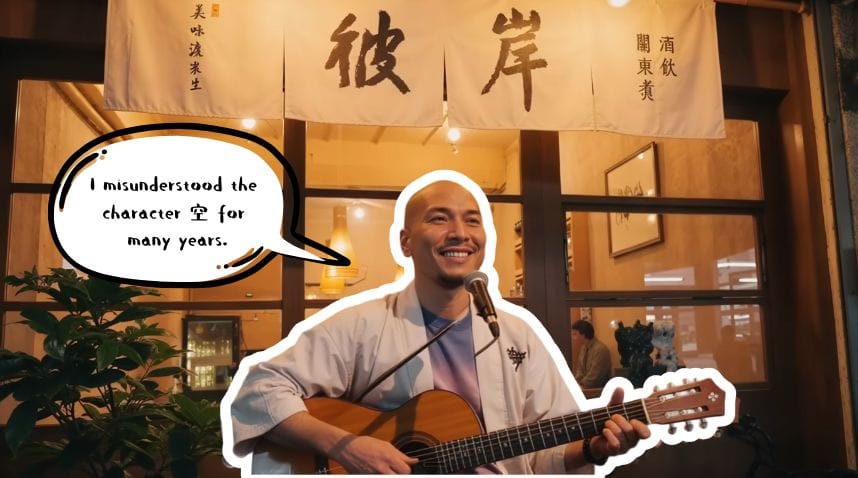
A Taiwanese creator called AI巷仔內 had used AI to assist him in writing the lyrics, composing the music, and producing a video which featured a ‘restaurant’ called 彼岸 (The other shore, aka Nibbana).
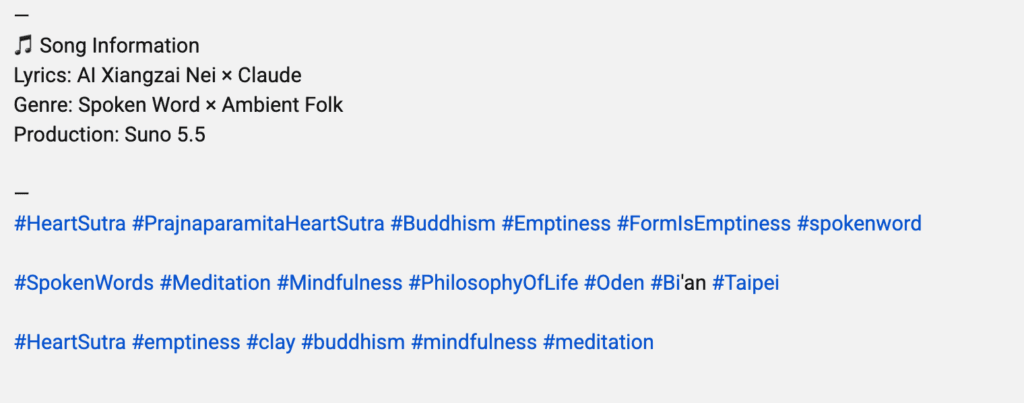
The genre tag was “Spoken Word × Ambient Folk.” The tool was Suno 5.5. The co-writer was Claude.
My first instinct was scepticism. AI writing about Buddhist sutras feels like it should be wrong somehow — like asking a calculator to explain grief. But I watched it anyway. And by the end, I’d been genuinely moved by something I couldn’t quite explain.
So I wanted to dive deeper into.
Not to debunk it, but to figure out why it worked.
The Set: a clay, a child and a ramen shop
The video opens with a confession: “I misunderstood the character 空 for many years.”
空 is the Chinese character for emptiness, the central concept in the Heart Sutra. Most people encounter it as a kind of negation. Empty. Gone. Nothing. The artist says he used to think the Buddha was asking him to hollow himself out, to become a stone.
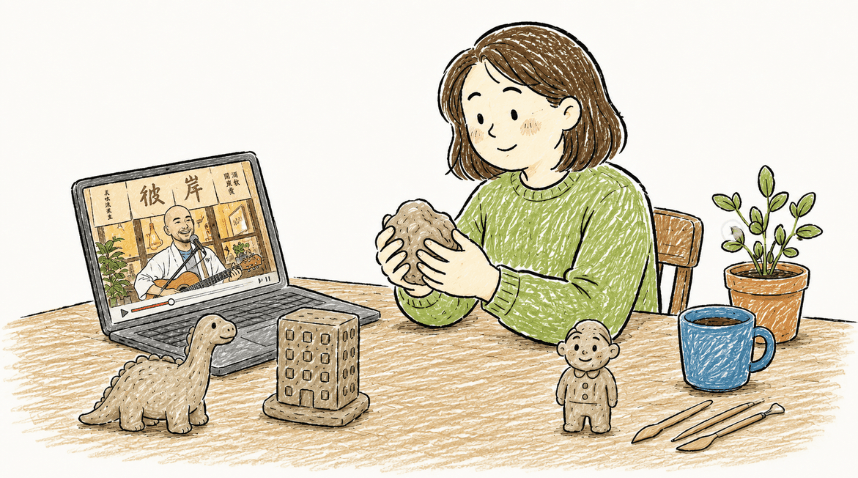
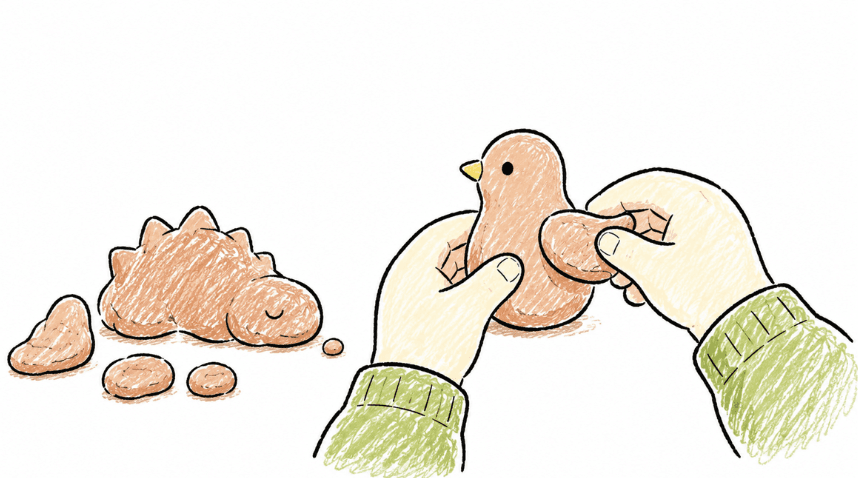
Then the metaphor arrives: a child playing with clay.
The child pinches the clay into a dinosaur, admires it for half a second, then squishes it flat and starts again. No hesitation or grief over the lost dinosaur.
Because the child knows something adults forget: the dinosaur was never the point. The clay was.
色即是空,空即是色. Form is emptiness. Emptiness is form.
The video’s interpretation: you are not the shape you’ve pinched yourself into. The title, the role, the person who “must stay strong.” You are the clay. The shape can collapse. That’s not loss, that’s nature.
What follows is a spoken-word piece that moves through the Heart Sutra’s most recognisable lines — 不生不滅,不垢不淨 (no birth, no death, no defilement, no purity) — and intertwines them with moments from the creator’s actual life.
A stint at an advertising agency. Quitting. Opening a small noodle shop in Taipei’s Xinyi district. Weekly six-day shifts. A son who plays with clay.
The song ends at the shop’s address. It felt oddly real for something made with AI.
What AI actually did here
This is where it gets interesting.
The creator credits the piece as: 詞:AI巷仔內 × Claude. A collaboration between human and AI with distinct roles.
What Claude likely contributed: structure, pacing, probably the weave between the sutra’s lines and the personal narrative. What the creator kept: the clay metaphor, the son, the noodle shop, the personal arc from advertising to small business owner.
Those details are too specific, too strange, too local to have been generated. The AI didn’t invent a Taipei noodle shop. A human who runs one did.
The production is ambient, unhurried, with a voice that speaks more than sings. It doesn’t try to be a Buddhist chant. It doesn’t reach for grandeur. It sounds like someone talking to you while you fold laundry, which is exactly right for this kind of reflection.
The question I kept turning over: would this piece exist without AI?
Probably not in this form. The creator writes in Chinese, the lyrics sit at the border of poetry and essay, and the production requires musical capability that most writers don’t have.
AI closed the gap between having something to say and having the means to say it fully.
Why the hopeful reading matters
The Heart Sutra is one of the most recited texts in Mahayana Buddhism. It’s short with about 260 Chinese characters, and some say that its central argument is that everything you think is solid is actually empty of fixed existence. Form, sensation, perception, mental formations, consciousness: all empty.
Most people find this unsettling the first time they encounter it properly. It sounds like nihilism.
What this video does with the clay metaphor is to flip the valence.
Emptiness isn’t the absence of value. It’s the precondition for all value.
The clay has to be empty of fixed form in order to become anything. The child can make a new dinosaur because the old one doesn’t have to last.
心無罣礙,無有恐怖. The mind has no obstruction, therefore no fear.
The creator’s reading: if you know you are the clay and not the shape, you can stop defending the shape. You can let the shape collapse. 碎了不是消失, where broken is not the same as gone. It means you can start again.
This is not a new interpretation of the Heart Sutra; rather, it is an unusually warm one. And the warmth came, in part, from the medium. A five-minute song gets past certain defences that a Dhamma talk may not for those starting the path.
You’re not being taught. You’re just listening to someone think out loud over soft guitar.
What I took from this
I’ve been scratching my head over this: What happens to spiritual content when AI is in the room?
The easy fear is that it becomes hollow. That a machine writing about emptiness is emptiness of a different and worse kind, creating a performance of depth without the weight of a life behind it.
But this video complicated that for me. The AI didn’t generate the meaning but helped a person who had meaning to express find a form for a sutta that is over a thousand years old.
AI was the clay. The creator was the child.
That framing probably sounds too neat. Maybe it is.
But I think there’s something true in it: the tools that help us make things are not the same as the things we make.
A brush doesn’t paint. A recording device doesn’t sing.
Someone did. Then they picked up the tool.
The next time you feel uneasy about AI-assisted creative work, try asking a different question. Not “did a machine make this?” but “did a person have something real to say and did the tool help them say it?”
If the answer to both is yes, the shape probably holds.
Wise Steps:
- When you feel stuck in an identity, pause and remind yourself you are the clay not the shape, which loosens attachment and helps you respond more flexibly, like noticing you are more than your job title when work gets overwhelming.
- Practise observing change without resistance by allowing small “collapses” in your day to happen, which builds comfort with impermanence, such as plans falling through without immediately reacting.
- Reframe loss as transformation rather than disappearance, which reduces fear and builds resilience, like seeing the end of a phase as space for something new instead of failure.