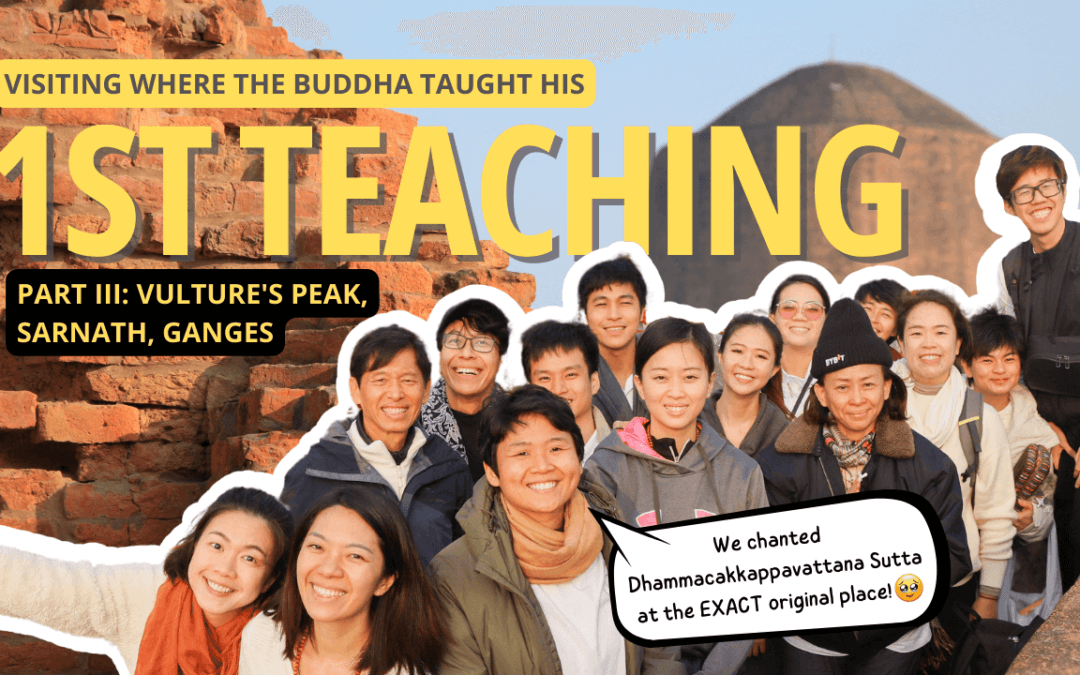
In the third part of our Indian Buddhist pilgrimage, we hiked up Vulture’s Peak, where the Buddha often meditated in seclusion. We also visited the caves of Moggallāna and Sariputta, two of Buddha’s chief disciples. After a peaceful trek, we headed to Sarnath, the site of Buddha’s first sermon, where he taught the Dhammacakkappavattana Sutta. The trip continued with a river cruise on the Ganges, where we witnessed traditional cremations, a vivid reminder of impermanence. The pilgrimage ended with reflections on the peaceful experiences of visiting these sacred sites in India.
Special thanks to our sponsors:
Buddhist Youth Network, Lim Soon Kiat, Alvin Chan, Tan Key Seng, Soh Hwee Hoon, Geraldine Tay, Venerable You Guang, Wilson Ng, Diga, Joyce, Tan Jia Yee, Joanne, Suñña, Shuo Mei, Arif, Bernice, Wee Teck, Andrew Yam, Kan Rong Hui, Wei Li Quek, Shirley Shen, Ezra, Joanne Chan, Hsien Li Siaw, Gillian Ang, Wang Shiow Mei, Ong Chye Chye, Melvin, Yoke Kuen
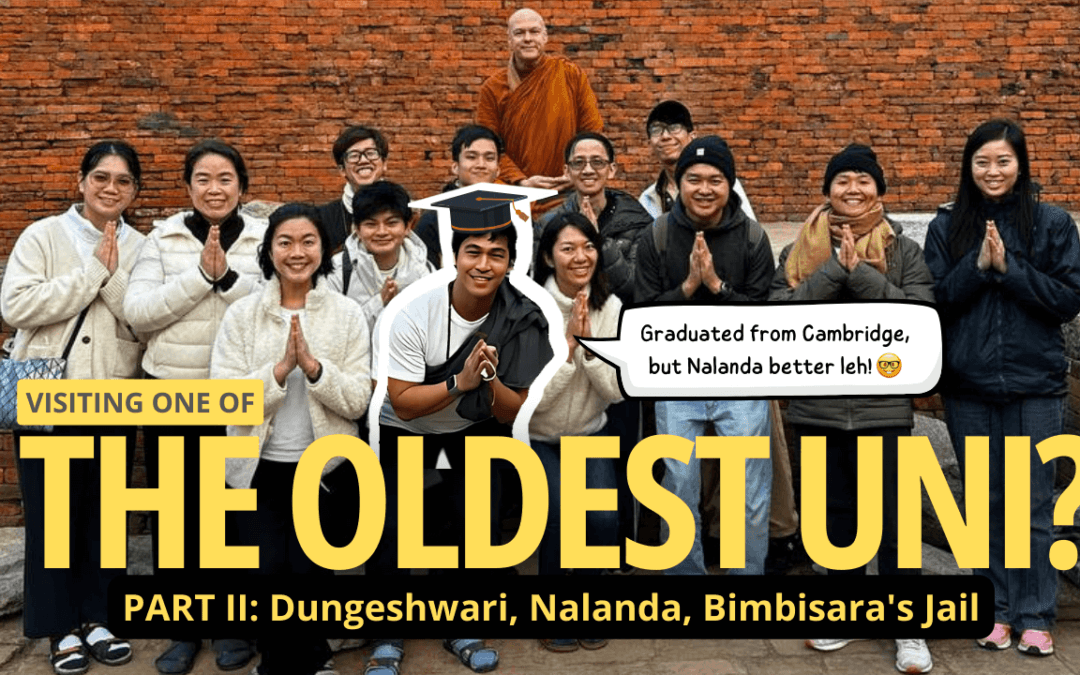
During our Indian pilgrimage, we visited key Buddhist sites like Bodhgaya, where Buddha attained enlightenment, and Dungeshwari Cave, where he practised austerities for seven years. We also explored Rajgir, home to Buddhism’s first monastery, and Nalanda, one of the world’s oldest universities. Each site holds deep spiritual significance, offering pilgrims a chance to reflect on the Buddha’s journey. Along the way, we visited Root Institute, supporting local communities, and learned about Hindu traditions at the hot springs. The pilgrimage ended with the story of King Bimbisara’s arrest, where we could view Buddha’s meditation site on Vulture’s Peak.
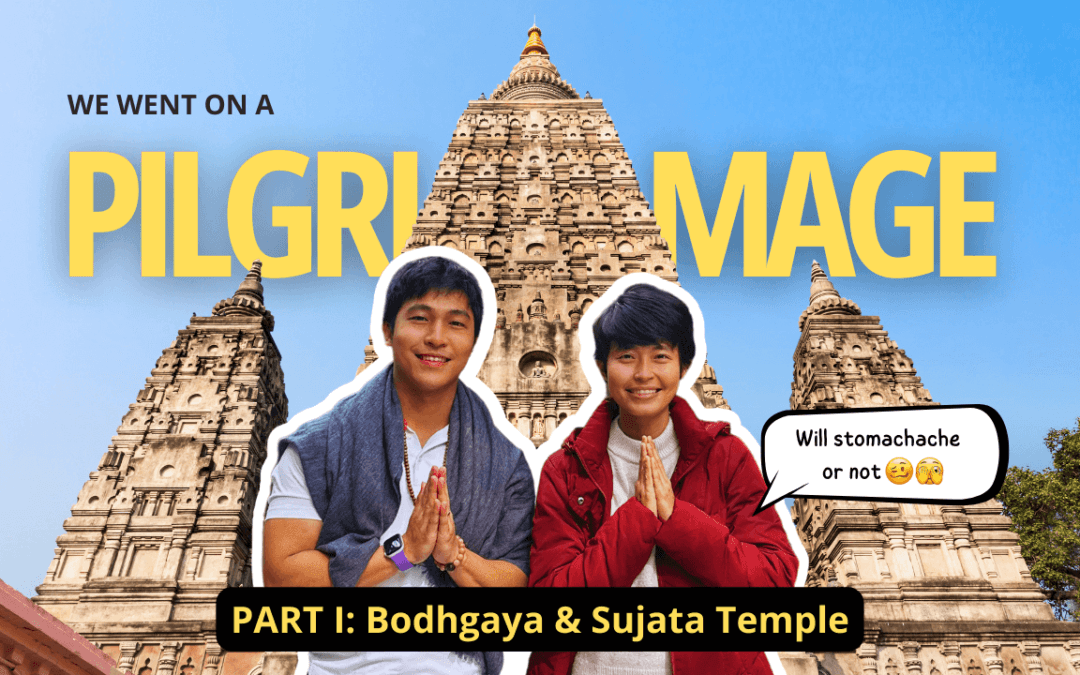
Join us on a transformative pilgrimage through India, following the Buddha’s footsteps at key holy sites. From the enlightenment tree at Bodhgaya to Sujata’s offering site, we share insights from our journey and explore the rich history of these sacred places. Learn how modern-day travel makes it easier to visit these important locations, where meditation and mindfulness are deeply powerful. Experience the vibrant ceremonies, traditions, and opportunities for dana, while reflecting on the significance of gratitude and generosity. Stay tuned for part two of our adventure, where we delve into more spiritual landmarks.
Special thanks to our sponsors:
Buddhist Youth Network, Lim Soon Kiat, Alvin Chan, Tan Key Seng, Soh Hwee Hoon, Geraldine Tay, Venerable You Guang, Wilson Ng, Diga, Joyce, Tan Jia Yee, Joanne, Suñña, Shuo Mei, Arif, Bernice, Wee Teck, Andrew Yam, Kan Rong Hui, Wei Li Quek, Shirley Shen, Ezra, Joanne Chan, Hsien Li Siaw, Gillian Ang, Wang Shiow Mei, Ong Chye Chye, Melvin, Yoke Kuen
TLDR: Friendship day through a Buddhist lens. Allen* reflects on his experience on the Buddhist version of friendship day known as Magha Puja where 1,250 monks gathered spontaneously 2,500 years ago.
*not his real name
An unexpected encounter in the fog of pollutants
During a brief exchange with Ajahn Achalo on the final day of our journey, he posed the question, “What are your impressions of the pilgrimage?” How does one respond?
Amidst the 400 Pollutant Standards Index (PSI) air, malfunctioning hotel heaters, and a longing for my pets, I found myself uttering to him, “It was almost life-changing”.
When I said that to Ajahn, my experience at Bamboo Grove came to mind, significant Buddhist milestones occurred at that site: The first generous donation of land to the Buddha and his Sangha; the first monastery where monks would gather and live together; and the first great gathering of the sangha, where the principal teaching, the Ovada Patimokkha was given.
Bamboo Grove vs Bodhi Tree
The Bamboo Grove was peaceful and quiet compared to the boisterous Bodhgaya, where you get triads of traditions gathering together to conduct their practice, most of them practising some form of an arms race of loudspeakers.
If the Buddha-to-be were to meditate under that same Bodhi Tree at Bodhgaya today, I doubt he would attain any form of awakening.
Standing amidst the serene Bamboo Grove, we found ourselves at the right place at the right time. It’s good to come with an experienced guide – Ajahn Achalo, a seasoned monk who has undertaken numerous pilgrimages to India in his unreasonable quest to complete 3,000 hours of meditation at sacred sites (he is already at 4,000 hours by the way).
Your predisposition will dictate whether it is a drawback or not, that he ceaselessly expects us to meditate at every site. And so we meditated.
A quiet appearance
After an hour of meditation, Ajahn signalled us to end our practice. I opened my eyes to the bright external reality, the whiteness from the marble floor reflecting the sunlight. There was another group facing us, quietly seated. The monks from our group offered flowers to the Buddha statue before us, then proceeded to greet the neighbouring group.
Curious, some of us went across to meet with the other group. Driven by a common Singaporean trait – “kiasu” or fear of missing out – I too, joined the group.
The neighbouring group was with Luang Por Thong Daeng. I sat near Luang Por while Ajahn had a cordial chat with him. Gradually, members from both groups began to intermingle. We bowed to Luang Por, while his entourage bowed to Ajahn.
Scrambling and gathering
While this was happening, some of my resourceful friends from the Dhamma Assembly for Young Working Adults (DAYWA) scrambled to find an offering for Luang Por. Despite the heavy 400 PSI pollution, the atmosphere was filled with a sense of reciprocal kindness and appreciation.
It was a beautiful scene, and I imagined how it might’ve been when the monks spontaneously gathered on that fateful night. Perhaps they too exchanged pleasantries or showed concern for each other. Perhaps they took the chance to share their practice.
Or perhaps, like us in that very moment, they simply sat in quiet companionship. At that moment, I felt a deep appreciation for the stories from the days gone by and felt how human the Buddha and his disciples were.
The honest bow of faith
After the warm exchange, I returned to our area to collect our mats and cushions. But a sudden urge to bow overwhelmed me. Feelings of reverence and gratitude took over me in a way that defied explanation. As I bowed to the Buddha statue, faith and energy surged, unlike anything I had ever experienced before.
Tears flowed as my head touched the earth. “Let them flow”, I thought to myself. I didn’t want to mask them with masculinity – I was rarely manly anyway.
Words cannot fully capture this profound experience. The unexpected encounter, with its remarkable resemblance to the story surrounding the Ovada Patimokkha, inspired me to deeply recollect the qualities of the Awakened One, to embrace the Dhamma, and to venerate the Sangha with immense gratitude in that single moment. Even now, recounting it gives me the goosebumps. How I wish you were there to share the experience!
Rethinking and reviewing what faith means
Faith is quite an enigmatic thing. Given my previous monotheistic, then skeptical atheistic background, I never would have expected myself to express faith in this manner. However, as I gradually tested various Buddhist hypotheses, it seems these little streams of tested faith gathered with gravity, and formed a whole body of evidence that ebbs and overflows into something deeply personal.
Thanks for allowing me to share this experience with you. If this piece was too “feely”, and you have a more skeptical and inquisitive mind, you may find this piece on my journey with doubt and faith more relatable. Until next time, keep the faith.
NB: So I told Ajahn Achalo that the trip was “almost life-changing”, but looking back, perhaps I broke the 4th precept. It was truly life-changing.
Wise steps:
Learn and familiarise ourselves with stories from the Buddha’s time to understand the context of the teachings.
It creates the conditions for us to develop a deeper appreciation of the Dhamma, by allowing us to put ourselves in the shoes of the characters in the suttas
TLDR: A dear fellow pilgrim reflects on their personal struggle with discernment amidst encountering (possibly) fake monks, inspiring one to uphold the precepts and finding courage to stick to them. Meanwhile, Ezra shares his challenges with maintaining mindfulness outside of the cushion, providing tips on improving one’s practice through the use of small changes in habit, practiced frequently. Wilson overcomes doubts through his teary experiences, and found inspiration in the Buddha’s determination and shared journey with spiritual friends. Read on to learn more about their deeply personal and unique encounters!
I am back with the third and final narrative of this three-part series into our fellow friends’ pilgrimage journey. Join me as we continue our exploration and discover the importance of morality, mental cultivation and faith. Each pilgrim’s encounter reflects a unique aspect of their own spiritual path, providing insights into their personal challenges and struggles along the way as they triumph their way to Nibbana.
Śīla (morality) by Anon.
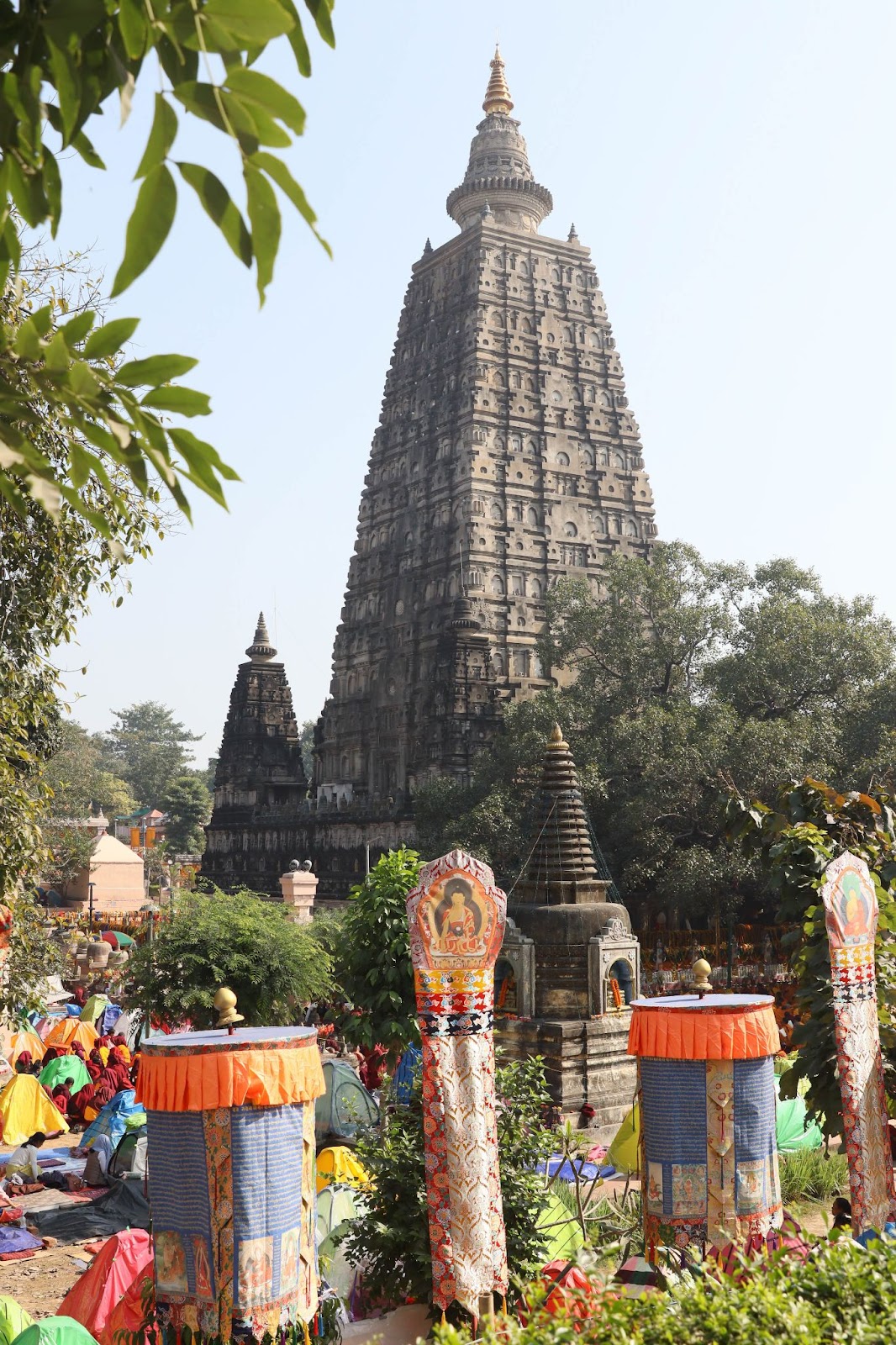
One of the things that plagued me in the first few days of the trip occurred when we were at the Mahabodhi temple. Fake monks seem to be quite common, and visitors are often warned about them. I ignored every single monk handing out leaves from the bodhi tree while I circumambulated the temple. Yet, after hearing stories of fellow pilgrims being given bodhi leaves without being asked for anything in return – I started wondering and felt bad that I may have turned down someone’s good intentions!
A part of me knew that these monks were probably fake, but indecision (about my judgment) remained. I wonder if this indecision and lack of discernment resulted from being in a work environment where truths are concealed and lying is commonplace.
When it comes to the Five Precepts, I struggle with the fourth: abstaining from false speech. This is especially the case at work, where lying seems to be commonplace, or even expected from all parties involved during negotiations. There was even a time when I was told by someone senior, “Everybody lies – there is no one that doesn’t lie.” (Something which I disagreed with – because I see examples of well-practised monastics who are impeccable in conduct, and kalyāṇa-mittas(spiritual friends) who are doing their best to uphold the precepts, even though we tend to slip back into our habitual tendencies.)
I thought about how my mind was during the visit to the Mahabodhi temple seemed muddled and confused. I compared this to the time where I had attended a retreat, observed noble silence, and undertook the 8 precepts – my mind felt very clear and free from hindrances. At the same time, I wondered how disastrous it would be if one day I undiscerningly accepted any false teachings I encountered. (Today it may be fake monks giving bodhi leaves, but in future, it could be a Buddhist cult!)
Due to the reflections resulting from the (possibly) fake monks – one of the aspirations I had made during the pilgrimage was to upkeep the five precepts to the best of my ability, even in situations where it may be difficult or require extra courage to do so.
Another inspiration I had from the trip was visiting the spot where King Bimbisara’s jail cell had been in the past. He was said to have renounced his kingdom so that his son Ajatasattu could rule peacefully. Commentaries point to King Bimbisara choosing the place of his jail cell in a spot where he could see the Buddha pass by during his daily walks up the Griddhakuta hill where he meditated.
I thought this was such an inspiration – a king giving up all his material wealth, following the teachings and being non-violent even in the most oppressive situation – with his only wish being to have a spot where he could see the Buddha.
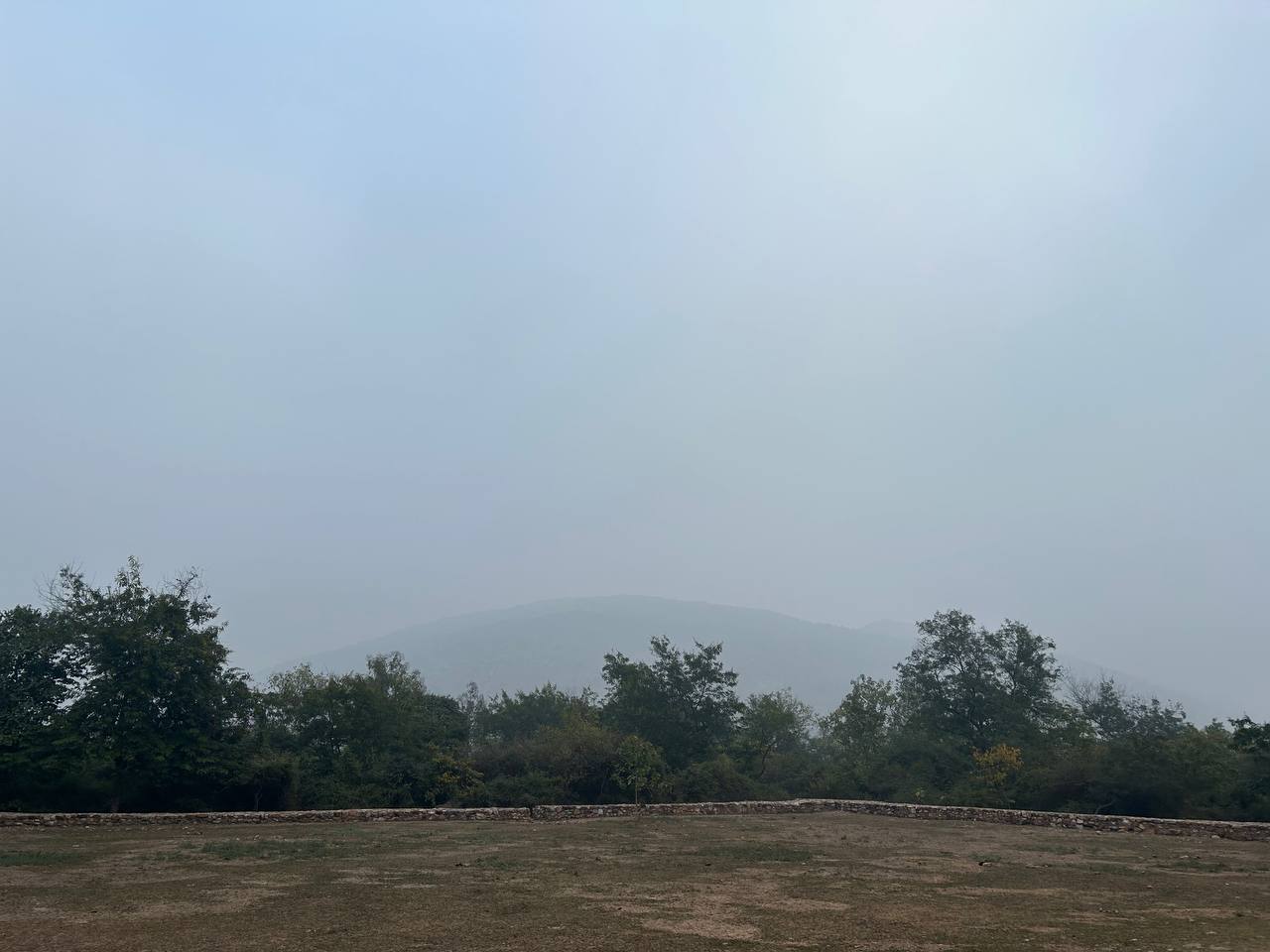
The location of King Bimbisara’s jail cell. Regrettably, the weather was not the best, so we had limited visibility and weren’t able to see Vulture’s peak. I hope King Bimbisara had better weather conditions than us!
This made me reflect on some of the situations that I find myself in, and the courage required to stick to my principles. While these training principles and precepts are difficult to follow, (and I regrettably will lapse sometimes), I hope I can find the courage and the determination to continue following them.
“Mendicants, there are these three grounds for making merit. What three? Giving (dāna), ethical conduct (sīla), and meditation (bhāvanā) are all grounds for making merit.”–AN 8.36
The Pali word bhāvanā literally means development or cultivation. This word is used in early Buddhist texts to describe “activities related to the development of the mind”. When we speak of mental cultivation in the Buddhist context, we tend to refer to mindfulness (sati) and samādhi, which is often translated as “concentration” but it is accurate to term it as a “collected stillness” that arises naturally with certain conditions rather than the everyday meaning of concentration and focus.
Like many of us, I struggle with maintaining sati and samādhi in daily life. Our minds tend to get caught up in various things in our busy lives. Wanting or rejecting something or some situation, wanting someone to do or not to do something, … etc. There’s always some desire clamouring for attention in our head.
A good way to see what we are caught up with is to periodically check the quality of our mind and observe which hindrance (see table below! ) is affecting us and what is the cause, then ask ourselves is it worth holding onto the cause of the hindrance so strongly.
The truth is – there will always be dissatisfaction and even suffering from time to time unless (and until) we are enlightened, and very often the dissatisfaction and suffering we experience are caused by ourselves!
I guess for most of us, it takes some effort to meditate daily, or even to put aside time to sit and meditate. This is one of the main challenges in my practice. Like many of my friends, my meditation quality was good during the pilgrimage, but not so good or consistent in daily life.
We are all creatures of habit and it can make a huge difference to our practice. One of the 7 Habits of Highly Effective People is Begin With the End in Mind:
Habit 2: Begin With the End in Mind is based on imagination—the ability to envision in your mind what you cannot at present see with your eyes. It is based on the principle that all things are created twice. There is a mental (first) creation and a physical (second) creation. The physical creation follows the mental, just as a building follows a blueprint.
James Clear in his book Atomic Habits recommends a framework to develop good habits and break bad habits:
“Every action you take is a vote for the type of person you wish to become. No single instance will transform your beliefs, but as the votes build up, so does the evidence of your new identity. This is one reason why meaningful change does not require radical change. Small habits can make a meaningful difference by providing evidence of a new identity. And if a change is meaningful, it is actually big. That’s the paradox of making small improvements.”
We can start building sati with small changes such as not using personal devices during meal times and on our daily commute. Shift attention to our breathing and keep it there.
When stray thoughts arise ask yourself if they are helpful to your practice, if not then let them go and come back to the breath. Over time we can also develop and maintain mindfulness while walking, talking, eating, cleaning, using the toilet, watching shows etc.
When we have some sati, samādhi arrives much more easily. The same small changes can be applied to building samādhi as well, such as sitting on the bed to meditate for a while after waking up, having a meditation break after lunch, and setting aside time to meditate after the day’s work is done. Even five minutes makes a difference!
When mindfulness and meditation are practised diligently, the quality of our minds changes. A subtle and steady peace would arise that releases and protects the mind from pain and suffering.
One thing to take note is that while mundane self-help tools can be beneficial to set a direction for our practice, we may need to tweak them for spiritual use. For instance, identity-based habits can be helpful but they must be applied with wisdom. These quotes should help to shed some light:
We practice to abandon “having” things or “being” anything at all. We don’t practice to “get” or to “be” a sotāpanna, sakadāgāmi, anāgāmi or arahant. – Ajahn Anan
but
We must forgive ourselves, love ourselves, and wish ourselves happiness. In other words, we must have a small, happy and healthy sense of self that will walk the path of non-self. This is very important. Otherwise, our self will not be able to walk on the path. – Jetsunma Tenzin Palmo
Following this understanding where our inner world determines our outer behaviour, we should also bear in mind that one of the most important aspects of bhāvanā is letting go.
When the mind isn’t pulling, pushing or holding onto anything we can experience pure bliss and happiness which is not something that the mundane world can provide. That being said, it is not feasible to let go of everything at once and letting go tends to be more effective as a gradual process.
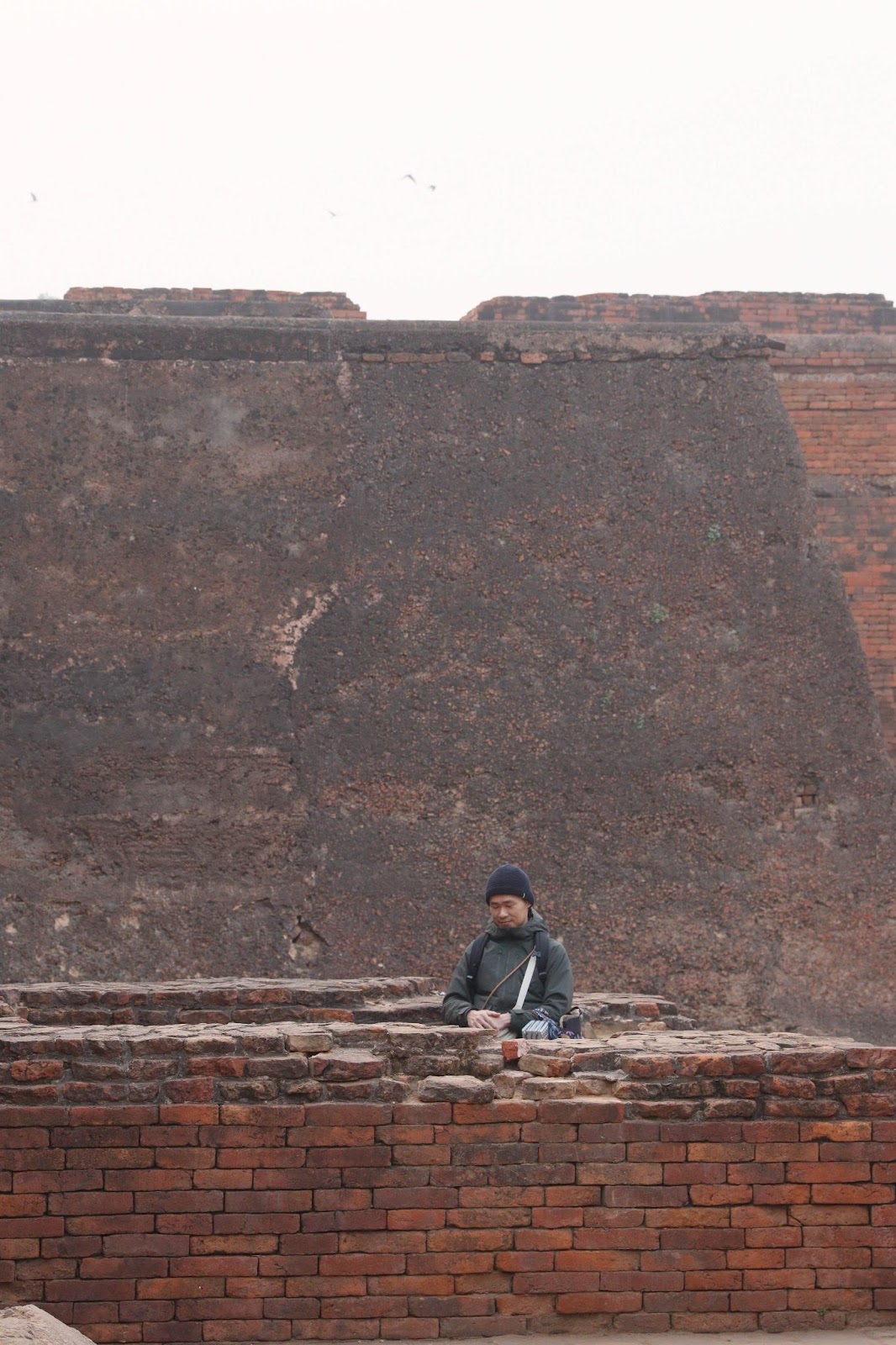
During the pilgrimage, A complicated personal experience occurred at the ruins of Nalanda and my mind was weighed down thereafter.
Fortunately, the help of some friends and wise words to “focus on the dhamma, not the drama” helped me to let go and I had a deep meditation experience at the Bodhi Tree.
We must learn to accept that life will never be smooth sailing all the time. When we start to see for ourselves that our mundane desires and conditions are innately impermanent, dissatisfactory, and non-self, we develop wisdom that delivers us from suffering.
Finally, here are some helpful resources on how to let go of:
The Pali word “Saddhā” (the first of the five spiritual faculties) can be translated as “faith” or “confidence”. A friend who had gone on pilgrimage before told me that going on a pilgrimage can deepen one’s faith. Immediately my mind went, “Really meh?
I mean even if these are the actual places where the Buddha practised, gained enlightenment and taught at, it’s been thousands of years already leh. So many people have come and gone and probably destroyed what was there to start with. How special can they be?”
This thought brought the realisation that I had doubts about some aspects of Buddhism, especially parts that were unverifiable by contemporary science. Studying science for decades and thereafter teaching science has shaped how I see the world and what I chose to believe in.
On matters like kamma and rebirth, I have taken the approach of putting my doubt on hold as I continue to practise.
The discerning reader might anticipate that I would write next about a drastic change of mind, just like those cheesy plotlines replete in dramas and movies. Aaaaaand congratulations, you are absolutely right!
Moreover, the places we visited that resulted in my change of heart were caves in two different hills, with dreamy feelings from the fog that descends early in the morning. Also present were picturesque spots to drum some sense into the sceptical protagonist.
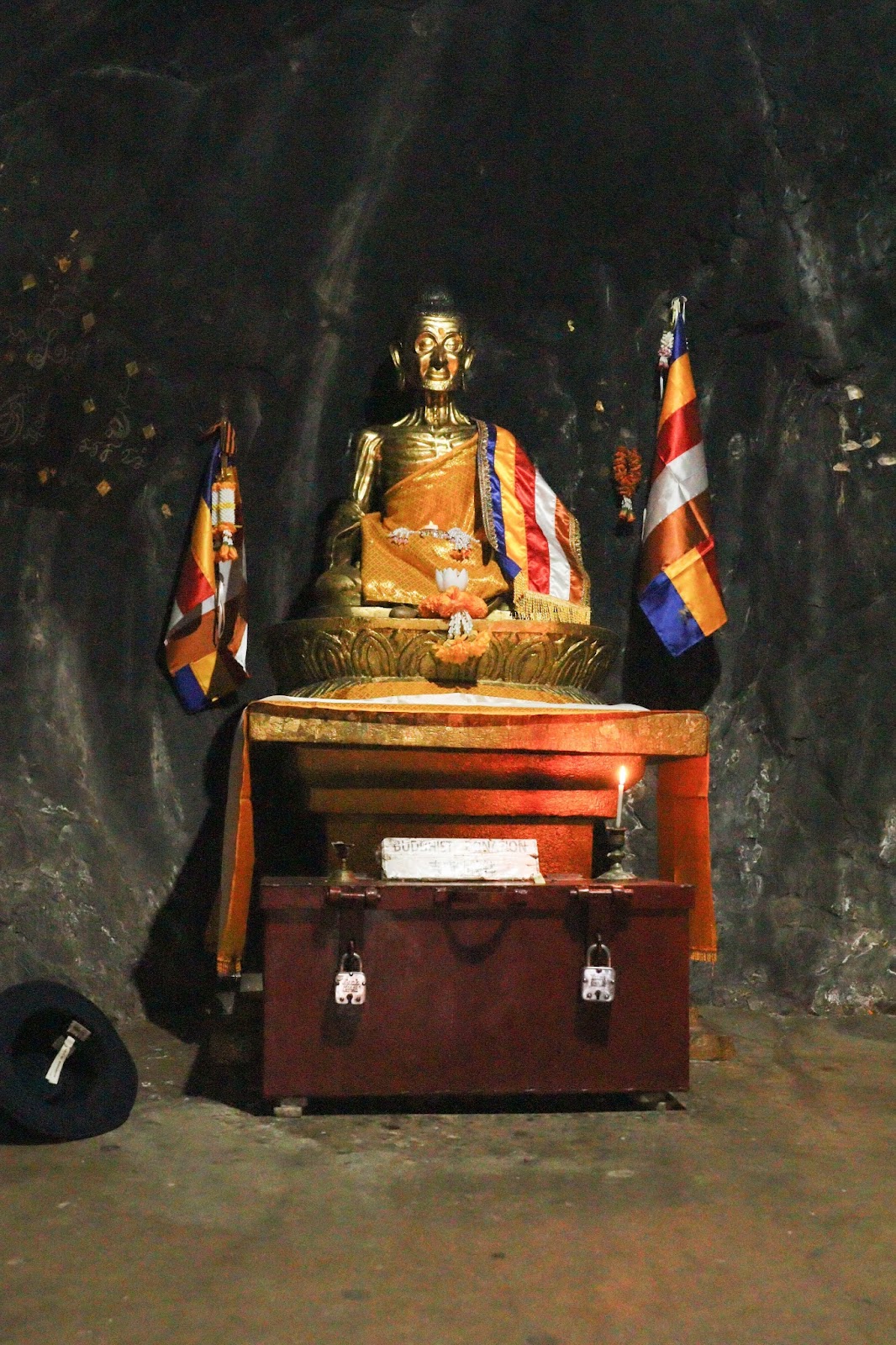
A sense of deep inspiration and respect washed over me as I stepped into the cave on Dungeshwari Hills in Gaya, where Siddhartha Gautama spent six years meditating and practising extreme asceticism before he became the Buddha. Due to his extreme starvation, he described how the skin of his belly stuck to his backbone.
The sight of the emaciated Buddha statue brought tears to my eyes as I was in awe of the Buddha’s determination to find the ultimate truth.
The extent to which he endured to arrive at the wisdom of the Middle Way, avoiding self-mortification or sensual indulgence.
On Day five, we climbed up Griddhakuta Hill in Rajgir, also popularly known as Vulture’s Peak. As I sat in meditation in the cave belonging to Venerable Maha-Moggallāna, alongside my friends, the peace and stillness that arose allowed me to appreciate an alternative perspective of the sheer number of pilgrims coming to these holy sites.
In the 2500 years after the Buddha’s parinibbāna, countless people went on pilgrimage to where the Buddha lived and taught, sometimes even risking their lives to do so, especially in ancient times. It is exactly because of these practitioners who demonstrated their faith and determination and painstakingly left records to show us the way.
Moreover, we embarked on this journey together with other pilgrims, coming from different backgrounds, each having our unique stories, forming part of the generations of nameless pilgrims.
Despite our differences, we share this affinity of pursuing the same Noble Eightfold Path.
This shared purpose of ours is not diluted by time, space or the number of pilgrims; conversely, walking along the same paths as those who have come before us and many who will do so in future serves as a source of inspiration for us all to practise.
Witnessing the effects of practising the Noble Eightfold Path on me and the people around me on the pilgrimage gives me confidence in the Buddha, his teachings and the noble practitioners who live out the teachings.
Lastly, I feel immensely blessed to have gone on this pilgrimage with my spiritual friends with the guidance of a wise teacher and support from kind tour guides.
I have this feeling that we made aspirations to practise and support one another in our past lives and the merits we accumulated brought us on this beautiful journey together again.
I look forward to continuing this journey with them in future lives, if conditions permit.
Till nibbāna do us part.
Conclusion
The narratives of Sila, Bhavana and Saddha reflected by my fellow spiritual friends’ pilgrimage experiences illuminate the diverse facets of their personal spiritual practices and their quest for enlightenment. Through their sharing about morality, mental cultivation and faith, these pilgrims inspire us to navigate our paths with courage, clarity and unwavering patient endurance.
As we bid farewell to this pilgrimage journey that we shared, may our experiences continue to guide and inspire each of us (and you!) in our own paths towards inner peace and liberation. Through mindfulness, moral integrity, and faith, may we navigate the complexities of life with greater clarity, compassion, and purpose. It’s important to remember that these experiences are deeply personal and that each of us embarks on our unique journey into spiritual paths.
While these stories inspire, readers should not expect the exact same experiences on their own pilgrimages but rather embrace their individual journeys with openness and curiosity.
As the pilgrimage comes to an end, we cherish the bonds forged, the wisdom gained and the bittersweet realisation that we have to strive with determination to bring ourselves closer to inner peace and enlightenment.
Wise Steps:
1.Cultivate Mindfulness in Daily Life: Consider Ezra Tay’s tips in the practice of Bhāvanā (mental cultivation) and integrate mindfulness practices into your daily routine. Start with small changes like setting aside dedicated time for meditation, practising mindfulness during routine activities such as eating or commuting, and periodically checking the quality of your mind to identify and address mental hindrances.
2.Uphold Moral Integrity: Make a commitment to uphold moral integrity even in challenging situations. Reflect on the five precepts of Buddhism and strive to maintain them to the best of your ability, especially in environments where dishonesty or unethical behaviour may be prevalent.
3.Strengthen Faith Through Experience: Consider the experiences of Wilson Ng’s journey of Saddha (faith)and deepen your faith through direct experience. Explore spiritual practices, visit sacred sites if possible, and surround yourself with supportive spiritual friends. Reflect on the teachings of Buddhism and observe how they manifest in your life, allowing your faith to grow organically through personal insights and experiences.