TLDR: Caring for our ageing parents can be challenging. Yet, by practising love, compassion, joy, and forgiveness, caregiving can become a path of Buddhist practice in everyday life.
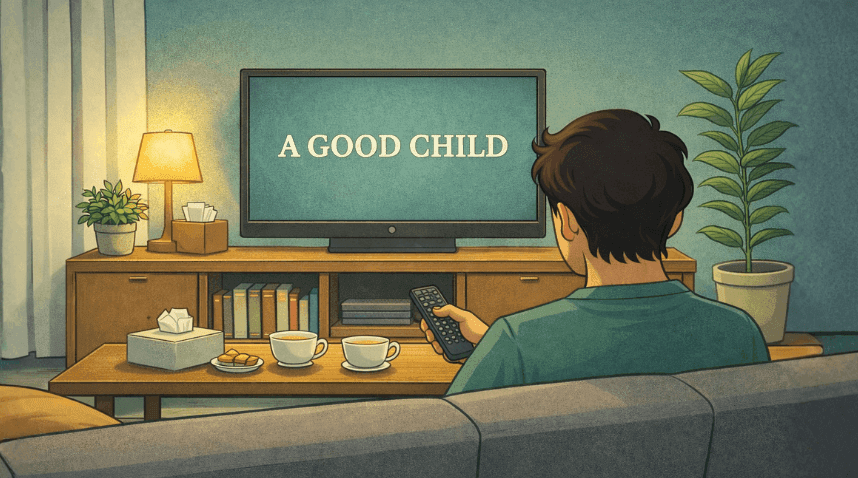
Ageing can sometimes feel scarier than death. It is a slow spiralling towards one’s death, and it affects the person who’s dying and those around them. The Singaporean movie A Good Child explores dementia and its impact on caregivers who must juggle careers and caregiving responsibilities. I explore the different Dhamma themes I uncovered when watching the film.
Love can be loud and rough around the edges. At other times, it can be soft and gentle.
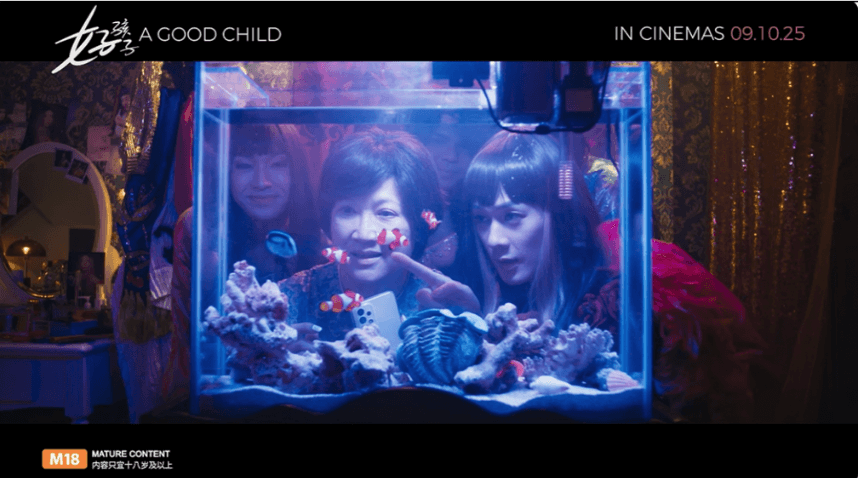
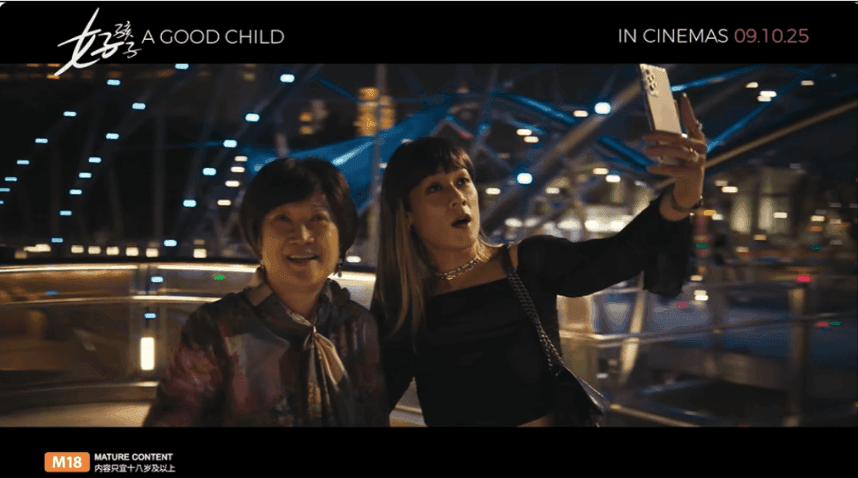
Jia Hao, a drag queen, takes care of his mother, Ju Hua, who has dementia. Even while grappling with childhood trauma and frustration inflicted by his parents, he continues showing up for his mother. He stays when it matters most.
Jia Hao’s partner, his boyfriend, stood by his side. He offered space for Jia Hao to vent, gently called out his insecurities, and allowed him time and distance needed to care for his mother.
Sometimes loving someone means not “chaining” them down. As one gentle sign in a park reminds us: “Please admire the flowers by not plucking them so that others can admire them too.”
By breaking down the word “Loving-kindness” into its two root words, Love and Kindness, I believe that even when we struggle to love fully, we can still choose kindness. One good example of this was when Jia Hao wished for his pregnant sister-in-law to take care of herself.
Love is not a performative act. It is not love only when others can see, hear or praise it. Love is when you can express it in whatever form possible in the simplest ways.
This is exemplified through the dilemma of an older brother in the sandwich generation (someone who has to take care of both elderly parents and younger children), who has to travel frequently for work and has a new family.
I grapple with this myself. I live and work in Singapore while my ageing parents live in Malaysia. While my middle brother cares for them directly, I often feel uneasy about not fulfilling my role as the eldest son, creating an emotional tug-of-war. My parents sacrificed greatly for me, mortgaging our family home to send me to the USA for my studies. Yet I did not complete the Computer Science degree they hoped for. I send a sum of money home monthly to help support my family, but is that enough? How else can I express my love and repay my parents’ kindness in their waning years?
How can we stay compassionate towards those who have hurt us? Compassion may grow more easily when we understand that they, too, have suffered. Their behaviour may not be a true reflection of their feelings towards us.
For example, corporal punishment such as caning or scolding for misbehaviour may serve as a way to protect us from harsher discipline inflicted by others. In A Good Child, Jia Hao was punished harshly by his mother when he was young. Looking back, we see she was trying to protect him from worse treatment from his father. While corporal punishment is no longer encouraged, her intention was rooted in care, even if expressed unskilfully.
One of the most mouth-gasping moments in the movie is when the sister-in-law suggests sending the mother to a nursing home, providing a SWOT analysis of the nursing home options. The initial reaction may be: “How dare she?” This is as unfilial as one can get.
Spoiler alert: We learn that the sister-in-Law is pregnant, which explains why she can’t take care of the mother.
Upon further reflection, it was a wise move. Compassion needs to start with oneself. We cannot care for others if we are not able to care for ourselves. Just like in-flight safety videos that many of us globe-trotting travellers have seen: you put your oxygen mask on yourself first, before you put it on others.
Joy does not need to exist only when life is going great; it can appear in the midst of life’s challenges.
“I will be happy when…” or a variation of such a phrase is often said by many.
But the question is, when does that moment truly arrive? There’s always something new to achieve, a bigger mountain to scale, and the moon to land on.
Psychology calls this hedonic treadmill: the chase for new highs after getting used to what once brought joy.
As Buddhists, we learn to remember impermanence. Can we be sure we will still be alive and healthy when that long-awaited moment finally arrives?
In the movie, the two brothers are caught off guard when the doctor declares that their mother has dementia. Simple moments, such as helping her put on make-up, having a meal together, and revisiting past moments to heal old wounds, turn out to be deeply meaningful and joyful.
Many of us chase future happiness like securing our dream job, ideal partner or home. But is that happiness truly lasting? Happiness is subject to impermanence as well. Instead, we can learn to relish the flickers of joy in our present moments.
Forgiveness starts with ourselves. A moment of enlightenment came to me when Jia Hao told his audience that he would stop sharing denigrating jokes about being a drag queen. Outwardly, he brushed off others’ insults of him and his drag queen peers, but inwardly, he carried internalised homophobia.
By letting go of the shame of being different, he began forgiving and loving himself for who he truly is.
We can still love someone before we fully forgive them. Forgiveness is a process that we may have to revisit over time, but it does not stop us from extending kindness and compassion when needed. Jia Hao loved his mother for raising him despite the pain of being ostracised for being gay and performing drag.
Forgiveness and love are not mutually exclusive emotions.
We can work towards understanding someone and still care for them while we heal. Our parents may not be around by the time we finish forgiving them for whatever “wrongs” they may have inflicted on us.
Buddhist meditation teacher and former monk, Jeff Oliver, has an excellent e-book on “Forgiveness for Everyone,” if you are keen to further explore the practices of forgiveness.
Love is love. Love wins. Love is like raindrops, falling on everyone without discrimination.
The movie highlights the challenges LGBTQ+ individuals face while showing that they can express love, compassion, joy, and forgiveness, as well as a range of other emotions, just like anyone else.
As the Buddha teaches, beyond gender, caste, or profession, we can learn to be kinder and more compassionate toward those around us, regardless of their sexual orientation. Respect and equality should not be reserved for Pride month alone. As wise Buddhist practitioners, may we aspire to be kind and compassionate for one and all.
TL;DR: This a reflection of a short movie about Thich Nhat Hanh, his teachings and community. Let’s walk together.
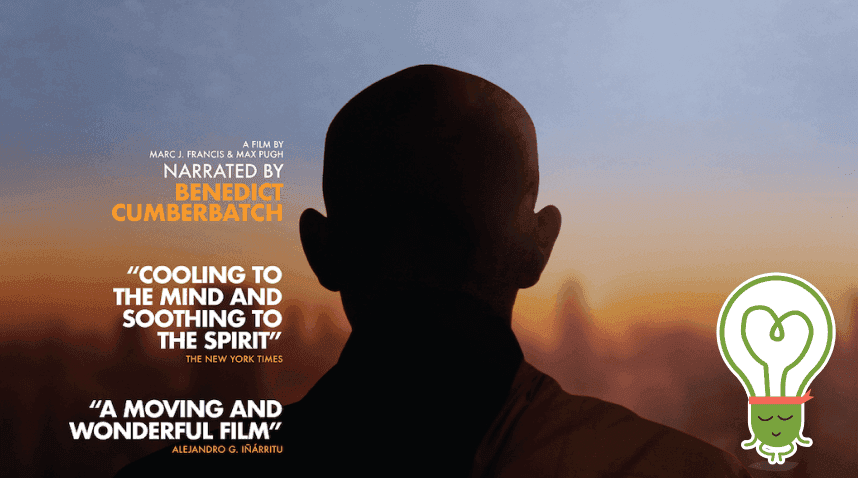
I had the chance to join the DAYWA (Dhamma Assembly for Young Working Adults) group for the Walk with Me movie screening some weeks ago. It’s a documentary showing a glimpse of activities in Plum Village, the community founded by Thich Nhat Hanh in France after he was exiled from Vietnam during Vietnam war time. It is a space for practitioners to immerse themselves in Zen Buddhism and the art of mindful living.
The directors perhaps wanted to appeal to a wider population, accompanying it with narration by Benedict Cumberbatch – with his deep voice and strong British accent. And I believe it may have worked when he read several lines from Thich Nhat Hanh’s journal throughout the movie.
There isn’t much dialogue or scripted lines like we’re used to in movies. It contains snapshots of activities, short conversations, moving images or sounds of nature.
What may seem like random scenes strung together, turns out to be a strangely beautiful flow of the story for me.
Cr: Scenes from the film
Captivating scenes
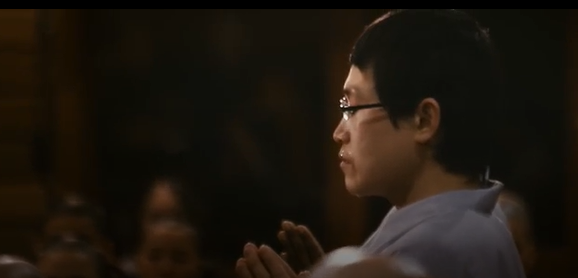
One of the earlier scenes left a deep impression on me: a group of laypeople on their knees, waiting in line for ordination. What’s striking isn’t so much the act of joining the ordained ones, but the deep sense of relief I see in their faces. Tears flooded down their faces, not from grief, but as if a huge rock had been lifted off their chests.
Cr: Scenes from the film
Witnessing such an intimate emotion, I can’t help but tear up and wonder to myself: when was the last time I experienced such a huge relief? What is weighing us down in life?
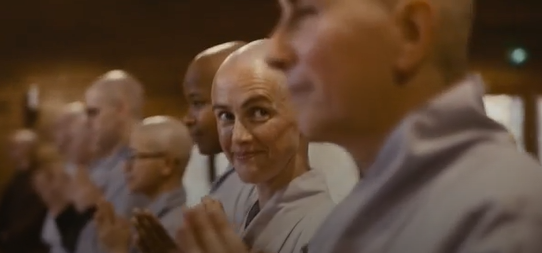
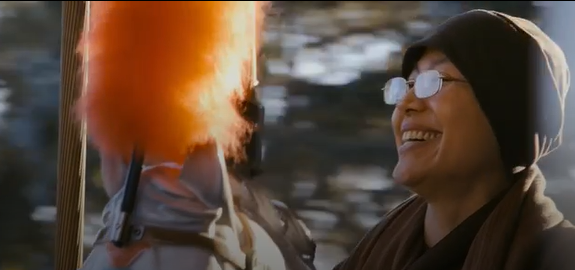
Cr: Scenes from the film. I love the knowing smile of “welcome to the group”
The bell chime every 15 minutes was cited by many of us as a good reminder for mindfulness – stop whatever it is and catch our breaths intentionally while listening to the bell for a few seconds. The resumption of the activities seems as if nothing has disrupted the motion; if not with the attitude of new experience.
Perish
“Friends want you to appear in the familiar form they know. But that is impossible. How could we continue to live if we were changeless? To live we must die every instance. We must perish again and again in the storms that make life possible.”
A few sentences with an immense reminder to the ever-changing nature of life: we’re not truly living if we try to fix part of us from others’ memory of us and we can’t fix others based on our memory of them.
It also reminds me of one poem in Yung Pueblo’s book Clarity & Connection:
How can we have a real conversation if every time we speak I can see in your eyes that my words are not reaching you? They stop at a narrative you have created about me based on who I was many years ago.
A reminder to let go of the past – image and belief of something and someone. So we could be fully present with what is in front of us, even if it’s a version that we’re unfamiliar with or dislike about.
The movie wasn’t only filmed within the compound of Plum Village, but also journeys to the outside world to share Buddha’s teaching. It was interesting how the monks’ and nuns’ encounters in the U.S. (prison visit, park meditation, monk’s and nun’s visit of family) shine light on the many who don’t understand Buddhism.
The scenes showed how these monks and nuns patiently shared with those who’d like to listen, in a way relatable to them. It was almost funny how the prisoners seemed to be frightened or perhaps showing pity when the monk said monks/nuns do not hold possessions and don’t even hold their own money – as if to ask: who is the one living in jail? But who is the freer person – the one who chooses to drop things or who yearns for things being denied?
Final words
I’ve watched the piece for the second time to write this article and a third time to find meaningful scenes to include alongside and realise that I can ‘watch’ it with my eyes closed. The directors have inserted beautiful sounds of nature, chanting and singing, familiar yet unfamiliar words and melodies. This is the first time I’ve heard Namo Avalokistesvara being chanted alongside violin accompaniment – a new way to appreciate the words and embrace what it stands for.
Cr: Scenes from the film: A smile can be a beautiful sound
One may expect to see more scenes with the Master himself. While Thich Nhat Hanh does make a couple of appearances in answering a question from a little girl (she’s feeling sad because her dog has passed away) and scenes covering his presence in the hall, there are limited scenes of him. His teachings and messages are cleverly transmitted through the actions and energies of his students; even in mundane activities like (mindfully) sipping a small cup of tea.
In summary, this may not be the typical movie or documentary.
One needs to appreciate and trust the flow enfolding every new second, as our self-held expectations and mind search for particular meaning or story, which is the result of a mind habitually trained at grasping. We can probably practise what Thich Nhat Hanh himself taught and come home.
Key Reflections:
Keeping ourselves open to new activities with a new group of people could result in a positive experience
The group may be watching the same film, but the message that strikes us individually may be different depending on our internal world
Lengthy script isn’t necessary to transmit a message that is well-woven in the visual, audio and tone of the piece
Buddhist Film Reviews is a partnership series between HOL & THIS Buddhist Film Festival 2021 (25 Sept – 8 Oct’21). Themed “Open your mind”, THISBFF 2021 features 15 thought-provoking documentaries and feature films from 12 countries.
TLDR: Paying homage to Master Sheng Yen and his movement to revive Ch’an (禅) Buddhist practice in Taiwan, the United States and around the world, the documentary paints a beautiful portrait of Master’s selfless life a decade after his passing in 2009.
If you had heard of Master Sheng Yen and his teachings, do you know how he came to be?
A saying goes, ‘still water runs deep’. Master Sheng Yen’s life story unfolds into many onerous chapters unknown to most.
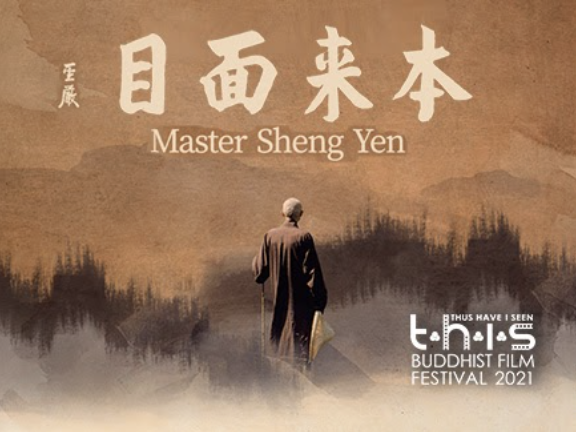
A posthumous biographic documentary, Master Sheng Yen (Chinese title: 本来面目) details his early years of ordination, the peak of his monastic life, its challenges, and his final efforts of serving Buddha’s dispensation.
The title of the documentary alludes to the quote from The Sixth Patriarch Venerable Hui Neng in The Sixth Patriarch Sutra, 「不思善不思恶,正与么时,那个是明上座本来面目?」 This question was posed to Venerable Hui Ming, who realised enlightenment thereafter. It roughly translates to “without considering the good nor the bad, what is your original face?” Master Sheng Yen has used this ko-an to discuss the true nature of one’s heart in his teaching.
To make up for the lack of intimate interviews with Master, the producer reconstructs Master’s personality and demeanour through animation, archival photographs, audio and video recordings, as well as extracts from letters and publications. Interviews of Master Sheng Yen’s disciples and acquaintances help us see Master as a humble teacher and striving monastic from their eyes.
Against the backdrop of socio-political turmoil and modernisation, the documentary tells an impeccable narrative of Master Sheng Yen’s life through the suitable use of black-white historical archives and re-enactments.
Through the documentary, the audience traces the historical forces that shaped Master’s compassionate outlook and disenchantment towards the world. Notwithstanding the school of life, Master Sheng Yen was apprenticed under a lineage of Ch’an and Zen teachers, who were formidable in their practice.
The nuggets of wisdom crystallised from Master Sheng Yen’s life experiences were offered together with pastel motifs of impermanence – albeit their screen times as fleeting as snowflakes. The scenes and delivery of content are ever-changing as with life – no one moment can be repeated like a running stream. Aptly, the cinematography takes on a sense of detachment – observing, looking on to the emptiness beneath.
How did the documentary make me feel?
I felt encouraged about Master Sheng Yen’s tireless efforts to revive Ch’an Buddhism after the purging of religion from the Cultural Revolution.Watching the documentary helped me reflect that I have taken his compassionate teachings for granted.
I was never once bored because of the different types of sources and media used in delivering Master Sheng Yen’s story. At any point in time, I feel immersed in that particular decade with Master Sheng Yen when he was making difficult choices to practice in line with the Dhamma and to benefit sentient beings.
What was the most memorable scene?
It was an interview snippet when Master Sheng Yen reminisced with the founding president of the Buddhist Society of the United States, Mr Shen. The latter drew an analogy where the Master was a field of merits and Mr Shen merely sowed in that field.
Hearing this, Master Sheng Yen broke down into sobs.
It was then that I realised the extent to which Master Sheng Yen had experienced life’s bitterness was one which no one could fathom, yet he remained such a hopeful pillar of support to his disciples.
What did I like about the documentary?
It pieces together a Master Sheng Yen I did not know and it helps me to appreciate what he stood for and the contribution he has made for Ch’an Buddhism.
I grew up learning about Master Sheng Yen’s teachings but I never understood who exactly was the monk who taught them — he was a man of calibre and honourable virtues; and definitely, a man of perseverance.
He was there in front of me throughout the documentary – his presence alive and piercing into my consciousness with light and wisdom.
What did I not like so much about the movie?
There were a few quotes that flew by quite quickly. At the end, there were some text describing the development of Dharma Drum Mountain but the words may have been small and quick to pass over. Perhaps, I am a slow myopic reader and it is time for me to change my spectacles.
Who would I recommend this for?
Anyone who knows Master Sheng Yen and who wants to learn from his life and his life’s works. This is a well-researched documentary – both educating and contemplative.
Liked what our author experienced? Book your tickets right now!