
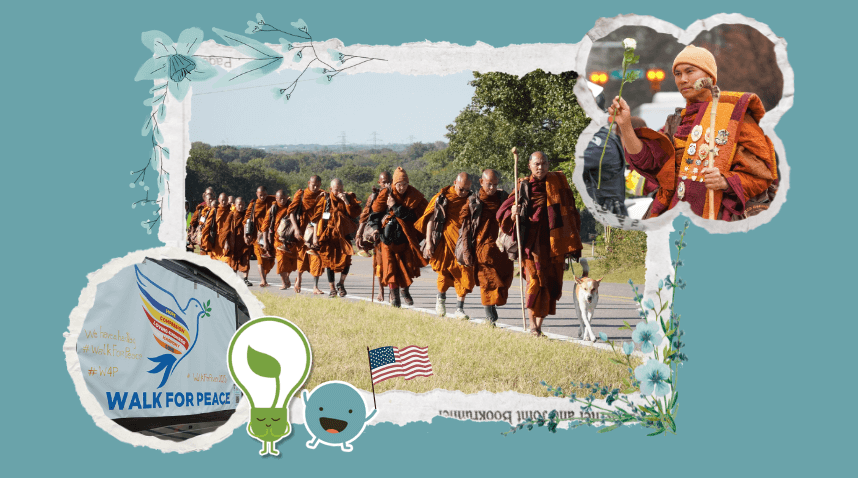
TLDR: The Walk for Peace USA is a long-distance walk led by Theravāda Buddhist monks, bringing mindfulness, compassion, and non-violence into everyday American life. Rather than a protest, it is a silent spiritual practice that invites inner peace, one mindful step at a time.
Have you been coming across videos of Buddhist monks walking across highways, small towns, and city streets in the United States? You may have wondered: What exactly is going on?
This movement, known as the Walk for Peace USA, has drawn widespread attention online, often accompanied by curiosity, admiration, and sometimes confusion. If you’re looking to learn more about this movement and explore the Buddhist foundations behind the Walk for Peace, you’re reading the right article!
What is the Walk for Peace USA?
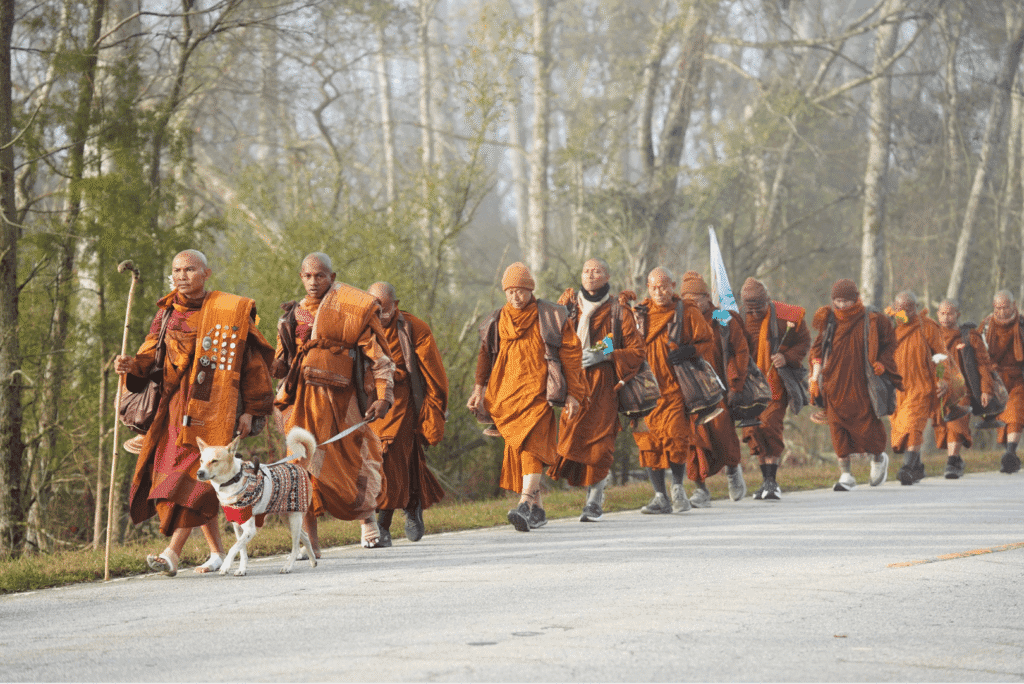
Walk for Peace USA is a long-distance peace walk undertaken by a group of Buddhist monks as a form of spiritual practice and walking meditation. Rather than a protest or performance, the walk is a contemplative pilgrimage rooted in Buddhist principles such as mindfulness, non-violence, and compassion.
The Walk for Peace began in late October 2025 and is expected to conclude in early 2026, making it a journey of several months.
Who is Involved?
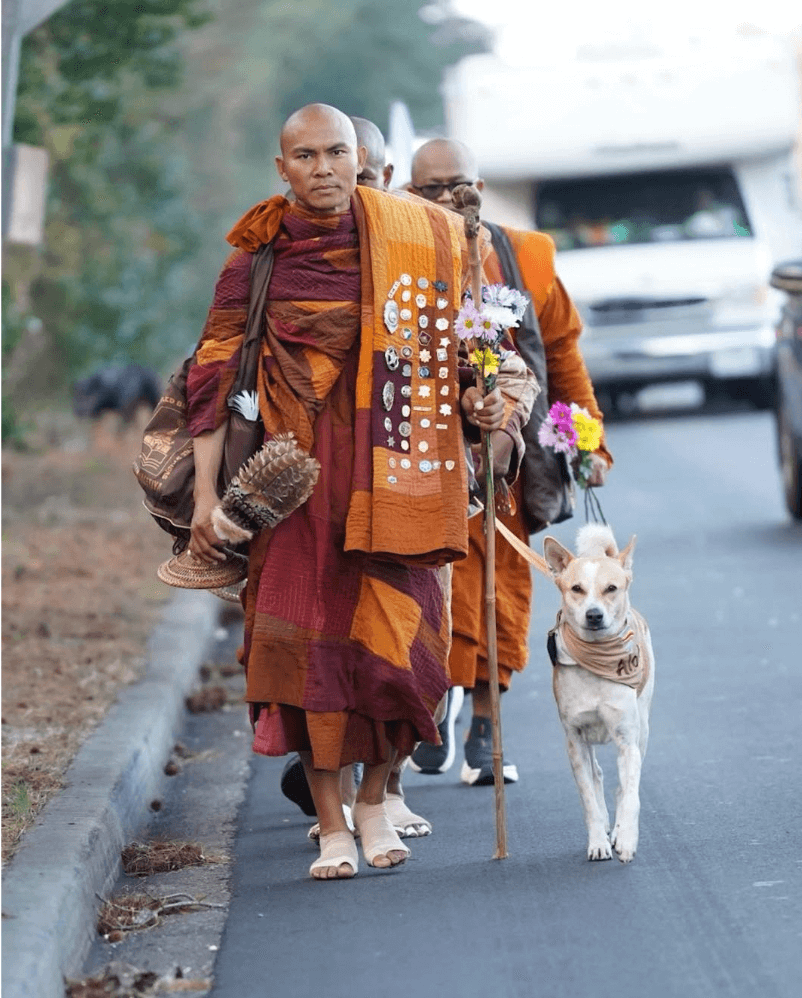
The walk is carried out by a group of Theravāda Buddhist monks originally based at a Buddhist meditation centre in Texas, led by the spiritual leader, Bhikkhu Pannakara. They are joined at times by volunteers and lay supporters, but the core of the walk is carried out by ordained monks following monastic discipline.
One distinctive presence that has captured public attention is Aloka, a rescue dog who walks alongside the monks and has become an informal symbol of gentleness and companionship on the journey.
Where are They Walking?
The walk spans approximately 2,300 miles (around 3,700 kilometres), with the monks walking daily at a slow, steady pace consistent with walking meditation rather than endurance trekking. The route stretches across multiple U.S. states, beginning in Texas and moving eastward toward Washington, D.C. Along the way, the monks pass through small towns, suburbs, highways, and city streets, bringing their practice into the rhythms of everyday American life.
Neeraj Bajracharya, the general secretary of the Nepalese Buddhist Association of Texas, says Washington D.C was chosen as the destination because of its symbolic role as the nation’s centre. Reaching the capital, he said, is intended to help carry the message of peace to Americans nationwide.
Why Walk for Peace?
Bhikkhu Pannakara says the journey is not intended as a protest, but as a way to encourage inner peace. He explains that the walk is meant to remind people that peace already exists within each individual and can be gently awakened.
From a Buddhist perspective, the Walk for Peace is a practice, not a campaign. Peace walks have been undertaken by Buddhist monks for more than 2000 years. The walk is described as a simple yet meaningful expression of unity and kindness: values that, once cultivated internally, can extend outward to families, communities, and society at large.
In a blog post titled “Why We Walk,” the monks further explain that the act of walking itself is not meant to create peace directly.
Instead, peace arises when people encounter the walk, whether online or in-person, and reconnect with a sense of calm and goodwill that already resides within them. The walk symbolises that a peaceful society begins with peaceful individuals, and inner transformation must come before external change.
The monks describe this as their contribution: not to impose peace upon the world, but to help nurture it silently, one awakened heart at a time.
Through the walk, the monks aim to:
- Cultivate inner peace through continuous mindfulness
- Generate loving-kindness (mettā) for all beings they encounter
- Offer a quiet reminder of calm, ethical living in a restless and divided world
By walking slowly and mindfully across the country, the monks embody non-violence in action, showing that peace is not something to be demanded, but something to be practised, step by step, in everyday life.
The Buddhist Tradition Behind the Walk
The Walk for Peace USA is rooted in the Theravāda Buddhist tradition, one of the oldest surviving schools of Buddhism, with a strong emphasis on simplicity, discipline, and direct personal practice, focusing on individual enlightenment through rigorous practice.
Practices such as walking meditation, renunciation, and living with few possessions have long been part of monastic life, reflecting a commitment to mindfulness in everyday activity.
Monks traditionally travel on foot, relying on generosity and maintaining a humble presence in the world. The Walk for Peace reflects these values by emphasising mindful presence, non-harming, and leading by soft example rather than through speeches, activism, or public demonstration.
Notable Highlights of the Walk So Far
As the monks have made their way across the country, the walk has prompted a wide range of public responses. In several towns, onlookers have been visibly moved, with some stopping to speak with the monks, offer food or water, or express emotion upon encountering the walk unexpectedly.
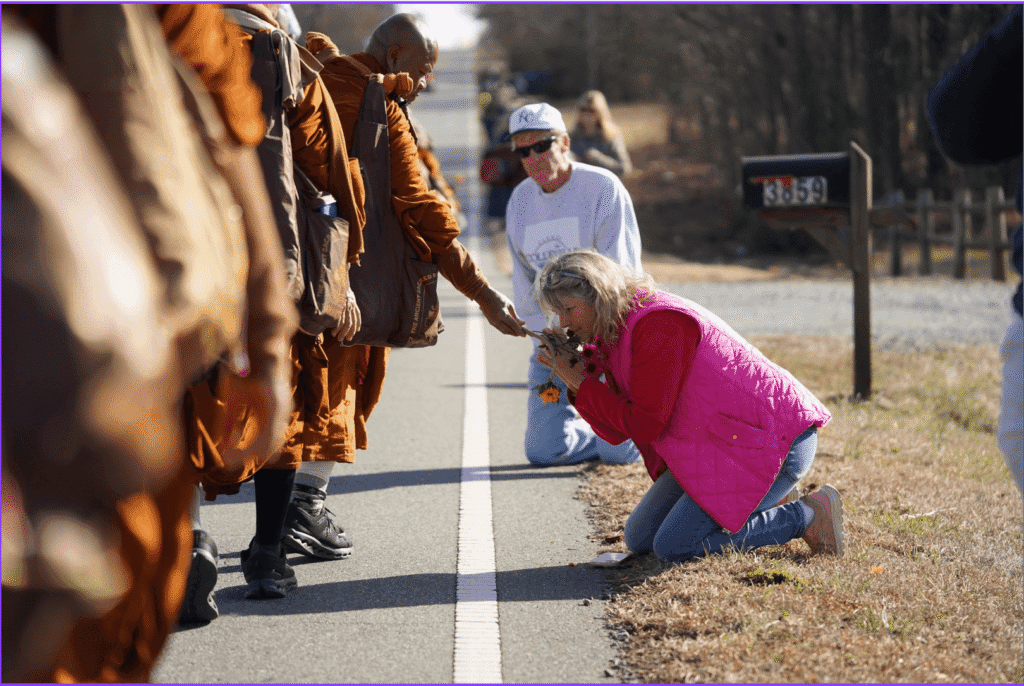
Furthermore, the monks have been welcomed by religious communities of different faiths, including churches, temples, and interfaith groups, where brief exchanges and shared moments of reflection have taken place. These encounters have often been informal and unscheduled, reflecting the walk’s emphasis on presence rather than programming.
One moment that drew widespread attention occurred during the walk in Texas, when one of the monks, Phra-Ajarn Maha Dam Phommasam, was seriously injured in a traffic accident. A car struck the group’s escort vehicle, which then hit the monk, resulting in the loss of his leg. He survived the incident and has since returned home to Sneville, where the monks later visited him as they continued their journey. Organisers have described his recovery as ongoing, and the incident has been received by supporters as a sobering reminder of the risks involved in the walk and the resilience with which the monks continue their practice.
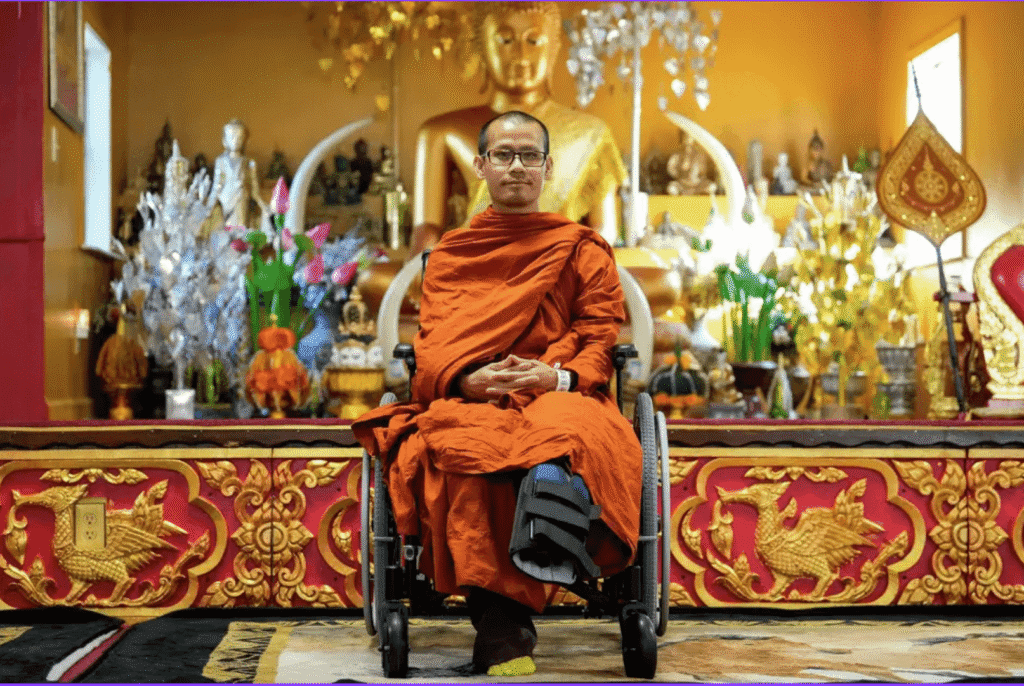
Credit: Houston Chronicle
At the same time, the journey has not been without scepticism. The monks have encountered critics both online and in person, some questioning their intentions or the meaning of the walk. Organisers have said such encounters are met with calm and dialogue, consistent with the walk’s emphasis on non-reactivity and compassion.
Impacts of the Walk
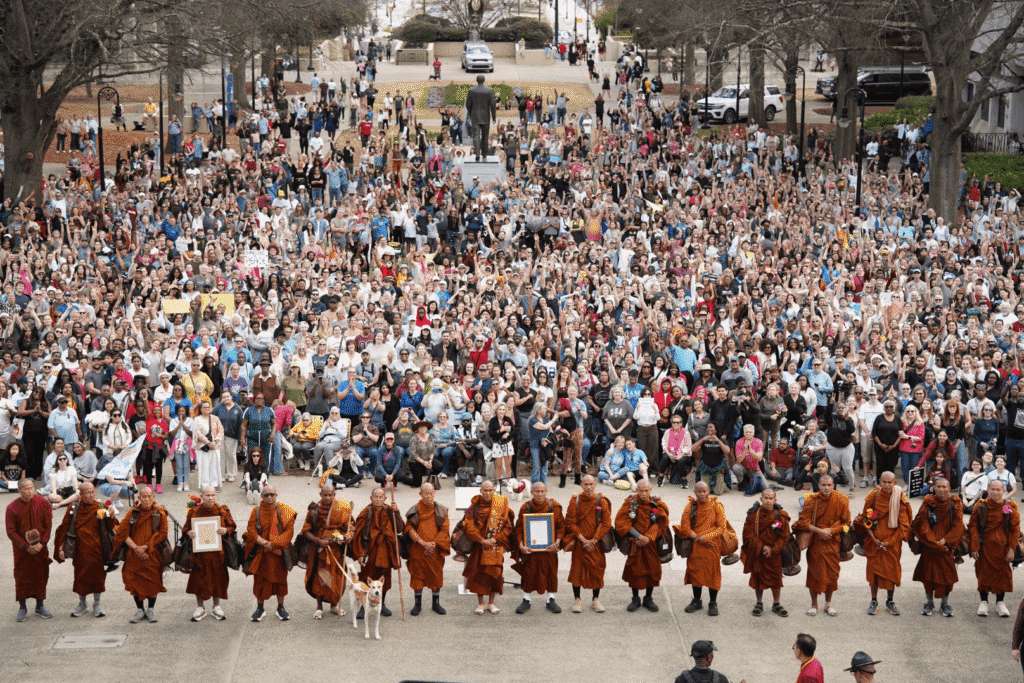
While the Walk for Peace is not intended to produce policy change, its impact has been felt on a personal and communal level. The walk has created moments of pause in everyday life, prompting reflection among those who encounter it, whether briefly on the roadside, during a chance conversation, or through videos shared online.
The journey has also brought Buddhist ideas such as mindfulness, walking meditation, and non-violence into wider public conversation, often reaching audiences far beyond traditional religious spaces. Ultimately, they measure the walk’s impact not by distance travelled or visibility gained, but by individual moments of connection, reflection, and calm.
Follow Walk for Peace USA:
- Walk for Peace USA Live Map: https://dhammacetiya.com/walk-for-peace/live-map/
- Facebook: https://www.facebook.com/walkforpeaceusa/
- Instagram: https://www.instagram.com/walkforpeace.usa/?hl=en
