
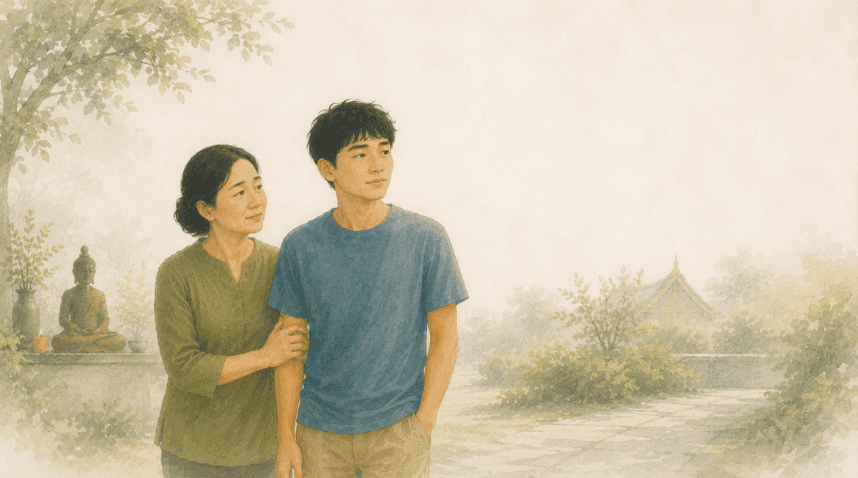
TLDR: When someone we love walks away from Buddhism, the real practice begins: learning to respond with patience, compassion, and letting go instead of fear and control. This reflection explores how equanimity, non-clinging, and genuine kindness can hold relationships together even amid spiritual differences.
“I don’t see the point of Buddhism anymore.”
A heretical opinion landed over dinner. No early signs.
A friend’s son, who used to sit with us at the vihāra (Dhamma hall) every Sunday, announced his position on the religion plainly.
The youth looked his mother in the eye and announced like he’d been rehearsing for months.
He, who once asked such sharp questions about the suttas that we joked he’d end up a monk, could no longer picture himself practising the Buddha’s teachings.
His mother shared with me that awful news the next week. I sensed she’d been replaying that moment ever since – her horrors multiplying with each recollection.
“We have raised him in the Dhamma. He used to love going to the temple. Now, he calls it a place of ritual and superstition.”
I’ve heard this retelling of someone’s departure from Buddhism more than I’d like. Some versions from parents. Others from friends, who had watched someone close drift away from the practice.
The details change but the feeling remains the same: a dull, heavy weight sinking into the abyss. An initial mix of pity, disappointment, and helplessness. Maybe even hints of betrayal. Perhaps doubt towards your own spiritual practice. Eventually, grief washes over.
You think the faith towards the Dhamma practice is a precious bond you share. Now, the other person has handed the path towards freedom back to the Buddha. Your spiritual journeys are no longer conjoined.
So what do you actually do?
Having sat in this situation with others, there are a few things I’ve learnt. Some lessons the hard way.
What to do first?
Steady your mind in the present.
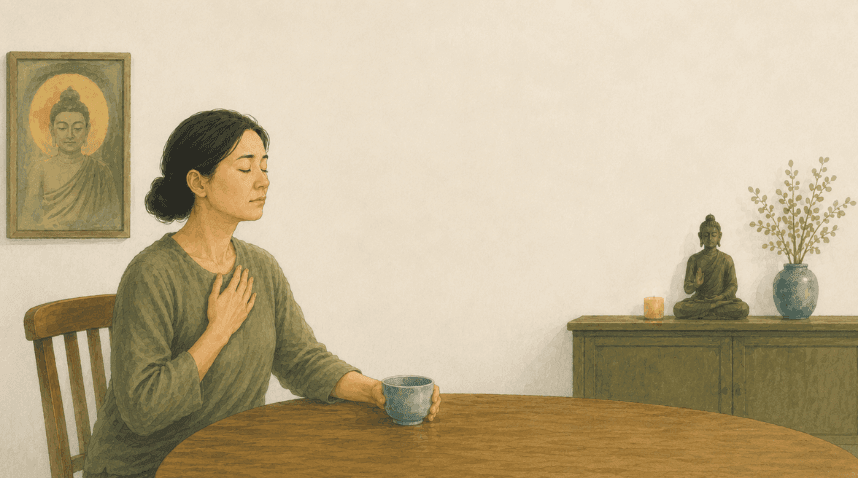
Panic may be your first instinct. Acting on it rashly may not be skillful.
If your reaction to “I’ve left Buddhism” is denial and guilt-tripping out of fear and despair, your own practice still needs to work on holding space for difficult conversations.
The Dhamma teaches equanimity (upekkhā) – not indifference nor suppressing your feelings. Equanimity is the ability to be with something painful without being consumed by pain.
Your friend has plucked up courage to initiate an important subject. Their vulnerability awaits your reciprocity. If your mindfulness spirals with unwholesome feelings, your unskilful actions may push their sincere bid for connection away. It might even reinforce their conviction that Buddhism is not for them.
Breathe. Be still. You can feel hurt without performing hurt. Holding space for your feelings to arise and pass away mirrors the same awareness you can offer for your friend, who yearns dearly for empathy and kindness.
Let your sense of self go.
The mind loves to find a cause; moreover, it loves to attribute that cause to a self.
“Maybe I pushed too hard. Maybe I didn’t explain it well enough. Maybe I should have taken them to a different teacher.”
Here’s the thing: what if it was never about you?
The Buddha taught in the Kālāma Sutta (AN 3.65) that people should not accept teachings simply because of tradition, or because a teacher said so, or because it’s what they grew up with.
He taught the Kālāmas, who were overwhelmed by various religious doctrines, to test the teachings against their own experience. After verifying, they should only take up what they found to be true and beneficial to their well-being.
Your child is doing exactly that. They tested the teachings and, for now, decided to put them down. Their decision is not a failure of your parenting or friendship. That’s a person exercising the very discernment the Buddha encouraged.
In the Sigālovāda Sutta (DN 31), the Buddha talks about the duties between parents and children. One of the parent’s duties is to “hand them over to a suitable inheritance.” But notice what the sutta doesn’t say: it doesn’t say the child must accept it. The giving is the parent’s job. The receiving is the child’s choice.
Taking their choice as proof that you failed is its own kind of clinging (upādāna). You’re attaching your sense of self-worth to their spiritual choices.
Notice that attachment. It’s worth examining. It is also worth letting go.
Cultivate patience.
Don’t give up on your friend. Not the relationship nor their capacity to find their way.
The Dhamma teaches a concept of planting seeds (bīja) in the mind. Some seeds take root quickly. Some stay dormant for years. Some need conditions that have yet to arrive.
The suttas describe people who hear the Dhamma and walk away (or even insults it), only to return much later when their own life experience brings them around.
Most people return to the Dhamma practice through their own suffering, in their own time, not because someone told them to. They can definitely benefit from the space and time provided by your patience.
Your relationship with this person is larger than Buddhism. It was there before they met the Dhamma, and it continues after they’ve stepped away from the Dhamma. You need not reduce the whole relationship into one disagreement about spiritual practice.
What to do next?
Be curious about their lives.
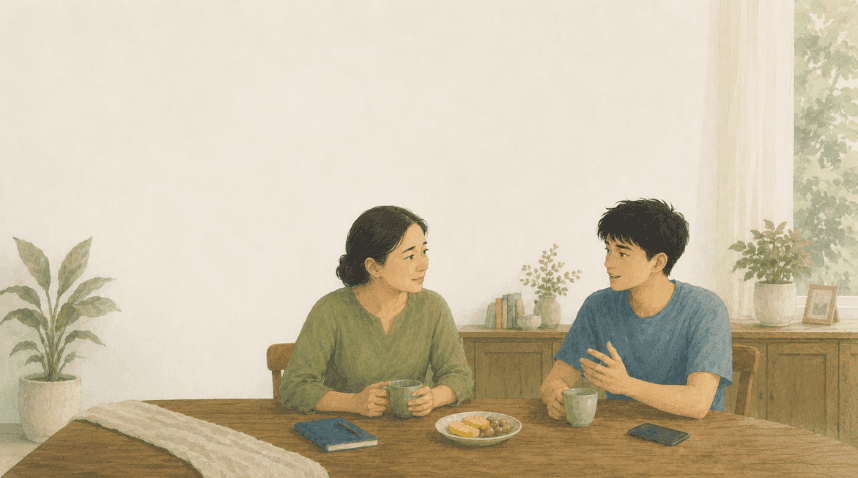
Apart from how they relate to Buddhism, there are plenty of other aspects in life where you can show interest in. Their work, their hobbies, what food they like, what they’re watching. Let life be the bridge.
Before making peace with reality, you may be tempted to find every opportunity in daily conversations to slip the Dhamma back in. Once you accept your child or friend as who they are and respect their choices, you allow for genuine connection to arise in your conversations.
The Mettā Sutta (Snp 1.8) describes an unconditional goodwill towards all beings. You can wish someone well, in spite of the differences, because they’re sentient beings.
When you show up without an agenda, your presence speaks louder than any discussion about the Four Noble Truths.
Challenge yourself to develop a genuine interest in who they’re becoming. Not who you hoped they’d become.
Reflect on what’s going on within.
This one is uncomfortable but it is crucial for understanding how the mind works.
Why does their leaving bother you so much? Is it because you’re worried about them? Or is it because their choice reflects on you?
The Sallatha Sutta (SN 36.6) teaches that when we experience pain, we often add a second layer of suffering on top of it:
The first arrow is the genuine sadness that someone you love has stepped away from something precious to you. That’s real. Feel it arise, watch it stay and then let it pass away with time.
The second arrow arises from the story that the untrained mind spins around the feelings. I’m a bad parent. People will judge me. What if they never come back. What does this say about my own practice?
That second arrow is where most of the suffering lingers, even after the initial sadness has gone by. And that’s the one you can work with.
Stay with the discomfort. Examine the narratives that are not helping you to abide in peace. This reflection might be the most honest practice you’ve done in years.
Live your practice.
The Dhammapada opens with “Mind is the forerunner of all actions.” Your state of mind will show in everything you do. If the practice is real, it shows up in how you treat others when they don’t meet your expectations. The practice culminates in peace and an undistorted awareness of situations: just as they are, not what you wanted them to be.
What if your child or friend never returns to the Dhamma?
Then you would have practiced something the Buddha teaches constantly but most of us avoid: letting go.
Let go of your idea of who someone should be. Let go of the outcome you wanted. Letting go of our expectations of others allows us to love fully without needing them to be a certain way (before we are ‘happy’).
This letting go of what causes suffering is a crucial part of the practice. It does not have to exist only in theory.
Allow the practice of letting go to arise in your actual life, with your child or friend, on a random Tuesday when change hurts.
One last thing
The Buddha compared the Dhamma to a raft (MN 22). You use it to cross the water, and then you put it down. He never said everyone would pick up the raft. He never said the ones who picked it up would hold it forever.
What the Buddha did say is that each person has to see the truths for themselves. You can point at the oceans of suffering. You can describe the far shore of liberation from suffering. Yet you cannot carry someone else apart from yourself across.
Your loved one has put the raft down. Maybe they’ll pick it up again someday. Maybe they won’t. Either way, the most useful thing you can do right now is to keep crossing the vast oceans of suffering.
Keep practicing. Keep being the kind of person whose life quietly answers the question: does this practice lead to long-lasting peace?
The next time your loved one walks away from the Dhamma practice, keep steering your raft towards awareness and peace. Just be there as someone who cares.
That’s goodwill towards yourself and your loved one. The best part is the other person does not have to believe in anything at all to feel your kindness.
Wise Steps
- Hold space before reacting: When someone steps away from the Dhamma, resist the urge to panic, convince, or correct. Practise equanimity by listening with calmness and allowing difficult emotions to arise without letting them control your response.
- Separate love from expectation: Reflect on whether your suffering comes from concern for the person, or attachment to who you hoped they would be. Letting go of spiritual expectations creates room for unconditional goodwill and genuine connection.
- Live the Dhamma quietly: Rather than trying to persuade others back into Buddhism, embody the teachings through patience, kindness, and steadiness. Often, how we live speaks louder than what we preach.