TL:DR; Venerable Thubten Chodron talks about how we can better approach the fears and anxieties of illness, particularly on how how our mind can shape our experience dealing with sickness in any form for better or for worse.
We all get sick. The only way to avoid sickness is to die first. But otherwise, once we’re born into cyclic existence with this body that’s under the influence of mental afflictions and karma, then sickness is guaranteed. But that’s the nature of our body—it gets old and it gets sick.
So how do we deal with sickness when it comes? We can just feel sorry for ourselves. We can blame somebody else. We can be angry. We can make ourselves and everybody around us quite miserable. Does that cure the illness? No, of course not.
Eliminating ignorance and attachment (craving) will eliminate rebirth in saṃsāra, which is the root cause of sickness.
Obstacles to eliminating the root cause of sickness
One way to stop sickness is to stop its root cause as, birth in cyclic existence. If we don’t want to get sick, then we should not be born in saṃsāra. How do we get rid of birth in saṃsāra? By eliminating the principal cause, which is ignorance and attachment.
We all say, “Yes, yes, I must get rid of my ignorance. But, later. “I’m having a good time right now. I’m young and my whole life is in front of me. There’s so much I can do. There are so many people I want to be with. So many people I care about. I want to have a career. I want to travel. I want to have all the pleasures. I want to do this and that. I’ll worry about rebirth in cyclic existence later on.”
Well, that’s what we have been doing for eons. We’ve been procrastinating for eons. Where has it gotten us? One rebirth after another. We just keep taking one rebirth after another because we keep procrastinating.
Why do we procrastinate? Because of attachment.
So here we are again, following the root cause of our suffering: ignorance and attachment. Why don’t we eliminate ignorance and attachment? Because we’re ignorant and attached. We have to see the situation clearly. We have to develop great courage to see the situation we’re in, and then put effort into realising the ultimate nature of reality, the emptiness of the inherent existence of all phenomena. In that way, we eliminate the ignorance which causes birth, aging, sickness and death.
Now, until we get to that point when we can realise emptiness, how else can we deal with sickness? There are a variety of quite interesting ways.
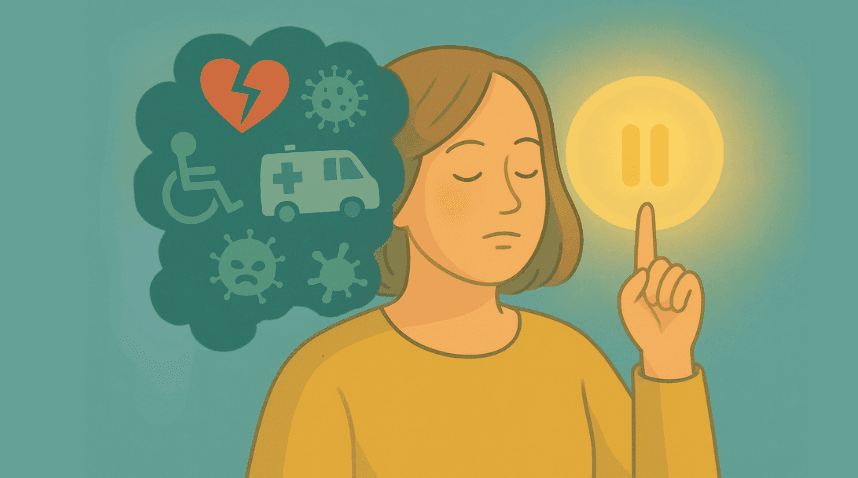
Press the “pause” button on our horror stories.
One way is to examine the mind and observe our reaction to sickness. I don’t know about you, but when I’m sick, my mind gets very afraid, and I start writing horror stories.
For example, I get a funny feeling here in my chest and I conclude that I’m going to have a heart attack. “Is somebody going to pick me up? Will they take me to the hospital? What will happen at the hospital?” It was just a small feeling, but my mind blew it up into, “I’m going to have a heart attack!”
Or we have an upset stomach and we think, “Oh, I have stomach cancer.” When our knees hurt in meditation position, “Oh, I’d better move because otherwise I’m going to be crippled my entire life.” Does your mind write these kinds of horror stories?
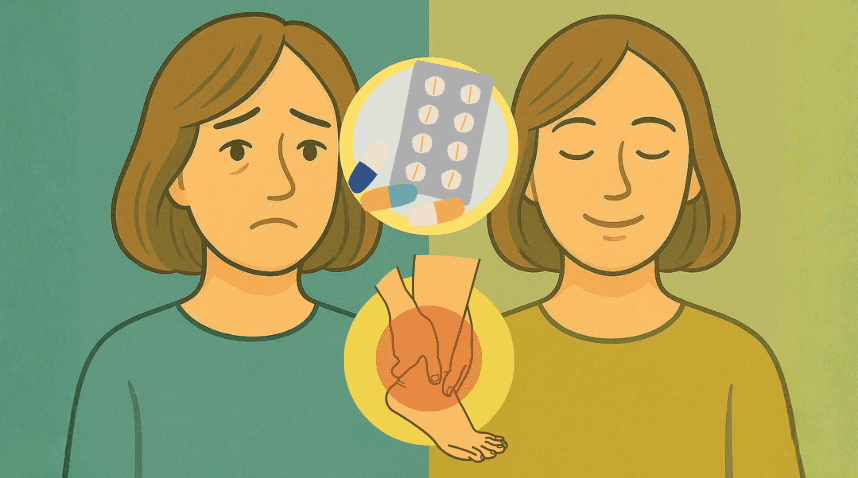
What we have initially is the sensation of some discomfort in the body—a physical sensation. And depending on how we relate to that physical sensation, we can create a whole lot of mental suffering. When we react to that physical sensation with fear and make up horror stories, we create tons of mental suffering, don’t we?
If we’re able to press the “pause” button on our horror stories and just be aware of the physical sensation, we don’t need to create so much mental suffering. It becomes just a sensation to experience. It doesn’t have to be something that we’re afraid of, something that we tense up about. It’s just a sensation, and we let that sensation be.
It’s quite interesting: In our meditation, we experience different physical sensations. If we label a sensation “pain in the knee,” then our knees really start to hurt. But if we label it “sensation” and we don’t have the concept of the knee so much, then it’s just a sensation. Where’s the sensation? Where’s the body?
You can experiment with different ways of playing with the physical experience of pain in your meditation, instead of falling back into the habit of getting tense, worried, and being afraid of it.
Another alternative way to respond when we’re sick, is to say, “How great that I’m sick!”
It’s the opposite of how we usually think, isn’t it? The Dharma antidotes for most of our afflictions are the exact opposite—exactly what we don’t want to do. It’s the case here, which means when we’re sick, to say, “Fantastic! It’s so great that I’m sick.”
You’re going to say, “Are you crazy? What do you mean by it’s great that to be sick?”
Our illness is caused by negative karma that we created in the past. Now that the negative karma is ripening in the form of our sickness, it’s not obscuring our mind anymore. That negative karma may have had the force to cause us to be reborn in a horrible rebirth (such as a hell being, hungry ghost or animal) for quite a long time, but instead it’s ripening now as some kind of comparatively small pain. If we look at it that way, the illness we have right now is actually quite manageable. It’s not something to freak out about. It’s not that bad.
So sometimes, saying “Oh good!” is a good antidote. In that regard, I’ll tell you a story about one nun who is a friend of mine.
One time when she was on retreat, she had a big boil on her cheek, which was very painful. During the break time between her meditation sessions, she was taking a walk and encountered our teacher, Lama Zopa Rinpoche.
Rinpoche said, “How are you?”
She said [in a moaning tone], “Oh! I have this boil…”
And Rinpoche said, “Great! Fantastic! You’re so fortunate!”
This was, of course, the last thing she wanted to hear. She wanted some pity and comfort instead. But Rinpoche said, “This is fantastic! All this negative karma that could have ripened in a horrible rebirth that lasted eons, you’re now experiencing it just by having a boil. How fortunate you are!”
So whenever we have some kind of physical pain or illness, if we look at it in this way and able to see it from this other perspective, then we realise that it’s actually not so bad. We can bear it when we think of how it could have ripened in another way that would have brought much more suffering. We can feel fortunate that this karma is ripening now and won’t obscure our mind anymore. This is another tool to use when you are sick.
What would His Holiness the Dalai Lama say?
There is another story that I love. This happened several years ago to a friend of mine. She was young, maybe in her early thirties. She had not been feeling well for a while and had gone to the doctor. The doctor gave her a frightening prognosis and told her, “This does not look good. You’re going to be sick for a long time. You might die.”
My friend’s instantaneous reaction was of course, to get upset and feel scared and sorry for herself. Then at one point, when she was lying in bed and feeling awful, she stopped and asked herself, “If the Dalai Lama were in my position, how would he feel? How would he handle this situation?” She thought about it, and the conclusion she came to was that His Holiness would say, “Just be kind.”
So she adopted that as her motto: “Just be kind.” And she thought, “OK, I’m going to be in the hospital for a while. I’m going to meet all sorts of people—the nurses, technicians, therapists, doctors, janitors, other patients, my family, and others. I’m going to come into contact with a lot of people, and I’m just going to be kind.” She made up her mind that what she was going to do was to be kind to whomever she happened to encounter.
She said once her mind thought like that, she became peaceful. That’s because she accepted that she was going to be sick and knew that she had a plan of how to manage the illness:just be kind. She realized that even when she was sick, she could still make her life meaningful and beneficial for others. She could still give something to others that would improve the quality of their life.
As it turned out, her doctor did more tests and told her that he had given her misdiagnosed her illness and that she didn’t have such a bad disease. Of course, she was relieved to hear that, but she said that going through that situation was a very good experience. It enhanced her refuge in the Three Jewels and gave her confidence that the thought training techniques for transforming adversity into the path to awakening worked.
What is a worthwhile life? When I was living in Singapore in 1987 and 1988, there was a young man in his late twenties who was dying from cancer. He asked me to help, and I got to know him and his sister, who was taking care of him. One day I visited him and he said, “I’m just a useless person. I can’t even leave my flat.” We were near the window, and I said, “Look out that window. All those people running around—do you think their lives are worthwhile? They might be busy doing a lot of things but does that mean their lives are worthwhile?”
I went on to explain to him that living a worthwhile life does not mean being the busiest of the busy. Living a worthwhile life depends on what we do with our minds. Even if our body is incapacitated, if we use our heart and our mind to practice the Dharma, our life becomes very beneficial. We don’t need to be healthy to practice the Dharma.
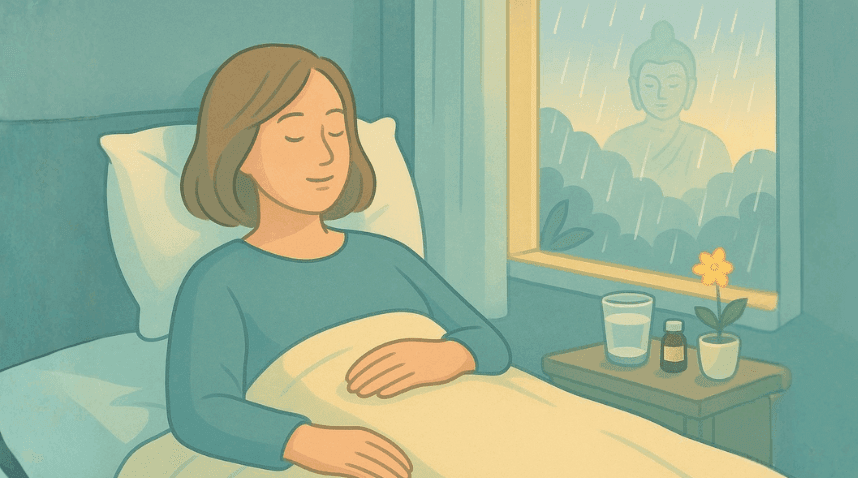
It might be easier to practice if we are healthy, but still, if you’re sick, you use whatever time and energy you have to practice, to generate wisdom and compassion. Even if you can’t sit up straight, or you’re lying on the bed, or you’re sleeping a lot, you can still think kind thoughts. You can still contemplate the nature of reality. You can still think about karma. You can still take refuge in the Buddha, Dharma and Sangha. There’s a lot that you can do even when you are sick. And that makes your life very meaningful.
Don’t think your life is meaningful just because you are running around making widgets or going from one social event to another. Don’t think that being able to impress other people with your money, possessions, or social status is a qualification for a meaningful life. Sometimes, we may have a lot of things to show for our efforts on the outside, but in the process of doing these things, we create a lot of negative karma by lying, cheating, and so forth. That negative karma is not a useful product of our life.
On the other hand, we could be sick and lying in bed, but if we use our mind to create positive karma, that will become the cause for good rebirths and bring us closer to liberation and enlightenment.
Don’t underestimate the power of the mind. The mind is really very powerful. Even if you’re sick, just the power of the compassionate and kind thoughts that you generate can influence the people around you.
Venerable Thubten Chodron is an American Buddhist Nun who focuses on the practical application of Buddhist wisdom to our everyday lives. An author of many books for meditation and philosophy, she is currently co-authoring with the Dalai Lama a series of books on the Buddhist path, called The Library of Wisdom and Compassion.
Wrestling with Karma, Illness, and the Buddhist Truth of Rebirth
TLDR: What if rebirth isn’t just about a next life but something we’re already living through in every moment? This reflection explores how karma, suffering, and impermanence shape not only our bodies and stories but also the deeper questions of who we are and who keeps being reborn.
Last Wednesday, after facilitating our Care and Share session with Rainbodhi Singapore, someone in the group said something that really made me pause. He shared that he’s a Buddhist, but doesn’t believe in rebirth. I wasn’t offended or eager to debate; it just genuinely made me stop and reflect, questioning something I’d long taken for granted in my own understanding.
Caught in the loop: The endless cycle of cause and effect
Buddhism, at its heart, speaks of cause and effect — karma shaping the contours of our lives, even beyond this single breath of existence. Rebirth isn’t just a doctrine. It’s a thread that runs through the entire fabric of Buddhist teaching. So how can one hold the identity of a Buddhist and yet not hold this belief? The contradiction made me pause.
I began to share, not as a teacher but as a fellow Buddhist. From what I’ve read, studied, and wrestled with, I’ve come to believe that this life right here, right now isn’t the full picture. It’s one of the chapters, not the whole book. It is samsāra (cycle of existence).
I began to explore the idea of rebirth by asking myself.
“Why are some born into privilege and others into poverty? Why are some born in India, others in Singapore? Why do some enter the world with illnesses or disabilities, despite their parents’ clean bill of genetic health? Why do some stumble upon the Dharma, while others are born far from it, wrapped in entirely different belief systems?”
Yes, some might explain it all away as nature versus nurture. But even nature raises its own quiet mysteries.
Why this body, this gender, this face, this skin, this sexual preference? Why do we cross paths with certain people, out of billions in the world, as if drawn by some invisible thread? It makes me wonder: isn’t there something deeper at work behind it all?
The late Dr. Ian Stevenson, a psychiatrist from the University of Virginia, documented thousands of cases where children recounted past lives with uncanny accuracy with names, places, events they couldn’t possibly have known. Are these simply coincidences? Or are they fingerprints left behind by previous lives?
But we don’t even have to leap into the afterlife to see rebirth at play. Think about last week, today, and the week ahead. How each choice, each moment, leaves ripples in the river of our life. Or look further back: would your 10-year-old self recognize the person you are today? Would a passport photo from that time prove your identity now? We die and are reborn constantly, in our bodies, in our beliefs, in our stories.
To me, that’s the quiet miracle of Dharma. It doesn’t ask for blind faith. It asks for presence. It asks us to look at suffering. Not to deny it, but to understand it. And that understanding leads us to awakening and far away from ignorance.
When Karma Speaks Through This Body
There are days when I feel so helpless about getting through the same day every day, unplugging the PEG tube, not being able to eat, sleeping with a tube attached to the stomach. Once the body was strong, effortless, full of thoughtless motion.
Now, every movement is a negotiation, every breath a pact between fragility and perseverance.
I’m 46, or close enough, and as a queer gay man, suffering comes all too naturally for me. As a cancer survivor, I’ve carried it through my bloodstream, through the ache of radiation, and through the contamination of chemotherapy. Even after 12 years of remission, I still carry it in the scars and in the silent complications. The PEG tube nestled in my abdomen is one of them, a constant reminder of the threat of aspiration risking my health. This isn’t survival in the triumphalist sense. This is endurance, raw and intimate.
Even speaking takes effort, the neck stiff with tension, muscles strained and unforgiving. I speak too loudly and garishly, as I can’t hear the tone of my voice, echoing back to me. That voice now becomes a soft memory of the one that once sang, shouted, laughed.
I used to think of sickness as something that happened to others—distant and abstract. Cancer shattered that illusion with brutal intimacy 12 years ago.
The deterioration came slow, then all at once. The body that once danced, laughed, ate with joy, slowly deteriorated and turned into a battlefield.
I remember the taste of metal in my mouth from chemo, the sheer exhaustion that felt like gravity had doubled. And then, after all the treatments had been done, a new challenge: I could no longer eat safely. I had to learn to feed myself through a tube. It felt dehumanizing at first, but with time, it became part of me—part of my strange, new survival.
There’s a saying that always stays with me: ‘If you ever feel upset about having no shoes, just turn around: you might see someone struggling to walk without feet.’
I’m not saying this to compare struggles, but to remind myself how lucky I am just to have my two legs. Every step I take is a gift I don’t want to take for granted.
Coming face-to-face with death not once, but over and over reshapes the very architecture of my beliefs. It’s like watching the walls of everything you thought you knew slowly crumble, leaving behind only what truly matters.
Seeking Answer, Not Comfort, in the Dharma
In those moments of stark clarity, I didn’t turn to the Dharma seeking comfort or cosmic rewards. I turned to it for understanding. Buddhism never promised me miracles. It didn’t hand me hope wrapped in illusions. What it gave me was something far more profound: a language for suffering, and a path that points to its end.
And that idea, the possibility of awakening stirs something deep in me.
Because let’s be honest: we’re all marked by the imprints of our karma.
I started seeing life through the lens of samsāra. Birth, aging, sickness, death. Not as poetic notions, but as lived truth. The relentless spinning of existence. And it made me ask: who is it, exactly, that keeps being born into this? In the Dhammapada, it is written:
The more I studied, the more I practiced, the quieter my world became. I noticed things I never had before, the exact texture of silence, the moment before a thought arises, the softness of a kind intention. The PEG tube, once a symbol of brokenness, became a reminder of impermanence.
My suffering was not unique. My body, my pain, even my thoughts, they were all passing clouds. Buddhism gave me a language for this. It gave me refuge.
But this is not detachment in the cold sense. I feel everything more deeply now. I cry more often. I laugh more honestly. I love more fiercely. And understanding karma better now, the question haunts me: Who is asking to be born, again?
When you’ve brushed against death, you can no longer pretend life is permanent. You see through the facade. You see people scrambling to hold onto illusions, and you want to whisper to them: it won’t last. None of it. And yet, there’s beauty in that. There’s freedom. Because when nothing is solid, everything can be fluid.
These days, I don’t look for a future without pain. I look for presence within it. I try to meet each moment fully, however it comes—through a feeding tube, through breathlessness, through gratitude. And in those moments, I sometimes feel it: a stillness, a clarity, a knowing that maybe, just maybe, the one asking to be born again… doesn’t need to be born at all.
Maybe the question itself is the answer.
And maybe that is enough.
Wise Steps:
Recognize patterns in your life as reflections of past actions. Karma is not punishment, but a mirror showing what still needs to be understood.
Use suffering as a teacher, allowing pain and challenges to deepen your wisdom, compassion, and awareness of impermanence.
Live with mindful intention, planting seeds through your thoughts, words, and actions that lead to peace and liberation.
Welcome to the Handful of Leaves podcasts. Today’s episode is very interesting because we will be talking about Buddhist leaders and mental illness. The aim of this podcast today is to shed light on the challenges and lived experiences of our friends with mental illness, especially on the unique challenges faced as leaders in the Buddhist scene.
Today we have a guest who will bring in a very unique perspective to this topic as she has personally navigated mental illness while also holding leadership roles. So let’s welcome Sister Ching Wi.
[00:00:35] Sis Ching Wi:
Hi everyone. Hi Cheryl. Thanks for having me.
[00:00:38] Cheryl:
Hi. Sister Ching Wi is a social worker with Aranya Sangha Dana Fellowship, a nonprofit that helps Buddhist monks and nuns, especially those living in the community. She’s also a facilitator who designed the Life Story Workshop for seniors and graduated from the London School of Economics and the National University of Singapore.
Can you share more about your personal journey with mental illness and how it has intersected with your leadership or volunteering roles?
[00:01:07] Sis Ching Wi:
Hi, Cheryl. I’ve been a social worker and because I benefited a lot from practicing the Dhamma, so I also try and serve the Buddhist community in any way that I can. This is actually the 10th year of my depression. It’s a very, very long journey. It started with me taking a break from work, I was just doing nothing. I happily thought that I was just going on a holiday, but then I didn’t realize that not doing anything made me have a lot of time to ruminate. Then I found myself starting to worry. You’re so used to working every month and seeing the paycheck in your bank account. So, these worries become bigger and bigger worries.
And then lo and behold, I was just spending my days on the sofa watching TV. It got so bad that even when I had to go to the toilet, I just couldn’t get out of the sofa at all. I just felt like it was so difficult to move my body. Sometimes people say, your body feels as heavy as a mountain, it really felt like that. I really had to force myself. So every day it’s very tiring mentally because it’s not like I’m just sitting there stoning away. My mind was super hyperactive. I couldn’t take care of myself. And I really had to force myself. But I still tell myself, okay, maybe being a social worker, this is just burnout. You just need to rest more.
So it went on for a few weeks and then one day I was just standing at my window.Suddenly I just caught myself thinking,most of us live in HDB Flats, when I looked down, suddenly the thought came, “Oh, actually it’s very easy to just drop down.”Then the next thought was, so how do you do that?Well, I guess I can push myself off my ledge and then I lose balance and I fall, or I can maybe just find a stool or a chair and step on it.Finding a chair will be easier. My chair is in the kitchen, so I turned and I walked towards the kitchen.
[00:02:54] Cheryl:
It was quite a serious thought in the sense that there was the intention of executing it as well.
[00:03:00] Sis Ching Wi:
There was even a plan. So after a few steps of walking into the kitchen, I realized that it was a suicidal thought. So that’s when I figured, okay, I can’t do this on my own. I went to see a psychiatrist and a counselor at the same time. And I started my healing journey from then on. But it wasn’t smooth at all because of my personality of being a perfectionist and a workaholic and all that, I would ask a psychiatrist, okay, so how long will I take this medication before I’m up again? Should we give it three months?
[00:03:30] Cheryl:
It almost seems naive like you’re thinking three months, but actually now in retrospect, it takes 10 years.
[00:03:36] Sis Ching Wi:
Exactly right. A good way of understanding depression, I like the model of BPSS, which is biological, physical, and psychosocial. I like this model because the focus is not just on taking medication and getting better, but I also have to look into the psychological aspects and social aspects. This helped me a lot. I had to figure out how to manage stress.
This is where mindfulness comes in and as a Buddhist already meditating, not a lot, but enough to help myself a little bit. It really made me see how I have some unhealthy thought patterns being a perfectionist. It came from wanting to do the best that I can. It’s fine to do the best that you can, but you’re not a machine. Where did doing the best that I can come from? So it gave me a chance to really investigate. It came from a sense of being responsible. Again, being responsible is a very good virtue, but to balance it, to be healthy, you must know how to draw boundaries.
You must have the wisdom of knowing at what stage I have fulfilled my responsibility, when I should let go and not blindly be responsible 100% all the way. In these 10 years, I had a chance to really look at my thought patterns, my mental habits, trial and error and figure out. It’s like moving into OS 2.0 from OS 1.0 that totally failed. And along the way it’s 1.2, 1.3. So it’s not just about curing my chemical imbalance in my head, about managing my emotions, taking good care of myself in terms of health, but also really examining, throwing away what doesn’t work for me in terms of my thought patterns and adopting and practicing good mental habits.
[00:05:35] Cheryl:
Almost like the mental hygiene, cleaning up the unhealthy ones, learning and relearning. Like you mentioned, you don’t get it right the first time. It’s like 1.1, version 1.2.
[00:05:44] Sis Ching Wi:
In a fun way I tell myself, okay, so now this is a game of how many times do you want to continue to run into the wall? Because I would have high expectations of myself to get better. Okay, the medication is working. So now, I’m eating better. Maybe in two months’ time, I can take on more work. Actually, I have experienced, whether I wanted it or not, different ways of letting go. And I think this is so precious as a Buddhist. It’s very easy to say, I want to let go of my troubles.
[00:06:15] Cheryl:
But how do you do it exactly. Yeah. So let’s delve into that a little bit deeper, it’s almost as though there are a lot of conflicting parts of your personality, because there is the part of perfectionism wanting to get everything right. But on the other hand, when you are facing a depressive episode, you will be on the side where you can’t even move yourself to do the most basic things like going to the toilet. When you’re a leader, all of these tendencies would come into play. So, how has it intersected for you personally, between having this mental illness with your leadership?
[00:06:49] Sis Ching Wi:
There are a few layers. It’s my inner work, and then of course, working with the team or the project. I remember right at the beginning I would get overwhelmed to the extent of not showing up. And this is so out of character, right? I try so hard. I just couldn’t. It’s a combination of dread, being very scared, being very weak. Basically, I just couldn’t get out of the house. And then I will look at the time, the meeting has started and I’ll be missing it. And then after that, I’ll feel so bad. The guilt, the shame and I eventually retreated to just not showing up at all, not answering phone calls. As long as my handphone has battery and there’s a blinking light, when I see the blinking light, I will break into cold sweat. So I just want the battery to be off. I was just like isolating myself.
But then I still continue to feel bad actively, because I know, tomorrow there’s this thing, and three days’ time there’s this thing and all that. But of course, friends and fellow workers, everyone was very understanding and people got really, really worried. And then I know people will get worried and that set me off into another spiral. Of course, in the midst of all these, friends couldn’t get hold of me. They started contacting my husband, my sisters and close friends. Then, people knew that I had depression.
[00:08:03] Cheryl:
So at that point, it was not public information yet.
[00:08:05] Sis Ching Wi:
Yeah, it wasn’t. Then people started passing messages back, to send me loving kindness, tell me not to worry. It made me more relieved. So I told the psychiatrist, you know what I discovered? When I went off the radar, the world did not collapse.
[00:08:20] Cheryl:
Wow.
[00:08:21] Sis Ching Wi:
And after I said that, I felt so relieved. I felt so relieved. So it’s not that I’m so egotistical, like the world revolves around me. But I was feeling so bad and I think I must have been beating myself up for so long, for not being able to perform all my duties.
So this term of being a leader, well, I guess you take on more responsibility. Part of the responsibility, at least for me, I always try to be hands-on. So then there’s this added responsibility of letting more people down. That was horrendous. Yeah.
[00:08:52] Cheryl:
Yeah. I think a lot of times leaders, especially in the Buddhist scene as well, people define leadership as basically being the person that is doing everything, doing the most. That can sometimes be a very heavy burden to lift, especially if you are already going through a very difficult moment in your life. But what you just shared is very powerful in the sense that sometimes leadership can be viewed as a shared responsibility amongst the communities, not just on your own shoulders. You are there, but also there are people supporting you there.
[00:09:30] Sis Ching Wi:
Definitely. In fact, I was already very blessed. One of my biggest takeaways was, thank goodness I didn’t have to do a lot of hands-on. So it wasn’t like I was the one who had the key to the Dhamma center, and then because I wasn’t there that night, people couldn’t attend the Dhamma talk. So it’s more at the planning level and all that. If we communicated enough and if we do proper planning, so what if somebody is down? The team just goes on and work gets done.
It really brought in the point that no one is indispensable. The leader must immediately think about leadership succession. It’s like day one of anything that you do,this notion of letting go is extremely important. It’s not just letting go of the duties. It’s not about being irresponsible, but it’s about can we find someone to shadow you? Can we work as a pair? Can we work as a team? And then somebody else can learn, the newer ones can learn, and the senior ones, can work themselves out of a job and go to the mountain and meditate.
[00:10:36] Cheryl:
So I’m curious, how do you juggle between a sense of responsibility versus a sense of shared community?
[00:10:44] Sis Ching Wi:
I think it’s mostly in our mental attitude. The responsibility and the job scope, you have to fulfill. But how can I try to be mindful of my attachment to the task at hand? If I’ve done it, I’ve done it. I don’t need to go back and be a perfectionist and ruminate. Can I let that go? Okay, I can. It’s an exercise in letting go. If this organization that I volunteer in or this project that I do, if we cannot achieve the objectives, then how? So, I’ve developed this habit of anticipating impermanence. There will be changes. And just being very clear to myself, okay what can I accept? Is there anything else that I can do?And that’s it.
I’ve gone through a rehearsal in my mind of the possible disasters. And when things happen I’m not caught off guard. In these rehearsals, it’s a chance for me to contemplate, how much do I personally, selfishly want this or am I seeing it too narrowly?
[00:11:39] Cheryl:
Yeah, that’s very wonderful. Thanks for sharing your reflections on this. What I take away is if someone is a leader who is struggling with mental illness, first is having that kind of self-awareness that this is my bandwidth, this is my capacity. And contrary to our ideas of taking on the whole world, on your shoulders, you can also understand that these are your boundaries. These are what you’re capable of and plan for how you can share these responsibilities. How can you give other people maybe an earlier heads up as well, so then you don’t have to feel so burdened by everything.
Then the second piece is that, where you’re possibly responsible for the task at hand, do your best and try to let go of whatever outcomes if you have already done your best and be at peace with whether the thing turns out good or bad knowing that you have already given it your all.
[00:12:33] Sis Ching Wi:
Thank you for the summary. I think a very important point comes to mind and that is the sense of ownership. I am not saying that I’m doing it fantastically well, but I know that it’s always important and I always try to do it right. If the sense of ownership is truly felt by most of us in the team, then it’s an organic thing. If the leader is out of action, everyone still has a shared vision, everyone still knows where we are going. So it becomes co-creation. It means that everyone brings in what is it that they want rather than it’s just a vision or goal by one or two people. Along the way, more or less we will achieve our outcome, especially being Singaporeans.
But the process is so important, whether we learn and we grow, whether we help each other to be more mindful, whether we are supportive of each other’s emotions. When you have disagreements and when people get hurt, do we as a team want to talk about it? It’s a way of supporting each other. The process is so important, especially if we are looking at voluntary projects, even if you’re paid nothing. I think a lot of times the stress comes from people misunderstanding us, miscommunication, not being able to share our passion, and not being able to contribute. So all this is about just the process of how can we help each other to achieve our own individual objectives as well as our collective team objectives.
[00:14:06] Cheryl:
And I think when individual contributors on the team are empowered, then that’s where we see more proactivity as well. That’s how the team grows in a more positive direction as well. With all the challenges you mentioned just now, how has that shaped your perspective on leadership? Do you find that it influenced the way you approach any positions that you hold?
[00:14:31] Sis Ching Wi:
Oh, definitely. The biggest lesson is in empathizing and respecting people I work with. Most people wouldn’t tell you they have had a hard day. They’re dealing with whatever that is happening in their lives. Most people are just responsible and they just wanna give their best.
So if we are not sensitive enough to catch people, these are the small little things, but extremely important things that we can do right by just checking in on people, making it a point to really get to know the people I work with. If there’s a change in their behavior or their energy, I can sense it. And developing a real relationship, just being authentic about it. We allow each other to offer support and even to take care of each other. That’s a huge thing that I’ve learned.
[00:15:20] Cheryl:
It seems that it empowered you to really be more compassionate to the people around you, especially in terms of building that personal, genuine relationship, seeing them as humans rather than just a person to get something done.
I’m also reflecting on the four Brahmavihārās that the Buddha taught us. One is loving kindness where you spread unconditional loving kindness to the people around us whom we are working with. Secondly, it is to have that sense of compassion to want to reduce their suffering.
I think these two things, in particular, are quite neglected sometimes when we are in the rush of getting projects done perfectly, or by a certain deadline. Sometimes we can forget these two pieces. It’s so important to always anchor ourselves that the person in front of us here is a human being, and we should wish for their happiness and to reduce their suffering as well.
[00:16:16] Sis Ching Wi:
Yeah. One point that I really wanna share is that the very basics of practicing Buddhism is to avoid wrongdoings, do good and purify our mind. So this notion of doing good, I used to not be able to understand. In Chinese Mahayana there is this 普贤菩萨十大行原品. It’s Samantabhadra Bodhisattva’s Ten Great Action Vows. One of it is 恒顺众生. It literally means to serve and to support all sentient beings, to help them as much as possible.
So then now that I think about doing good, in the course of us having the responsibility to get the job done, we have limited time. Sometimes we feel that it’s not so important to ask how everyone is feeling. Or if somebody doesn’t know how to be the administrator of Zoom, instead of taking the time to teach, you find somebody else who can.
But then if we were to look into doing good, if I take a bit of time to teach this person, then this person would learn something. This is such an important skill and this person can do a lot more, not just for the project or for the organization, but for his or her life. So it is about enabling and empowering people. So I’ll get smart next time. When I am planning the next project, let’s plan in time. Let’s plan this in as a task, so that we have the bandwidth. A project is a project, but you can build in small little tasks and goals along the way that we all can practice, we all can help each other to grow.
[00:17:56] Cheryl:
I really love that.
[00:17:58] Sis Ching Wi:
Yes, do good.
[00:17:59] Cheryl:
Yes. And it’s almost like if you set your mind on doing good, you’re intent on it, you would be able to find ways. You’re so smart in incorporating that into the project plan, empower this person, teach this person, put that as part of the to-do list. It’s so beautiful because then you are also helping another person. We help to nurture them to their highest potential and that creates a whole ripple of positive effects onto the community. Thanks for sharing.
[00:18:27] Sis Ching Wi:
Welcome, Cheryl. I really invite everyone to just try one small little initiative like that and when the project is done, everyone’s heart is closer to each other because I’m also rejoicing and celebrating your success. Not just in the final step of that project. Along the way the logistics person has to do this, the marketing person has to do that, but then I know I was journeying with you a lot more. So all the interconnection and all the rejoicing, it’s so beautiful. So please try it. Everyone just try it.
[00:18:58] Cheryl:
Yes. Let’s try doing that. For all the leaders who are listening here, try to intentionally put in an action step that you could do to help enable another person to learn to grow or to be nurtured. You mentioned rejoice as well, and I thought is so appropriate that rejoicing is the third Brahmavihārā . I shared the first two just now. The first being loving kindness. The second being compassion to reduce people’s suffering. And the third one is to rejoice to feel appreciation for other people’s success, joy and growth. The fourth one is the idea of equanimity. If everything fails, we practice that sense of equanimity, to see things as it is, that it is what it is. That’s the Four Brahmavihārās as well.
[00:19:41] Sis Ching Wi:
You frame my sharing in such a way that I think it comes across as so smart.
[00:19:45] Cheryl:
What you share is very valuable.
[00:19:48] Sis Ching Wi:
I think a lot of times equanimity, we related to letting go. The way that I eventually come to experience it is dynamic. It is not dead silence. It’s a dynamic process, there is also a timeline involved. There’s a duration involved. So equanimity as a state of mind, I can be mini equanimous and I can be super zen-out equanimous.
[00:20:14] Cheryl:
It is like a spectrum.
[00:20:15] Sis Ching Wi:
It is a spectrum. Earlier on I was talking to my husband and I said, I have to practice mindfulness to literally save my life because I need to catch all these illogical suicidal thoughts when they come up. It is quite similar to Cognitive Behavioral Therapy. When your eyes see something, it goes into your brain. It will be linked to a certain thought or a certain memory. Then, you will create a story in your head. And when the story is created, it seems so real. Sometimes certain feelings will come up and you may even want to do something about it.
Let’s say someone may see my very short hairstyle, which is my lack of mindfulness in communicating with the hairdresser. Somebody may think, I also want to have that hairstyle, maybe next time I can go and get that hairstyle. So from seeing me, you develop thinking,
[00:21:03] Cheryl:
…proliferations.
[00:21:04] Sis Ching Wi:
Yes. It may even lead to emotions and actions, I like this, or I don’t like this, and I wanna do something about it. So back to mindfulness and being equanimous. I realized that I have to be mindful and I have to manage myself in such a way that I don’t become too crazy high and I don’t become too depressingly low. For me, this is kind of like being equanimous. I just have to stay within a range of emotions. And in order to do that, I have to constantly be mindful. Then I realized that actually, this is a very good skill to have as I go about life, when I’m stressed, when I am in a hurry. I found my zone, I have to just keep on practicing to be in that zone. As a result, I’m more grounded, my mind is clearer. Whatever work I do, I can just be more attuned. I have more space to observe people, to be more considerate of how they are doing, to pick up if they are feeling low, things like that. This is my own interpretation and working model of equanimity. This is how I apply and I understand the Four Brahmavihārās.
[00:22:13] Cheryl:
Can you share what are some practical trainings or reflections that you do to help keep you within that healthy boundary?
[00:22:23] Sis Ching Wi:
Being a workaholic and a perfectionist, I had to try very hard to convince myself that I have to take it easy. After convincing myself to take it easy, I have to put it into an action plan.
[00:22:34] Cheryl:
The take-it-easy action plan.
[00:22:38] Sis Ching Wi:
Oxymoron. So how many percent of your action plan have you completed in taking it easy? Yeah. I’ve learned to just tell myself it’s okay that I don’t get it right all the time. Finally, I think what worked was to have a sense of fun and adventure. Let’s treat it as a game. If I can catch a negative thought, yay! What do I reward myself with? So there are a lot of constant opportunities to reframe and to practice self-compassion. When I decided to see this as a fun thing, I finally took off. I finally started to really incorporate a lot in my life. Yeah.
[00:23:16] Cheryl:
So in the Take it Easy action plan, there are some guidelines if anyone wants to build up their own action plan. Reframe. So if your habitual tendency is to get angry, allow yourself to think of alternative ways about this. What can I do other than get angry? What are some other things that I can put in instead?
Second is to make it fun. Try to catch yourself. Try to notice how many times you have a negative thought or how many times you go into unhealthy coping behaviors. And third is to practice self-compassion. Occasionally indulge in a healthy amount of potato chips or whatever else, not indulge until you get a stomachache. But get some form of harmless fun to your life.
[00:23:56] Sis Ching Wi:
Along the way, I think small little victories, I celebrate. Neuroscience theories will tell you, if you celebrate, you’re developing your neural pathway, you are growing it. So if I pay attention to good things, then the good neural pathways will grow. If I pay attention to bad things, then I’m just sabotaging myself. So then celebrating becomes very important to seal it in. I went on this whole spiel about, look, you’re a responsible person. You are Buddhist, so you don’t celebrate in an indulgent way. Don’t be so frivolous and all that. Hey, wait a minute. Oh yeah, hey, I caught it! In this ongoing process, I’ve also gotten to know myself a lot better.
I’ve also gotten to see my ego. We all have this vanity, of wanting to present the best of ourselves. After I try this and that, and bang my head against the wall, there comes a point where I go like, oh, I forget it. This is just too tiring. I just let go. So I keep letting go, I don’t care how people think of me anymore. This is a healthy kind of adjustment. The whole idea is you become more and more relaxed. You wanna take it easy. Eventually, I got somewhere after years, and When I saw people behaving in a certain way that I used to behave, that empathy and compassion came out. But then I quickly remind myself, Hey, remember you’re a social worker, it means that there’s a tendency for you to not respect your own boundary and go and help save the whole world. Right? Anyway, these thoughts we’ll always have in our heads, but we don’t have to entertain them. But then I’m able to see people struggling, and it just makes it so much easier to connect. The empathy of just wishing somebody well, just smiling at that person.
I will admit that it’s really not easy, just bravely seeing yourself for who you are, but it results in a lot of beautiful things in my life now for myself and for people around me. So it’s totally worth it. I’m sure even for friends listening who are not diagnosed with depression. All of us have got bad days and all that. But just keep on working on ourselves. It will come to a stage where we become better and when we are better, we become more attuned to people around us and we can start to help people around us. Then it just becomes a cycle that goes on and on. Yeah.
[00:26:03] Cheryl:
And like Thich Nhat Hanh always says, the more we are in touch with our own suffering, then the more we can be in touch with other people’s suffering. That’s where true compassion can spring up. Because we understand it for ourselves, we truly know how unpleasant it is. When we touch the core of it, then we are also able to see it in everyone. And in that sense, we see, despite our colors, our perspectives, our views, underlying all of these things, we are one and the same in terms of our quest for happiness, our quest to be free from suffering in our own ways.
[00:26:41] Sis Ching Wi:
So beautifully said.
[00:26:45] Cheryl:
And Sis Ching Wi, I really want to thank you for coming on this show. It’s very brave of you because there are a lot of people out there suffering from diagnosed mental illness or even mental illness to a lesser degree, but still struggling. And I think that by you coming up here today to speak, you’re also speaking for all of them and of course everyone else who’s keen to understand a little bit more. Would there be one message or word of encouragement that you would like to share with the people who may be listening and struggling silently?
[00:27:18] Sis Ching Wi:
For all of us who are struggling, just keep trying. Even if it’s just about managing to get a glass of water for yourself. It’s not about always having progress all the time or to achieve big milestones. As long as we don’t give up, we are trying, as long as we are breathing, we are trying. So as long as I just tell myself I will keep trying, that’s it. That’s my project.
I would like to invite everyone out there, be it you are a leader or team member, to see if we can hold space for each other. Very simply put, if you can see that somebody is struggling, then there are some little acts of kindness that we can do. Holding space also means, if we see some toxic behavior, then we should call it out. If a leader is too demanding, then can we communicate more with each other so that at the end of the day, we don’t end up creating more harm to each other as an operating principle. And I’m sure there’s a lot of different context and all that. So calling out toxic behavior may be the more intense kind of action. But if we see it as a spectrum, if we see unkindness, are there ways that we can try again and do it in a different way?
If we can all try and put this at the back of our mind, to always hold space for each other and to always make sure that we take care of each other, just as how you want to take care of yourself, this will have a very good outcome for ourselves and for people around us.
[00:28:55] Cheryl:
And like the Buddha said in the Karaniyametta Sutta, like a mother loving their only child, that’s how you should cherish other people as well and view them as precious or treat them with that form of kindness and gentleness. Thank you so much, Sister Ching Wi.
And for all of our listeners here, I hope you enjoyed listening to our conversation. If you like this podcast, please like, give us five stars and stay happy and wise. See you in the next episode. Thank you.
Resources:
Special thanks to our sponsors:
Buddhist Youth Network, Lim Soon Kiat, Alvin Chan, Tan Key Seng, Soh Hwee Hoon, Geraldine Tay, Venerable You Guang, Wilson Ng, Diga, Joyce, Tan Jia Yee, Joanne, Suñña, Shuo Mei, Arif, Bernice, Wee Teck, Andrew Yam, Kan Rong Hui, Wei Li Quek, Shirley Shen, Ezra, Joanne Chan, Hsien Li Siaw, Gillian Ang, Wang Shiow Mei.
Editor and transcriber of this episode: Cheryl Cheah, Susara Ng, Ke Hui Tee
TLDR: What can we do when we are thrust into the role of a caregiver? In Singapore & Malaysia, we are taught to be filial. What does that mean when our parents are sick? What can we do?
What do you say when your mum tells you that she’s going through too much, and she doesn’t want to suffer anymore?
Her body is breaking down right in front of our eyes. It happens gradually, but at times, the deterioration is sufficient to catch us by surprise. It baffles me how she can have such poor control of her legs. Why can’t she take a bigger stride? Why is her body awareness so bad?
We’ve been told that we don’t own our bodies and that everything is impermanent. However, it wasn’t until now that this message hit home.
My mum has Parkinson’s disease and a heart condition. Last year, she was diagnosed with cancer. You never expect these things to happen to you or your loved ones. And sometimes I wonder why these things would happen to such an incredibly kind person.
Loss
Watching my mum lose her health has been hard.
There is a loss of motor function, cognitive decline, and also emotional changes associated with the disease. As a family, we are learning to navigate these changes skillfully. It isn’t always pretty.
I found myself ugly crying on the MRT a few days after my mum’s cancer diagnosis. I remember feeling pangs of fear and regret, but there was also this underlying sense of loss. I’ve always had this idyllic picture of what the future would look like for our family.
I envisioned a healthier version of my mum celebrating various milestones together, playing with my kids, and doing the things she loves.
With these diagnoses, I felt robbed of this version of the future. But this is the problem isn’t it? The attachment to ideal states and a built-up fantasy of reality.
As a patient, there is a loss of independence, loss of vitality, and loss of identity. As a carer/ family member, we lose the person we used to know, as well as the future that we had envisioned for ourselves, and to some extent, freedom.
The non-acceptance of what is.
I was watching mum get into a car one day with so much effort and difficulty, I was in disbelief. I remember deliberately not helping her and thinking to myself, “Surely it’s not this bad. She has to be able to do it on her own”. I refused to believe that her motor skills would decline just like that.
Another time, we were trying to walk across the mall to a restaurant, and it was the most laborious process. At one point, we were at a standstill because she couldn’t get her legs to move. It was a very difficult moment.
As my mum’s condition progressed, I found myself being more impatient around her. I would say things that would upset her and lack empathy for what she was going through.
I was aware of the unskillful states arising, but my mindfulness was not strong enough for me to snap out of it. It was very confusing because I knew that a good daughter should be patient and caring in a time like this, and I wasn’t. There was a lot of anxiety and guilt.
Walking Together
It took me a while to realize that the anger was not directed at her, but rather, towards the reality of things. There was a lot of resistance and anxiety due to change. I was so attached to the person she used to be, and I wanted things to remain that way.
Avoiding the second arrow
The Buddha talked about avoiding the second arrow – creating suffering out of the unpleasant experience. My mum’s condition is the first arrow; and my aversion, sorrow, and distress in response to it is the second arrow.
I am suffering because my mum, whom I love very much, is suffering. I am caught in aversion because I don’t want to see her in this state. However, it ended up creating more suffering for both of us.
Ajahn Kalyano, a wise monk based in Australia, mentioned in one of his talks that we need to back up our metta with equanimity and treat our suffering correctly. While we can’t control the first arrow, the second arrow, which is our reaction to the first, is optional.
It’s okay.
The best advice I received whilst dealing with all of this was, “It’s okay”. It was so simple but brought me so much relief. It is a difficult situation, and it is okay to not know how to respond skillfully.
This predicament uncovered the dark corners of my mind and it was not pleasant to watch. I had a hard time reconciling with myself.
It took some time, but I learned to be kinder to myself and to forgive myself. It was when I started doing so that I had the spaciousness in my mind to investigate what was going on. Being able to see things more clearly has helped me in my relationship with the situation and my mum. For anyone going through a similar predicament, I want to let you know that it is okay.
Establishing mindfulness
Situations like these do require more endurance and forbearance than what is normally required of us. Ajahn Anan said that we need to put effort into establishing mindfulness, and making our samadhi firm so that we know what the mind is like.
It is normal for anger, fear, and delusion to come up in situations like these. But when these unwholesome states do arise in the mind, we need to put in the effort to skillfully abandon them.
On days when it gets overwhelming, take a rest, do some chanting, meditate, establish samadhi, and bring up endurance once more.
Looking impermanence in the eye
I was uneasy the first time I had to clean my mum’s surgical wound. It wasn’t the sight of the wound that was hard to look at but the empty space that was once a lump of muscles and tissues.
Seeing the stitches and scar tissues in place of it was to have a good look at the impermanent nature of things. It left me contemplating how something once considered our ‘self’ or a part of us, can be cut away and disposed of simply as medical waste.
No matter how hard we try to hold on to these conditioned phenomena that we once thought to be pretty, strong, and delightful, they are all subject to decline. Ajahn Chah, a famous thai forest monk, said that we are ‘lumps of deterioration’. The body declines just like a lump of ice. Soon, just like the lump of ice, it’s all gone.
The drawbacks of the sensory world
This has truly been a huge teaching moment for all of us: about impermanence, suffering, and nonself. As a Buddhist, these words get thrown around so much that it becomes trite, but it is moments like these that definitely drive home the point. Everything we have in this world is borrowed. We have them for a while, then it has to go.
Wise Steps:
Know that it is okay to not be okay in such situations, we need patience more than ever. For both ourselves and our loved ones
Don’t take health for granted. Be present with your loved ones because you don’t know how long your or their health will last
When was the last time you noticed impermanence in your life? Peeking into the reality of things daily can cushion our minds when things go south.
TLDR: Learning to be okay with not feeling okay can help us recover better when an unexpected illness happens
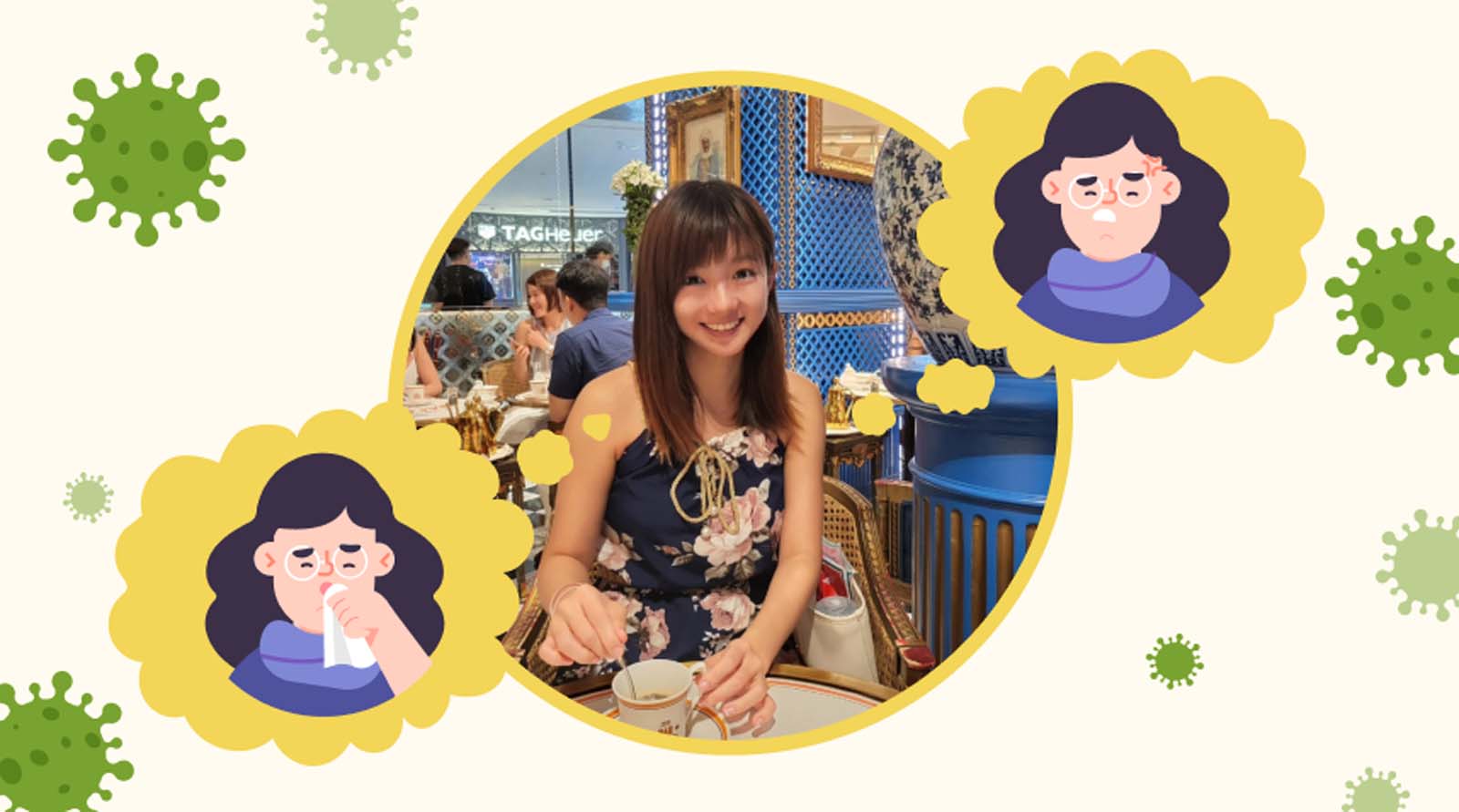
It was during a meal that Celeste, in her 20s, began to feel some slight discomfort. Her throat was dry and her nose was runny after having Tom Yum soup.
At 4 am, Celeste confirmed that her discomfort was not from the Tom Yum but something worse.
Her test result showed she was positive for Covid-19. It was something that she never expected to contract as she had taken many precautions.
Fever and body ache struck her quickly. This shocked her as she assumed that after being fully vaccinated, and keeping a healthy lifestyle, it will pass like a breeze.
That was far from the truth as she entered Day 2 of home recovery.
Rotten food & rotten plans
Snapshot of the food that had no taste due to Covid
Celeste felt that being a swim coach, playing tennis & yoga, coupled with healthy eating would provide a strong trampoline for recovery on Day 2. Covid had other plans installed for her. It was not going away.
“I lost my sense of smell. Everything tasted like rotten food”, she recalled.
Fear arose when she Googled and found that some people stopped eating even after recovery as their sense of smell never recovered fully. They had lost interest in eating as it was no longer enjoyable.
The fear then morphed into self-blame for falling sick.
“I didn’t realise it was unkind until the anger and fear clouded my mind. It made me afraid of Dukkha (Suffering)”, she recalled.
Her meditation practise helped make her aware of the unnecessary self-criticism and blame she was laying on herself. However, the fear and anger grew in her mind.
Soothing Fear with Dhamma
As the fear paralysed Celeste, she decided to use piano music to calm herself as she lay in bed. However, the mental proliferations filled with fear did not go away.
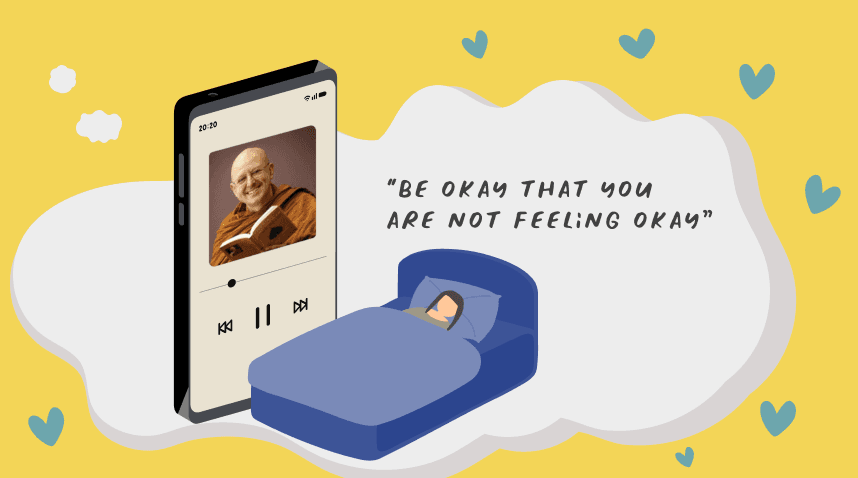
She then recalled a playlist of talks recommended by her Dhamma friends from her young working adult Dhamma group (DAYWA). Being new to Buddhism, she was unfamiliar with whether it would help but decided to give the playlist a try.
“Be okay that you are not feeling okay”, Ajahn Brahm, the monk on the playlist, advised. This struck her hard.
She was always trying too hard to be healthy. Covid was something beyond her control. Despite being fully vaccinated, she still fell deeply sick. Acknowledging that it is okay to fall sick was a great relief to her heart and mind.
“90% of my worries never came through. I spent so much time worrying about things that never happen”, recalled Celeste as she was recovering.
After the one hour Dhamma talk, Celeste felt at ease and fell into a deep sleep.
Returning to senses
Celeste, having heard numerous mind-soothing episodes of Dhamma talks, was ready to accept a life of no smell. She reflected that she had taken her 5 senses for granted and realised that they did not belong to ‘us’ strictly as we could not command them as we like.
“We don’t own these senses, senses are merely borrowed. Not Mine, not myself.” she reflected.
Celeste was internalising and seeing first-hand what Buddha talked about non-self. We do not control our body and mind as much we would love to. For if our body was fully ours, it wouldn’t lead to dissatisfaction and we would have full control.
This brought to mind Buddha’s teaching to monks in the following dialogue:
What do you think, monks? Is form (body) permanent or impermanent?”
“Impermanent, sir.”
“But if it’s impermanent, is it suffering or happiness?”
“Suffering, sir.”
“But if it’s impermanent, suffering, and perishable, is it fit to be regarded thus: ‘This is mine, I am this, this is my self’?”
“No, sir.”
As Celeste was coming to peace with her lack of smell senses, it came back to her. She was beginning on her upward path to recovery.
Associating with the kind
As she slowly recovered, she found that body aches and pain remained. However, she avoided the trap of feeling unhappy with her body.
“Wanting things to be perfect feed the monster within you. Pain reminds you that your body is not perfect…and that’s okay”, Celeste shared.
Beyond the Dhamma talks, her loved ones were pivotal in lifting her towards full recovery.
Her in-laws delivered her favourite vegetables that she loved to eat even when the Delta variant was a real threat to their health. Her yoga friends delivered herbal tea and cooked for her.
This difficult period also made her appreciate her husband more (who was also infected and had to be hospitalised). Life and death became very real for her when her husband heart rate dropped drastically which landed him in the hospital as she lay at home infected with Covid.
“These moments made me count my blessings and not take them (loved ones) for granted”, Celeste recalled.
Life lessons from covid
This episode made Celeste rethink the way she was living her life. She decided to cut down on some overindulgence she was partaking in, such as midnight movies and sleeping late. Maintaining health was a crucial component of her life that she wanted to strengthen.
She then aspired to dedicate more time and consistency to her meditation practice which tide her over this tough period. She found herself meditating less when times were going good for her and hence, aspires to build a consistent habit of meditating regardless of the times.
“Be patient and be unafraid” she advised those who may face such an unexpected infection.
“For your friends infected with Covid, ask them how you can help them. Delivering food and checking in on them really lifts their spirits”, she encouraged.
In our darkest and lowest times, recollecting the Dhamma is one way to rest our minds at peace. This allows our body and mind to be okay at being not okay, paving the way for deeper healing.
Wise Steps:
Create a playlist of your favourite Dhamma talks that you can listen to in times of trouble
Every hardship we face is an opportunity for us to turn towards the truths of life or remain in our perceived truths of life