TLDR: Nothing hurts us more than clinging to our certainties. Not because they are always wrong, but because they narrow how we see.
Editor’s note: This was originally published on Kyle’s substack and has been kindly approved for republishing on HOL’s website
Why Certainty Feels So Safe
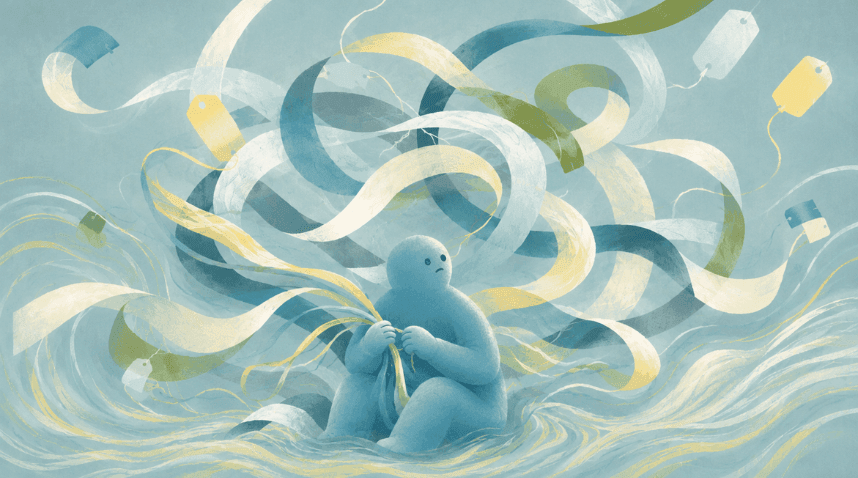
In Buddhism, suffering begins when we grip too tightly. To our views. To outcomes. To how things should be. Certainty can feel like safety, but it often turns into expectation. And when life does not meet that expectation, disappointment and harm follow, toward ourselves and toward others.
They look solid. Reassuring. Like something we can lean on when life feels unstable. We tell ourselves stories about how things will go, who we are, how our bodies should behave, and how healing should arrive if we are patient enough or positive enough. Certainty feels like safety. But the Buddha saw something else, and I see this even in my own good intentions.

When Effort Starts Asking for Recognition
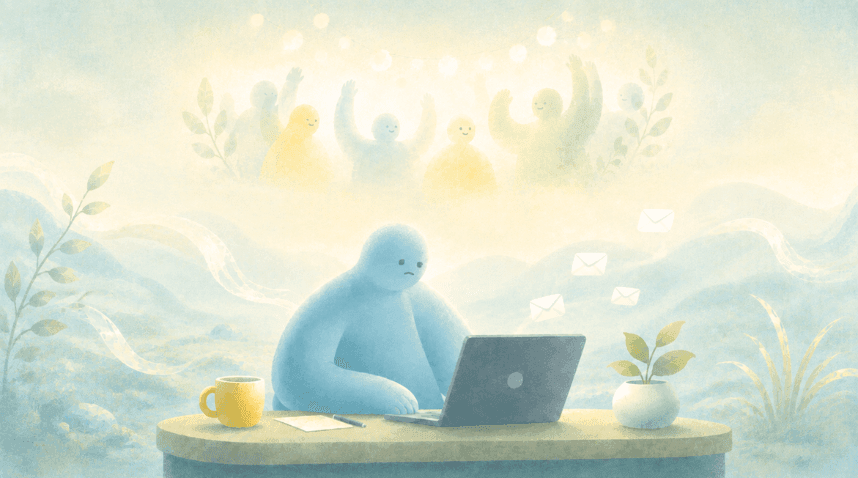
When I began organising the Queer Buddhist Festival, I reached out to people and organisations with what I believed was a sincere wish to build something meaningful for our LGBTQ+ community. When responses did not come, I noticed a familiar tightening. For a moment, I felt discouraged. Not because anyone owed me a reply, and not because I was rejected outright, but because a quiet certainty had formed in me. A belief that genuine intention should naturally be met with support. That doing something “good” should be recognised. That effort should produce affirmation.
That certainty was my projection.
How We Turn Hope into Pressure
I was not only offering something. I was also expecting something in return. Validation. Momentum. A sense that I was not alone in wanting change within Buddhist spaces. When that expectation was unmet, disappointment arose. Not from others’ silence, but from my own attachment to how I thought things should unfold.
This is how certainties become subtle and selfish. They centre our story, even when our intentions are generous. They quietly say, “Because I see this as important, others should too.” When they do not, we suffer.
We Cling to More Than Pleasure
Again and again, the Buddha pointed not to pain itself, but to clinging as the source of suffering. Not the experience, but the tightening around how we think things must be. In the Second Noble Truth, Samudaya Sacca, the Buddha names craving and attachment as the cause of dukkha. What we cling to does not even have to be pleasure. We cling to views, identities, outcomes, and ideas of how life should unfold.
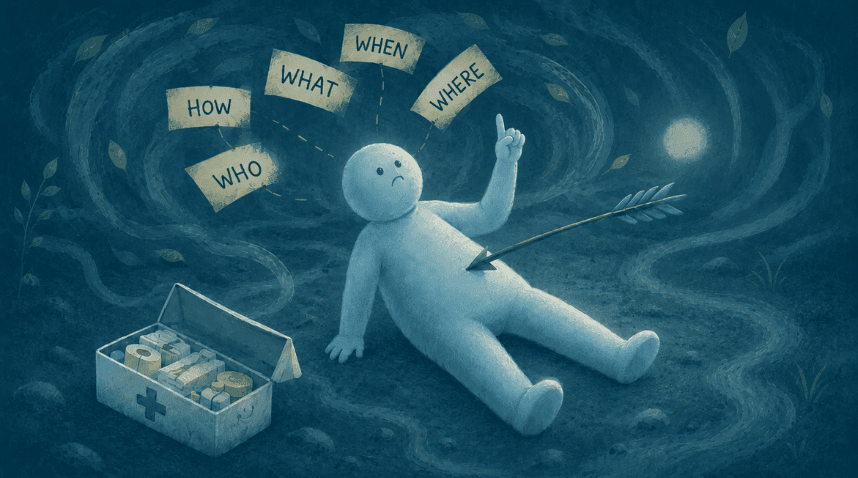
One of the Buddha’s most striking metaphors is found in the Cūḷamālukya Sutta (MN 63). A man is shot by an arrow and refuses treatment until he knows every detail about it. Who shot it? Why. From where. With what kind of bow? The Buddha tells us that such a man would die before getting answers. The teaching is not anti-knowledge. It is a warning about how certainty can delay care, presence, and release.
I understand this now in my body.
When the Body Refuses the Script
As a cancer survivor, and now a PEG tube disabled person who cannot consume food due to aspiration, my life has narrowed in ways I never imagined.
I live with a body that does not follow the script. Eating, once ordinary and social, is no longer possible. This is not a temporary condition. It has been medically diagnosed as a lifelong condition.
And yet, people around me continue to hope that one day I will eat again.
They even suggest that I try chewing food and spitting it out just to taste it. But that never made sense to me. It only creates more craving and strengthens my attachment to food.
What people don’t see is how many times I have tried to swallow even the simplest things. Soft foods. Liquids.
Each attempt ends the same way. My body reacts with violent chills and fever, and I am left lying in bed for two days, all because of one small, hopeful meal.
This is not dramatic suffering. It is quieter than that. It is daily. It is ongoing. And this is where certainties show their sharpest edge.
That certainty adds pressure.
How can we be so sure that our certainties do not quietly turn into expectations?
The Weight of Other People’s Hope
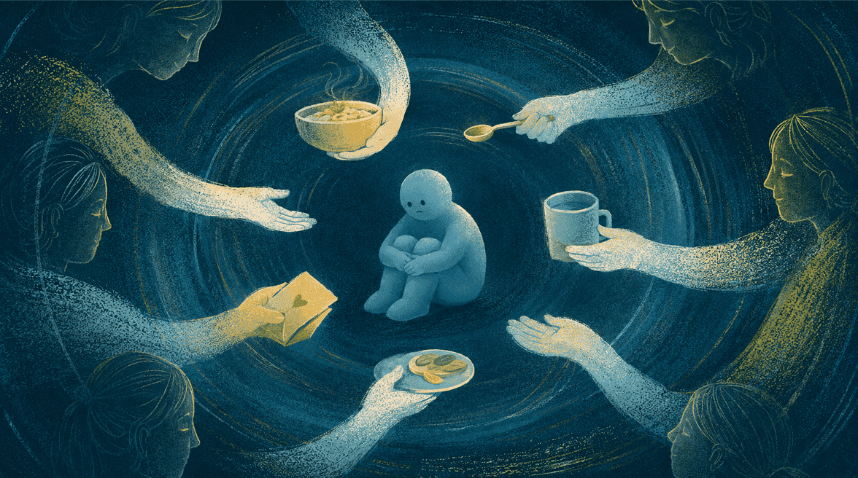
Certainties are especially frightening because they often disguise themselves as hope. They sound kind. Encouraging. Loving. But inside them lives a quiet condition: what if it does not happen? When certainty insists on a future outcome, it leaves no room for grief, adjustment, or truth in the present.
It asks my body to become something else. It asks for my acceptance to wait. It quietly suggests that where I am now is not enough. Rather than easing suffering, it multiplies it.
I have felt this deeply. I feel responsible for it. And when reality does not match that certainty, the disappointment does not disappear. It lands somewhere.
Often, it lands back on my body, my choices, my acceptance. Their certainty becomes another round of suffering that returns to me, asking me to keep waiting for a version of life that may never arrive.
In those moments, I realise that letting go is not always the most compassionate instruction. Sometimes the practice is simply letting it be.
Certainties, Upekkhā, and Letting Things Be
Over time, our stories harden into certainties that collide with each other every time we engage with another person, who is another story.
The anxiety of living makes us want to judge, be sure, have a stance, and definitively decide. Having a fixed, rigid system of belief can be a great relief.
As long as we don’t decide, we allow further information to keep coming in. Reading a story like “Gooseberries” might be seen as a way of practicing this. It reminds us that any question in the form “Is X right or wrong?” could benefit from another round of clarifying questions. Question: “Is X good or bad?” Story: “For whom? On what day, under what conditions? Might there be some unintended consequences associated with X? Some good hidden in the bad that is X? Some bad hidden in the good that is X? Tell me more.”
This openness to more — to truth beyond story, to beauty beyond certainty — is precisely what teaches us how to love the world more.
With a deep bow to Chekhov as the master of this existential art, Saunders writes:
This feeling of fondness for the world takes the form, in his stories, of a constant state of reexamination. (“Am I sure? Is it really so? Is my preexisting opinion causing me to omit anything?”) He has a gift for reconsideration. Reconsideration is hard; it takes courage. We have to deny ourselves the comfort of always being the same person, one who arrived at an answer some time ago and has never had any reason to doubt it. In other words, we have to stay open (easy to say, in that confident, New Age way, but so hard to actually do, in the face of actual, grinding, terrifying life).
As we watch Chekhov continually, ritually doubt all conclusions, we’re comforted. It’s all right to reconsider. It’s noble — holy, even. It can be done. We can do it. We know this because of the example he leaves in his stories, which are, we might say, splendid, brief reconsideration machines.
Buddhism offers another way of meeting reality, through equanimity, upekkhā. Equanimity is not coldness. It is not giving up. It is the capacity to stay present with what is unfolding without clinging to how we want it to be. It is love without conditions attached.
In the Satipaṭṭhāna Sutta, the Buddha invites us to know the body as body, feelings as feelings, and mind as mind. Not improved. Not corrected. Just known.
This is the heart of equanimity. Seeing clearly, without forcing change. Allowing things to be as they are, while still holding them with care.
Letting Life Be Incomplete
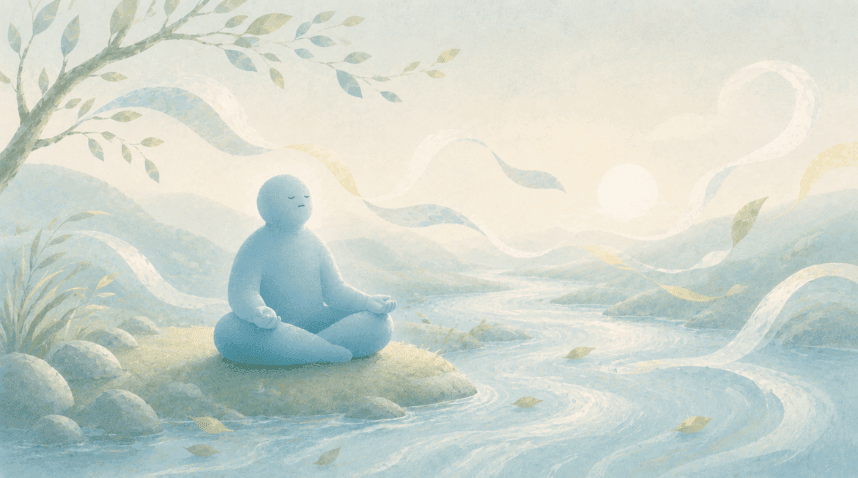
For me, equanimity has meant learning that an open heart is not about letting go in a dramatic sense. It is about letting things be. Letting my body be what it is today. Letting others feel their hope without needing to fulfill it. Letting life be incomplete, uncertain, and still worthy of love.
This does not remove pain. But it makes pain bearable. It turns struggle into something workable. And slowly, it loosens the grip of certainties that ask life to perform.
The Buddha’s own life reflects this. Born into comfort, shielded from sickness, aging, and death, he lived inside certainty. Then he saw what could not be unseen. Liberation did not come from replacing one certainty with another, but from seeing clearly and staying. Sitting under the Bodhi tree, he did not force the world to make sense. He allowed it to be known as it was.
The practice is not to know everything, but to stay present. To soften the grip. To meet this moment as it is, not as we demand it to be.
Maybe wisdom is not about being right.
Maybe it is about being here.
A Short Practice Reflection
Take a moment to pause.
Notice one certainty you are holding right now. About yourself, someone else, or the future.
Ask gently:
What am I expecting this certainty to protect me from?
What would happen if I allowed this situation to be exactly as it is, just for today?
You do not need an answer. Simply notice what arises. This noticing is already the practice of equanimity.
Sometimes, peace does not come from knowing what will happen.
It comes from learning how to stay in the present.
Wise Steps:
- Notice where certainty has slowly become expectation in your life, because even sincere intentions can create suffering when they carry an unspoken demand for affirmation or results.
- When disappointment arises, look first at the story you were holding rather than blaming other people, because unmet expectation often says more about our attachment than about their response.
- Be careful when hope starts prescribing an outcome, because what sounds loving can become pressure when it leaves no room for grief, truth or the present moment.