
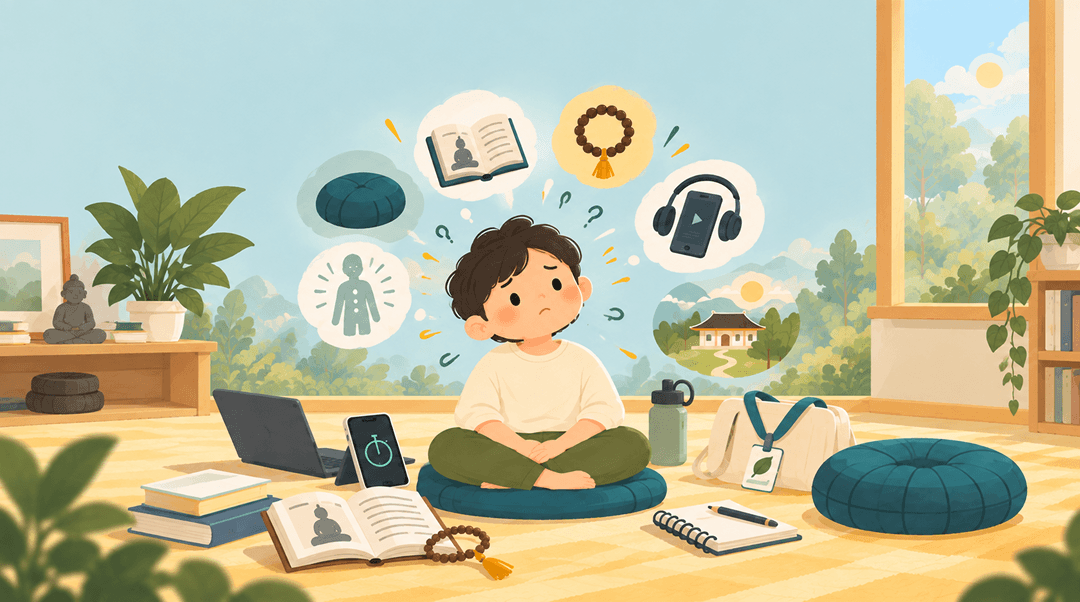
TLDR: Burnout in Dhamma practice usually comes not from doing too little but from doing it without balance, whether through constant method-hopping, rushing for results, over-serving, straining relationships, or clinging to a “serious practitioner” identity.
Burnout in Dhamma practice rarely comes from laziness or lack of faith. More often, it arises when sincere effort slips away from Right Effort and balance.
In our Singapore/ Asian culture that prizes self-improvement and intensity, even practice can turn into striving and self-judgement, until it slowly depletes the very qualities the Dhamma is meant to cultivate.
This article highlights some mistakes practitioners may encounter, which we hope will serve as practical reminders to ground our effort in mindfulness, right intention, and compassion.
Constantly Changing Practice Methods
Lack of Saddhā: Confidence and Trust
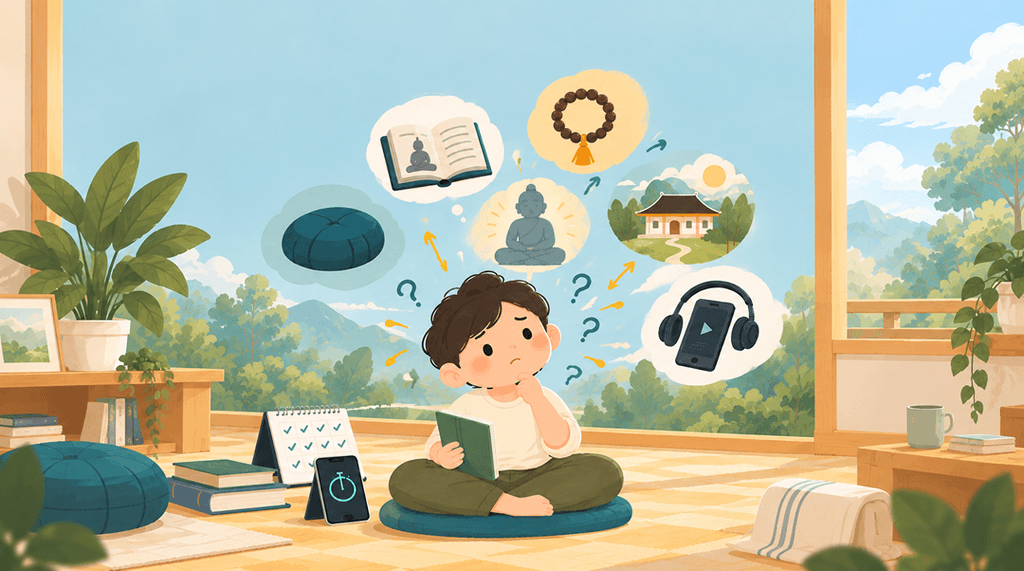
One common mistake that leads to burnout in Dhamma practice is frequently changing methods.
While exploration is natural, constantly switching between techniques can prevent the mind from settling and developing stability.
Saddhā refers to confidence or trust, not blind faith, but the willingness to stay with a practice long enough for understanding to grow. When methods change too often, energy is scattered, progress feels uncertain, and practice becomes tiring rather than grounding.
Saddhā refers to confidence or trust, not blind faith, but the willingness to stay with a practice long enough for understanding to grow.
A common real-life example is the practitioner who starts with breath meditation, switches to loving-kindness after a few restless sittings, then moves on to body scanning, chanting, or another retreat style because “this one isn’t working”.
On the surface, it looks like diligence, but in reality, the mind never stays long enough with one method to learn how resistance, boredom, or doubt actually feel.
Without saddhā, confidence in the path weakens. Practice begins to feel unstable and discouraging, leading to mental fatigue and burnout rather than clarity.
Wanting Results Too Quickly
Imbalance of Viriya: Effort Without Patience
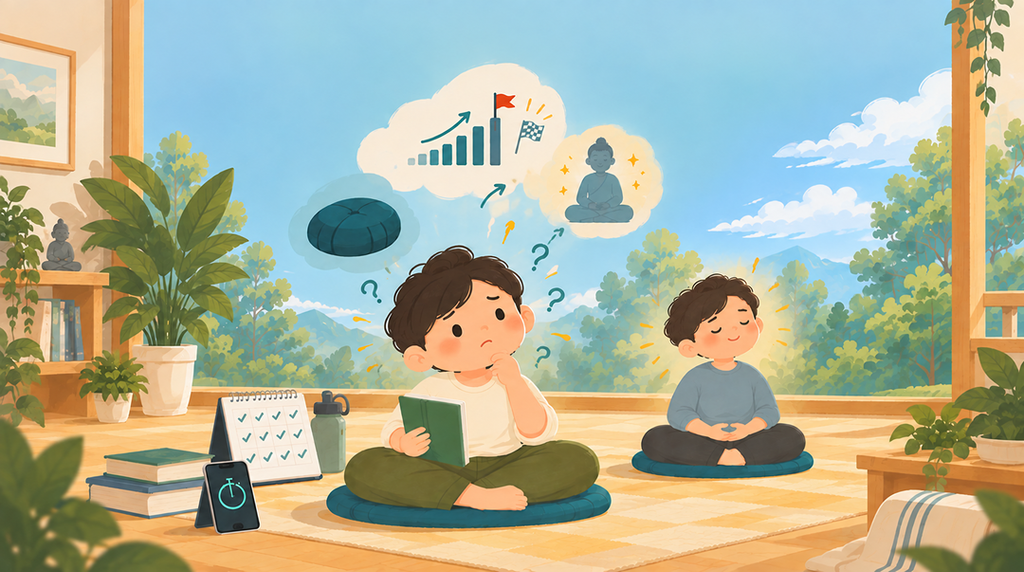
Another major cause of burnout is the desire to see quick results. Practitioners may expect calm, clarity, or insight within a short time and become discouraged when change feels slow.
Viriya refers to applied effort, but effort without patience easily turns into strain. When practice becomes outcome-driven, it subtly shifts into self-pressure and comparison. True transformation unfolds steadily through gradual training, not on demand.
This often shows up as silent comparison. A practitioner attends a retreat, hears others share about calm states or insights, and begins wondering why their own mind still feels messy.
At home, they might increase sitting time aggressively, hoping to “push through” and get results faster. In this example, viriya becomes over-effort.
Practice turns into another performance metric: Am I progressing fast enough? Why am I still distracted? When expectations are not met, disappointment creeps in. Over time, this striving can drain the joy of practice and may lead to emotional exhaustion.
Letting Service Replace Personal Practice

Neglect of Samādhi: Inner Concentration
Service and volunteering are meaningful expressions of practice, but burnout can arise when service consistently takes precedence over personal cultivation.
Without time for samādhi, even well-intentioned service can become exhausting. The Buddha taught that caring for others and caring for one’s own mind are not separate. When inner practice is neglected, compassion may slowly turn into obligation, leading to emotional and physical fatigue.
Without time for samādhi, even well-intentioned service can become exhausting.
Many practitioners experience this through volunteering. For example, someone may volunteer to help organise events, support newcomers, or coordinate retreats, all while slowly cutting back on their own sitting and reflection time because “there’s too much to do”.
Eventually, once little friction arises during the retreat, they blow up at others, which can further give rise to more ill will within themselves.
Practising in Ways That Create Tension or Conflict

Forgetting the Role of Mettā and Upekkhā: Kindness and Balance
Burnout can also occur when practice is held too tightly and begins to create friction with people around us.
Sudden changes, rigid views, or moral pressure can unintentionally cause discomfort or conflict. Mettā (loving-kindness) and upekkhā (equanimity) remind us that practice should soften the heart, not harden it. If practice leads to strained relationships or tension, it may be a sign that balance and gentleness need to be restored.
This mistake often appears in everyday relationships. A practitioner adopts new habits, such as stricter schedules, dietary changes, silence, or strong views, and expects loved ones to adjust accordingly.
When others feel confused or uncomfortable, frustration may arise: Why don’t they understand my practice? Here, attachment to “doing practice correctly” overshadows mettā and upekkhā. Practice becomes tight, joyless, and isolating, thus leading to burnout.
Turning Practice into an Identity

Sakkāya-diṭṭhi: Attachment to Self
Burnout can arise when practice becomes a fixed identity: “I am a serious practitioner,” “I should always be calm and mindful.” This reflects sakkāya-diṭṭhi, the concept of identifying with body, thoughts, or roles as a solid “self.”
What began as a path to freedom turns into pressure to perform. Instead of loosening self-view, practice quietly reinforces it, making mistakes feel heavier and rest feel undeserved.
A practitioner may suppress frustration or doubt to maintain an image of being “spiritually together.” They avoid sharing struggles and push themselves to keep up appearances.
Over time, this inner split becomes exhausting. The Buddha taught that freedom comes from seeing through identity, not clinging to it. When practice is allowed to be imperfect and human, energy and ease naturally return.
Conclusion
Burnout in Dhamma practice often does not come from practising too little, but from practising without balance.
These everyday examples show that sustainable Buddhist practice is rooted in patience, wise effort, and compassion, not constant striving.
May you walk this path of peace well and meaningfully!
