
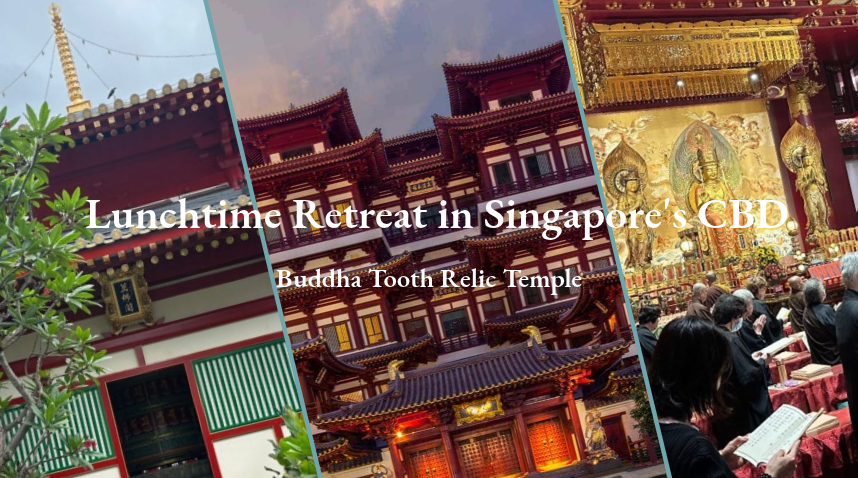
TLDR: A lunchtime detour to the Buddha Tooth Relic Temple, complete with $4 vegetarian rice, a meditation hall, and a rooftop prayer wheel, shows how a busy CBD workday can still hold room for stillness.
Lunchtime Retreat in Singapore’s CBD: Finding Space to Practise at the Buddha Tooth Relic Temple
“Work is too stressful“ and “I’m too busy to practise” are narratives that we feed on as days blend into weeks and weeks into months. When working life feels like a spiritual desert and you’re just trying to survive the day, it’s easy to miss the pockets of time that are already there. Most of us put off practice until the weekend or the next retreat… or the next life!
One weekday lunch, a friend and I decided to do something different. Instead of grabbing a quick meal and returning straight to our desks, we shared a simple vegetarian lunch and spent some time meditating together. In the process, we discovered an oasis hidden in plain sight, right in the heart of Singapore’s CBD.
Getting There & What to Expect
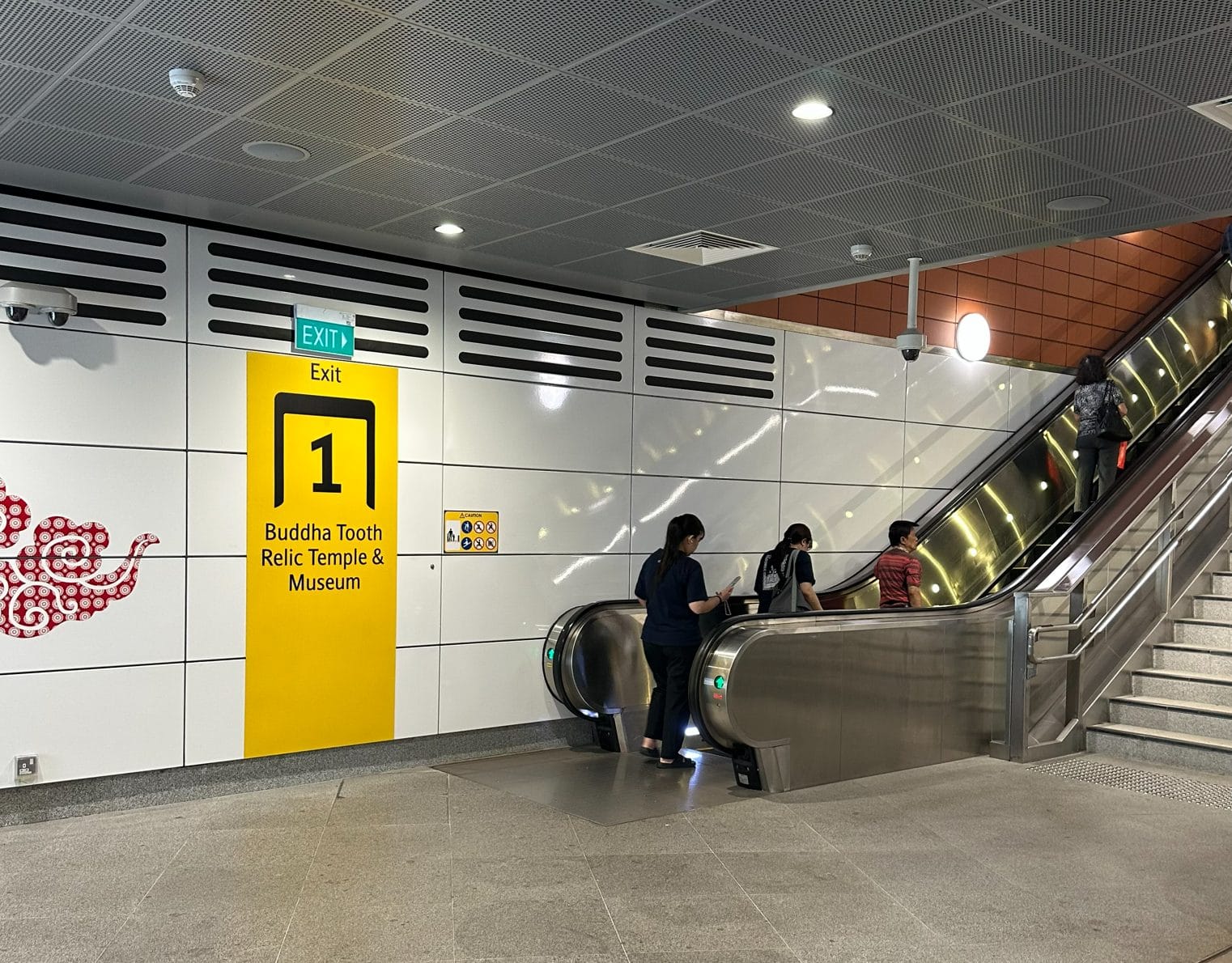
Buddha Tooth Relic Temple is a 10-15 minute walk from my office in the CBD. Nearest MRT: Maxwell MRT (exit 1).
One thing I’ve come to appreciate is treating the walk itself as a way to train the mind. Before leaving the office, I set a simple intention: work can wait until I return.
It’s often only when I slow down that I realise how much tension I’ve been carrying. During the walk, I try to reconnect with bodily sensations, notice my breathing, and soften areas of tightness accumulated throughout the morning. The journey becomes an intentional transition from “productivity mode” (sometimes caffeine-fueled mental overdrive) to presence, creating space between actual work and unnecessary emotional and mental work I’ve created around work and life.
The journey becomes an intentional transition from “productivity mode” (sometimes caffeine-fueled mental overdrive) to presence, creating space between actual work and unnecessary emotional and mental work I’ve created around work and life.
The Vegetarian Canteen (Basement Level – B1)
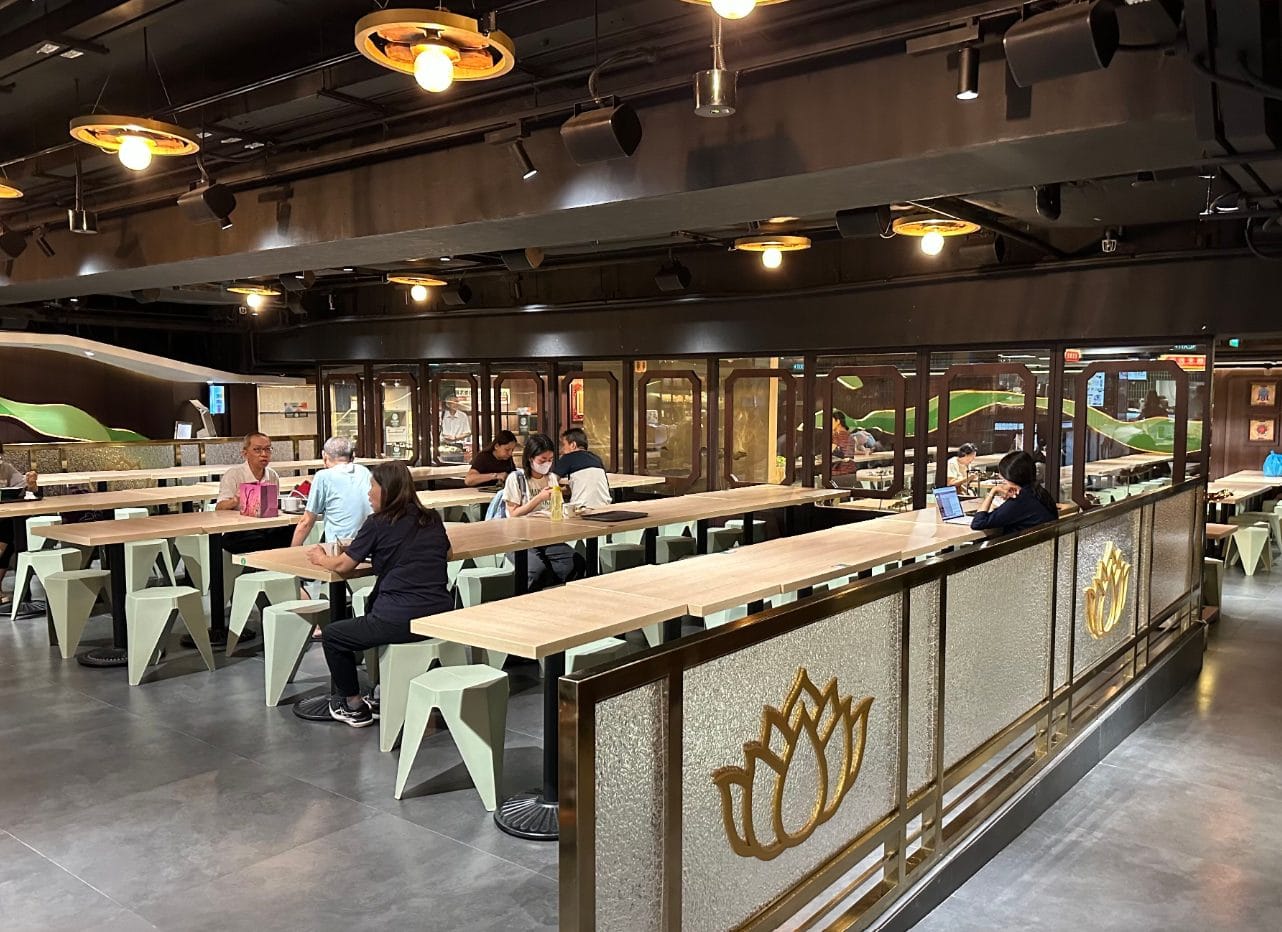
The basement houses a wonderfully unpretentious vegetarian canteen serving a wide variety of Asian and Western dishes. The atmosphere is simple, functional, and welcoming.
I usually opt for the mixed vegetable rice stall, where prices start from just $4 for rice or noodles with two dishes. There is also a daily special (today’s was vegetarian Laksa) and a Western food stall for those looking for something different.
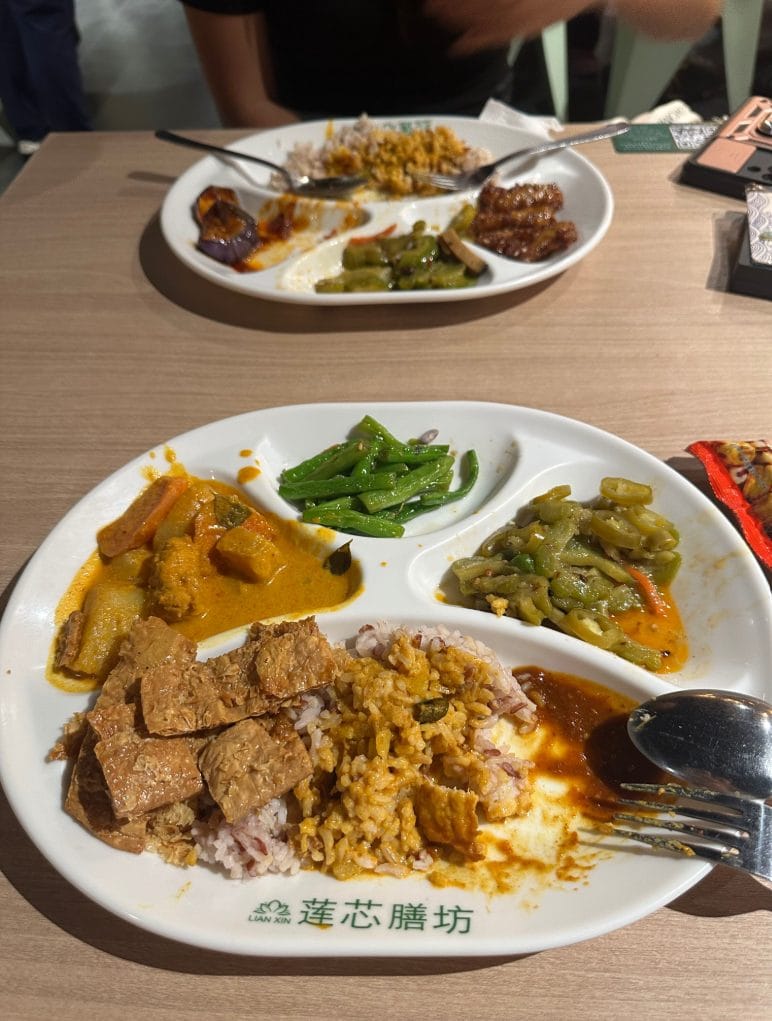
(Yes, I only remembered to snap a photo mid-meal)
We usually try to arrive by 11.30am, before the lunch crowd thickens. Though it can get crowded at lunchtime, there is usually a seat available.
Sacred Light Hall Chamber (Level 4)
After lunch, we head up to Level 4 and make our way into the Sacred Light Hall.
Meditation platforms line both sides of the hall, and there are spare cushions available. After paying respects to the Buddha relic, we find a place to sit, set our timers for 30 minutes, and allow the atmosphere of the hall to do its work. The gentle chanting of Buddham Saranam Gacchami… Dhammam Saranam Gacchami… Sangham Saranam Gacchami, played softly on a continuous loop, creates a supportive backdrop for the mind to settle.
There are no expectations during these sessions. No striving, no attempt to manufacture a particular experience.
There are no expectations during these sessions. No striving, no attempt to manufacture a particular experience.
Some days the practice consists simply of observing how busy the mind has become. Even that can be valuable in itself. It offers an honest check-in and a chance to recalibrate how we want to approach the rest of the day.
Other days, the mind settles more readily. Unimportant mental chatter that clutter the mind is put into the recycle bin, and a quiet sense of ease emerges. Whatever the outcome, we almost always return to the rest of our day with a lighter heart and a clearer perspective.
I’ve intentionally left out photographs of the meditation hall. Some places are best encountered directly rather than through a screen. That, and technically photo and video taking are not allowed.
When There’s More Time
The lunchtime routine of the canteen and meditation hall is what makes this routine sustainable on an ordinary workday. Yet on days when I have a little more flexibility, the temple gradually reveals more of itself.
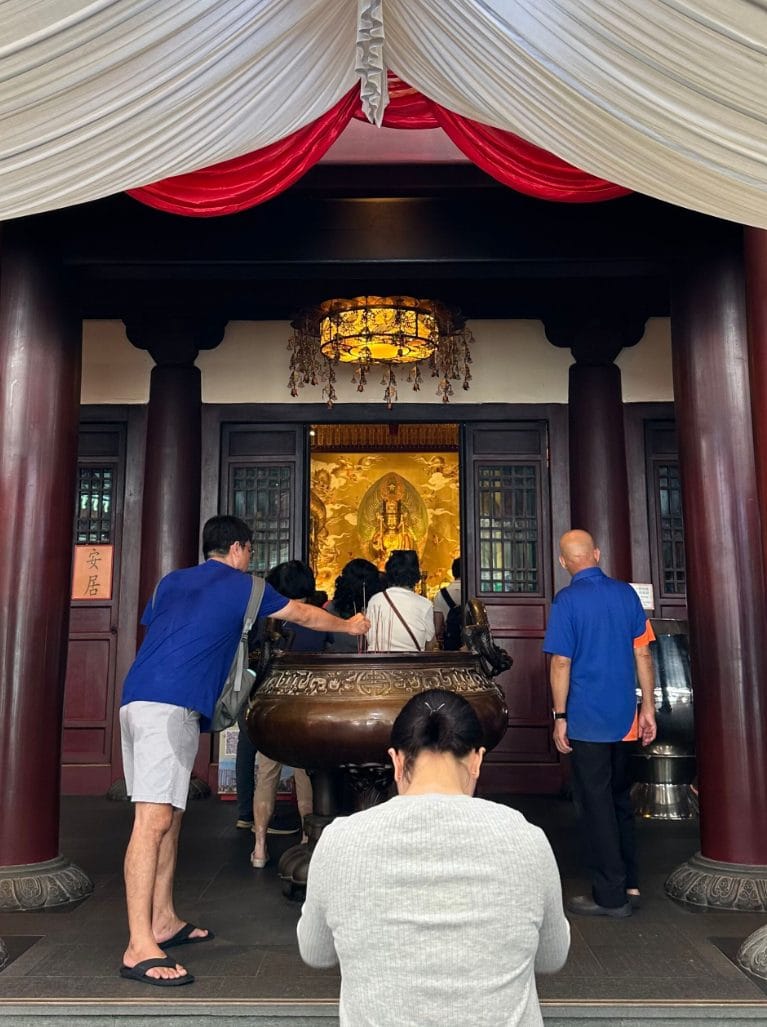
I usually begin at the ground floor. After offering incense and paying respects before the Buddha rupa, I spend some time simply walking through the main hall.
For readers new to Buddhist rituals, offering incense is traditionally a gesture of respect and devotion. Symbolically, it can remind us of our sila (our commitment to be harmless and to treat those around us well), which spreads beautifully in all directions. The main point is simple: we offer incense not to please a God, but to cultivate a wholesome mind. Bowing expresses humility, gratitude, and reverence for the Buddha and his teachings. It reminds me why I call myself a student of the Buddha and what internal work I need to do.
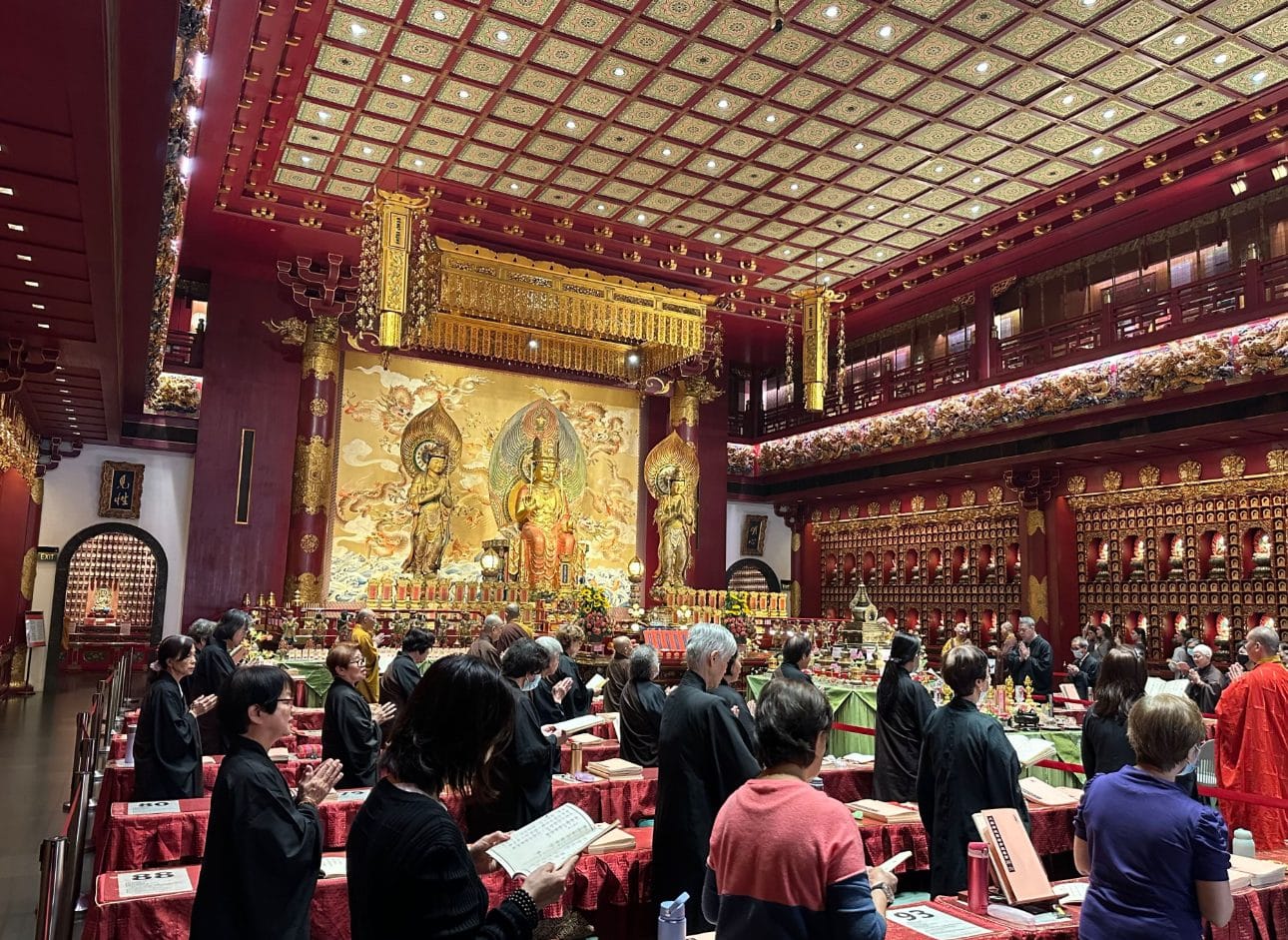
The main hall has a way of slowing your pace almost immediately. During one recent visit, a chanting session was underway. I found myself lingering silently at the back, appreciating the sincerity of those gathered there. There are countless ways one could spend a Wednesday afternoon. Yet here was a group of people choosing to do something skillful with their time. There is something inspiring about that.
Buddhas of the World Museum (Level 3)
When bringing friends to the temple for the first time, I often stop by the Buddhas of the World Museum on Level 3.
The museum houses hundreds of Buddhist artefacts from across Asia, including pieces from China, Thailand, Myanmar, Pakistan, and other regions shaped by Buddhist culture. As you move through the exhibits, you encounter the story of the Buddha’s life: from his encounter with old age, sickness, death, and a renunciant, through his spiritual quest and eventual awakening.
What I appreciate most is that the museum doesn’t merely present historical artefacts. It quietly reminds visitors why the Buddha left behind a privileged and comfortable life and why his teachings continue to matter. The story of awakening ceases to feel like a distant historical event and instead becomes a gentle encouragement to make skillful changes to your life, here and now. IYKYK.
The story of awakening ceases to feel like a distant historical event and instead becomes a gentle encouragement to make skillful changes to your life, here and now.
As with the meditation hall, I’ve deliberately omitted photographs. Discovery is part of the experience.
The Rooftop Garden (On top of level 4)
On cooler or overcast days, I often make my way to the rooftop garden. Access is via Level 4 through a door marked “To Roof Top Orchid Garden”.
This time, I noticed that there weren’t any actual bloomed orchids in the garden. But that doesn’t detract from the serenity of the space.
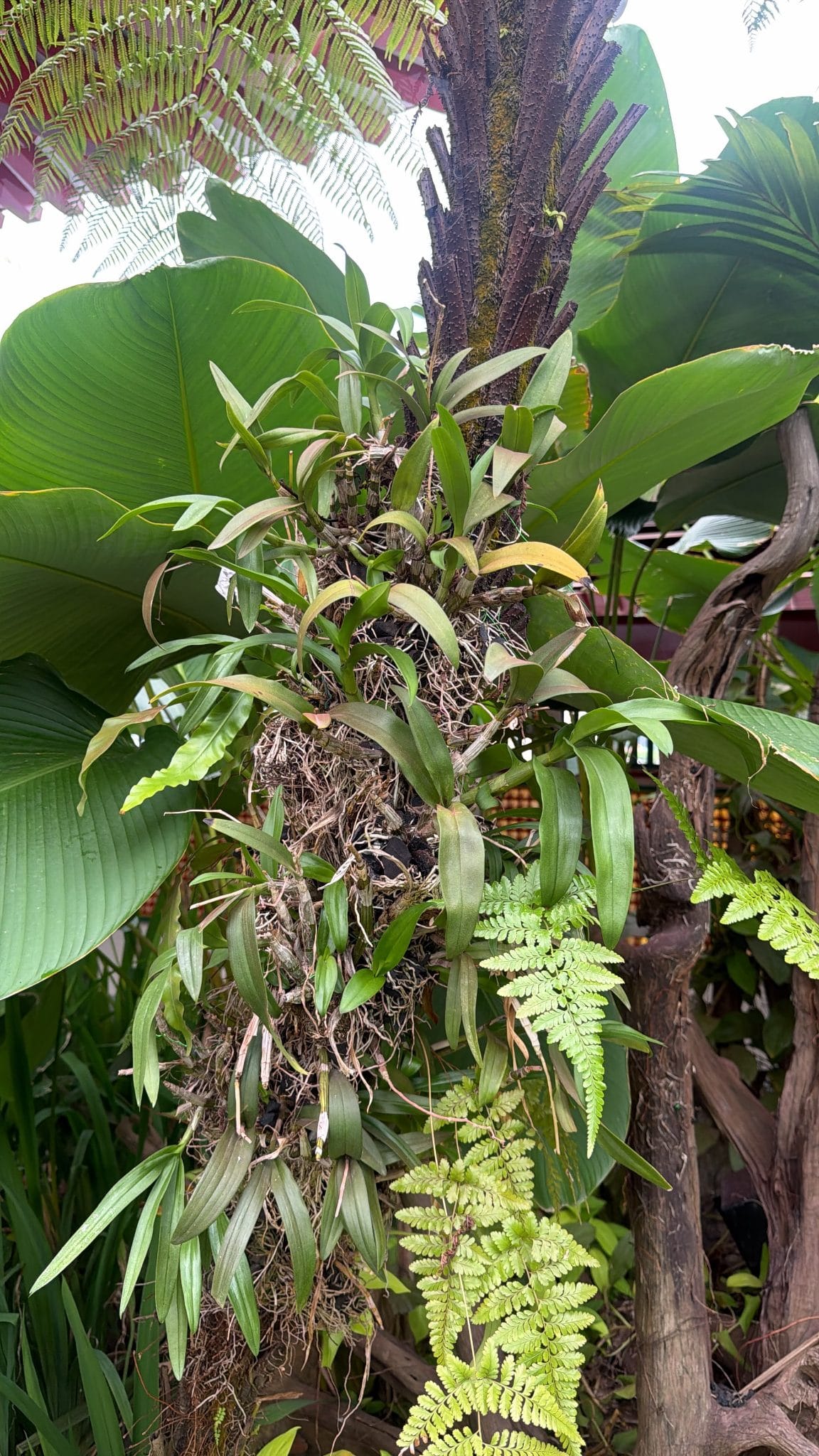
Surrounded by skyscrapers, the garden feels like a visual metaphor for mental cultivation itself: a secure refuge surrounded by a busy and demanding world.
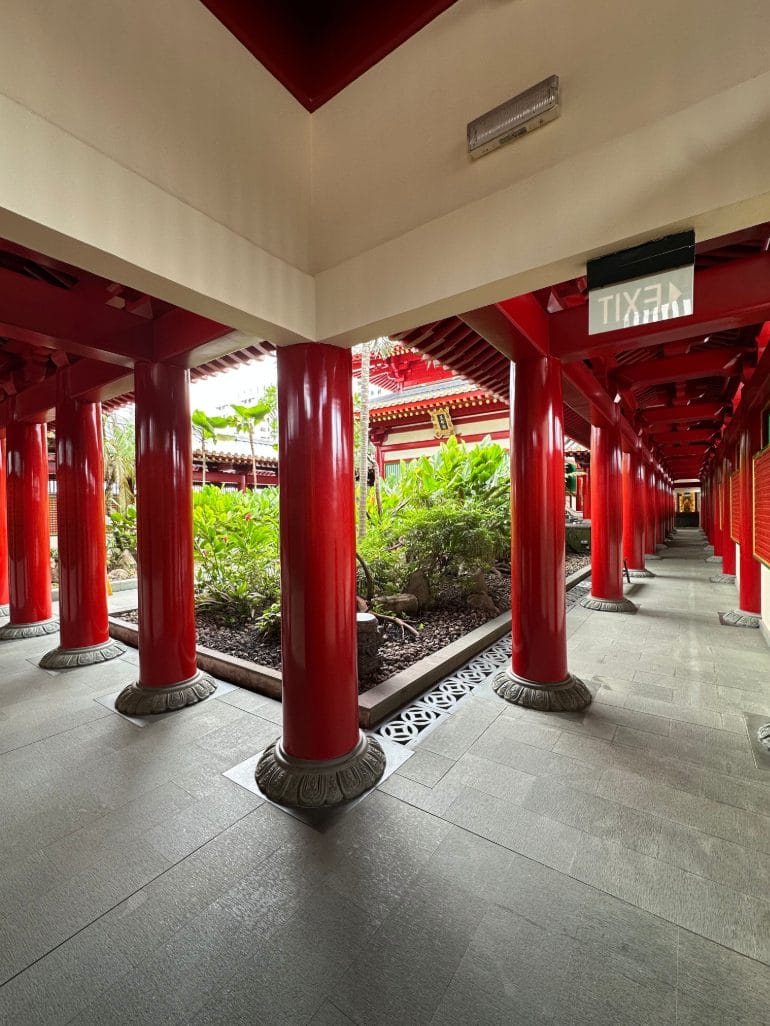
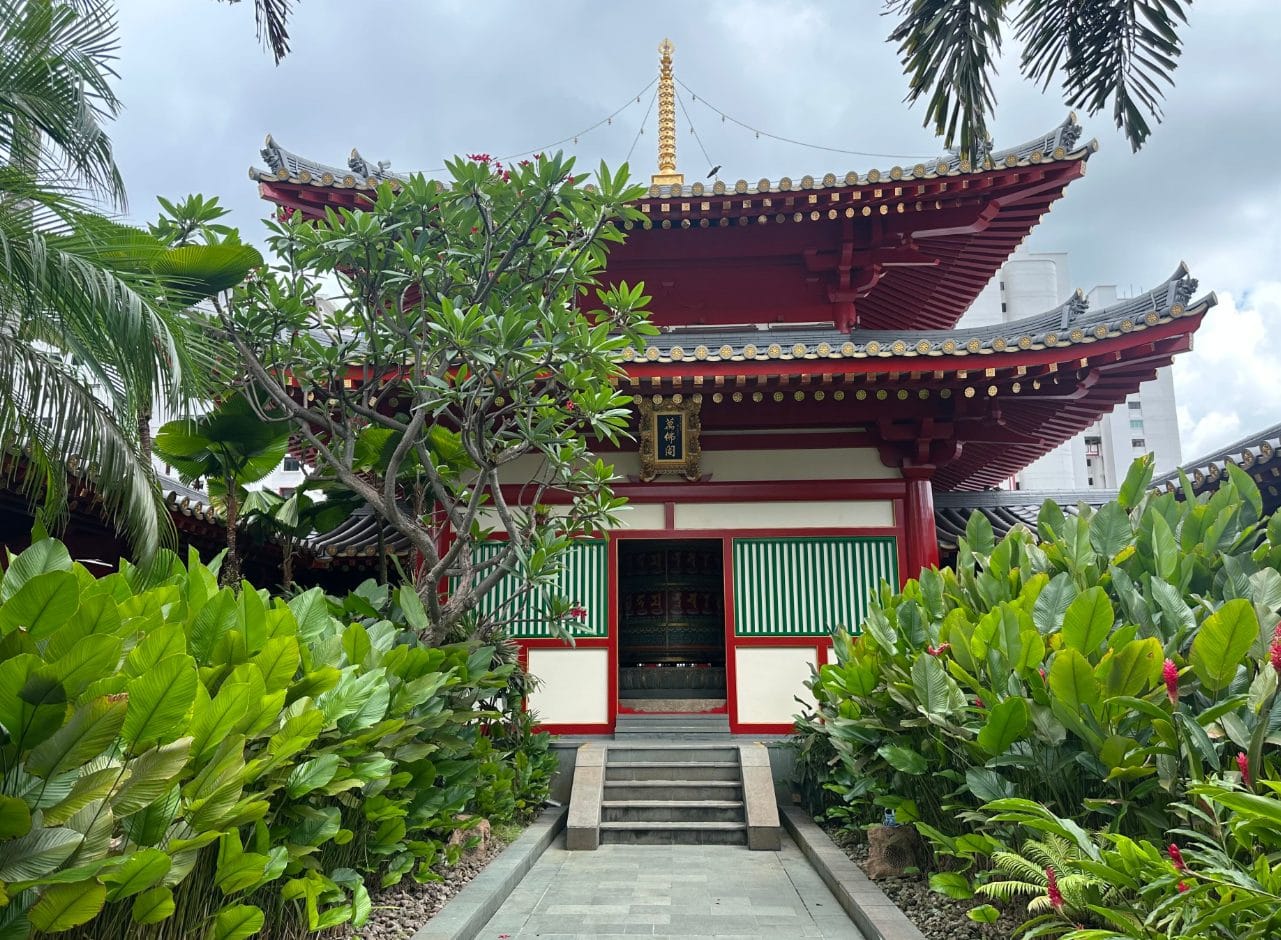
Recently, I’ve found myself enjoying forms of mental cultivation that involve movement. Walking meditation, mantra recitation, and circumambulating the prayer wheel have become extensions of sitting meditation.
As I walk around the prayer wheel housed at the centre of the garden, reciting a simple mantra, I’m reminded that there is nowhere else I need to be and nothing I need to become in that moment.
Sometimes the mind remains restless after sitting meditation. Gentle movement can provide an anchor that physical stillness alone cannot. On other days, the simple act of walking around the prayer wheel shifts attention away from the endless stream of “if onlys”, “must haves”, and unfinished to-do lists.
Instead, there is gratitude. Contentment. A quiet appreciation for things exactly as they are.
Why It Matters
A longer visit that includes the main hall, museum, rooftop garden, and meditation hall takes around two hours at an unhurried pace. Strangely enough, I often leave feeling more productive than when I arrived.
Perhaps that’s because Buddha’s teachings give us something increasingly rare in modern life: the opportunity to pause long enough to remember what we’re doing and why we’re doing it.
When work life becomes a blur of deadlines, meetings, and obligations, it’s easy to spend years rushing forward without ever examining the direction we’re heading. A simple lunchtime visit to a temple won’t solve all of life’s problems. But it can provide a valuable pause, a chance to reconnect with what matters, and a reminder that peace isn’t something waiting for us at the end of our responsibilities, in retirement, or in some other country.
But it can provide a valuable pause, a chance to reconnect with what matters, and a reminder that peace isn’t something waiting for us at the end of our responsibilities, in retirement, or in some other country.
It can be found right here, if only we’re willing to make the time and space to stop running to and from things and turn our attention inward to figure out what’s going on.
Practical Information
Address: 288 South Bridge Road, Singapore 058840
Nearest MRT: Maxwell MRT Station (Exit 1)
Opening Hours:
- Level 1: Main Temple & Ground Floor: Daily, 7:00am to 5:00pm
- Level 3: Buddhas of the World Museum: Daily, 7:00am to 5:00pm
- Level 4:Sacred Light Hall (Meditation Hall): Daily, 9:00am to 5:00pm
- Basement 1: Lian Xin Vegetarian: Daily, 7:30am to 4:45pm (Last order: 4:15pm)
Admission: Free
Wise Steps
- Habit stack or replace habits such as using your commuting time to build mindfulness. This helps the mind settle during formal sitting.
- Constantly watch your mind (without judgement) so you can skillfully guide it in right direction
- Find creative ways to incorporate mental cultivation into your work day