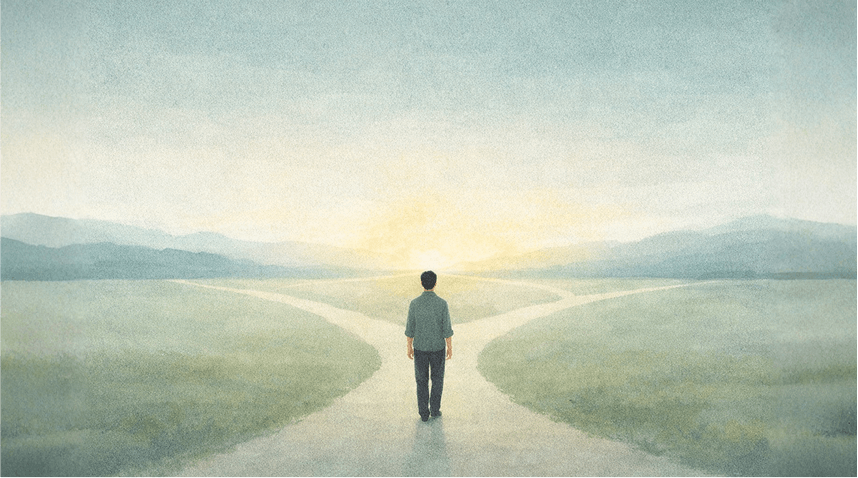
TLDR: A decade’s search to release the mind from suffering through different Buddhist traditions. What I found was boundless love and wisdom across all through different dharma doors.
It has been more than a decade since I began practising seriously on the Buddhist path. I would like to share some reflections on this journey: what I have experienced and what I have observed.
Nothing here is meant as a criticism of any tradition, teacher, or practitioner. What you read is simply my own studies, observations and reflections. My interpretation of the different schools of Buddhism may not be accurate too, please use your discernment.
Seeking Liberation
Unlike many people I have met, I do not find human life particularly blissful. There are moments of joy, but ultimately, there is pain and separation from things and people we love or are familiar with.
We don’t even need to die to experience it. I was born into a family of four, but my parents are no longer with me, my sister is married with her own life, and friends from the past have drifted away. More people are living alone, with no one to care for them. Community and compassion are not easily found on Earth – something I had observed as a youth.
Though separation has always been painful for me, it was anger that led me to the Buddha’s teachings. Impatience runs in my family. I was quick to temper but also quick to forgive.
At one point, I felt betrayed by two close friends, and anger lingered in my body for several days. I noticed how it released toxic energy into my system and realised I needed a way to release it. By chance, I came across an online copy of Thich Nhat Hanh’s book on anger, which drew me in.
Soon after, as if by divine intervention, I met a stranger at a vegan bakery. She was enrolled in a Tibetan Buddhism course, a seven-year program that progressed from basic teachings to tantra. She encouraged me to join, even though the course had already been running for a year.
A Shocking Realisation
To catch up, I began reading Thich Nhat Hanh’s The Heart of the Buddha’s Teaching. My first attempt was unfocused, so I read it again.
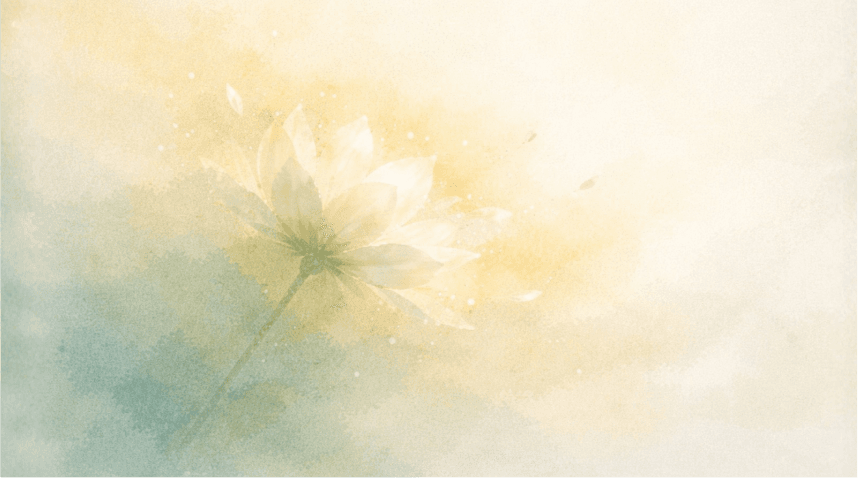
Late one night, I came across a passage where he asked: “Where is the flower? Is it the petals, the leaves, or the stem?” At that moment, I caught my reflection in a large painting frame before me and realised I was no different from the flower. I could not find “me” anywhere.
That realisation shocked me. I went to bed filled with fear, not knowing who or what I was after having lived more than thirty years of my life.
The next morning, however, I awoke with a sense of profound release. A heavy burden seemed to fall away. I no longer felt the need to maintain an identity or construct a personality of likes and dislikes. I felt free.
I had already been meditating on my own for a few years, focusing on the breath. But that morning, my practice took on new depth.
I moved through the day with freedom and happiness for an entire week. I knew it would not last. I wanted to put all my efforts into realising the truth of freedom and bliss within deeply.
Study and Practice in Tibetan Buddhism
The Tibetan school I first encountered emphasised study. Meditation was mostly analytical, guided by texts and structured reflections. We also held weekend group discussions, though since I joined in the second year, I often studied alone.
I remain deeply grateful for this course. It provided step-by-step instructions for practice, especially helpful for beginners unsure of what to reflect upon. Yet I was not a disciplined student. I relished the freedom to explore and test my experiences rather than to simply follow.
I also struggled with doubt, which made it difficult to embrace the practice of guru devotion fully. While the purpose of guru devotion is profound, I observed that many practitioners focused more on the outer teacher than on the inner teacher – our intuition.
Only later did I begin to grasp the depth of Tibetan Buddhism and why wisdom is emphasised at the outset. After two years of study and a retreat at Kopan Monastery, I stepped away, drawn more strongly to meditation than to analysis.
I didn’t realise at the time I was already doing a lot of analytical meditation in daily life through observations of the Buddha’s teachings in daily life.
Though my time in Tibetan Buddhism was brief, the tradition left a deep impression. Thanks to my sincerity and some depth in mindfulness meditation, a lay teacher shared with me the pointing-out instructions from Dzogchen (from the Nyingma Tibetan school), which profoundly deepened my practice.
Later on, I learnt of the Six Yogas of Naropa through reading, and was impressed by how Tibetan Buddhism covers all states of consciousness to help a practitioner realise reality in one lifetime.
Lessons from Zen
Seeking more meditation practice, I joined a Korean Zen centre in Singapore that offered monthly retreats. The school followed Seung Sahn Sunim and worked with koans in the Lingji tradition.
A koan is a paradoxical phrase, riddle, or story used in Zen Buddhism as a tool for meditation to help practitioners transcend logical reasoning and achieve insight or enlightenment.
While koans are meant to halt overthinking, they had the opposite effect on me, stirring even more thought. Eventually, I gave up the koan practice and returned to simple breath meditation, focusing on the abdomen.
During this time, I experimented with fasting and practised prostrations. At the time, I didn’t fully understand their purpose except to watch my craving and physical discomfort. Only later did I realise that fasting heightens sensitivity to the space in the body, while prostrations help reduce the ego and cultivate devotion.
Entering a spiritual practice through devotion makes the path much sweeter. However, I was more keen on the intellect and did not focus so much on my heart.
The Zen centre’s teachings focused on pointing out the duality of thought and its failure in providing truth. Many found them difficult to follow. Some practitioners studied The Blue Cliff Record, a classic Zen koan text, trying to decipher the meaning of each koan.
What I appreciate most from Seung Sahn Sunim’s teachings is the practice of “don’t know mind”—resting in openness and uncertainty. Learning to trust not knowing remains one of the hardest yet most freeing lessons.
Later, I discovered that the Caodong school of Zen, popularised by Japanese master Dōgen and further explained by Taiwanese master Sheng Yen, might have suited me better. The practice of silent illumination, simply sitting with full awareness and letting body and mind fall away, parallels the Tibetan experience of luminosity of mind: an open awareness grounded in the present amid thoughts and feelings.
Returning to Early Teachings
When I could not find clear meditation guidance, I enrolled in a postgraduate diploma course at The Buddhist Library. There, I was introduced to the early Buddhist texts, the Pali Canon. For the first time, I could read the Buddha’s discourses directly rather than only through commentaries. While the texts must be approached with discernment, given their more than 2,500-year transmission, some of the discourses deeply moved me.
I was especially drawn to the Buddha’s teachings on the mindfulness of breathing and the four foundations of mindfulness.
Later, I trained in the Mahasi Sayadaw tradition in Yangon, known for its detailed mindfulness practices, including extremely slow walking meditation. Though the slowness is often criticised, it helped me find the joy of walking mindfully (at a normal pace) even in busy Singapore streets, and carried that same presence into daily activities that don’t require thought.
I would note, however, that some schools may place strong emphasis on rigid methods, discouraging practitioners from exploring others. While methods are valuable at the start, the Buddha’s ultimate teaching is release: letting go. Clinging even to a method keeps the mind bound.
In my case, I practised one method which is usually dreaded by humans because it brings up fear and anxiety.
The Power of Death Meditation
Among all practices, the Buddha called mindfulness of death the “king of meditations,” just as the elephant’s footprint is the largest of all footprints.1
There are many ways to practice it: watching the impermanence of each breath, letting go completely with the out-breath, or visualising the decay of the body’s 32 parts. The breath practices help consciousness touch into the space in-between and also surrounding the breath. The 32 parts require deep awareness and the ability to mentally visualise each part in your body, and helps the practitioner realise that space in the body is unity, while the body parts are separate (though they work in unity).
At a two-month retreat in Thailand after the pandemic, I felt despondent, fearing I would never realise the Dharma in this life. Such was my yearning to realise the truth before I die.
Practising methods, watching the breath and daily reflections did not bring me any deep realisation of the truth. I did the 32 parts, but any realisation I had from this practice did not resonate with the depth of my heart.
My deepest fear is the fear of death, or the process of it. I also have a history of anxiety disorder. However, the fear of not realising the truth was deeper than the fear of death.
Desperate, and inspired by the Hindu saint Ramana Maharshi, I began imitating him by visualising my own death. I imagined my body dying in various situations and ceasing to breathe.
Fear arose at feelings, thoughts and consciousness dissolving into nothingness. Yet in that imagined death, a deep love and bliss arose in my chest. I realised that there is no such thing as nothingness! What’s left after the five aggregates (body, feelings, perception, thought and consciousness) dissolve, is something quite spiritual.
The Dalai Lama himself practices death meditation daily. He describes death as the greatest opportunity for liberation. It is at this pivotal moment one finds out the depth of one’s practice in life.
Toward a Unified Understanding
Over time, I realised that all Buddhist traditions, and indeed all religions, ultimately point us toward the same truth: the nature of our minds.2
From my experience, the three traditions have these characteristics that stood out to me (it might be different for each person).
The Theravāda tradition emphasises wisdom, the Mahayana school emphasises compassion, while Tibetan Buddhism unites the two through devotion (love) and analysis. Compassion, in the Mahayana and Tibetan traditions, is not separate from love. It is unconditional love grounded in wisdom.
The four Brahmavihāras—metta, karuna, mudita, and uppekha—taught in early Buddhism are also not separate qualities but a unified expression of the same boundless love. Equanimity, which is one of the qualities of awakening, is not a cold-hearted detachment. It contains compassion for all, while having the wisdom to know how one can, or can’t help oneself and others.
Boundless compassion comes from the wisdom of letting go and walking through fear with trust – indeed it is hard to trust ‘not knowing’ and to stay with deeply difficult emotions such as anxiety, to be open to it, and watch it cease.
My deepest understanding of the practice today is that when compassion arises with an open heart, we can stay with painful feelings without rejection or suppression – it can still be difficult and requires courage and trust, but something we can apply repeatedly until we can accept suffering and not be caught in it.
A friend once reminded me: practice leads not to the end of painful feelings, but to the end of suffering.
Perhaps it is in embracing the human experience fully, without avoidance or obsession, that one truly becomes human, and in doing so, transcends the human condition.
Wise steps:
- If you are new on the path, be open-minded. There is something you can learn from each tradition because ultimately they all lead to awakening, including other spiritual paths.
- Follow your heart, even though in this world, we have been taught not to trust it. Balanced it with wisdom. The heart contains intuition, and can lead us to places we need to be, not want to be.
_________________________________________________________
Disclaimers:
1 Please note that there are different meditations for different mind states and personalities. Death meditation is not suitable for everyone, especially for those feeling depressed or anxious. I have anxieties over death, and it was with great determination and despondency for not being close to the truth (awakening) that I practised it.
2 The statement is based on my own research, reading and practice of different Buddhist traditions as well as other religions. Every religion has a public face and a less known side where the teachings and practice include meditation, recollection, and reflection. Most people are familiar with the public side, not the deeper side of religions.