

TLDR: Becoming a Buddhist is not just about peace and calm. It often begins with discomfort, honesty and the loss of old certainties.
People often imagine that becoming a Buddhist is about learning to stay calm. Sit quietly. Breathe slowly. Light a candle. Feel peaceful. Those moments do come. They are lovely when they do. But anyone who has walked even a little way into practice knows that the real beginning feels very different.
When you sincerely try to understand your mind, certain inner “costs” appear. They are not punishments or signs that something has gone wrong. They are simply the price of wanting a clearer heart and a wiser way of living.
Here are eight costs that show up again and again.
Cost of imposter syndrome for the freedom of honesty
There was a stretch of time when every meditation session left me feeling useless. My thoughts stampeded. My legs ached. I watched the person in front of me sitting perfectly still and heard a voice whispering that I did not belong here.
I wanted the calm others seemed to carry (They sit so still!). But the price of entry was meeting that voice of self-doubt without looking away.
What surprised me was the relief that arrived the moment I stopped pretending. I told my teacher I felt like a fraud and I was trying so hard I felt tired. He nodded as though it was the most ordinary thing in the world. Many people feel this, he said. The shame of being not good enough loosened immediately.
Honesty makes the practice easier rather than a performance of the person I wish I already was.
Cost of uncertainty for the peace of accepting impermanence
I assumed that spiritual practice would hand me certainty. I imagined that sufficient mindfulness would stabilise life with little or no drama. The more I practised, the more clearly I saw the opposite.
Everything moved and twisted. Thoughts changed. Emotions rose and dissolved. Jobs ended. Friendships deepened or drifted. Bodies aged. There was no certainty to be found
The Buddha taught impermanence not as a gloomy verdict on existence, but as an accurate description of how life actually unfolds. When I stopped fighting this movement, uncertainty stopped feeling like a personal failing. It felt natural that there was nothing ‘personal’ about changes happening to you.
Cost of loneliness for the growth that comes from solitude
A particular kind of loneliness arrives when your values begin to change. I felt it when I started wanting quieter evenings. When I began declining things that drained me and old patterns lost their pull.
Some friends understood. Others grew distant. What had once bonded us no longer did. We grow differently.
At first, the isolation felt like rejection. Later, I recognised it as space. Space to breathe. Space to listen and watch my own mind without constant background noise.
In solitude, I saw how frequently I had been reacting out of pure habit. I found wounds or mental burdens I had been carrying for years without examining them.
Cost of routine for the transformation that comes from steady practice
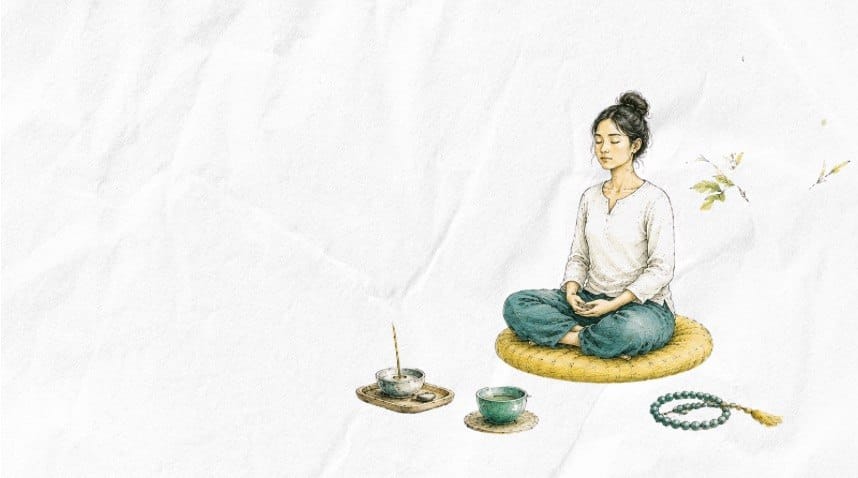
People love the idea of wisdom. The reality of it tends to look like the same small choices made over and over. Sit. Breathe. Notice. Let go. Get irritated. Begin again.
There were mornings when I genuinely questioned whether any of it was doing anything. It felt so unremarkable. Just a person sitting on a cushion facing a stone statue.
But the mind changes through familiarity, not through spectacle. I noticed I became slightly more patient with strangers. Slightly kinder to myself and less reactive when things did not go as planned. When metta takes root in your heart, you are less quick to anger and instead see the cycles of conditioning a person is trapped in.
Cost of criticism for the integrity of walking your own path
The moment you begin making choices from your actual values rather than from convenience or social pressure, someone will question you. Someone will misunderstand you. Someone will decide you have become strange.
When I began adjusting my lifestyle, people made jokes. When I became more reflective and less immediately reactive, a few said I had changed too much.
My first instinct was to defend myself. Then I understood that approval had stopped being a reliable compass. The teachings describe praise and blame as winds that blow in and blow out. They are not verdicts or final. Integrity grows when you stop trying to curate them for instagram or social media.
Conclusion
These costs do not make the path harsh. Instead, we recognise them for what they are, they are the price of entry onto the path.
We stop thinking that suffering means we are doing it wrong. We begin to understand that these very costs are shaping the qualities we hoped to grow.
If you notice any of these costs appearing in your own practice, you are not alone. You may simply be stepping into the real beginning of the path.
Wise Steps:
- Admit honestly when you feel like a fraud in practice, because as the article shows, naming imposter syndrome to a teacher or to yourself often loosens shame and makes the path less performative.
- Notice subtle signs of progress rather than chasing spiritual highs, because becoming slightly more patient, less reactive and kinder to yourself is often how the Dhamma first takes root.
Reframe discomfort in practice as part of the training, because seeing these costs as the price of entry rather than proof of failure helps you stay steady when the path feels hard.