TLDR: It is important to speak up about taboo topics such as mental health conditions as representation is important. Rachel shares about how she resonated with Mingyur Rinpoche when he spoke about his own panic attacks.
A monk and his panic attacks
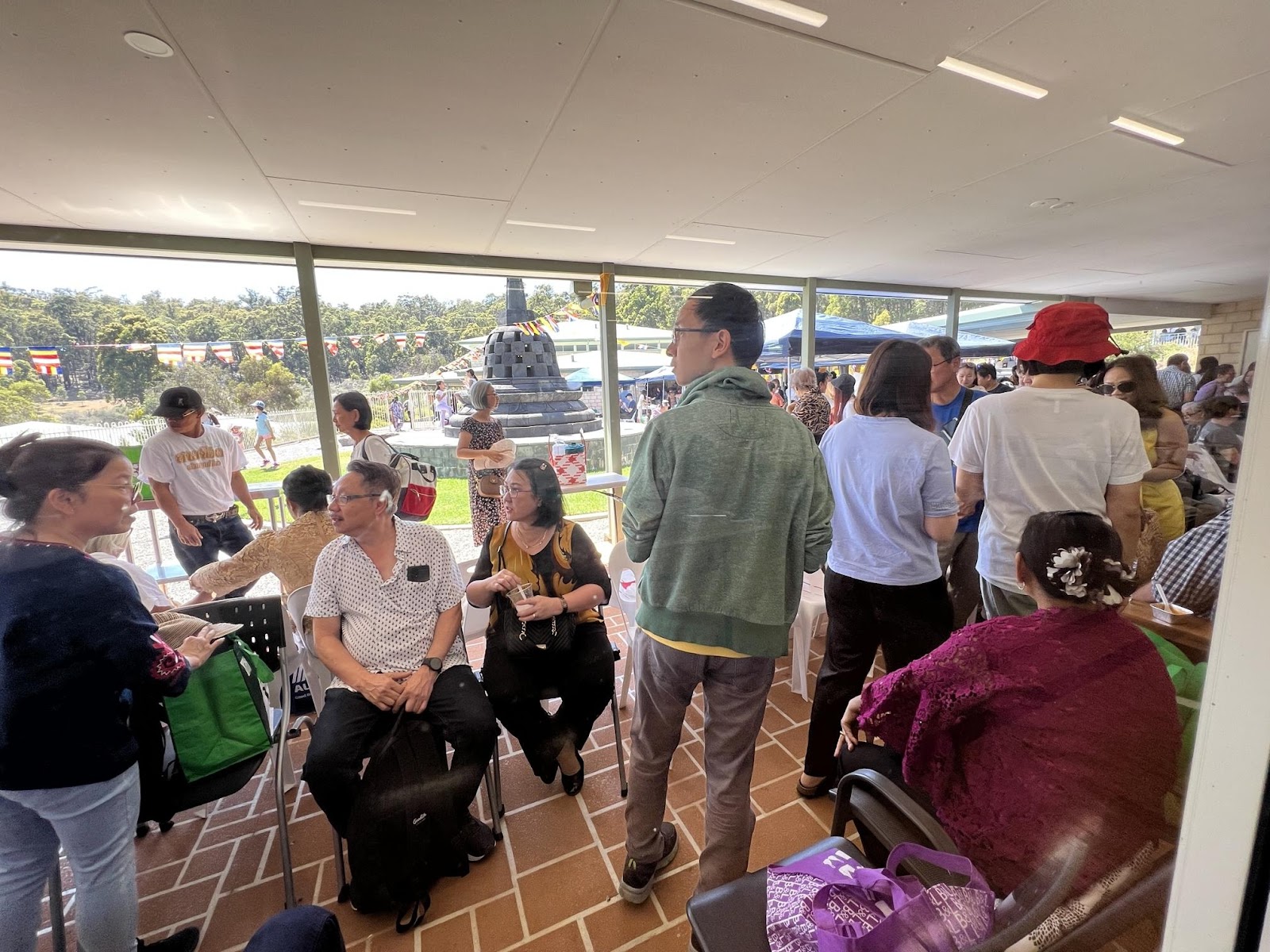
One of the most impactful monastic sharing took place during the second day of the 12th Global Conference on Buddhism. It was a conference that brought together Buddhist speakers and participants from across the world, that took place on the 16th and 17th December 2023.
It was there when I heard Yongey Mingyur Rinpoche, who was born in Nepal, share about his panic attacks.
I have never before heard any person who was ordained share about their mental health problems in my 5 years of venturing into Buddhism, so it was particularly striking to me when he put out his moment of vulnerability on stage.
He opened his dhamma talk by sharing about how he learnt meditation from his father at the age of 9. The reason was due to his panic attacks.
Apparently, since the age of 7, he had been experiencing panic attacks, even though he didn’t know that was what they were called. He just had severe heart palpitations and went to see a whole host of doctors, all of them telling him he was alright.
“They are not good doctors!” he incredulously proclaimed, to the laughter of the entire hall.
He continually felt like he was having a heart attack, and one day, he went to the big city hospital in Kathmandu, the best in town, and the best doctor in town also told him that his heart was working perfectly fine.
“He was not a good doctor too!” he continued, to much mirth in the audience.
Finally, his mother figured out that he had a problem, and told him to get his father, himself a well-respected Buddhist teacher, to teach him how to meditate in an attempt to help with the panic attacks..
The very next day, he was surprised to find that his father approached him instead, (turns out his mom had encouraged his father to do so), and there began his journey in meditation.
Me and my panic attacks
I resonated with this story by Yongey Mingur Rinpoche because as a person who’s suffered from panic attacks after her breakup with her first girlfriend at the age of 31, I too kept going to the doctors at the various Accident and Emergency (A&E) units.
Both times they did an electrocardiogram (ECG), a simple and fast test to evaluate the functioning of the heart, and declared that I was alright and was not suffering from a cardiac arrest.
I unfortunately could not access Xanax (a fast-acting, potent tranquilliser that is a medication used to treat panic attacks and anxiety disorders) through A&E but got some from my psychiatrist later.
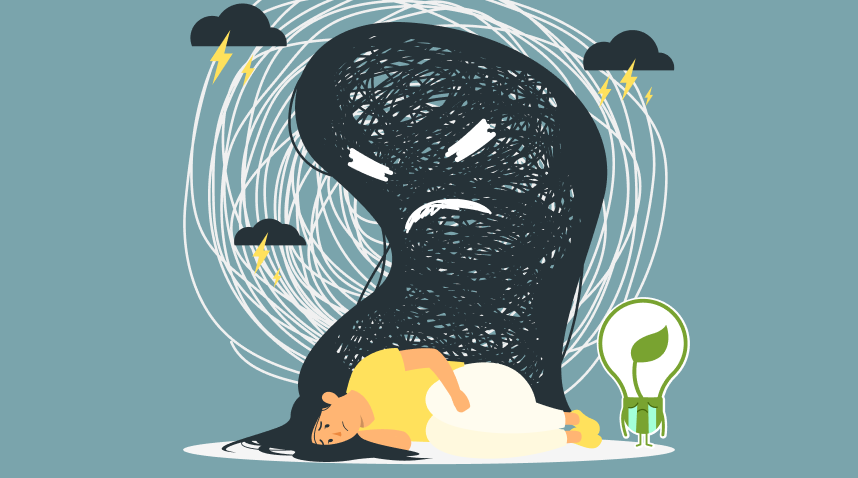
I felt helpless and hopeless in the face of my panic attacks.
Xanax was supposed to help with the immediate relief of symptoms of panic attacks and allows the patient to have feelings of calmness as it calms the body’s overactivity in a short span of time.
However, because the patient can develop an addiction to it, psychiatrists often only give the bare minimum before the next consultation.
The panic attacks always came unannounced and unanticipated. I would be in the middle of the work day and then would experience a sudden burst of heart palpitations and shortness of breath, and find myself unable to continue with the rest of the work day. It was debilitating and embarrassing.
After repeated visits to the psychiatrist, paired with skilled psychotherapy from a skilled therapist, together with time, my panic attacks eventually receded.
Unhelpful mental health advice
Once during a Dhamma sharing, a layperson told me to meditate when I have panic attacks instead of taking Xanax. Unfortunately, that was something I had tried to do but failed. I have been unable to sit down and be still in the middle of overwhelming anxiety.
I felt unable to articulate how I felt in the middle of this session, and felt as if I wasn’t being listened to. As my anxiety levels continued to rise when she continued dispensing advice, I decided to clam up about my experience.
It might seem counterintuitive to say, but dear reader, I was a beginner just stepping into Buddhism when the layperson gave me that advice to meditate when my heart was racing.
It was impossible then on a physical, psychological and spiritual level.
The reason is simple – I was not ready.
It took a long time for my body and my mind to settle—years in fact.
It took multiple sessions of therapy with trained and licensed therapists to help with the underlying issues that lay at the root of these panic attacks.
I am also grateful to my spiritual friendships created in the Medical Dhamma Circle where we met weekly for Dhamma sharings and conducted mini-meditation sessions of 5 minutes to 20 minutes in a safe space held by medical professionals.
This was helpful for me to learn that meditation did indeed reduce my general anxiety levels, and I began to incorporate it into my daily life using the Headspace app at first, and when that got too expensive, with a free app that Venerable Jue Wei developed and introduced to me.
One’s daily practice is important, because when it comes to the difficult times, that is precisely when the effects kick in.
It was really gratifying to hear from a dear Dhamma sister, who is trained as a nurse, when she shared that it made sense to not be able to meditate when one is highly distressed. I had, after all, tried to and failed.
It made an even bigger impact when Rinpoche shared that on stage.
Today, I no longer need Xanax, and like him, meditation has helped tremendously over the past 5 years of practising.
It may sound like a contradiction, but I suppose one has to have a stable physiology, with neither a racing heart nor a racing mind to be able to meditate. Xanax helped curb my panic attacks and gave me the clarity of mind to attend meditation classes.
A constant daily dose of a mood stabiliser, till this day, has ensured that my mind is calm and stable. Meditation is an additional layer that provides a constant grounding throughout my day, as my mental constitution is quieter and calmer. Both meditation and medication go hand-in-hand for me, and I am thankful for both.
But I can see the dilemma for the beginner meditator who is given advice contrary to standard medical advice as there is a huge resistance in spiritual communities sometimes toward external methods of calming the mind.
I am not sure how it works for others, but pairing both medication and meditation is what has worked for me.
Therefore, I realised that representation is so important. And talking openly about issues surrounding mental health-related conditions, especially when one is diagnosed, is so important.
The importance of representation
Earlier in a 1-day retreat led by Venerable Damcho, I made some new friends and was sharing with a Dhamma sister that I have been diagnosed with bipolar disorder for the past 13 years. I was just chatting about the memoir I wrote to help people navigate the mental health landscape in Singapore, when the most surprising thing happened.
She too shared about her condition.
I have come to observe over the years that it is vital to have ordinary people share their ordinary stories about their “taboo” conditions because that is precisely what gives people hope. And that’s exactly why I wrote my memoir.
In my earlier days as a member of a different religious group, I was told that one’s faith would make you well. “Go out and get some sunshine,” a religious leader once admonished. “Pray and believe,” he continued.
While I have no doubt that great faith can heal a person, sometimes it makes sense that medicine can be useful too.
In my half a decade attending weekly Dhamma talks and meditation lessons, it was only after hundreds of sessions before I encountered Yongey Mingyur Rinpoche’s sharing on panic attacks. With my Dhamma sister who had a similar mental health condition, I realised too, that because people in religious circles shy away from talking about this, that representation is truly very important.
Speaking up can help another feel less alone, whether you are the speaker of a dhamma talk, or just sharing your journey with a spiritual friend over a meal after a meditation class.
Similarly, today, even with a regular meditation practice. I am still medically compliant, taking one mood stabiliser every night as prescribed by my psychiatrist for my mood disorder.
I believe that science and faith can work well hand in hand.
We don’t have to choose one or the other, and doing so can unfortunately be very harmful to an individual who is diagnosed with mental health conditions.
Conclusion
I would like to thank Yongey Mingyur Rinpoche for his open and honest sharing. And I hope that going forward, more people will be brave enough to share their otherwise “taboo” stories in an effort to dispel stigma and also to give hope and light to those around them.
Editor’s Note: This is a two-part series adapted and edited from PJ’s blog that captures his insights and reflections as he walks the path.
TLDR: Learn to let go of personal preferences and embrace selflessness. PJ shares how a dramatic bushfire experience reminded him that rationalization is a sign of unwholesome motivations. Explore 5 other lessons from PJ’s 2-month Rains Retreat. Read Part I here for the first 5 lessons.
6. Let go of personal preferences
Another personal learning, is linked to the understanding that “sankhara is the ultimate suffering”.
If sankhara is the ultimate suffering, then I shouldn’t be following them so tightly. So a resolution I kept (and still kinda follow nowadays) was to let go of my personal preferences, and to go with the preferences of the other people around me (as far as possible).
This is easier in a retreat than in daily life, TBH: in daily life, I still ultimately hold the responsibility for my welfare, so I am forced to ask myself what I really want.
But this has made it a lot easier to just go with the wishes and preferences of others.
TLDR – let go of your self and its preferences, by going with others’ wishes and preferences
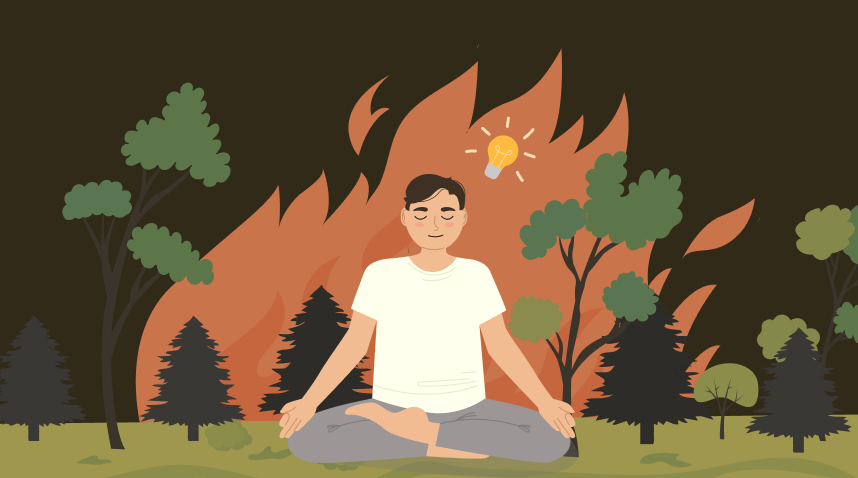
The remaining three learnings came from a very dramatic bushfire which threatened the retreat centre and monastery on the day that the retreat ended, just the day before the monastery’s Kathina . It was a very interesting experience, which I don’t think I will forget! At one point, a fireman told everyone “Guys, Kathina is NOT HAPPENING. There is a FIVE PERCENT CHANCE that Kathina will happen!”…and I stayed (with my wife, and three other new friends) to see the five percent. 🙂
7. Good behaviours require no explanation; bad behaviours have Reason as a bodyguard
When the bushfire incident happened, I observed a large range of behaviours from my fellow retreatants.
What was interesting was that, when people did something good, there were usually little or no explanations given (or expected): people just gave a simple description and did it.
For example, one of my fellow retreatants came up to ask me if we should prepare food for the volunteer firemen (there were two of them, Matt and Ron, in a firetruck at the carpark). When I said that I had already offered them food but they said no, he replied, “They might not feel it’s right to say yes, but I don’t think they will say no if we prepare food for them; let me organize that” and he left to organize the sandwich-making party.
Similarly, nobody said “Please let me do more good: I need to make more good kamma to survive the bushfire”: people just helped out, which was wonderful and super inspiring to see!
In contrast, when more self-centred requests were aired, invariably these requests were accompanied by a lot of reasoning and logic, along the lines of “I need _ , because of __, __ and ___.”
It reminded me of an episode from my childhood. My parents sent me to a martial arts class every Sunday to “toughen me up” as a kid. It was a very harsh environment, and I always dreaded going to the class. I became an expert at coming up with all kinds of lies (I didn’t keep the five precepts as a kid, for sure!), because of this overwhelming sense of dread. And in my mind, I thought that it would be better if I could come up with more reasons why I shouldn’t attend the lesson: I was having a fever, an important test that week, AND my asthma was also acting up.
It’s a tell: if your mind is generating multiple reasons why you should or shouldn’t do something, that probably means your motivations are less than noble.
It also reminded me of this classic quote from David Hume:
Reason is, and ought only to be the slave of the passions, and can never pretend to any other office than to serve and obey them.
TLDR – the more reasons you’re generating to justify your actions, the more you should be suspicious of your real motivations.
8. Positive emotions can substitute and displace negative emotions
The people who showed gratitude to me in person were often the ones who also showed no fear. The reverse was true: the ones who were overcome with fear were often the ones who expressed zero gratitude in person.
To me, this points to a possible solution to fear (& other negative emotions) that the Buddha mentioned in MN 20. Following the Buddha, if you have a negative emotion, substitute it with a positive emotion by choosing a perception that generates that positive emotion.
TLDR – if you’re in the middle of a negative emotion, choose another perception which generates a positive emotion (like gratitude), to displace the negative emotion.
9. What is your real refuge?
The last learning from the bushfire was a question of refuge. Taking refuge means that you rely on something as a place of refuge, a source of safety.
It seemed to me that many people were taking refuge in the five sense world, and not really in the Buddha, Dhamma and Sangha.
Because they were constantly holding on to some hope that they could control the world of the five senses to their benefit. Their fear-driven desire (or desire-driven fear: same thing) then drives them to rationalise and proliferate. They can’t let go.
Do you know what is actually scarier than a bushfire? It’s the fires of greed, hatred and delusion. Because these three fires will cause you to repeatedly suffer and suffer. (See the famous fire sermon). And what is the fuel for these three fires? Wanting of the five sense world.
It also seemed to me that many people might have a mistaken understanding of Ajahn Brahm’s teachings: Ajahn’s teachings are not just fun, bad jokes and games.
Ajahn is actually teaching all of us how to live well, and thus actually also how to die well. Thus, the potential life-death situation we faced in the bushfire was actually a final exam for our practice.
If one’s mind was steady, and one was ready to let go of one’s life even, and focus on letting go, kindness and caring for others, then one probably really understood and trusted in the Buddha Dhamma Sangha.
I strongly encourage most people to take their Dhamma practice more seriously. Always be mindful and kind, by body speech and mind. Practice like you will die in a bushfire. Or, as the Buddha said, like their hair is on fire.
Seriously.
People might know intellectually that they can die at any time, but emotionally they might actually still be in denial.
Because absolutely nothing in the five-sense world is within our control. The sooner we accept it, the easier and smoother our practice and our lives.
Coincidentally, after my retreat, I read a brilliant Dhamma talk by Ayya Vayama on exactly this topic, about what is our real refuge. Unfortunately, I can’t seem to find the pdf of the talk: if you can, I highly recommend reading it.
TLDR – what is your real refuge: the material world or the Teachings?
10. How to be a “monk at home” without the Vinaya
In July, I visited Luang Por Ganha in July, and he gave (me) the advice of “be a monk at home, then be a monk in the monastery”. By that, he meant to practice towards being a streamwinner (and above) while at home.
During my silent retreat, the more I thought about it, the more it seemed to me to be an insurmountable puzzle. Because the monks have the Vinaya (Discipline code for monastics), which is a set of rules, but also is a kind of training programme which the Buddha had put in place for the monks, to train towards liberation.
As a layperson, how could I then “be a monk at home”, when I don’t have the training guidance of the Vinaya? How could I be sure that I wasn’t simply being led by the nose by my defilements?
So after I finished my silent retreat, I went to look for Ajahn Brahm one day and asked him exactly this question.
Ajahn gave a brilliant answer.
Live simply. Renounce, simplify one’s life along the lines of the gradual training.
Meditate a lot.
Do acts of service, but don’t let others know you did them. Don’t do things which build up your sense of self.
Beyond keeping precepts, practice sense restraint.
TLDR – simplify your life along the lines of the gradual training; meditate a lot; serve without credit; sense restraint
Editor’s Note: This is a two-part series adapted and edited from PJ’s blog that captures his insights and reflections as he walks the path.
TLDR: Why ambition IS holding you back and how to cultivate true contentment. Explore 5 lessons from PJ’s 2 month Rains Retreat
I was on a meditation retreat from 29th September until 6th November 2023 at Jhana Grove. It was especially fruitful during my personal 3-week silent retreat, from 2nd to 23rd October: during those times, there were days when I literally said nothing aloud to anyone. It’s one of the most enjoyable periods in my life.
Here are some of my learnings, which I’m sharing here. Hopefully, these will be useful for some of you.
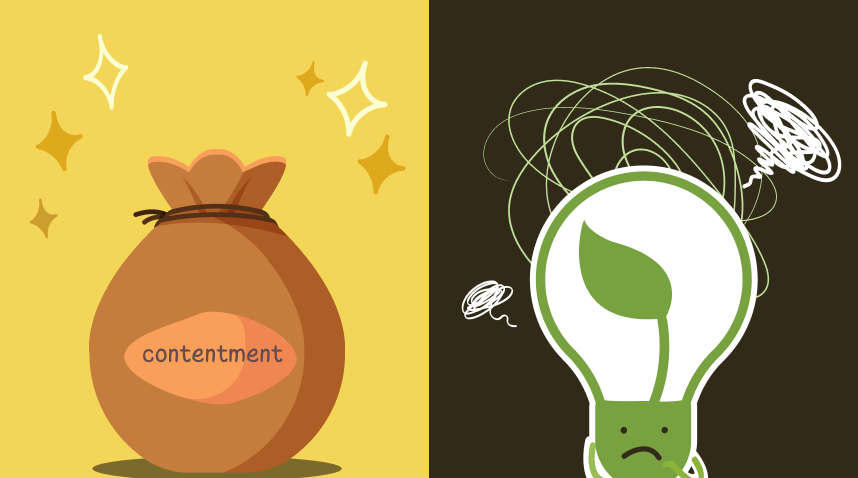
1. Contentment is the ultimate wealth; Sankhara is the ultimate suffering.
Before this retreat, I’d never really understood the idea of “contentment is the ultimate wealth”: it made no sense to me. If you’re contented, doesn’t that mean you won’t get more? So how can that be the ultimate wealth?
The best way to describe my new understanding is through the analogy of food (whatever is available in the five-sense world) and one’s stomach (mind).
If your stomach is full, no matter how much is offered to you, you can’t stuff more into your stomach: it gets very uncomfortable. Similarly, when you’re content, your mind is “full” and you don’t want anything else. And as long as your mind is “full”, that is wealth.
In contrast, imagine that no matter how much you eat, you will never feel full, but you will always feel hungry. In that analogy, your mind is never “full”.
Another analogy is that of financial credit & debt ratios: if you have equity of $1 and you’ve loaned $6, it’s not different from a billionaire (net worth $1bil) taking out a $6 billion loan. Contentment is removing all debt.
Shortly after my arrival at Jhana Grove, I asked my teacher Ajahn Brahm a question. How do I deal with the sense of ambition?
I’ve constantly struggled between the horns of a dilemma: on the one hand, I really appreciate the peace, calm and happiness from my Buddhist practice. On the other hand, I also have this strong sense of ambition, which manifests as a strong desire & inclination towards planning, doing, thinking, and writing.
Ajahn told me to ask myself “And then what?”, and to play things out to their logical conclusion. “What if my ambition isn’t for myself, but actually for the Buddhist community?”, I asked.
“That’s a bit of a bluff, “ he immediately replied.
“I’m sure every Buddhist community would prefer having one more contented, happy, peaceful and enlightened person. And if there were more contented, happy, peaceful persons, then I would have fewer questions to answer, and can go back to my cave earlier after lunch…” I got the hint, and took my leave. 🙂
What happened over the next few weeks really drove home the point. There were a few meditation sessions which were largely spent with my mind generating will, thoughts, plans, comments, and analyses.
Then, as I practised sense restraint (see next learning point), the thoughts, plans, comments, and analyses died out naturally, to be replaced by moments of stillness, quiet, peace and calm.
The peace and calm was so nice, in stark contrast to the previous stormy thoughts. It felt like I had travelled through the stormy part of a hurricane, only to enter its calm “eye”.
These experiences made me realize that contentment was about not-wanting, and that sankhara (which includes will, thoughts, plans, comments, analyses) was entirely driven by wanting and desire. And not-wanting was so much nicer! And then, suddenly one day, the two sentences from the Dhammapada made sense to me.
One day, after my restlessness had died out and my mind was again filled with calm, I suddenly had this terrifying question: how many lifetimes have I strived, thought, planned, commented, analysed and basically did things, instead of being contented & still? That is still a thought which makes me shudder. The insight has started to turn me away from my thoughts. I’ve also started to place less weight on the value of my thoughts, opinions etc., as there are intrinsic defilements within thoughts and perceptions.
TLDR – contentment is the way to Nibbana. And any kind of willingness to planning is suffering.
2. The suttas aren’t the Dhamma: they point to the Dhamma, but are not the Dhamma itself.
This point can be confusing, but basically, the suttas spell out the Dhamma, but they are NOT the Dhamma. Their relationship with the Dhamma is more like this:
Diagram taken from chat with Venerable Ananda
It’s in the same way that a restaurant menu (or picture) points to the actual food, but is NOT the actual food. Eating the menu wouldn’t really help you get full: similarly, just eating the suttas (and its concepts) will not get you full. Instead, it will just drive you around and around and around in a whirl of conceptual proliferation…
So while the suttas are very important, one needs to have the wisdom to recognise that they are not the same thing as the Dhamma.
The Dhamma needs to be realised within each and everyone of us, and the only way to realise the Dhamma, is through practising the whole Eightfold Path. Reading/listening/asking questions/debating about concepts like dependent origination is potentially a very big and dangerous distraction.
Because many people simply go around in circles, rather than directly realising the Dhamma (i.e. going inwards).
TLDR – Suttas are important, but they are the menu, not the food.
3. Don’t get caught up in the features and details of one’s perceptions, and don’t get dismayed!
A sutta which resonated with me during this retreat was AN4.14 Restraint. This text has parallels in Gandhari and Chinese, so it is probably quite reliable.
The excerpt which resonated with me was this:
“When a mendicant sees a sight with their eyes…When they hear a sound with their ears … When they smell an odour with their nose … When they taste a flavour with their tongue … When they feel a touch with their body … When they know an idea with their mind, they don’t get caught up in the features and details.
If the faculty of sight/sound/smell/taste/touch/mind were left unrestrained, bad unskillful qualities of covetousness and displeasure would become overwhelming.
For this reason, they practice restraint, protecting the faculty of sight/sound/smell/taste/touch/mind, and achieving its restraint. They don’t get caught up in the features and details. If the faculty of sight/sound/smell/taste/touch/mind were left unrestrained, bad unskillful qualities of covetousness and displeasure would become overwhelming. For this reason, they practice restraint, protecting the faculty of sight/sound/smell/taste/touch/mind, and achieving its restraint. This is called the effort to restrain.“
But why should we practice sense restraint? Another sutta SN46.6 To Kundaliya (with a Chinese parallel) explains this:
Buddha: “The benefit the Realized One lives for, Kuṇḍaliya, is the fruit of knowledge and freedom.”
Kundaliya: “But what things must be developed and cultivated in order to fulfill knowledge and freedom?”
Buddha: “The seven awakening factors.”
Kundaliya: “But what things must be developed and cultivated in order to fulfill the seven awakening factors?”
Buddha: “The four kinds of mindfulness meditation.”
Kundaliya: “But what things must be developed and cultivated in order to fulfill the four kinds of mindfulness meditation?”
Buddha: “The three kinds of good conduct.”
Kundaliya: “But what things must be developed and cultivated in order to fulfill the three kinds of good conduct?”
Buddha: “Sense restraint. And Kuṇḍaliya, how is sense restraint developed and cultivated so as to fulfill the three kinds of good conduct? A mendicant sees an agreeable sight with their eye.
They don’t desire it or enjoy it, and they don’t give rise to greed. Their mind and body are steady internally, well settled and well freed. But if they see a disagreeable sight they’re not dismayed; their mind isn’t hardened, dejected, or full of ill will. Their mind and body are steady internally, well settled and well freed.”
So it is clear that sense restraint is necessary for liberation. And, when sense restraint is done right, it is actually pleasurable: the mind isn’t dismayed, hardened, dejected or full of ill will.
This is particularly important to note, because many people take a “hear no evil, see no evil, say no evil” approach to sense restraint, using a lot of willpower and force. They also often get dismayed: “Why am I craving this so much??” and don’t realise that they have taken the wrong approach to sense restraint.
TLDR – Don’t grasp at the features and details of whatever you perceive. Just acknowledge and let go.
4. The fuel for restlessness is focusing on one’s restlessness. Focusing on one’s settled mind starves future restlessness (SN46.51)
There is the unsettled mind. Frequent irrational application of mind to that fuels the arising of restlessness and remorse, or, when they have arisen, makes them increase and grow.
There is the settled mind. Frequent rational application of mind to that starves the arising of restlessness and remorse, or, when they have arisen, starves their increase and growth.
There is tranquility of the body and of the mind. Frequent rational application of mind to that fuels the arising of the awakening factor of tranquility, or, when it has arisen, fully develops it.
Taken in totality, this means that after meditation, it is less important to focus on one’s restlessness, and much more productive to focus on the moments of peace (no matter how short!) one experienced in the meditation.
TLDR – Water your flowers, not your weeds.
5. Listen and adjust, all the time.
This was a personal learning. At the start of my retreat, I decided that, instead of forcing myself and using will, I would instead just play by ear, and just continuously listen to my body and mind, and adjust to its needs (not wants!), all the time. It was a form of applying mindfulness and kindness.
Quite often, I would sit and my body would end up feeling slightly tense (especially around my lower spine, back and neck). In the past I would “tough it out” by telling myself to ignore the discomfort, to “let it go”… and end up being in even more discomfort!
This retreat, I would note the discomfort, and instead of toughing it out, I would then gently and subtly adjust my posture a little bit. And every day, I was listening and watching my own mind and body, seeing what both needed.
There was one day when I struggled with meditation: I woke up late and really struggled with sleepiness the whole day. In the evening, as I was writing in my diary, I realised I was extremely tired: so I went to bed at around 6pm, and just slept. The next day, everything felt normal.
In retrospect, I wonder if my body was not feeling well that day, and I had listened to my body’s needs: as a result, I didn’t fall sick the whole five weeks, even though I was in close contact with a few Covid patients in the last week.
TLDR – be kind to your mind and body, at every moment
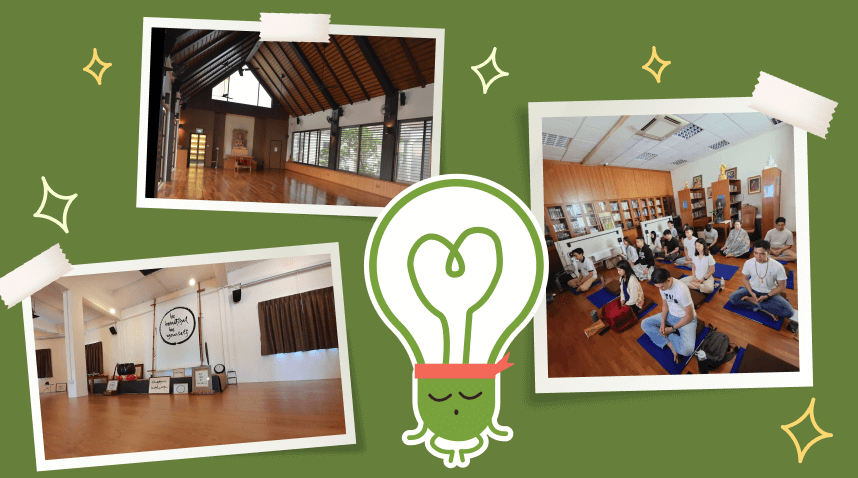
TLDR: Some of us take to meditation like fish to water and, at some stage, want to further stretch that mindfulness muscle through formal instruction, an extended retreat, and group practice. This article contains a list of short meditation retreat options (a day or less) for anyone looking to explore their practice or to find a meditation community.
Before we go on – if you’re a beginner to meditation who is figuring out questions such as ‘Why meditate?’, and ‘What is Buddhist meditation?’ – we have the perfect article for you! Meditation 101 contains a toolkit of FAQs, apps, and other resources that are tailored to someone just starting out on their meditation journey!
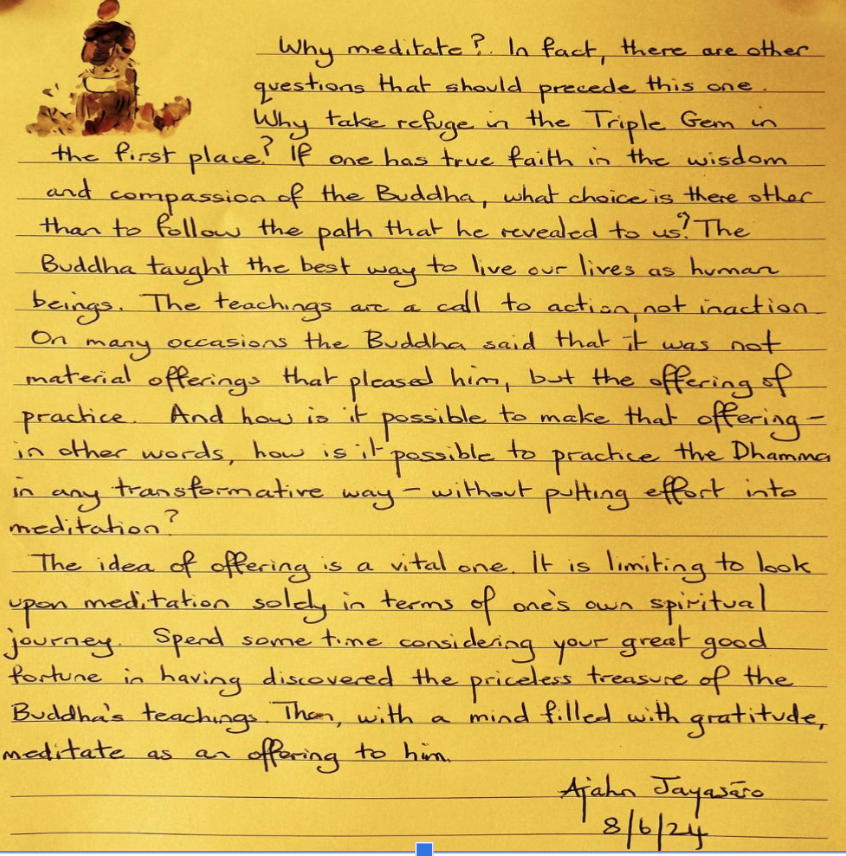
For those with meditation experience, we’d like to offer a reflection by ‘Yellow Pages Monk’ Ajahn Jayasaro:
“Why meditate? In fact, other questions should precede this one. Why take refuge in the Triple Gem in the first place? If one has true faith in the wisdom and compassion of the Buddha, what choice is there other than to follow the path that he revealed to us?
The Buddha taught the best way to live our lives as human beings. The teachings are a call to action, not inaction….”
1. JOYFUL GARDEN SANGHA: DAY OF MINDFULNESS (Last Sunday of each month, 10am – 4pm, Open to all)
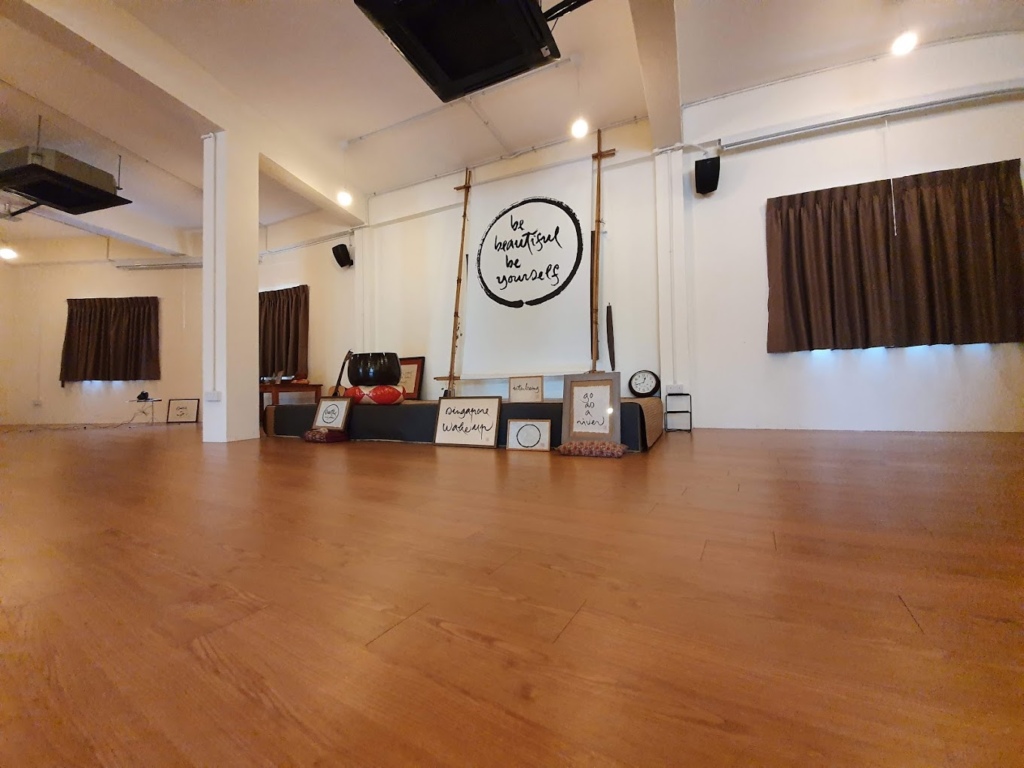
Image: Google
About Day of Mindfulness by Joyful Garden Sangha
Day of Mindfulness (DOM) is a mini mindfulness retreat in the tradition of Zen Master Thich Nhat Hanh and Plum Village, facilitated by Joyful Garden Community of Mindful Living (Joyful Garden Sangha). It is organised usually on the last Sunday of each month. Occasionally Joyful Garden Sangha may host special events and practices too.
When an event is scheduled and open for registration, you will see it on this page. You can also join their mailing list, or follow on Facebook to be notified. Seats are filled rather quickly.
What to expect
The practice of moment-to-moment awareness in a group setting. Discover how the application of mindfulness to eating, moving, singing, listening, and more, could transform your everyday experience.
What to pack
A vegan lunch of your own, and a jacket or scarf in case it gets cold for you.
2. DAYWA: DAY OF PRACTICE A.K.A DOPE (First Saturday afternoon of each month – Open to Commune Members only)
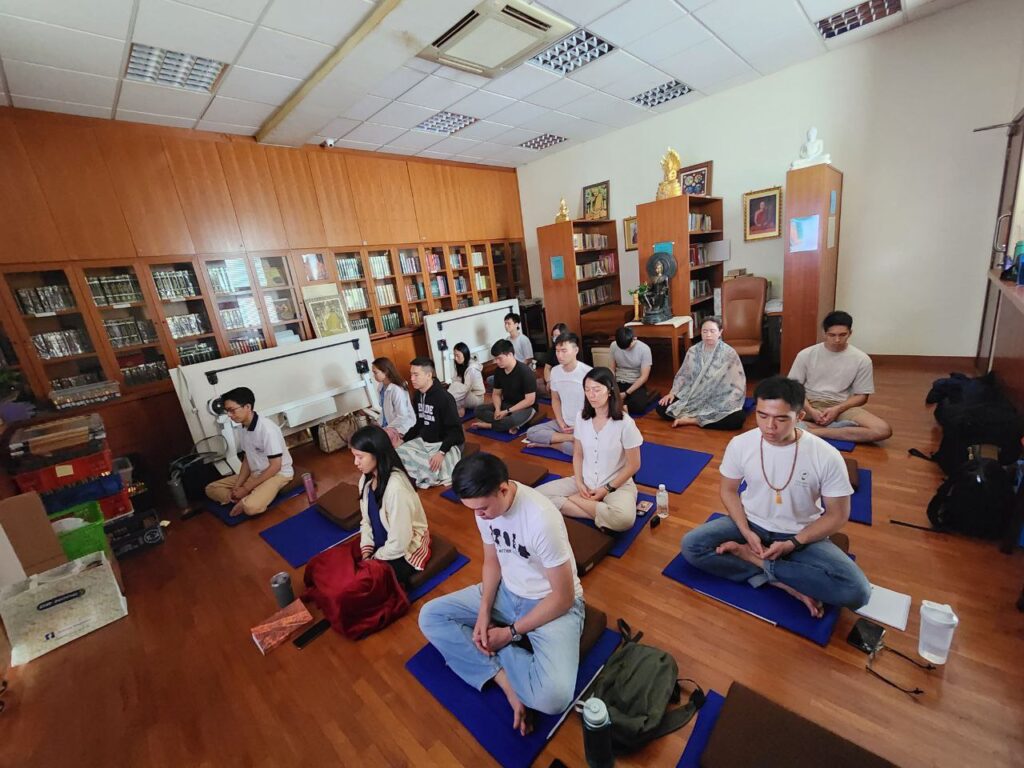
Photo: DAYWA
About Day of Practice (DOPE) by DAYWA
The DOPE retreat format was created by organisers behind the Dhamma Assembly for Young Working Adults (DAYWA), in order to give its members a taste of what a formal retreat could be like. The retreat format adopts many practices from the Thai Forest tradition and also encourages sharing and learning between practitioners from the various Buddhist traditions.
Recommended for: Meditators interested to explore the Thai Forest practice, and to connect with other youthful practitioners.
How to register
This event is open to those in the DAYWA Commune Members only i.e. you will need to have attended at least 3 DAYWA events in a year, to join the Commune and sign up for DOPE practice.
What to expect
Chanting in Pali, reading and discussion of Early Buddhist Texts, guided and non-guided sitting meditation practice.
What to pack
Bring your own meditation cushion if you would prefer to use that. Lunch is usually organised before the practice commences, it would be optional to join for that.
3. BUDDHIST FELLOWSHIP: MEDITATION TEACHINGS AND EVENTS (Monthly line-up)
Image: Buddhist Fellowship Website
About meditation teachings at Buddhist Fellowship (BF)
Buddhist Fellowship’s (BF) weekly Sunday Services regularly feature meditation as part of its programme, often in the Theravadin traditions and with reference to early Buddhist texts such as the Annapannasati Sutta. BF also organises meditation courses and retreats with visiting monastics from time to time, so do look out for that.
Recommended for: Meditators looking to explore Theravadin traditions and early Buddhist texts.
How to register
Stay tuned to Buddhist Fellowship’s social media, such as Facebook and Telegram, for announcements.
What to expect
Experienced monastics and lay practitioners sharing their own practice and offering guided meditation experiences.
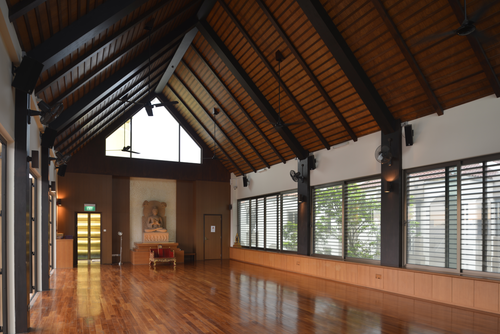
Palelai Buddhist Temple’s resident monastic community (Sangha) leads two meditation sessions on a daily basis at the Meditation Hall on the 3rd floor of the main Chedi building (go up the staircase from the central Arahants’ Hall).
Recommended for: Meditators who are familiar with Thai Forest practices.
How to register
No need to register.
What to expect
No instructions are provided, meditators of all levels are welcome to join the sit quietly behind the Sangha. A short blessing will be given at the end of the session.
What to pack
Simply bring yourself, with an open heart and mind.
5. DHARMA DRUM SINGAPORE: MEDITATION GROUP PRACTICE (Weekly, Wednesdays & Sundays)
Image: Dhamma Drum Singapore
About meditation group practice at Dharma Drum Singapore
Dharma Drum Singapore (DDS) promotes Chinese Chan Dharma Drum Buddhism based on the principles and methods of Dharma Drum Mountain founded by Master Sheng Yen. DDS regularly offers meditation group practice on Wednesdays evenings (7.30pm – 9.30pm) and Sunday mornings (9.30am – 12.00pm) that are open to the public, and conducted in Mandarin Chinese instruction.
Recommended for meditators who are interested in Chinese Buddhism and detailed meditation instruction.
How to register
Registration for each practice session opens 1 week before. Dharma Drum Singapore uses the Eventbrite system. If you use the Eventbrite App on your phone, registration will be easier and faster.
Please find on this page the link to register for the specific session that you are attending.
Please do not attend the session if you are feeling unwell. If you are unable to attend, you can also cancel your Eventbrite order to make room for others.
Simply bring yourself, with an open heart and mind.
6. KONG MENG SAN PHOR KARK SEE A.K.A. BRIGHT HILL TEMPLE: SHORT-TERM TEMPLE STAY, SELF PRACTICE, MEDITATION COURSES (Short-term temple stay available to Males only)
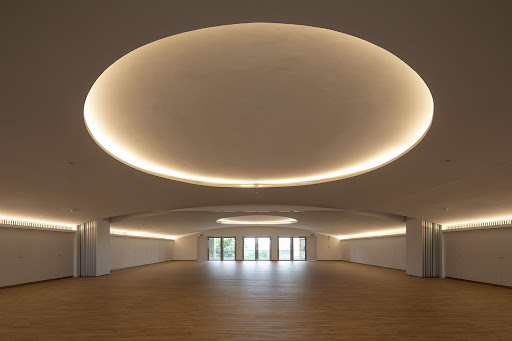
Image: Forum Architect which designed the new meditation hall
About short-term temple stays at Kong Meng San Phor Kark See
Amid the chaos of today’s hectic pace, have you taken a moment to calm your inner thoughts? If you desire a deeper understanding of yourself and wish to embark on a journey of self-discovery, consider immersing yourself in a short-term temple stay at Kong Meng San Phor Kark See a.k.a Bright Hill Temple. This allows you to embrace a peaceful, detached lifestyle, allowing yourself to explore the deep corners of your mind.
Recommended for: Meditators of all levels, given the variety of formats.
How to register
For self practice at the Prajna Meditation Hall, there is no need to register.
For Relaxation & Mindfulness Meditation courses, please follow the page or write in to:
For short-term temple retreats, these are open to healthy Singapore male citizens, between the ages of 17 and 60, that are able to commit to at least one month to a year of retreat. Detailed application instructions here.
What to expect
Kong Meng San Por Khark See Monastery offers a zen and peaceful environment to deepen your cultivation.
The short-term temple stay programme is currently being refined – enquire via email to find out more.
The Relaxation & Mindfulness Meditation courses are a helpful introduction to body scan relaxation techniques. You may access a preview of the type of guided meditation provided by Venerable Kwang Sheng here.
What to pack
A jacket or shawl, as one may find the air conditioning strong at certain venues in the monastery.
7. ONLINE RETREATS & OTHER RESOURCES
In the post-Covid era, online retreats have become a popular option offered by local and overseas monasteries, who have adapted their technology to broadcast teachings and retreat instructions.
Here are some online channels which you may be interested to follow to find out more:
As our list of retreat options is non-exhaustive, for each Buddhist tradition and/or temple that you feel drawn to, it is a good idea to check out their website and/or social media to find out if they are offering formal instruction or group practice settings.
TLDR: When getting sufficient sleep, the following 3 practices helped me to almost entirely overcome drowsiness in sitting meditation: (1) keeping my eyes open, (2) using mala beads, and (3) silently or audibly reciting the Buddha’s name, the names of the Triple Gem, or the Buddha’s qualities.
My Past: Frequent Drowsiness Made It Hard To Stick to a Regular Sitting Meditation Routine
After discovering Buddhism during my university days, I was enamoured by the wisdom of the teachings, but one thing frequently hindered my sitting meditation practice.
For many years, my sitting meditation was beset by frequent bouts of overwhelming drowsiness. On many days, unless especially well-rested, I usually fall wholly or partially asleep after a few minutes. Surprisingly, I often felt drowsier during sitting meditation than afterwards when trying to fall asleep.
For many years, this drowsiness hindered my attempts to stick to a sitting meditation routine since I would nod off after a few minutes.
Change 1: Keeping Eyes Open During Sitting Meditation
Learning this, during my sitting meditation, I let my eyes rest on a point on the wall, floor, corner, or dim light source such as a lamp. This helped to reduce some drowsiness, although it wasn’t until combining this technique with the other two techniques below that things significantly improved.
Change 2: Mala beads To Help Focus
Wanting to explore Buddhism more deeply but having limited options where I lived, I resolved to study in India to learn more about the subcontinent where Buddha was born.
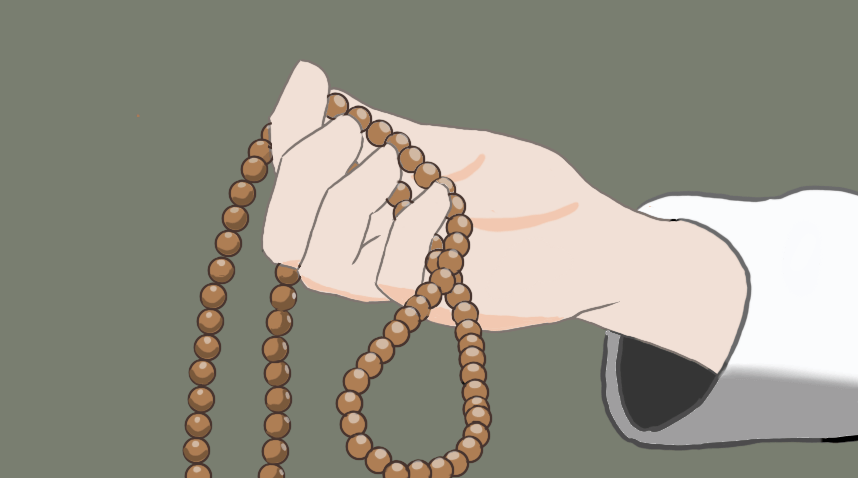
After much planning and financial saving, I hopped on a plane and the adventure began. My time in India was extremely insightful and life-changing. Furthermore, while exploring Dharamsala, India, the ubiquitous mala beads for sale there constantly called my attention to them. Having purchased a string of 108 beads, the next phase of my journey to overcoming drowsiness began.
As Master Sheng Yen teaches and I have experienced:
“…the deliberate action of the fingers moving the beads may serve as a quick reminder to focus on the recitation, should the mind stray. The functions of reminding and counting complement each other…”
At that time, I used the mala beads with a Tibetan mantra. As I used the mala beads more and more with the mantra, I found that the mala beads helped my mind to stray less often. I also found that the sensation of mala beads on my fingers was easier to focus on, and more stable than the breath, which was more subtle and harder for me to follow.
Moreover, even if trying to focus on breathing, the beads were still helpful by providing an additional anchor point.
If my attention strayed from the breath, it could drift to the sensation of touching the beads instead of wandering off.
As I continued to practice the mantra with the mala beads, I further discovered that the fingers’ movement also helped keep my mind more active, especially if moving them quickly. Between the improved focus and more active mind, my drowsiness further diminished.
Change 3: Silent or Audible Recitation of The Buddha, The Triple Gem, or His Qualities to Rouse Energy and Grow Faith
In SN46.51, the Buddha provides another helpful piece of advice:
And what is the lack of food for the arising of unarisen sloth & drowsiness, or for the growth & increase of sloth & drowsiness once it has arisen? There is the potential for effort, the potential for exertion, the potential for striving. To foster appropriate attention to them: This is lack of food for the arising of unarisen sloth & drowsiness, or for the growth & increase of sloth & drowsiness once it has arisen.
Although keeping my eyes open and using mala beads with a mantra had been helpful, a piece was missing.
For many years I had difficulty rousing energy reliably, which as mentioned above is important to reduce and prevent drowsiness.
Regarding modern teachers, I discovered the Thai Forest teacher Ajahn Anan’s teaching about mindfulness of the Buddha:
Knowing that it is hard, we need to firmly set sati to the task of guarding the heart and bringing it to calm. If we are going to practice samādhi in this way, we need to keep “Buddho” constantly with us.
Whether we are standing, sitting, walking, lying down, or whatever else we might be doing, we have to keep the meditation word “Buddho” always in the heart.
As time went by and I learned and experienced more and more joy and the other benefits, my faith in Buddhism began to grow and grow, which consequently fueled the arising of mental energy and exertion during sitting meditation, overpowering the drowsiness.
What Things Are Like Now
Having practised like this, combining all 3 of these changes for over a year, although I sometimes still feel drowsiness, it doesn’t overwhelm me like it did before.
Now that sitting meditation contains so much more alertness, energy, and joy, maintaining a regular sitting meditation routine has become much easier and more enjoyable.
Keep your eyes open and stare at a point on the wall, floor, corner, or dim light source such as a lamp.
If doing a type of meditation that can be counted, including breath-counting or mindfulness of the Buddha, try using mala beads. See these mala bead usage instructions from Dharma Drum for more information on how to use them.
Find a meditative practice that rouses energy and joy for you.