

TLDR: A group of practitioners from DAYWA came together to create a directory of grief and end-of-life resources in Singapore, organised around what someone is experiencing. This article shares why it was created, what’s in the directory, and how the Buddha’s teachings can help us meet grief with compassion and understanding.
Why a group of practitioners built this
A few months ago, a handful of people from DAYWA found themselves asking similar questions from different places in life.
They came together through different encounters with grief, caregiving, and confrontations with the reality of death. Though each member’s journey was unique, they were united by a shared recognition that illness, loss, and death are inevitable parts of life – experiences that will touch each of us and those we love. Motivated by a wish to better understand death through the Dhamma and to serve others with compassion, the group hopes to make Buddhist support more accessible for those facing the end of life, so that no one has to navigate these moments alone. This directory is one part of that broader effort, bringing together resources that can help people navigate grief with greater wisdom, compassion, and presence.
As they began exploring what support was available, the group realised that the challenge wasn’t a lack of support. Singapore already has many valuable grief and end-of-life resources. Viriya runs a grief support programme. Assisi Hospice runs a monthly Grief Cafe. Ajahn Brahm has given Dhamma talks on facing sickness and death with wisdom. Dharma Drum holds a weekly practice group for end-of-life Dharma support and practices.
The challenge was that these resources were scattered. Someone already carrying the weight of grief or caregiving often had to search across many different organisations, hoping to find what they needed.
So the group created Held Through Impermanence, a directory of grief and end-of-life resources in Singapore, now hosted on Handful of Leaves. Instead of organising resources by organisation, the directory begins with a simple question:
So the group created Held Through Impermanence, a directory of grief and end-of-life resources in Singapore, now hosted on Handful of Leaves.
What are you going through right now?
Editor’s note: The Dhamma reflections in the following sutta sections are adapted from the DAYWA Discussions session, “Good Buddhists Don’t Cry – when loss hurts, does that mean our spiritual practice failed?” You can view the original discussion slides on DAYWA’s telegram channel. Thank you to the lovely folks who prepared these heart-warming slides.
It is okay to grieve
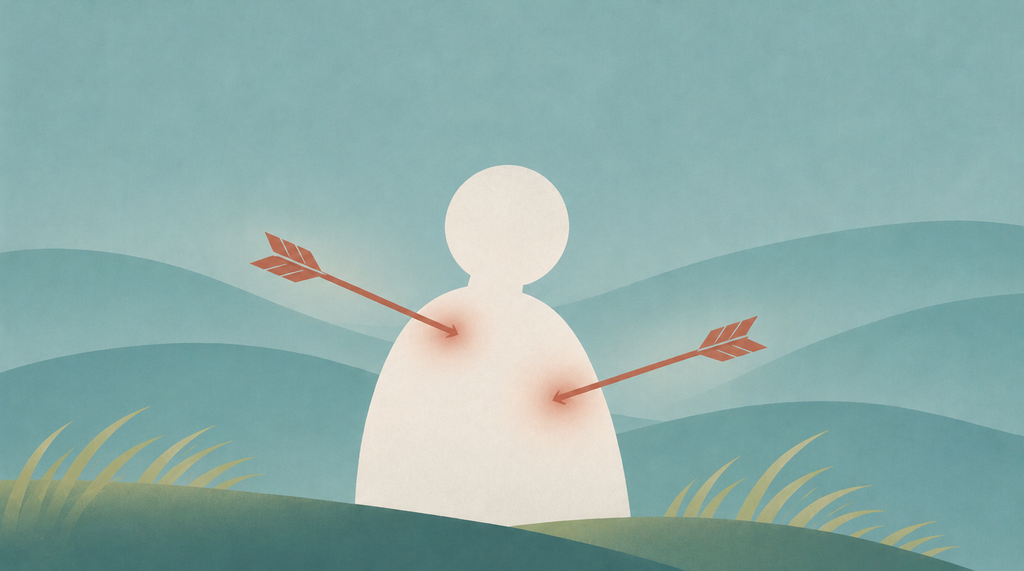
The Buddha’s teachings offer a wise and compassionate way of understanding grief.
In the Sallatha Sutta (SN 36.6), often referred to as the teaching on the “Two Arrows”, the Buddha explains that when loss strikes, we are first pierced by the unavoidable pain of the experience itself. Then comes the possibility of a second arrow – the resistance, self-blame, and endless stories we layer upon that pain.
Even someone who practises the Dhamma is not spared the first arrow. The difference is not that practitioners stop feeling grief. Rather, through practice, they gradually learn not to add unnecessary suffering to what is already painful.
Many of us have absorbed the idea that grief is something to overcome within a certain timeline, that we should eventually “move on” or “get back to normal.” The teachings offer another way of relating to our grief.
In the Piyajātika Sutta, Born From the Beloved (MN 87), the Buddha gently points out that sorrow and lamentation arise precisely because we love. King Pasenadi initially struggles to accept this truth, and Queen Mallikā patiently helps him to see it. It is an understandable struggle, one that many of us share.
Grief is not a spiritual failing
Grief is the natural pain of having loved someone who, like all of us, is impermanent. Yet, we are not asked to become emotionally numb. Instead, we’re invited to ask a different question: Can we care wholeheartedly while knowing that we cannot keep anyone forever?
The story of Kisāgotamī is a similar story. After losing her young child, she desperately searched for a mustard seed from a household untouched by death. Through that search, she gradually came to realise that loss is part of the shared human condition. Her grief did not suddenly disappear. But something within her changed. She no longer struggled against the reality of impermanence alone.
Perhaps this is what wise grief support can offer, not a way to erase the first arrow, but a compassionate space where we can hold grief tenderly, understand it more deeply, and discover that we do not have to carry it alone.
Practising with grief is not about trying to move on or make the pain disappear. It is an invitation to be mindful of the narratives we create around our suffering, to allow ourselves the space to grieve without rushing the process, and to contemplate the truth of impermanence – that all things are constantly changing.
Practising with grief is not about trying to move on or make the pain disappear. It is an invitation to be mindful of the narratives we create around our suffering, to allow ourselves the space to grieve without rushing the process, and to contemplate the truth of impermanence – that all things are constantly changing.
As our understanding deepens, grief does not necessarily become smaller – but our perspective can become wider. We begin to see that what appears to be an ending may also be a continuation in another form.
Seeing Continuation Differently

While working on this directory, one member of the group realised that this offering was itself a continuation of their loved ones. Until then, they had understood continuation through memories, shared traits, and the ways their loved ones had shaped their life. But as Vietnamese Buddhist monk and teacher Thich Nhat Hanh teaches, a cloud never truly disappears – it simply becomes rain. Likewise, they came to see that their loved ones had not disappeared, but continued through the love, compassion, and aspirations they had inspired. This directory became one expression of that continuation.
What’s in the Directory?
The directory is organised around three simple pathways, so visitors can begin with the situation they’re currently facing.
“I am grieving a loss”
You’ll find grief support groups such as Viriya and Assisi Hospice’s bereavement programmes, Dhamma talks on grief and loss, and reflections from Handful of Leaves writers, including My Dhamma Journey: Exploring Death and Grief As A Goal and Who is Asking to be Born, Again?
“I am caring for someone nearing the end of life”
This section brings together palliative care services, Kong Meng San Phor Kark See Monastery’s free bilingual guide for supporting someone who is dying, Buddhist chanting resources for bedside and funeral use, and personal reflections such as As A Dying Buddhist, Here Are My Final Reflections.
“I want to prepare, learn, or serve”
Here you’ll find volunteering opportunities such as Ambulance Wish Singapore, weekly chanting practice groups, and courses for those who wish to support grieving individuals and families with greater confidence and compassion.
Everything listed in the directory is freely available. Most of these resources have existed for years. They simply lived in different places, making them difficult to discover, especially during seasons of grief, when even simple decisions can feel overwhelming. This directory brings them together in one place, so that when support is needed, it is a little easier to find.
This directory brings them together in one place, so that when support is needed, it is a little easier to find.
Holding One Another Through Impermanence
None of us can avoid loss, but we do not have to walk through it alone.
May this directory be a small companion on that journey, for ourselves, for those we love, and for anyone learning to meet impermanence with wisdom and compassion.
With thanks to Geraldine and Heng Xuan for their kind contributions to this article.
Wise Steps
- Bookmark the Held Through Impermanence directory before you need it. Grief often arrives without warning, and it’s easier to find support when you already know where to look.
- If you’re caring for someone who is nearing the end of life, consider reading the Kong Meng San Phor Kark See guide before the final days arrive. Having some familiarity beforehand can bring steadiness when emotions are running high.
- Reflect on the Buddha’s teaching of the two arrows. We cannot always avoid the first arrow of pain, but through practice, we can learn to meet it with kindness rather than adding a second arrow.
- If you know of a grief or end-of-life resource that could help others, share it through our suggestion form. Every contribution helps make Held Through Impermanence a little more complete for the next person who may need it.
