

TLDR: A Brahmavihāras retreat reminded me that wholesome qualities such as mettā may emerge more naturally when the body and mind are given the conditions to settle, rather than when we try to force them into being. As a helping professional, I am also learning what upekkhā might mean in practice: to care deeply, while recognising my limits and letting go of what is beyond my control.
When Kindness Feels Elusive
Working in a helping profession, qualities such as kindness and compassion are familiar to me. Much of the work involves sitting alongside distress, trying to understand another person’s experience, and responding with care.
Yet, strangely, when I sit down to meditate and intentionally cultivate the brahmavihāras, which include loving-kindness (mettā), compassion (karuṇā), appreciative joy (muditā), and equanimity (upekkhā), they can feel elusive.
During the retreat, something clicked:
Perhaps these qualities can’t be forced. They can more readily arise when the conditions support them.
I was reminded that our mental states don’t arise in isolation. They are shaped by the conditions around and within us.
Perhaps a life spent constantly “switched on” makes it harder for the body and mind to settle. When the nīvaraṇas (hindrances) are strong, even gentleness can feel difficult to access.
I believe there is softness and gentleness within me. And true enough, the moments when I experienced warm feelings of mettā, gratitude, and joy were not when I was actively trying to produce them.
They came about naturally when the body was relaxed, the mind was present, and there was no expectation of what should happen next.
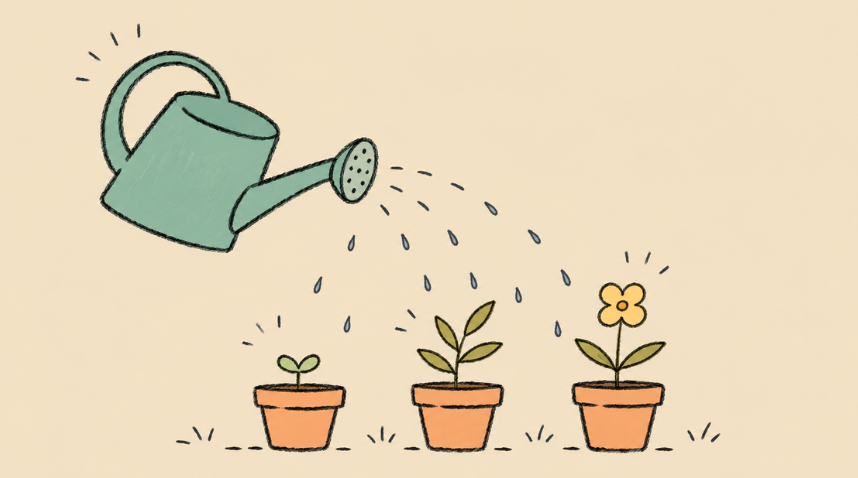
Perhaps the practice is less about trying to feel a certain way, and more about cultivating the conditions for these qualities to arise.
Learning to Care Without Carrying
During the retreat, Sister Sylvia Bay suggested that one quality particularly important for those of us in the helping professions is equanimity (upekkhā).
That stayed with me.
Compassion feels intuitive in the work of helping. Equanimity, however, feels like something I am still learning.
What does it mean to care deeply without holding too tightly?
To accompany another person through suffering while recognising that I cannot determine how their journey unfolds?
As helping professionals, it is not only the struggles of those we support that we carry. There are also heavy workloads, limited resources, gaps in services, and systems that do not always work the way we hope they would. It can be easy to feel that we have to somehow make up for all that is lacking.
This is where upekkhā feels especially relevant to me: caring deeply does not mean taking responsibility for everything that is beyond our control.
There will always be things we want to change. We can continue to advocate, improve what is within our reach, and show up where we can, while recognising that we cannot carry the weight of an entire system ourselves.
And when the body and mind are exhausted, being able to acknowledge:
What could be done has been done.
There is wisdom, too, in recognising when enough has been done and allowing ourselves to rest.
Equanimity Is Not Indifference
Importantly, upekkhā is not indifference.
Indifference says: “I don’t care.”
Equanimity says: “I care, and I understand that I cannot control everything.”
That distinction matters to me.
Letting go does not have to mean withdrawing our care. Resting does not have to mean that we have stopped caring. And accepting our limits does not mean becoming passive in the face of another person’s suffering or the things we hope to change.
Perhaps that is why upekkhā rests upon wisdom (paññā): knowing when to act and when to let go; what is ours to carry and what is not.
For those of us accustomed to helping, perhaps this is a practice in itself: remaining caring without being consumed, engaged without grasping, and committed to change while honouring the limits of our own body and mind.
I am still learning what this looks like.
Maybe caring well does not mean carrying everything.
Sometimes, it means doing what we can, letting go of what we cannot control, and giving ourselves permission to rest.
Wise Steps
- Notice the conditions: When kindness, patience, or compassion feels difficult to access, pause before judging yourself. Ask: What conditions are present in my body and mind right now? Am I tired, tense, distracted, or expecting myself to feel a certain way?
- Care without carrying the outcome: When supporting someone through difficulty, notice when care begins turning into responsibility for how things must unfold. Ask: What is within my influence here, and what is not?
- Let rest be part of the practice: When you notice yourself reaching your limits, consider whether continuing to push is actually the wisest response. Sometimes, upekkhā means recognising: What could be done has been done. For now, I can let go and rest.