
TLDR: Obsession turns a familiar romantic fantasy into horror: what if the person you want finally chooses you completely? Through Bear’s wish, the film shows how craving can turn love into possession.
There is a scene early in Obsession that feels embarrassingly relatable for a married woman like myself who once chased boys.
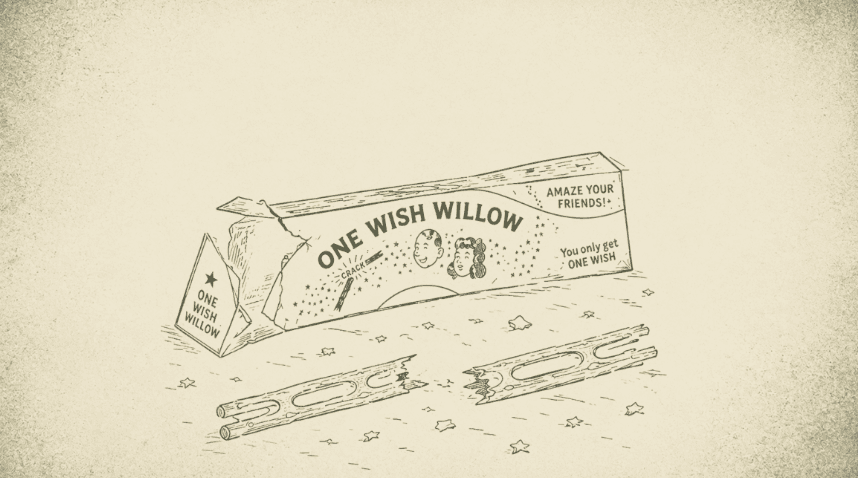
Bear, short for Baron, stands in a gift shop, holding a cheap novelty toy, and makes a wish. He wishes that Nikki, his childhood friend and coworker, would love him “more than anything in the world.”
It is the kind of wish most of us have made in some form at some point of time. Somewhere in the private theatre of our wanting, we have all pointed at one person and thought: if only they would choose me completely, my world would be complete.
What follows in director Curry Barker’s Blumhouse horror film is a precise and brutal unpacking of what “my world would be complete” actually costs and why craving, taken to its logical end, doesn’t satisfy. It destroys.
SPOILER ALERT: Do not read if you are intending to watch the movie!
The Film In Short
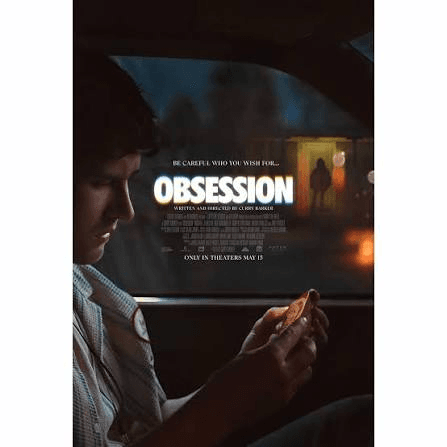
Bear (Michael Johnston) is a mild-mannered music store employee pining for his friend Nikki (Inde Navarrette). He knows confessing his feelings will complicate things. Their mutual friends Ian and Sarah have already warned him not to make things weird. But he can’t help himself.
After the wish, something changes. Nikki returns his feelings… but not in any healthy sense. Her eyes glaze. Her speech fragments. She becomes manic, clingy, volatile. She begins committing acts of horrific violence against herself and others, as if her own self is rebelling against being hollowed into a vessel for someone else’s fantasy.
Bear eventually learns that the real Nikki is suffering somewhere else, in Hell, while her possessed double cuddles with him on the couch. And he stays. He chooses to keep the copy. He tells himself it’s complicated, that he loves her, that he’ll fix it. He does not fix it. The film’s ending brings him exactly the punishment his cowardice and craving have earned.
Wishes that are technically granted can be spiritually catastrophic. The genre has always known what Buddhism teaches: desire fulfilled on its own terms tends to devour itself.
Tanha and the River That Never Fills
In the Dhammapada, verse 251, the Buddha says:
There is no fire like passion, there is no grip like ill will, there is no net like ignorance, there is no river like craving.
The commentary explains that last image plainly: a river can flood and recede. Craving (tanha) never does. It cannot be satiated because it is not actually pointing at what it claims to want. Bear does not really want Nikki. He wants the feeling of being chosen absolutely. He wants the ache of longing to stop. He wants proof that he matters. Nikki is, in the film’s own logic, a stand-in, and the moment she becomes fully “his,” she stops being a person and starts being an object.
This is what tanha does. It takes a real human being and flattens them into a solution. And solutions, unlike people, are not supposed to have bad days or want things of their own.
Sirima’s Body
The ancient story of Sirimā offers a similar parallel.
Sirimā was a courtesan in Rājagaha, renowned for her beauty. A monk once heard her described by another and fell so deeply in love that he stopped eating for four days. He could not function. He lay with his bowl of rotting rice and could not move.
Then Sirimā died.
The Buddha asked the king to leave her body in the charnel ground. Four days later, bloated and decomposing, she was unrecognisable. The king proclaimed that anyone could have her for free. No one came forward.
The Buddha turned to the bhikkhus: This is the value of the thing you were burning for.
The monk who had pined for her from a rumor, who had nearly destroyed himself over a description, attained Stream Entry at that moment. He saw it. The beauty he had been craving had never been in her body.
It had been in his mind, projected outward, mistaken for something real.
Bear’s wish conjures the same illusion with supernatural literalness. He gets the projection. He gets Nikki-as-fantasy. And the actual Nikki, the full person with her sharp humor and her own needs and her refusal to be an object, disappears into Hell.
What Tenzin Palmo Was Pointing At
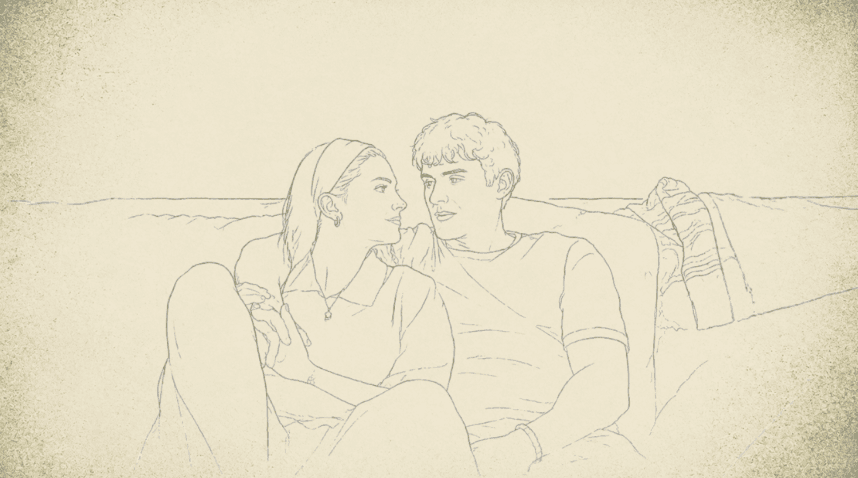
Tenzin Palmo, a renowned nun, writes: “We think that if we love somebody, the measure of our loving is that we want to hold on to them. But that’s not love, that’s just self-love, attachment. It’s not genuinely loving the other person — wanting them to be well and happy. That’s wanting them to make us well and happy.”
She describes love as the sun: it shines without conditions, without target, without grip. Some people close their doors. The sun shines anyway.
Bear’s love is the opposite. It is a closed fist. He needs Nikki to reflect something back at him. When she does so perfectly, totally, at the cost of her soul, there is no joy in it. There is only dread, because even Bear, at some level, knows it isn’t real.
The Wish We Keep Making
Obsession is horror, but it is not really about a cursed toy. It is about the ordinary magic we perform every time we locate our entire happiness inside another person.
The Buddha did not say craving was shameful. He said it was a river. It flows and it flows and it does not stop, and if you build your house on its bank and believe the water will fill you, you will drown.
The practice is not to stop loving. The problem is the fist. The practice is to notice when longing tips into possession, when care becomes control, when “I love you” starts to mean “stay exactly as you are as mine so I will never feel abandoned”
Bear got his wish. He got everything he wanted. He lost everything that mattered.
The toy only did what tanha always does.
Wise Steps:
- Watch for the moment care becomes control, because the how I love you can slowly turn into stay exactly as mine so I never feel abandoned.
- Practise non-grasping love, because Tenzin Palmo’s teaching makes clear that love wants the other person to be well while attachment wants them to make us well.