

TLDR: A film about renting family members reveals a deeply Buddhist truth: what people often seek is not perfection, but to be seen, remembered, and cared for. Through the lenses of dukkha, anattā, and mettā, Rental Family shows that genuine kindness can emerge even from unexpected beginnings.
I never expected a movie about renting family members to say anything useful about the Dhamma.
SPOILER ALERT! This article spoils the movie, so please watch it if you are keen!
The premise sounds absurd. In Japan, you can hire a stranger to attend your funeral and weep convincingly. You can pay someone to be your date, your father, and even your friend.
The 2025 film Rental Family, directed by Hikari, follows Phillip, a struggling American actor living in Tokyo, who takes a job doing exactly this. He plays roles in other people’s lives. He is, by all appearances, a merchant of illusion.
After the film, I kept returning to the same thought: A wise practitioner or even the Buddha would not have judged Phillip’s clients. He would have recognised them immediately.
The Loneliness the Buddha Saw
The Pali word dukkha is often translated as suffering, but that flattens it. Dukkha captures something more specific: the low, persistent ache of a life that cannot quite hold together. The hunger that food does not fill. The crowd that does not cure the loneliness.
Every client in Rental Family carries dukkha. There is Mia, a girl whose father was absent for years, whose mother hires Phillip to pose as him so she can pass the entrance interview for a prestigious school. There is Kikuo, an elderly actor losing his memory, who gets a pretend journalist so he can tell his stories one more time before they disappear. There is a man who fakes his own funeral to hear what people honestly think of him before he dies.
Each of them is trying to fix a gap that conventional life failed to close. Interestingly, the people who work for the Rental Family company are just like their customers, lonely. Some even hire loved ones after their work! The hired and the hiring are caught in the same condition.
The Buddha’s First Noble Truth is not a counsel of despair. It is a diagnosis. Dukkha exists. To see it clearly in a film is to practise a small form of sammā-diṭṭhi, right view. We are not looking at exotic Japanese peculiarity. We are looking at ourselves.
Anattā and the Role that Becomes Real
The Buddha taught anattā, the absence of a fixed, permanent self. This is the teaching most people find difficult. We cling hard to the idea that there is a solid “me” at the centre of things.
Phillip is a useful teacher here, even an accidental one.
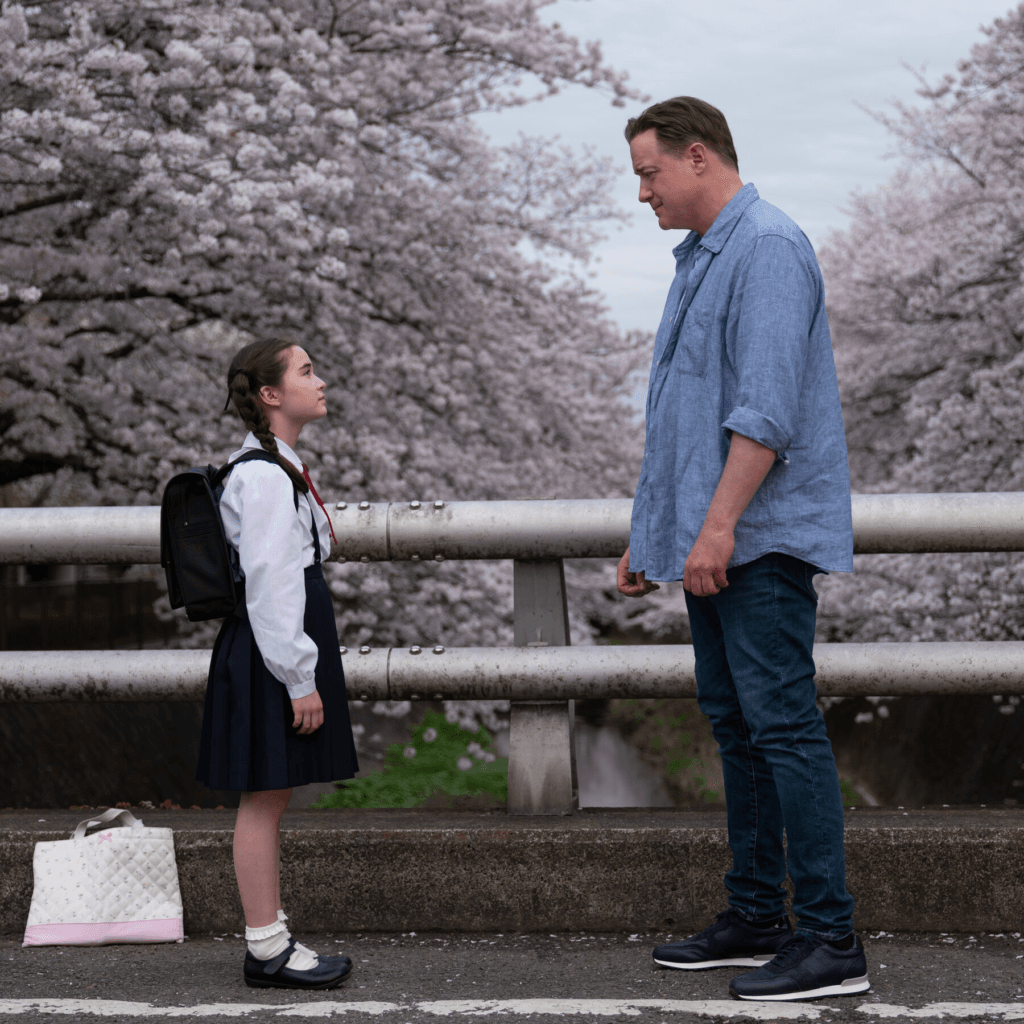
He takes on role after role. He plays a father. He plays a husband. He plays a journalist. He is, professionally, a self that can be exchanged on demand. And the film does something interesting with this: the roles do not remain hollow. When Phillip sits with Mia, pretending to be her father, something genuine passes between them. When he sits with the elderly Kikuo, pretending to be a journalist, he becomes, in some real sense, the witness the old man needed.
The movie does not resolve this cleanly. Phillip frets: “I’m messing with people’s lives.” He is right. And yet the messing-with produces something real. The Dhamma would frame it this way: the self doing the caring was always constructed, but the caring itself was not.
When we dissolve the performer and examine what remains, what remains is the act of attention, of presence, of treating another person as though they matter.
Anattā does not mean that nothing matters. It means that the one who thinks they are the one who cares is less fixed than they imagined. The care itself can be truer than the caregiver.
Mind-bending but also freeing.
Mettā that Arrives Without a Contract
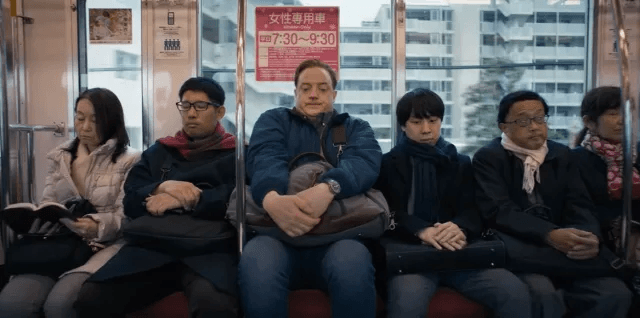
The Pali word mettā is usually translated as loving-kindness. The traditional practice is to extend goodwill outward, first to yourself, then to those you love, then to strangers, then to those you find difficult.
Phillip does this backwards and under duress. He starts with strangers. He is paid to extend warmth. The ethical question the film keeps asking is whether paid warmth is real warmth.
The Buddha’s answer, I think, would sidestep the framing entirely. He taught that intention, cetanā, is the seat of kamma. What is Phillip’s intention? At first, it is survival, a gig to pay rent. But watch what happens when he sits with Mia. Watch what happens when the old actor tells him his stories. The intention changes. The pay cheque stops being the reason. Something opens.
The film makes this case without sentimentality. It acknowledges the bleakness. Paying someone to pretend to care is “inherently bleak.” But the bleak premise does not prevent the genuine outcome. The mettā that began as performance becomes, through repeated contact, something closer to the real thing.
This is, in fact, how some Buddhist teachers recommended beginning the practice. You start by wishing beings well, even when you do not feel it yet. You say the words before the feeling arrives. The feeling, if you persist with sincerity, tends to follow.
The Mirror in the Shrine
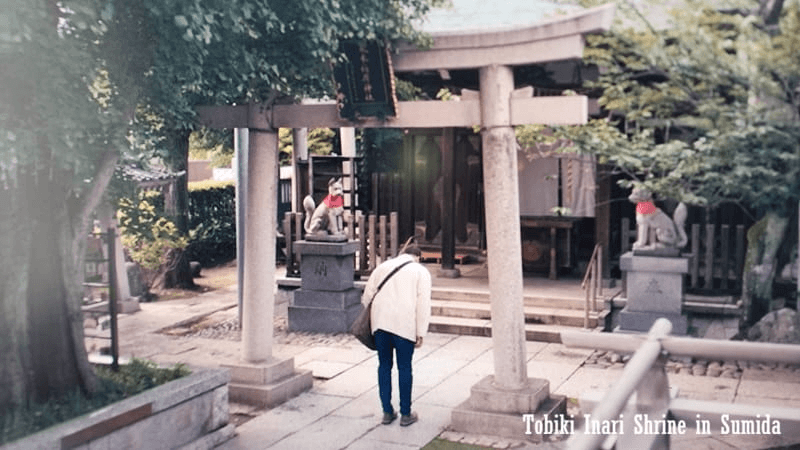
The film’s final scene is where all of this lands.
After Kikuo’s death, Phillip attends his funeral. This matters because he had avoided his own father’s funeral years earlier. The wound was still open. He goes this time, and the film reads it as the small, quiet act of a man who has finally started to turn towards rather than away.
Then he goes to the shrine Kikuo had often visited. Earlier in the film, Kikuo told him to look inside. Phillip said, “Maybe later.” He finally looks.
Inside, there is no deity. No offering. No religious icon. There is a mirror.
Phillip sees himself. And he smiles.
The shrine’s mirror connects directly to Kikuo’s earlier belief, expressed in the film, that god is present within us all. Fraser, the actor behind Philip, described the moment in an interview this way: “I am in there. I was enough all along. I didn’t need to doubt myself. I’m going to be okay going forward.”
Phillip spent the whole film believing he was the background figure, the token white guy, the expendable extra. He measured his worth by whether he got the auditions, the roles, and the recognition that never came. He looked everywhere except where Kikuo was pointing.
The mirror in the shrine does not show Phillip anything new. It shows him what was there the whole time, which he had been too self-doubting to see.
There is a reason Zen teachers sometimes say: before enlightenment, chop wood, carry water. After enlightenment, chop wood, carry water. The activities are the same. What changes is the one who sees. Phillip walks into the shrine as a man who thought he did not count. He walks out as someone who has caught a glimpse of himself, fully, without flinching.
He had been tending to people’s hearts the whole time. He had been present with Mia. He had sat with a dying man and let him feel remembered. He had shown up, again and again, in other people’s most private moments of need. All of that was him, not a performance, not a role, but the person underneath the roles.
The mirror confirms it. So did Kikuo. So did Mia, who forgave him completely when she learned the truth, choosing friendship over betrayal. You do not forgive someone who meant nothing to you.
What I Took Away
The Buddha was not in the business of tidy endings. He was in the business of clear seeing.
What Rental Family sees clearly is this: the desire to be witnessed by another person is not a weakness. It is one of the most persistent facts of being alive. Every client who hired the rental family agency was asking, in their own way, to be seen.
So was Phillip. He just did not know it until he looked in the mirror.
The next time you catch yourself doubting whether your presence in someone’s life actually mattered, remember the shrine. Remember that the old man across from you, the child beside you, the stranger you showed up for, those encounters left a mark. Not because you performed well. Because you were actually there.
That is the practice. Chop wood. Carry water. Show up. Look in the mirror without flinching.
You were enough all along.
Wise Steps:
- Practise showing up fully for one person each day: Instead of trying to fix someone’s problems, offer your full attention. Being present is often more healing than having the right words.
- Extend mettā before the feeling arrives: Wish someone well, even if the warmth feels mechanical at first. Like Phillip’s journey, sincere goodwill often grows through repeated practice.
- Look in the mirror with kindness: When self-doubt arises, pause and reflect on the people you’ve helped simply by being there. Your worth is not measured by performance, but by presence.