
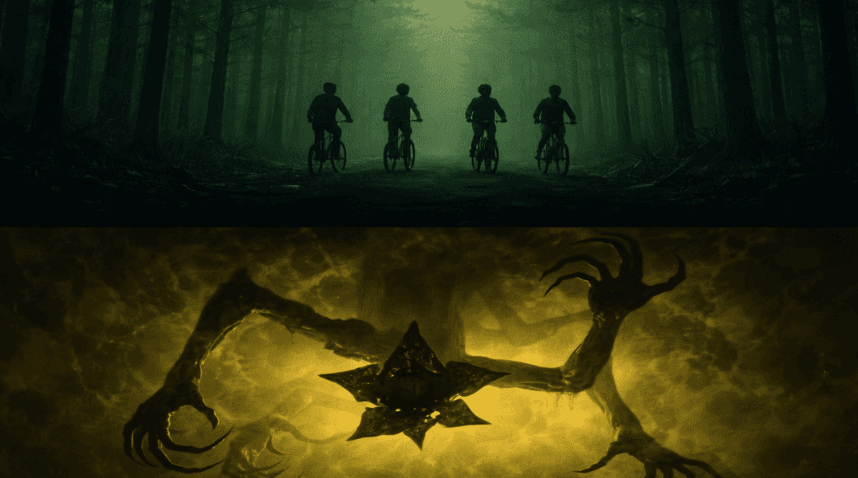
TLDR: Stranger Things has come to an end. Season 5 shows that what remains is a human note beneath the monsters. Freedom lives in how we meet what hurts.
Why Seasons 4 and 5 Stayed with Me
The earlier seasons of Stranger Things were easy to enjoy. Fast pacing, clear villains, a sense that things would work out if everyone stuck together. Seasons 4 and 5 slowed everything down. Consequences stayed with a feeling closer to home.
By the final episodes of Season 5, I found myself less interested in how the story would end and more attentive to how the characters were living with what had already happened. The series felt less like a typical Netflix escapism and more like a mirror to our reality.
Here are some Dhamma elements that I glimpsed from the series. Warning: Spoiler alert!
Vecna and the Inner Voice that Feeds on Pain
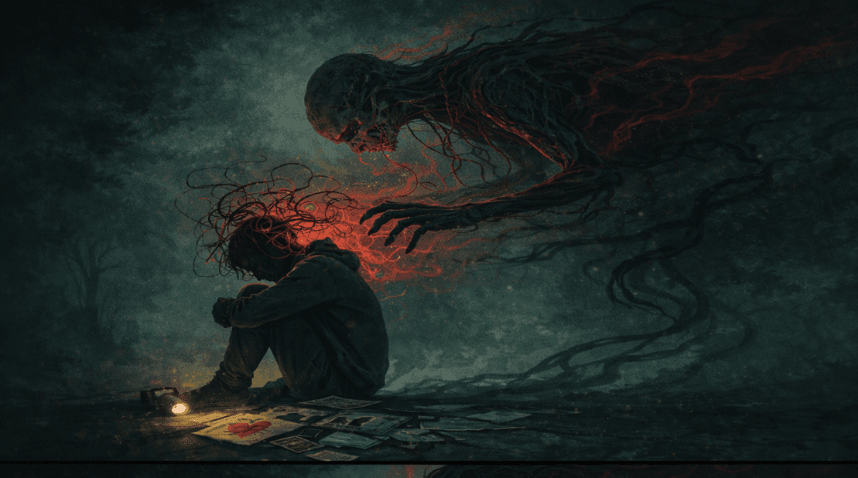
Vecna, the main villain, does not hunt randomly. He goes after people already carrying unresolved grief, guilt, or shame. He listens, waits, and then speaks in a voice that sounds uncomfortably familiar.
When he tells Eleven, “All I needed was someone to open the door. And you did that for me. Without even realising it. Didn’t you? And when you did realize, you chose to resist. So I sought a means to open my own doors. I sought… your power. So, don’t you see? Once again, you have freed me.” It lands because many of us have heard a version of that line internally.
Pain becomes identity. Suffering becomes proof of who we are.
In the Sallatha Sutta, the Buddha explains that while pain is unavoidable, the mind often turns pain into ongoing suffering through rumination and self-blame.
Vecna thrives in that space. He does not need to invent torment. He only needs people to believe their pain defines them.
Season 5 makes this clearer than ever. His power depends on isolation and identification. The more a person believes “this is me,” the tighter the grip.
Max and the Exhaustion of Avoidance

Max’s story across both seasons felt painfully ordinary in the best sense. After Billy’s death in Season 3, she keeps moving. She keeps quiet. She avoids stillness because stillness hurts.
Max blamed herself for Billy’s death, feeling she could have done more to save him, or even that her past wish for him to die had come true. This survivor’s guilt, combined with witnessing the traumatic event, led to depression and suicidal ideation.
At one point she admits, “I thought if I didn’t feel it, it would go away.” That line could belong to anyone who has tried to outrun grief.
Max only began to move toward acceptance when forced to confront her feelings while being targeted by Vecna. During a visit to Billy’s grave, she read a letter to him, acknowledging her complicated feelings of both missing him and the relief that his abuse had ended.
The Buddha never suggested that suffering dissolves through avoidance. Mindfulness means staying present with what arises, without collapsing into it or pushing it away. Max finds some ground only when she allows others to know what she is carrying. Fear remains, but it becomes shared. That makes it bearable.
Eleven and Learning When to Stop Pushing

Eleven’s journey in Season 5 feels like a correction of earlier assumptions. Strength had been framed as force. Push harder. Fight longer. Override pain with will.
That approach always came with collateral damage.
When Eleven finally says, “I don’t want to fight anymore,” it does not sound like defeat. It sounds like discernment. She begins to see that anger gives energy but narrows the mind. Control without understanding creates more suffering.
The Buddha’s teaching that hatred is never ended by hatred comes to mind here. This is an observation of reality. Feeding anger keeps the cycle alive. Understanding loosens it.
Eleven’s steadiness grows when compassion enters, especially towards herself. That change affects how she meets everything else.
The Upside Down and a mind stuck in place
By Season 5, the Upside Down feels frozen. Time has stalled. The same decay repeats endlessly. Nothing moves forward.
This resembles how trauma works in the mind. The past refuses to become past. Experience keeps replaying as if it is still happening now.
In Buddhist terms, this is clinging or samsara. Experience is held too tightly. Liberation does not require erasing memory. It requires changing the relationship to it.
Several moments in Season 5 point to this directly. When characters finally admit, “We can’t pretend this didn’t happen,” the storyline shifts. Naming allows movement out of the frozen world.
Friendship as a Practical Refuge

Season 5 leaves little doubt about what actually protects people. Not cleverness. Not power. Not lone heroics.
Protection comes from staying connected when fear encourages withdrawal.
One line captured this simply. “You don’t have to do this alone.” There is nothing dramatic about it. That is why it works.
The Buddha described good friendship as the whole of the holy life. Fear isolates. Shame isolates. Friendship interrupts both by making the experience shareable. No fixing required. Just presence.
What Stayed with Me After the Final Episode
The series does not promise resolution in the neat sense. Pain remains part of life. Fear still arises. But suffering loses some of its authority when it is seen clearly and held together.
That sits close to the Buddha’s promise. Not escape from difficulty, but freedom in how difficulty is met.
For a story filled with monsters, Stranger Things ends on a very human note. Suffering grows in isolation. It softens in understanding, honesty, and companionship.
That felt like the most enduring takeaway of all.
Wise Steps
- Catch the inner critic early by labelling it as a voice rather than truth, then ground attention in the body for one minute, for example feeling both feet on the floor while breathing steadily.
- Replace avoidance with a gentle check-in by setting a daily two-minute timer to name the dominant feeling, such as saying “sadness is here” and letting three slow breaths accompany it.
- Practise the two-arrows move by asking “what am I adding?” whenever pain appears, and drop the story loop by returning to one anchor like the breath or a hand on the heart.