

TLDR: Parenting is live Dharma: you only get it once you’re in it. It tests patience, generosity, and emotional control when you’re tired and frayed.
Parenting is Dharma in real time: you can prepare yourself with advice from others, but you only get it once you’re living it. It’s exhausting, chaotic, and regularly pushes you to your limits, forcing you to practise patience, selflessness, and emotional control when you’re exhausted and frustrated.
At the same time, it brings unexpected joy, a deeper love for you and your family, and a purpose that is hard to find elsewhere. The sacrifices are real, but so is the growth. If you choose this path, you don’t just raise a child, you also become a calmer, kinder, and more grounded version of yourself along the way.
As the wise, venerable Thubten Chodron mentioned in a talk, “Dharma is like a pill. We talk about it, we speak about how good it is, but at the end of the day, you need to consume it to truly understand it.”
As a new parent, I only understood the concepts of parenthood; I truly understood it when I began my journey. Just as with dharma, we learn from talks and only appreciate them after we “consume” them.
Today, I would like to share about the struggles and the sweetness of parenting that I have experienced so far as a new parent with a dharmic background. Parenting can be fulfilling, but it also has many ups and downs. My goal is not to convince you to have kids or not, but to share my journey and insights.
My Child Teaches Me Selflessness
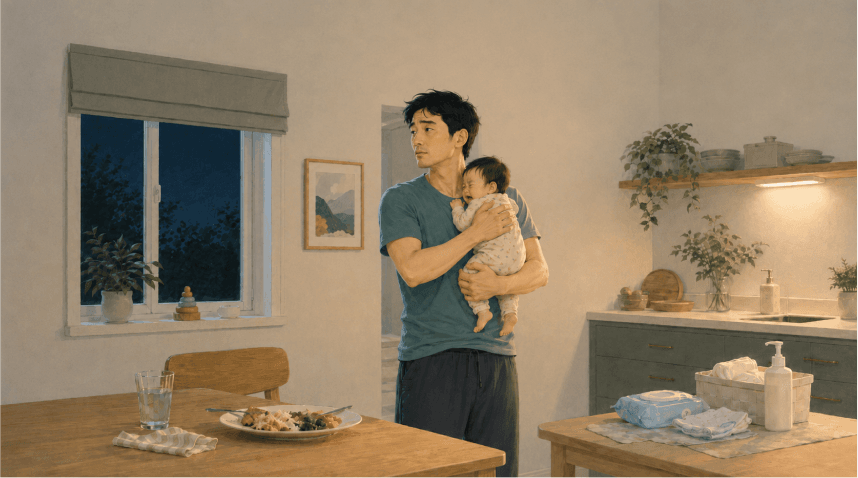
Most of us are selfless and giving, often willing to help others in need. For example, I value donating money to charity, such as to a Dharmic cause and to Guide Dogs Australia. A true test of selflessness is when you are exhausted and when tensions are high.
According to Ajahn Chah, it is easy to meditate in an air-conditioned room, but out in the jungle, it is much more difficult with the heat and “Ajahn mosquito”. I certainly found it hard to keep my cool when my daughter is screaming for no clear reason, even after she is fed, changed and showered with love. That is when my patience and practice are truly tested. I often put her needs first, giving her a shower before I have one and giving her the best parts of my meals.
Letting Go, One Wet Nappy at a Time
We feel responsible for the creation and growth of our child, but there is a voice at the back of my head reminding me, “She is not me; she is not mine.” I need to realise that she will be her own person one day and I am just an influence in her life. I can only provide the “ingredients” for my child to be a good person, but I am in no way in “control” of her future.
Metta at 3 am: Self-regulation and Emotions
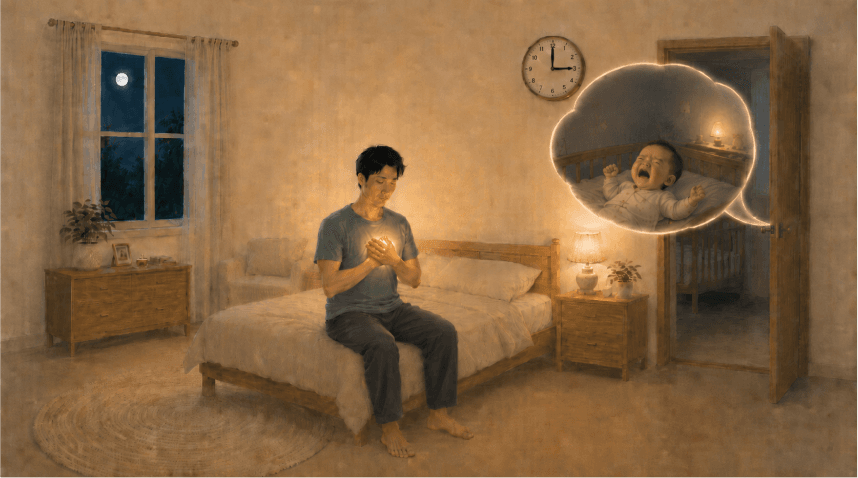
There was one day, when my wife was on a 13-hour shift at the hospital, and I was alone with my crying baby for 15 hours straight. Mentally, I was exhausted and at a breaking point.
I remembered one of the ways to deal with frustration, prescribed by the Buddha, was to walk away from the situation mindfully. I placed her in her cot (safe area) and locked myself in a room to calm down.
The first step was to be honest with myself and acknowledge the emotions I was experiencing. Self-regulation helps my child co-regulate her emotions. It is also important to look after our own well-being first, before others. I also appreciated that these difficult moments are impermanent and mixed with happy ones, too.
Another antidote I have used is to chant the Metta Sutta when my child is unable to regulate herself. It helps calm both my child and me.
Who am I KIDding?

But now you may be asking yourself, what are the positives of having children? All I can see are the negatives and the adverse adjustments I have to make to my life. Here are some of my reflections.
I was on the fence about having children, largely because I always thought about it from a dollar and cost perspective. I have always enjoyed playing with kids, but playing well with children and having them are quite different. E.g. playing with a dog and having a dog as a pet is a bit more nuanced. 😊
I agreed with my wife that if we were to have kids, the child/children should add value to society, and we would like to be hands-on parents. Not just to produce a child and let him/her run rampant, causing issues for others.
Responsible parents… was the goal.
Becoming the Parent You Wanted to Be
I have always told myself growing up that when I become a parent, I will try to be an even better parent than my parents. Having a child became a catalyst for being a better person. Having a child gave me the opportunity to be more mindful, more kind, more understanding, more patient, and to be the role model she respects and looks up to.
Teamwork Makes the Dreamwork
Getting married is pretty easy; you plan the wedding, work towards it, and then it’s done, with all the cultural and personal expectations wrapped up in a single event. Having children is the true test of a relationship.
How we treat our spouse is how our kids learn to treat their partner.
Are we setting them up for healthy future relationships?
If we came from a difficult upbringing, could this be an opportunity to reset how our childhood could have been?
Unconditional Love, Finally Understood
I felt that having a child helped me understand what it is like to love a being unconditionally. There are no expectations of the child to love you back, but when they do, there are no words to describe it. I can come home exhausted from work, and when I see her smile at me, all my stress and frustrations melt away.
To Wise It All Up:
To quote the great Ajahn Brahm,
“A single person has a single person suffering
Couples have a couple suffering
In this case, families face their own difficulties, but they also have multiple blessings and intangible gifts.
The decision is up to you and your partner on which suffering is worth it.”
Wise Steps
- Practise mindful pausing when overwhelmed by your child’s cries by placing them safely in the cot and taking ten slow breaths in another room, just as I did during the 15-hour solo day.
- Train selflessness through small daily offerings by putting your child’s shower and meals before your own, and giving them the best part of your dinner.
- Apply the not-mine contemplation to loosen control by reminding yourself “she is not me; she is not mine” and focusing on providing good conditions rather than being fixating on results.